That first Play button changes how you see Paris.
This self-guided audio tour gives you stories at major landmarks and quieter corners, plus a clickable map route so you can move at your pace. I like the low price for a long list of stops, and I like that several key sights along the way have free admission if you just walk in. One catch: the audio is delivered through a web link, so you’ll want reliable internet at many stops.
If you like museum-level facts but hate waiting on a group, this works well. The route is designed for about 5 hours, though you can stretch it by staying longer at the places that grab you. Just don’t plan on it being truly offline everywhere.
In This Review
- Key things I’d watch for before you hit Play
- Price and value: $9 buys stories, not tickets
- How the audio tour actually works (and what to bring)
- Stop-by-stop: what you’ll get from Gare de Lyon to Bibliothèque nationale
- 1) Paris Gare de Lyon: begin with clocks and the grand station vibe
- 2) Place des Vosges: the old square that still feels right
- 3) Musée Picasso-Paris: art in a 17th-century mansion
- 4) Palais Garnier: opera glamour and a movie-famous facade
- 5) Basilique du Sacré-Cœur: white-domed views from Montmartre hill
- 6) Parc Monceau: an elegant park break with eclectic touches
- 7) Arc de Triomphe: a monument and a view down the Champs-Élysées
- 8) Musée Marmottan Monet: Monet’s big collection, in a smaller setting
- 9) Eiffel Tower: the symbol and the engineering story
- 10) Musée du quai Branly – Jacques Chirac: indigenous arts across continents
- 11) Pont Alexandre III: ornate bridge photo moment, no ticket needed
- 12) Musée de l’Armée des Invalides: military history and Napoleon’s tomb
- 13) Musée Rodin: gardens plus sculptures, including The Thinker
- 14) Chapelle Notre Dame de la Medaille Miraculeuse: a quiet, specific chapel
- 15) Notre-Dame-des-Champs: a lesser-known church in the middle of things
- 16) Luxembourg Gardens: rest like a local
- 17) Musée d’Orsay: Impressionism/Post-Impressionism in a repurposed station
- 18) Place de la Concorde: Paris’s huge square with a history-heavy past
- 19) Musée de l’Orangerie: Monet’s Water Lilies in its purpose-built home
- 20) Jardin des Tuileries: formal gardens stretching between icons
- 21) Louvre Museum: the big museum, with the Mona Lisa on the list
- 22) Sainte-Chapelle: Gothic stained glass you can’t fake
- 23) Towers of Notre-Dame Cathedral: gargoyle-eye views
- 24) Bibliothèque nationale de France – site François Mitterrand: modern architecture, free visit
- The real strengths of this route (beyond the landmark list)
- Timing reality check: 5 hours can work, if you plan priorities
- Quick pros and cons before you decide
- Who this is best for
- Should you book this Paris Self-Guided Audio Tour?
- FAQ
- FAQ
- How much does the Paris audio tour cost?
- How long is the tour supposed to take?
- Are the entry fees included for attractions?
- Which attractions on the route are listed as free admission?
- Do I need to bring headphones or an audio device?
- Does the audio work offline?
- When do I receive access to the audio?
- Can I start and end where I want?
- Is it a private tour?
- Is the booking refundable if I cancel?
Key things I’d watch for before you hit Play
- SoundCloud web audio + a Google My Maps link you can click at each stop
- 24 attractions packed into a route you can follow in your own order
- Many free entries (rail-station sightlines, churches, gardens, and views) that help value
- Entry tickets not included for several big draws, so you’ll budget for those
- Internet matters for playback, especially if you’re away from Wi-Fi
Price and value: $9 buys stories, not tickets
At $9 per person, the cost is mostly for the audio access (24 stops in one playlist and mapped individual clips). The big value question is admissions: a good chunk of the stops are free to enter, but several of the famous museums and attractions are not included, so your real total depends on what you choose to pay for.
Think of it like this: you’re paying for context. When you decide to spend money on a ticket, you’ll usually get more out of it because you’ll know what to look for—architecture cues, the names tied to the art, and why the place matters in Paris’s timeline.
You can also read our reviews of more tours and experiences in Paris.



How the audio tour actually works (and what to bring)

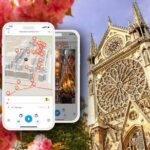
You get two private links by email for your chosen date:
1) a SoundCloud web link to listen to guides (either the full tour or individual stops), and
2) a Google My Maps link where each pin corresponds to a stop and its audio.
You’ll want a charged smartphone and earphones. The tour’s own guidance is clear: you need internet access for the audio web link, and the audio device isn’t provided. That means your experience can swing based on connectivity—Paris has Wi-Fi in plenty of areas, but it’s not guaranteed right where you stand.
I also like that you can plan ahead. If you skim the audio clips before you go, you’ll know which stops are worth your energy and which ones you can skip.
Stop-by-stop: what you’ll get from Gare de Lyon to Bibliothèque nationale
Below is how I’d approach each stop, what makes it worth your time, and where you should expect ticket costs.
1) Paris Gare de Lyon: begin with clocks and the grand station vibe
This is a strong start point because it’s visually interesting right away: a major railway station with a famous clock tower and the well-known Le Train Bleu restaurant. Even if you don’t eat or drink there, it sets a clear Paris mood—busy, historic, and very real-life.
Admission is free, so you can spend a few minutes getting oriented and then move on without feeling stuck paying at the first stop.
2) Place des Vosges: the old square that still feels right
Place des Vosges is the kind of place where the buildings do the storytelling. It’s the oldest planned square in Paris, and the surrounding architecture is from the 17th century, which helps you picture the city’s orderly side.
It’s free to visit, and it works as a calm reset if you need a breather before the more ticket-heavy sights.




3) Musée Picasso-Paris: art in a 17th-century mansion
This stop is all about Pablo Picasso, with an extensive collection housed in a 17th-century mansion. The mansion setting matters here: you’re not just seeing paintings or objects; you’re seeing them in historic space.
Admission is not included, so if Picasso is on your must-do list, expect to pay for entry and factor that into timing.
4) Palais Garnier: opera glamour and a movie-famous facade
Palais Garnier is the kind of building you can’t help noticing. It’s a 19th-century opera house and also inspiration for The Phantom of the Opera, which makes it easy to connect the architecture to pop culture even before you step inside.
Admission is not included. If you only have limited time, you might choose to appreciate the exterior and nearby views rather than pay for entry.
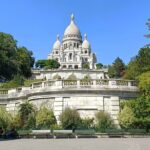
5) Basilique du Sacré-Cœur: white-domed views from Montmartre hill
This is a classic Paris skyline stop. The basilica’s white dome sits atop Montmartre, and you get panoramic views of the city from up there.
Admission is listed as free, which makes it one of the easiest “wow” moments on the route. The main limitation is physical: Montmartre means some climbing, so build in time.
6) Parc Monceau: an elegant park break with eclectic touches
Parc Monceau gives you a different Paris mood—English-style gardens and eclectic monuments in a quieter setting. It’s a good place to pause, especially if your feet need a rest between bigger-ticket stops.
This one is free, so you can linger without worrying about entry fees.
7) Arc de Triomphe: a monument and a view down the Champs-Élysées
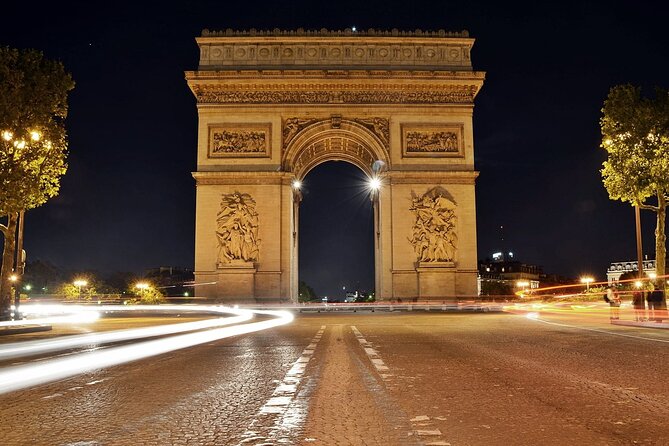
Arc de Triomphe honors those who fought for France, and the location gives you the dramatic straight-line perspective down the Champs-Élysées. It’s also a place where you can feel how big Paris is, even if you’re only there for a short moment.
Admission is not included. If you want the view from inside, budget for entry; if you’re mainly after the monument and street alignment, the exterior still delivers.
8) Musée Marmottan Monet: Monet’s big collection, in a smaller setting
This museum focuses on Claude Monet and is described as having the world’s largest collection of his works. It’s an appealing choice if you love Monet enough to go beyond the most famous postcard scenes.
Admission is not included, so check your timing and how much you want to spend on museum tickets that day.
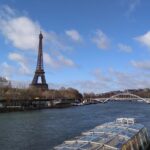
9) Eiffel Tower: the symbol and the engineering story
The Eiffel Tower is still the Eiffel Tower: an engineering marvel and a city symbol. The audio here is likely useful because it helps you read the structure as more than a photo-op.
Admission is not included. If you don’t want to pay for the tower itself, plan for time to appreciate the area around it and the sightlines from nearby points.
10) Musée du quai Branly – Jacques Chirac: indigenous arts across continents
This stop covers indigenous art from Africa, Asia, Oceania, and the Americas. If you want Paris culture that’s not only European painting and fashion history, this is a smart counterbalance.
Admission is not included, so you’ll likely decide in advance if you’re paying for this museum day.
11) Pont Alexandre III: ornate bridge photo moment, no ticket needed
Pont Alexandre III is called out as one of the most beautiful bridges in Paris, connecting the Champs-Élysées quarter with the Eiffel Tower quarter. It’s a perfect “walk-through” stop: you get dramatic river-and-street views without committing to an interior ticket.
Admission is free. This is also a nice moving breather—easy to fit into a route without slowing you down.
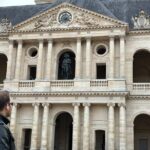
12) Musée de l’Armée des Invalides: military history and Napoleon’s tomb
Invalides is big in both scale and significance. This complex covers France’s military history and includes Napoleon’s tomb, which is a major reason people make the journey.
Admission is not included, so treat it as a planned ticket stop. If you’re skipping paid interiors, you may still enjoy the area, but the focus here is clearly inside.
13) Musée Rodin: gardens plus sculptures, including The Thinker
Rodin’s garden setting is part of the experience. You’ll see sculptures including The Thinker, and the open-air layout gives you a slower pace than a standard gallery.
Admission is not included. If you’re choosing only a few paid museums, this is one of the better options on a route full of ticket stops.
14) Chapelle Notre Dame de la Medaille Miraculeuse: a quiet, specific chapel
This chapel is tied to the Miraculous Medal apparitions, and it’s described as serene. I like stops like this when I’m trying to balance the big-name attractions with something more local and calm.
Admission is free. It’s also a good “pause point” when the rest of the route is more intense.
15) Notre-Dame-des-Champs: a lesser-known church in the middle of things
This is a church that’s described as beautiful but lesser-known, located in the heart of Paris. The value here is simple: you get a break from crowds and still get a Paris landmark type that matters.
Admission is free, so you can stop quickly or linger if the vibe fits you.
16) Luxembourg Gardens: rest like a local
Luxembourg Gardens are wide and relaxed, and they’re presented as a favorite spot for Parisians to unwind. This is exactly the kind of stop where I’d rather spend 30 minutes than rush through.
Admission is free. Use it as your recovery block before the museum-heavy core of the route.
17) Musée d’Orsay: Impressionism/Post-Impressionism in a repurposed station
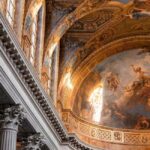
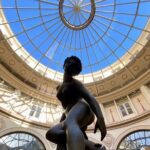
Musée d’Orsay is known for Impressionist and Post-Impressionist masterpieces, and it’s in a converted railway station. That location detail matters because it shapes your experience: you’re surrounded by art in a dramatic old industrial shell.
Admission is free in this tour’s info, which makes it a standout value if you want a major museum without an extra ticket cost.
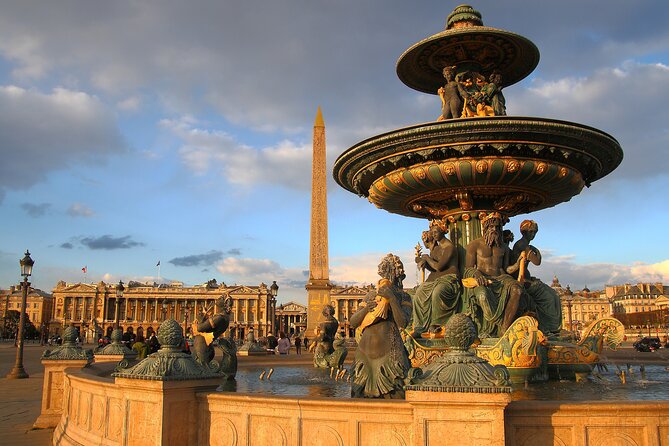
18) Place de la Concorde: Paris’s huge square with a history-heavy past
Place de la Concorde is described as Paris’s largest square and a site of key historical events. Even without going inside anything, it’s the kind of space that helps you understand the city’s scale and political gravity.
Admission is free, so it’s a good stop that doesn’t risk messing up your budget.
19) Musée de l’Orangerie: Monet’s Water Lilies in its purpose-built home
This museum is built specifically for Monet’s Water Lilies series. If Impressionism is your thing, this stop is the kind where the room design helps the art land in a strong way.
Admission is not included, so plan for ticket costs here if you’re aiming to see the Water Lilies.
20) Jardin des Tuileries: formal gardens stretching between icons
Jardin des Tuileries runs from the Louvre toward Place de la Concorde. It’s a formal French garden setting that feels like a designed walkway between major sights.
This is free, and it’s a great way to connect paid museum stops without burning cash on more entries.
21) Louvre Museum: the big museum, with the Mona Lisa on the list
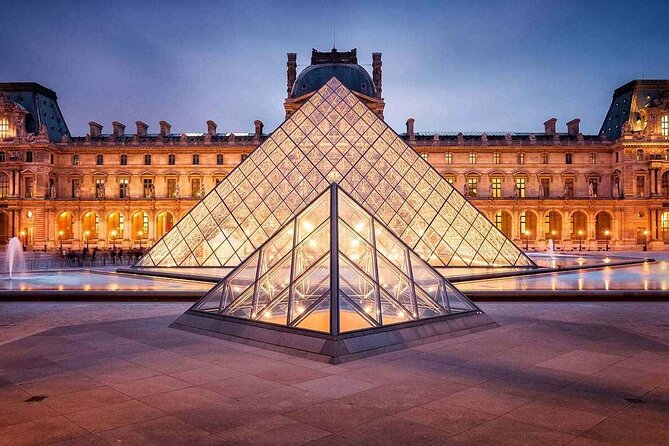
Louvre Museum is described as the world’s largest art museum and includes the Mona Lisa. This is where time can evaporate fast, so the audio format helps if you treat it like a guided path through your must-see rooms.
Admission is not included. I’d be realistic: if you’re only doing one major interior museum that day, decide whether it’s the Louvre or another paid stop, because you can’t do everything comfortably in one 5-hour window.
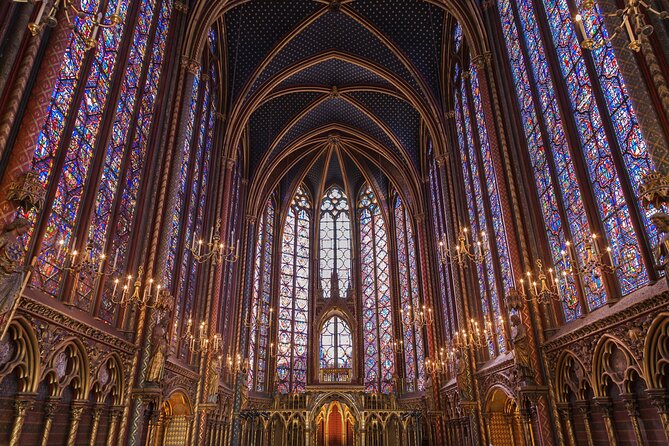
22) Sainte-Chapelle: Gothic stained glass you can’t fake
Sainte-Chapelle is all about exquisite stained glass in a Gothic royal chapel. If you’ve ever looked at photos and thought the colors look unreal, this is the stop that answers that question in person.
Admission is not included. Plan for time, because stained glass is slow-looking by nature.
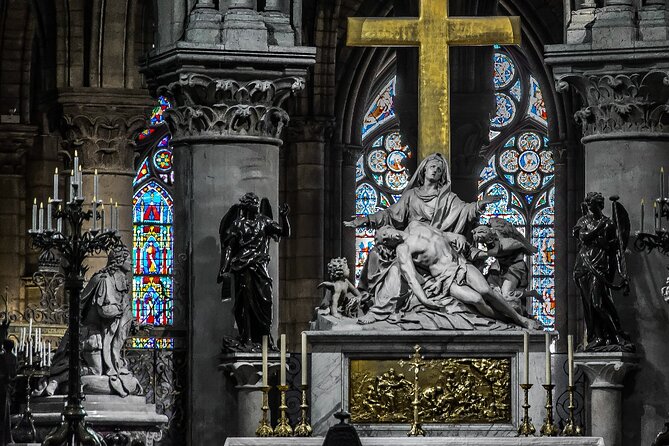
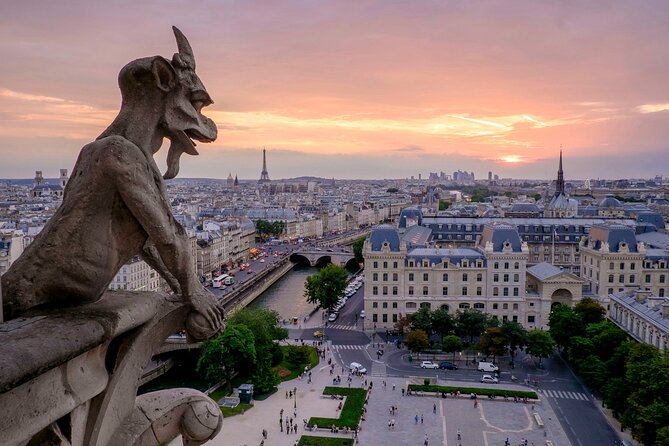
23) Towers of Notre-Dame Cathedral: gargoyle-eye views
This is one of the route’s most “worth it for the view” options: climb the towers for gargoyle’s-eye views of Paris. It’s described as a ticketed attraction list as free admission within this route, so it’s a nice perk on the itinerary.
Admission is free. If you’re not feeling the climb, you can still enjoy the surrounding area, but the whole point of this stop is getting up high.
24) Bibliothèque nationale de France – site François Mitterrand: modern architecture, free visit
This final stop shifts the focus to modern Paris. The national library site is described as a modern architectural marvel, and it’s a free stop here.
Admission is free, and it’s a smart closer because it doesn’t repeat the same museum theme. You end with a sense of Paris as a living city, not just a past-city photo set.
The real strengths of this route (beyond the landmark list)
What makes this audio tour work for me is how practical it is. You’re not stuck in a rigid group rhythm, and you can spend more time where the audio makes you care more.
Here are the most useful reasons I’d recommend it:
- You can follow your own order. That matters in Paris, where crowds and lines can change minute to minute.
- You get context before you pay. Several stops are free, so you can decide where your money goes once you’ve heard what each place is about.
- You’re not forced into a single style of attractions. Your route mixes churches, gardens, major museums, bridges, and viewpoints.
And yes, the route includes major draws like the Eiffel Tower and the Louvre. The difference is that the audio format turns them from random must-sees into places you can actually read.
Timing reality check: 5 hours can work, if you plan priorities
The duration is listed as about 5 hours, with short time blocks per stop. In real life, walking time, crowds, and whether you actually go inside can stretch or shrink that window.
My practical approach: treat the route as a menu. If you’re paying for a couple of major museums, keep the free stops short. If you’re skipping paid interiors, then you can stretch the free stops longer—especially gardens and viewpoints.
Quick pros and cons before you decide
Pros
- Great price for the audio access across a wide set of stops
- Map + audio links make it easy to self-navigate
- Several stops are free, so you can lower total spending
Cons to consider
- Audio is accessed via web links, so you may need internet while you’re on the street
- Many top attractions require separate tickets, which can add up fast
Who this is best for
This is a good match if you:
- want flexibility over a fixed guided schedule
- like structure, but not a guide telling you exactly where to stand
- enjoy mixing iconic Paris with quieter pauses like parks and smaller churches
It’s less ideal if you:
- expect the tour to work smoothly without working internet anywhere
- want a fully guided, line-managed day where you never think about tickets
Should you book this Paris Self-Guided Audio Tour?
If you can manage a smartphone on the go and you’re okay buying separate attraction tickets for some stops, I think it’s a strong value at $9. The audio turns famous sights into better storytelling moments, and the free stops help you keep costs under control.
If you’re worried about connectivity or you were hoping for true offline audio, I’d be cautious. In that case, you’ll either need reliable data/Wi-Fi or you might end up stuck with silence at some points.
FAQ
FAQ
How much does the Paris audio tour cost?
It costs $9.00 per person.
How long is the tour supposed to take?
It’s listed at about 5 hours.
Are the entry fees included for attractions?
No. Entry fees are not included where tickets are required.
Which attractions on the route are listed as free admission?
The tour lists free admission for: Paris Gare de Lyon, Place des Vosges, Basilique du Sacre-Cœur, Parc Monceau, Pont Alexandre III, Chapelle Notre Dame de la Medaille Miraculeuse, Notre-Dame-des-Champs, Luxembourg Gardens, Musée d’Orsay, Place de la Concorde, Jardin des Tuileries, Towers of Notre-Dame Cathedral, and Bibliothèque nationale de France (François Mitterrand site).
Do I need to bring headphones or an audio device?
Yes. Audio devices are not included, so you’ll want earphones/headphones and your own smartphone.
Does the audio work offline?
The guide is accessed through a SoundCloud web link and the tour guidance calls out internet access, so you should plan on needing connectivity.
When do I receive access to the audio?
After booking, you receive confirmation and then, before your starting time on your selected date, you’ll get an email with two links: the audio and the interactive map.
Can I start and end where I want?
Yes. It’s self-guided with start and end in Paris, and you choose your starting and ending points.
Is it a private tour?
Yes, it’s listed as a private tour/activity, so only your group participates.
Is the booking refundable if I cancel?
No. It’s non-refundable and cannot be changed for any reason.