REVIEW · ISTANBUL
Istanbul Archaeological Museums Entry Ticket & Audio Guide
Book on GetYourGuide →Operated by Istanbul Tourist Pass® · Bookable on GetYourGuide
A QR ticket can save you Istanbul time. This self-guided ticket lets you step into the Istanbul Archaeological Museums fast with skip-the-line entry, then follow along with a 25-language audio guide at your own pace. If you like making sense of artifacts without joining a group schedule, this is a strong setup.
One thing I like a lot is the plain value of having audio in so many languages, including English and Japanese. Another is that the QR ticket is designed to help you get past the ticket purchase part quickly.
One consideration: you still face mandatory security checks, and your QR only works if your phone has internet when you are right by the entrance.
In This Review
- Key Things to Know Before You Go
- A QR Ticket With a 25-Language Audio Guide
- Getting There: Tram T1 to Gulhane and a Short Walk
- What You’ll See Inside the Archaeological Museums
- 1) Main museum galleries: gods, daily life, and official art
- 2) Tombs and sarcophagi areas: scale, symbolism, and story
- 3) Enameled Kiosk Museum: early Ottoman art (and a date you can anchor)
- 4) Old Eastern Works Museum: a bridge across regions
- The Big Name Pieces: Hermes, Aphrodite, and Iconic Statues
- Tombs, Sarcophagi, and Everyday Objects That Tell Real Stories
- Audio Guide Tips: Making the Most of 25 Languages
- Entry Day Reality Check: Security, QR Timing, and Passports
- Price and Value: $25 With Audio vs a Short Visit
- Who Should Book This Ticket + Audio Guide
- Should You Book This Ticket + Audio Guide?
- FAQ
- How do I get my entry QR code and audio guide?
- Can I skip the security lines?
- When can I show the QR ticket?
- Do I need an internet connection to use the QR ticket?
- Is this activity a guided tour?
- What are the meeting instructions and how do I get there?
- What languages are included in the audio guide?
- What is included in the price?
- What is not included?
- Do adults and children need passports?
Key Things to Know Before You Go

- 25-language audio guide so you can match the museum’s pace to your comfort level.
- QR ticket for skip-the-line entry, but you cannot skip security.
- Multiple museum sections to plan around: tombs, sarcophagi, and Ottoman-era rooms.
- Passport check for age validation for adults and children.
- No museum Wi‑Fi included, so rely on your own connection.
- Self-guided entry, meaning you control timing and how much you see.
A QR Ticket With a 25-Language Audio Guide

Istanbul’s Archaeological Museums can feel like a big, beautiful storage house for the ancient world. The trick is not just seeing objects, but understanding why they mattered. That is exactly where the audio guide helps.
You get two separate parts delivered by email from Istanbul Tourist Pass®: your entry QR codes and your audio guide link. The museum visit is self-paced. There is no guide herding you through rooms. So, if you want to spend extra time with one object, you can. If you’d rather skim the rest, you can do that too.
The audio guide language list is wide: Arabic, Bulgarian, Chinese, Croatian, Dutch, English, French, German, Greek, Hindi, Hungarian, Indonesian, Italian, Japanese, Korean, Persian, Polish, Portuguese, Romanian, Russian, Spanish, Swedish, Turkish, Ukrainian, Urdu. That matters because the museum names and artifact descriptions can be confusing when you are moving fast. In a place like this, listening in your language often makes the whole visit feel less like guessing.
The Istanbul Archaeological Museums cover civilizations that shaped the wider Mediterranean and Middle East: Greece, Egypt, Mesopotamia, and more. The audio is built to give you context as you move through exhibits, including the stories behind major works and smaller pieces that you might otherwise walk past.
You can also read our reviews of more tours and experiences in Istanbul.



Getting There: Tram T1 to Gulhane and a Short Walk

I like meeting points that make your first 15 minutes easy. This one is simple.
Take the T1 Bağcılar–Kabataş tram and get off at Gulhane station. From there, it is an easy 5–10 minute walk to the museum area. That short walk is helpful when you are carrying your phone and trying to keep your ticket ready for scanning.
One practical note: plan to arrive with enough time that you are not sprinting at the final moment. Your QR codes are only meant to be shown when you are near the entrance, and they depend on internet access on your smartphone.
What You’ll See Inside the Archaeological Museums

This ticket is for the Archaeological Museums complex, and it includes access to highlights spread across its different sections. Here is how I’d think about structuring your day so it does not turn into random wandering.
1) Main museum galleries: gods, daily life, and official art
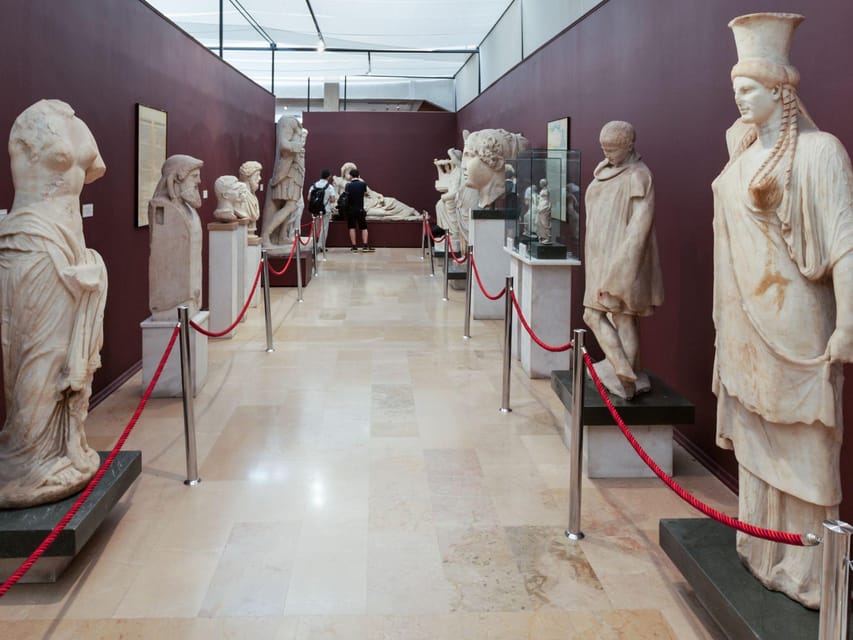
This is where you’ll connect the museum’s biggest names to the everyday. Expect to see ancient figures and carved objects, plus the kind of detail that helps you understand what people valued: religion, power, trade, and even how objects were made.
The museum’s strength is that it does not only show royal-looking art. It also gives you examples that hint at the lives of everyday people, including objects tied to rituals and practice.
2) Tombs and sarcophagi areas: scale, symbolism, and story
Some of the most memorable stops are the tombs and funerary displays. In particular, the complex includes:
- Crying Women Tomb
- Lykia Tomb
- Alexander Sarcophagus
These are not just impressive shapes. They also help you understand how ancient cultures used art to manage the idea of death and memory. If you like when museum objects explain a whole worldview, these sections will do that better than generic artifact rows.





3) Enameled Kiosk Museum: early Ottoman art (and a date you can anchor)
If you want the visit to feel more layered, don’t skip the Ottoman-era room. The Enameled Kiosk Museum is an important stop for early Ottoman art, established in 1472 by Fatih Sultan Mehmet.
That date is a useful anchor. It helps you realize you are not only looking at the distant ancient past. You are also seeing how later eras collected, valued, and displayed earlier civilizations.
4) Old Eastern Works Museum: a bridge across regions
The Old Eastern Works Museum brings together artifacts from Anatolia, Mesopotamia, Egypt, and Arabia. That mix is valuable because it pushes you beyond one-civilization thinking. Even when the objects are grouped differently, you start noticing overlaps in materials, motifs, and techniques.
The Big Name Pieces: Hermes, Aphrodite, and Iconic Statues
If you love instant recognition, this complex delivers. Two of the iconic works mentioned include:
- Statue of Hermes
- Aphrodite
These names matter because they act like signposts. When you hear the audio guide’s explanation, you can connect what you are seeing to how the Greeks and Romans understood gods and symbolism. You also get a better sense of how those figures were represented, not just that they existed.
This is where an audio guide earns its keep. Without context, you may admire the craft but miss the why. With audio, the same statue often turns into a clearer story: who made it, what it signaled, and how it fit into beliefs.
Tombs, Sarcophagi, and Everyday Objects That Tell Real Stories
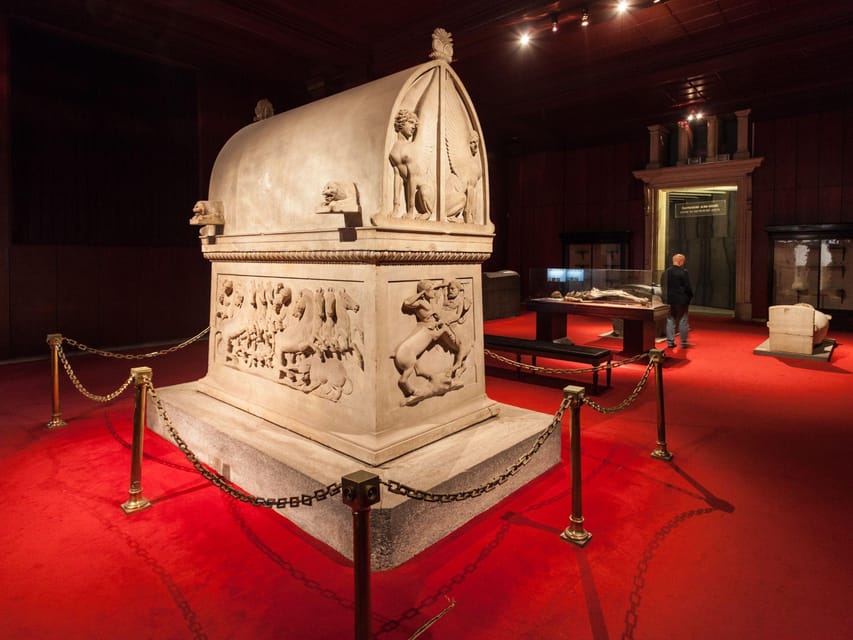
I like museums most when they help you notice the human side of history. The Istanbul Archaeological Museums have that, if you are willing to slow down for a few rooms.
The tomb displays and the Alexander Sarcophagus especially invite you to look beyond the surface. You can see how art was used to preserve identity and communicate status. They can also make the “ancient world” feel less like a textbook and more like people planning for the future.
You’ll also come across artifacts that show daily life and ritual practice. The audio guide is set up to help you connect what you see to broader themes like religious activity and everyday use. That is a big deal in a museum where labels are easy to skim and impossible to translate fully in a hurry.
One practical thing to know: the audio guide numbers may not always line up perfectly with each room sequence. In one case, the audio experience for Japanese included some jumping in numbering. My advice is simple: if your audio skips, don’t assume you missed the story. Pause, check where you are in the room, and resume with the audio track that matches what you’re looking at.
If you prefer, you can also use the text information on-site and translate as you go. That can be a helpful backup strategy when the audio pacing and room flow do not match your expectations.
Audio Guide Tips: Making the Most of 25 Languages
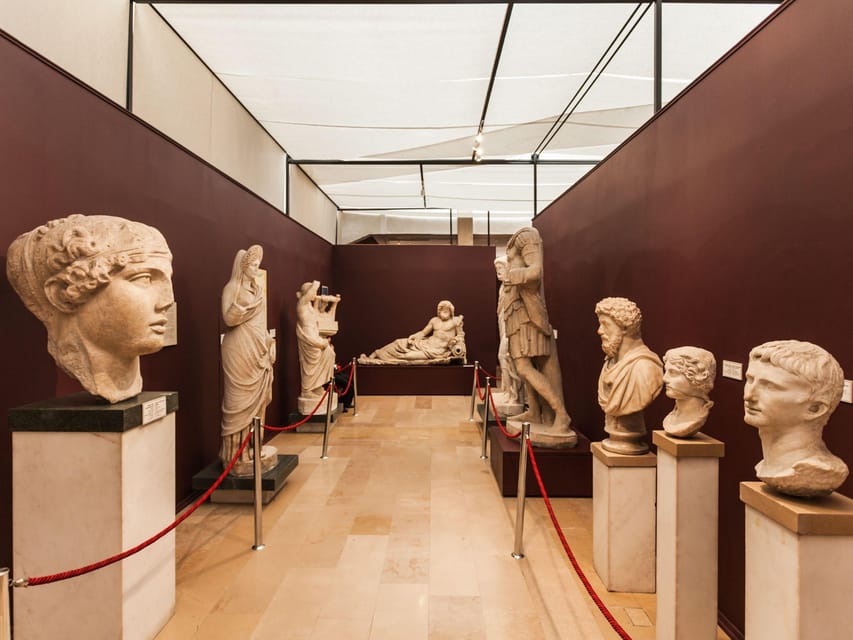
The biggest benefit here is clarity and comfort. I really like that the audio guide includes languages like English, French, German, Turkish, Russian, and Japanese, plus many others. It reduces friction when you are trying to connect an inscription, relief, or statue to meaning.
Here are a few ways to use it efficiently:
- Start early in the day so you are not stressed about time.
- Keep your smartphone charged, since you need internet access to retrieve your QR tickets and access the audio link.
- Use the audio for the big story points, then spend extra time looking with your eyes.
Also, remember this is not a guided tour. The audio helps you interpret, but you are still planning your own route. If you like structure, give yourself a rough plan before you enter: for example, do one main-gallery set, then tombs/sarcophagi, then Ottoman and Eastern works sections.
Entry Day Reality Check: Security, QR Timing, and Passports
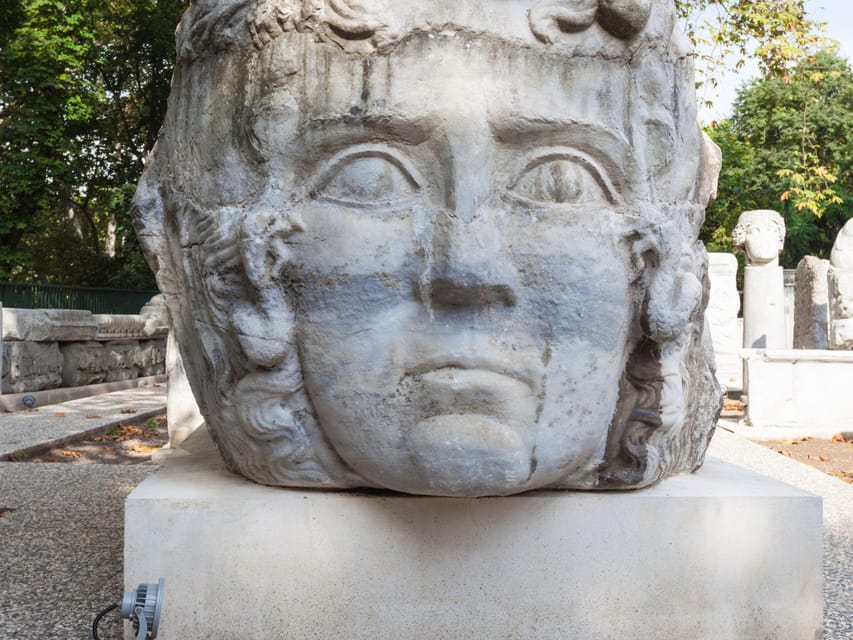
This is the part that can make or break a smooth visit.
First: you get your QR codes and your audio guide link via separate emails from Istanbul Tourist Pass®. Second: the QR tickets are only shown when you are near the entrance. That means you should not sit across the street trying to load everything. Wait until you are close.
Third: you cannot skip security lines. Even with a skip-the-line ticket purchase approach, mandatory security checks still happen. If you arrive late, you may end up standing longer than you expected, so plan buffer time.
Fourth: your smartphone needs an internet connection to get your QR tickets. Also, Wi‑Fi access at the museum is not included. So rely on your own data plan, or make sure you have a workable connection before you reach the museum gates.
Finally, bring your passport. All persons and children will be asked to present valid passports at the entrance to validate age. Keep it accessible rather than buried in a bag.
In one practical example of what can go wrong: there can be QR scanning issues, so having the email confirmation handy is smart. If the QR will not scan, you will need to contact the company that provided the ticket.
Price and Value: $25 With Audio vs a Short Visit
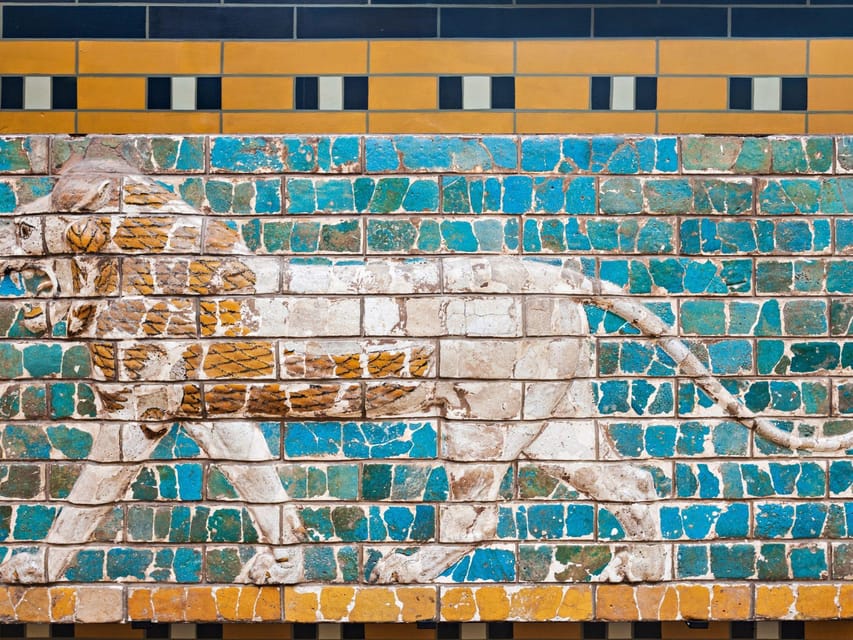
At $25 per person, you are paying for two main things:
1) skip-the-line entry, and
2) an audio guide in 25 languages.
That can be good value if you want to understand what you are seeing. The audio guide is not just filler commentary; it is built to explain exhibits as you move through them. If you’d otherwise be stuck reading quickly or using your own translation tools the whole time, this saves effort.
That said, value depends on what condition the museum is in on your day. Renovation can limit access to parts of buildings or exterior areas. One issue reported was that outside of one building had renovation and access was closing off, which can affect how much of the complex feels complete.
Also, because the visit is self-guided, your experience can feel shorter if you move quickly or if you find a lot of rooms closed. One review described the visit rounding up faster than expected.
My take: $25 feels fair if you plan for a thoughtful pace. If you are the type who tries to see everything in a strict time window, it might feel expensive for the hours you end up with. On the flip side, if you spend time in the tombs, sarcophagi, and the Eastern and Ottoman sections, the price starts to feel more justified.
Who Should Book This Ticket + Audio Guide
This ticket suits you best if:
- you want a self-paced visit without a guide controlling your schedule,
- you like audio context while you look at objects,
- you need a language option beyond a single museum script,
- you plan to use your phone thoughtfully and have internet available at the gate.
It might be less ideal if:
- you’re expecting a fully guided, tightly organized walkthrough,
- you hate dealing with QR apps and spotty phone connections,
- you only want one quick stop and then to move on.
Also, if you are sensitive to missed details caused by numbering gaps in audio tracks, you may prefer adding your own reading or translation while you go.
Should You Book This Ticket + Audio Guide?
Yes, I’d book it if you care about understanding what you’re seeing. The combination of skip-the-line entry and a 25-language audio guide is exactly what you want for a museum that can otherwise overwhelm you with names and artifacts.
I’d hesitate only if you know you will arrive without reliable internet on your phone, or if you strongly prefer fully guided explanations. The museum still has mandatory security checks, and QR scanning is dependent on your device working at the entrance.
If you want an easier decision rule: book it if you’re willing to take a calm pace and use the audio as your main interpretive tool. Pass if you want a guaranteed, structured “room-by-room” walkthrough regardless of audio quirks.
FAQ
How do I get my entry QR code and audio guide?
You receive your entry ticket QR codes and the audio guide link via separate emails from the supplier Istanbul Tourist Pass®.
Can I skip the security lines?
No. Even with the skip-the-line entry ticket, mandatory security checks still happen for all visitors.
When can I show the QR ticket?
The QR tickets are only shown when you are near the entrance of the museum.
Do I need an internet connection to use the QR ticket?
Yes. You need internet on your smartphone to get your QR tickets.
Is this activity a guided tour?
No. This is an entrance ticket. The audio guide is available for you to use on your own, at your own pace.
What are the meeting instructions and how do I get there?
Take the T1 Bağcılar–Kabataş tram and get off at Gulhane station. The museum is an easy 5–10 minute walk away.
What languages are included in the audio guide?
The audio guide is available in Arabic, Bulgarian, Chinese, Croatian, Dutch, English, French, German, Greek, Hindi, Hungarian, Indonesian, Italian, Japanese, Korean, Persian, Polish, Portuguese, Romanian, Russian, Spanish, Swedish, Turkish, Ukrainian, and Urdu.
What is included in the price?
Included: the audio guide in 25 languages and a skip-the-line entry ticket for the Archaeological Museums.
What is not included?
Transportation fees and Wi‑Fi access at the museum are not included.
Do adults and children need passports?
Yes. All persons and children will be asked to present valid passports at the entrance to validate age.