REVIEW · MONTEREY AND CARMEL
Off the Beaten Path in Carmel-by-the-Sea: A Self-Guided Tour
Book on Viator →Operated by VoiceMap Audio Tours · Bookable on Viator
Carmel gets quieter when you walk with no schedule. This self-guided VoiceMap tour is designed for roaming at your own tempo, with audio and maps that help you skip the most obvious tourist loops. I especially like the offline GPS approach, so you can keep moving even when your phone struggles to find signal.
One drawback to keep in mind: GPS can lag your actual position, which can mean a bit of backtracking. Also, the initial app download and start-up can feel fiddly if your phone is picky.
In This Review
- Key things that make this Carmel tour work
- Why a self-guided VoiceMap tour fits Carmel-by-the-Sea
- Price and value: $9.99 for an offline history walk
- Getting your phone ready for offline GPS (without the frustration)
- The one-hour route: how the stops build a Carmel story
- Stop 1: M.J. Murphy and Carmel’s early builders
- Stop 2: Harrison Memorial Library and the town’s public works momentum
- Stop 3: The Valentine sculpture in First Murphy Park
- Pausing, pacing, and handling GPS lag without losing your groove
- Who this tour suits (and who might want a different style)
- Practical details that affect your day
- Should you book this Carmel Off the Beaten Path VoiceMap tour?
- FAQ
- FAQ
- How long is the Carmel-by-the-Sea Off the Beaten Path tour?
- How much does the tour cost?
- Do I need an internet connection during the tour?
- Where does the tour start?
- Is the tour private?
- Is a smartphone included?
Key things that make this Carmel tour work
- Offline GPS + offline audio help you keep going without relying on cell service
- Pause and resume means you can stop for a view, a chat, or a photo without breaking the flow
- Three story-focused stops give you a tight route in about an hour
- M.J. Murphy’s early Carmel story connects the town’s growth to the people who built it
- Public-works context at the Harrison Memorial Library adds meaning beyond just the building
- The Valentine sculpture turns a park stroll into a small moment of art history
Why a self-guided VoiceMap tour fits Carmel-by-the-Sea
Carmel-by-the-Sea has a way of pulling you into pretty streets and quick photo stops. The problem is that you can spend your whole day doing that and still feel like you missed the town’s real backbone. This VoiceMap self-guided walk is built to help you do both: enjoy the scenery, but also understand what you’re seeing.
The format is straightforward. You start at the Pine Inn area (Ocean Ave & Lincoln St), press play when you’re ready, and follow the route using offline maps and GPS. You’re not locked into a group schedule. You can pause and pick things up again whenever you feel like it, which is a big deal in a place where your feet (and your curiosity) will often get the better of you.
The value here is not fancy production. It’s practical storytelling in the exact spot where the story happened. If you like walking through town with context—rather than speed-running attractions—you’ll probably enjoy this style.
You can also read our reviews of more tours and experiences in Monterey and Carmel.


Price and value: $9.99 for an offline history walk
At $9.99 per person for an approximately 1-hour self-guided route, the cost is easy to justify if you actually use the offline features. You get lifetime access to the tour, plus the VoiceMap application with offline access to audio, maps, and geodata. That’s the key: you’re not just paying for a one-time experience. You’re paying for a repeatable set of stories you can come back to.
Also, this isn’t a museum-ticket kind of outing. There are no included museum entries or entrance fees mentioned, and food and transportation aren’t included. That can sound limiting, but it usually helps your budget: you spend on the tour, then you spend your own time and money only if you want to.
If you’re traveling in a way where you like to stay flexible—stopping when something catches your eye—this low-cost format makes sense. Just remember: you’ll need your own smartphone, and you’ll want it charged.
Getting your phone ready for offline GPS (without the frustration)
This experience lives or dies by your smartphone and your readiness. You’re asked to download the tour through the VoiceMap app to get started when you like. Then the audio, maps, and geodata are available offline, which is great for Carmel’s coverage quirks.
Here’s the practical advice I’d follow before you leave your hotel:
- Download on Wi‑Fi if you can. Even if it works on mobile data, Wi‑Fi reduces stress.
- Check battery level and bring a charging option if you’re the kind of person who takes a lot of photos.
- Before you start walking, give GPS a moment to lock in. Some phones take longer than you expect, especially near buildings.
A real consideration: one issue you might run into is GPS lag, where the on-screen dot doesn’t match your exact position right away. If that happens, don’t panic and don’t assume you’re lost. Walk carefully along the route area the audio is guiding you through, and expect that it may take a moment to catch up.
The one-hour route: how the stops build a Carmel story
This tour is designed around three timed stops that each answer a different question about Carmel. You start near the Pine Inn area and end back at the meeting point. So you’re not committing to a long cross-town trek.
The tour’s structure is smart. Instead of scattering facts like confetti, it uses a theme: Carmel’s early development and the way public spaces and art reflect the town’s identity.
You’ll spend most of the hour listening on foot, then stepping closer to each landmark to match what the guide is describing. If you’re someone who likes to read a sign and move on, this will feel different—in a good way. The goal is to help you notice details you might otherwise skip.
Stop 1: M.J. Murphy and Carmel’s early builders
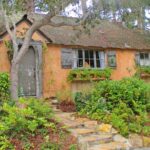
The first stop focuses on M. J. Murphy, born in 1885 in Utah. The story starts in 1902, when Murphy, his mother Emma, and his sister Myrtle traveled to Carmel to meet Frank Devendorf. Devendorf had promised M.J. work building homes in the village, and at age 17, Murphy built his first home for his mother and sister.
By 1904, Murphy was an associate with Devendorf, working as a builder for the Carmel Development Company. That detail matters because it shows that early Carmel wasn’t only about charm—it was about labor, planning, and real construction work.
At this stop, I’d pay attention to the kind of context these stories create. You’re standing in a town that looks timeless, but the tour reframes it as something created by people making practical choices. If you enjoy origin stories—how a town went from idea to streets and homes—this opening stop is a strong start. It gives the later stops (library and sculpture) a foundation: Carmel’s public life and cultural landmarks didn’t appear out of nowhere.

Stop 2: Harrison Memorial Library and the town’s public works momentum
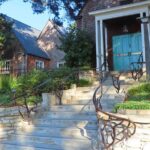
Next up is the Harrison Memorial Library, described as one of Carmel’s first public works projects. The library was constructed in 1927 and is named for Mrs. Ella Reid Harrison and her husband, California Supreme Court Justice Ralph Chandler Harrison.
This stop is where the tour shifts from private building to public investment. The story makes the library feel like more than architecture. It becomes a symbol of civic priorities: education, community space, and the kind of projects that help a small town function as a real place, not just a scenic stop.
When you’re listening here, think about how early Carmel would have needed shared spaces. A library isn’t only about books. It’s about gathering, learning, and giving residents somewhere to participate in the town’s growth. The fact that this was built in 1927, and early enough to be called among the first public works, helps you understand the pace of development.
A practical note: if you’re hoping to go inside the library, the tour data doesn’t mention admissions or visiting hours. So plan for the audio and exterior-orienting experience. You’ll still get value from the story even if you don’t step in.
Stop 3: The Valentine sculpture in First Murphy Park
The final stop brings you to art in a very tangible way: a bronze sculpture figure called The Valentine, created by George Wayne Lundeen. The sculpture was purchased by the City of Carmel for $40,000 and installed in First Murphy Park in 1994.
What I like about this stop is the way it describes posture and mood. The man wears a bow tie and sweater vest, gently resting his hands on a cane while his head leans on the woman next to him. She holds a valentine in her hand. The two are portrayed as frozen in time, with a suggestion that they’re daydreaming about days past.
That’s the kind of description that changes how you look at a sculpture. Instead of reading it as a generic romantic motif, you’re invited to notice the small human details the sculptor used to make the moment feel quiet and intimate.
This is also where the “off the beaten path” idea starts to feel real. Parks and public art are often where you slow down naturally. If GPS has you a little off track earlier, this last stop is a good one to treat with patience—you’ll probably enjoy the payoff once you’re in the right place.
Pausing, pacing, and handling GPS lag without losing your groove
One of the strongest features in the tour design is control. You can pause when you need, then resume at your leisure. That matters more than it sounds. In Carmel, you might stop because a street view is irresistible, or you might simply need a breather. This setup lets you do that without restarting from scratch.
But the other side of control is responsibility. Because the tour is self-guided, you’re the navigator. If GPS lags, you may briefly feel like you’re walking in circles—especially if you’re watching the screen too closely. My practical approach would be:
- Let the audio lead the way first.
- Use the map as a general guide, not a microscopic compass.
- Expect a small correction if the dot is late.
You’ll likely do fine if you keep your pace relaxed and your attention on the surroundings. If you’re in a rush, or if you constantly check the screen every few steps, that’s when GPS lag feels worse than it is.
Who this tour suits (and who might want a different style)
This is best for people who want a light, focused walking experience with story context. You get an easy about-one-hour format, a manageable number of stops, and a route that starts and ends near the same spot.
I think it’s a good fit if you:
- Like walking in towns where small details matter
- Want offline support so you’re not stuck hunting for signal
- Prefer independent travel over rigid schedules
- Enjoy learning about local development, not just famous sights
It might be less ideal if you:
- Hate dealing with apps on your phone
- Expect perfect GPS accuracy at all times
- Don’t like troubleshooting when technology gets cranky
Based on the practical issues people have experienced with app start-up and GPS lag, I’d treat this as a “prepare once, then relax” kind of tour.
Practical details that affect your day
A few things to plan around so you don’t waste time:
- Smartphone is required. The tour says it’s not included, and the whole system uses your phone.
- Transportation isn’t included. You’ll be walking the route.
- Food and drink aren’t included. Build in time before or after if you need a snack.
- The schedule is basically open all day (12:00 AM to 11:59 PM, Monday through Sunday), so you can start when your feet feel ready.
Also note the experience format is private—only your group participates. That’s useful if you’re traveling with family or friends who want to move together at one pace.
Service animals are allowed, and it’s listed as near public transportation. The tour also says most travelers can participate, which suggests a typical walking level rather than a specialized trek—but the exact distance isn’t given.
Should you book this Carmel Off the Beaten Path VoiceMap tour?
If you’re looking for a low-cost way to understand Carmel-by-the-Sea beyond postcards, I’d say this is a smart pick. The mix of early development (M.J. Murphy), civic building (Harrison Memorial Library), and public art (The Valentine in First Murphy Park) gives you three different lenses in one hour. Add offline access and the ability to pause, and you get real flexibility.
I’d book it if you’re comfortable using your phone for navigation and you’re willing to do a small amount of prep before you start walking. I’d skip it if you know you’ll be frustrated by app download hiccups or if you don’t want to handle the possibility of GPS lag.
One last thing: the experience is non-refundable and can’t be changed, so only book once you’re confident your timing works for you.
FAQ
FAQ
How long is the Carmel-by-the-Sea Off the Beaten Path tour?
It’s listed as about 1 hour.
How much does the tour cost?
The price is $9.99 per person.
Do I need an internet connection during the tour?
The tour includes offline access to audio, maps, and geodata, so you can use it without relying on mobile data during the walk.
Where does the tour start?
The start point is Pine Inn, Ocean Ave & Lincoln St, Carmel-by-the-Sea, CA 93921. The tour ends back at the meeting point.
Is the tour private?
Yes. It’s listed as private, meaning only your group participates.
Is a smartphone included?
No. You’ll need to bring your own smartphone to use the VoiceMap app.