REVIEW · MONTEREY AND CARMEL
17-Mile Drive Self-Guided Audio Tour from Monterey & Carmel
Book on Viator →Operated by Adventures with Action · Bookable on Viator
Monterey rewards slow driving. This self-guided audio tour uses GPS triggers and offline maps to turn the famous coast road into a storybook. You’ll get hands-free narration with clear directions between major sights and smaller pull-offs, plus a GPS map that helps you not feel like you’re guessing in fog.
Two things I really like: it costs $14.99 per group (up to 4), so the value is strong if you’re traveling as a carload, and you can reuse it across trips thanks to the new lifetime access approach. One heads-up: you still need to pay any separate gate/attraction fees on your own, so don’t assume the price covers admission.
In This Review
- Key highlights you’ll feel on the drive
- A self-guided route that makes the 17-Mile Drive make sense
- Price and value: one purchase for up to four people
- Download once, then drive without service (and why that matters)
- Start in Monterey, then roll into Pacific Grove vibes
- Point Pinos Lighthouse (1855): the opener to the cliff-country story
- Kissing Rock and Kissing-Rock thinking: it’s about the details
- Asilomar Beach tidepools: small stops can be the best stops
- Spanish Bay and the history thread that keeps you paying attention
- Point Joe: shipwreck tales and why the sea earned its name
- China Rock: where old cooking traces became part of the scene
- Bird Rock and Seal Rock: how to tell seals from sea lions
- Fanshell Beach Overlook and Crocker Grove: two ways to appreciate the coast
- The Lone Cypress: the foggy icon that steals the show
- Pescadero Point: the spooky chapter
- Pebble Beach finish: world-famous sand and cliffs
- Who this self-guided audio tour fits best
- A few practical tips that improve your odds of a smooth drive
- Should you book the 17-Mile Drive self-guided audio tour?
- FAQ
- Do I need a cellular signal during the drive
- How long does the 17-Mile Drive portion take
- Is the audio tour included in the 17-Mile Drive entry fee
- Can I use the audio tour more than once
- Do I need to wait for someone at the meeting point
- Can I play the audio through my car stereo
- Can I cancel and get a refund
Key highlights you’ll feel on the drive
- GPS-triggered stories: audio starts with your location, so you’re not constantly tapping
- Offline maps: no cell service needed once you download
- Flexible timing: start anytime, pause anywhere, and linger at the views
- Main stops plus the in-between: shipwreck tales, sea life spotting tips, and photo-ready overlooks
- Built for a car group: one purchase covers your whole vehicle (up to four people)
A self-guided route that makes the 17-Mile Drive make sense
If you’ve ever done a big scenic drive without context, you know the problem. You see beauty, sure. But you miss the “why it matters” part. This tour fixes that with a simple formula: you drive, the audio cues you, and the stories explain what you’re looking at.
The route focuses on Monterey and the 17-Mile Drive stretch that’s famous for coastal drama—granite outcrops, ocean spray, and the kind of shoreline that makes you stop even when you’re hungry. The app’s GPS mapping and location-based audio are the big deal here. Instead of trying to follow a wall of text or remember which overlook is which, you get short, guided segments that match your pace.
There’s also a practical advantage. You control the tempo. If you want a quick pass, you can. If you want to park and stare at the horizon (a normal activity on this coast), you can do that too.
You can also read our reviews of more tours and experiences in Monterey and Carmel.


Price and value: one purchase for up to four people
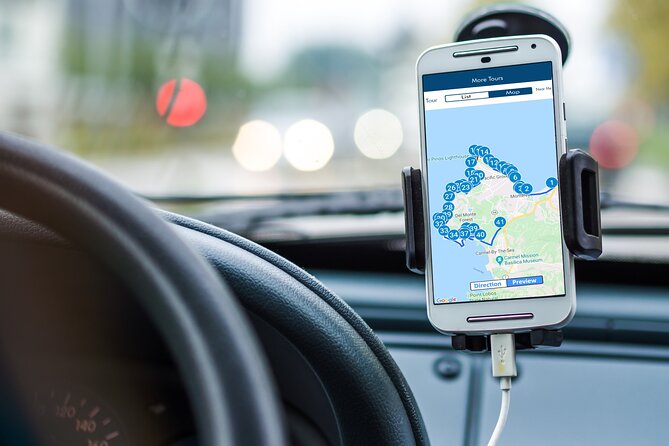
At $14.99 per group (up to 4), this is priced like something meant for real family and friend travel, not per-person tourism math. If you’re splitting the cost in a small car, it can feel like you’re paying about the price of a decent snack for a whole lot of added meaning.
Here’s the part you should plan for: the audio tour itself is what you’re paying for. It does not include entry tickets or reservations. That means you’ll likely still see a separate fee at the gate for the 17-Mile Drive road access, and you’d pay for any optional admission, like an aquarium visit.
So the best way to think about value is this: you’re buying convenience and context. You’re saving money versus a guided tour, and you’re saving time versus fumbling with maps and guesswork. If you enjoy learning while you move, you’re in the right place.
Download once, then drive without service (and why that matters)
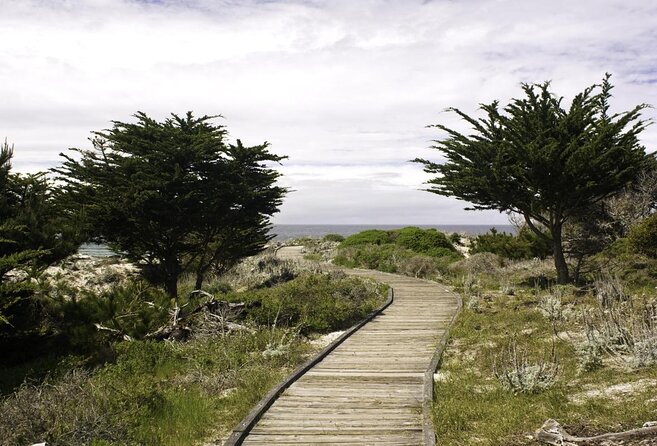
This tour works offline after you set it up. That matters on California coasts because coverage can be spotty, and you don’t want your history lesson to freeze right when you reach the cliff views.
You’ll use Action’s Tour Guide App on your phone. After booking, you get an email and text with setup instructions and a password. You’re told to download the tour while you’re on strong wifi or cellular, then you can keep going even when your signal disappears.
On the day, no one meets you at the start. You open the app onsite and start the correct tour version based on your starting point and direction. Then you follow the route and speed limits so the GPS-triggered stories stay in sync.
A small but important practical tip: connecting your phone to your car stereo via Bluetooth, USB, or AUX can make it feel truly hands-free. If you’re hopping out for photos, headphones can help keep audio clear without competing with wind and waves.
Start in Monterey, then roll into Pacific Grove vibes
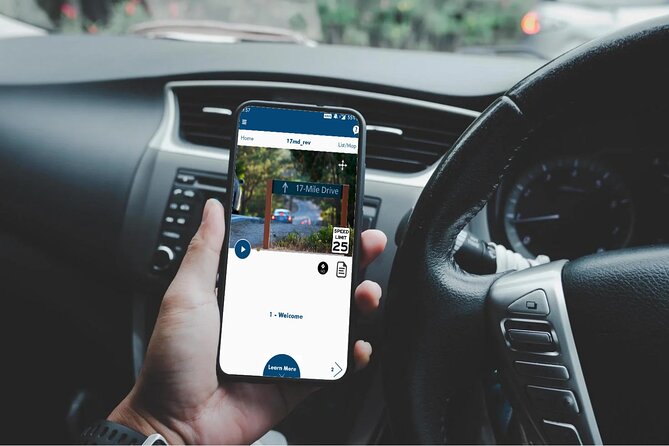
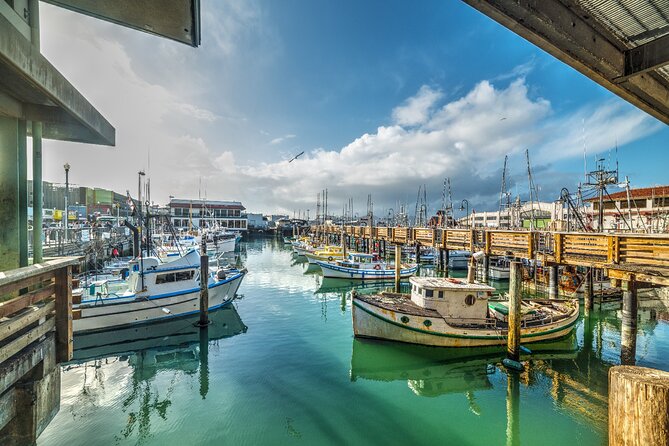
Your route begins around downtown Monterey near Old Fisherman’s Wharf. That opening stretch is useful because it gets you oriented in the area before you hit the postcard section.
Then the tour moves you toward the Pacific Grove portion, where the big famous coastal road begins. You’ll encounter the kind of spots that make the 17-Mile Drive famous: waterfront properties, Lovers Point Park, and the iconic Kissing Rock area.
One reason I like this ordering is psychological. You don’t feel like you’re throwing yourself immediately into the most dramatic part of the coast. You ease in, get the audio rhythm down, and then the main set pieces hit.
Point Pinos Lighthouse (1855): the opener to the cliff-country story
After you pass the early Pacific Grove stops, the tour reaches Point Pinos Lighthouse (1855). This is where the audio shifts from quick sightseeing facts into a deeper sense of place—how this shoreline has been watched and navigated for a long time.
Practical takeaway: this is a great stop for your first real photo and your first real pause. Since the audio is location-based, you’ll likely have already had a few minutes of narration by now, which makes it easier to follow the line of the route and understand what comes next.



Kissing Rock and Kissing-Rock thinking: it’s about the details
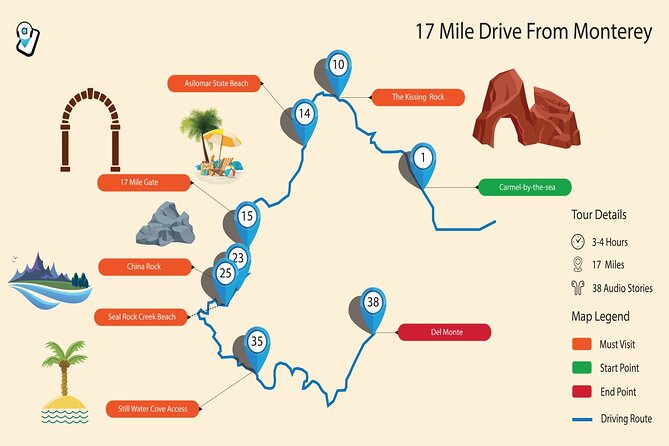
Next up is Kissing Rock View Point. The tour helpfully corrects the common misconception: it isn’t a single rock pretending to be romantic. It’s a natural formation where two granite rocks fused over time. The name The Kissing Rock was officially given in April 1970 because they appear to be kissing.
I love this kind of story. It turns a quick photo stop into something you can explain to someone later without sounding like you memorized a brochure.
If fog rolls in (it often does out here), this area still works because you’ll be able to hear and feel the ocean energy, even when the horizon is muted.
Asilomar Beach tidepools: small stops can be the best stops
The tour then takes you through Asilomar Beach, known for tidepools. The audio focuses on the idea that life thrives in that zone. That’s the kind of detail that makes you slow down and look instead of just driving past.
Should you expect wildlife? You might, especially if conditions align. But even without dramatic sightings, this stop helps you experience the coast beyond the big cliffs. It’s a nice balance: ocean cliffs for views, tidepools for curiosity.
Spanish Bay and the history thread that keeps you paying attention
At The Inn at Spanish Bay, the audio sets up Monterey’s history as you start moving deeper into the classic 17-Mile Drive sequence. This is also one of those points where the road feels like a gallery—ocean in front, coastline curves around, and the narration is there to keep you connected to why specific locations matter.
This is also where I’d give yourself a little breathing room. The route is long enough that it helps to step out, stretch, and reset your eyes before you hit the more story-heavy stretches.
Point Joe: shipwreck tales and why the sea earned its name
One of the most memorable parts is Point Joe, where the audio connects the stretch to shipwreck history, specifically the St. Paul and the Celia. The story also explains why locals call the ocean here The Restless Sea.
What makes this stop valuable is how it links human history to the physical environment you see now. This is one of those places where the coast looks calm from above. The narration reminds you that the underwater reality can be different and more dangerous—perfect context for why shipwreck stories belong on a scenic drive.
China Rock: where old cooking traces became part of the scene
At China Rock, the audio points out something visual: you can look for marks from 1800s cooking smoke that settled into the rocks. It’s a clever way to help you see the coastline as layered history, not just a modern view.
The tour also adds the wildlife angle, describing the spot as a favorite resting place for local fauna. It specifically suggests you might see seals and sea lions, plus plenty of birds. If you’re visiting between November and March, the audio notes you might even catch distant grey whale spouts.
Bring a camera and binoculars if you have them. Even if you’re not a “wildlife person,” this is a stop where you can get that classic coastal wildlife feeling without committing to hours on foot.
Bird Rock and Seal Rock: how to tell seals from sea lions
Next, the tour brings you to Bird Rock and Seal Rock, where the audio focuses on spotting. You’ll get guidance on how to identify seals versus sea lions, and the types of birds you’re most likely to notice.
This is one of those details that turns “we saw something” into “we actually learned something.” And it makes your stops more satisfying if you’re traveling with kids, too, because it gives them a game.
This stretch also reinforces why the coast drives are worth the time. The scenery isn’t static. Birds move, waves change rhythm, and animals appear and disappear fast. The audio keeps you ready for what you’re about to notice.
Fanshell Beach Overlook and Crocker Grove: two ways to appreciate the coast
As you continue along the 17-Mile Drive, the tour includes Fanshell Beach Overlook. Then it passes Crocker Grove, which the audio credits to the man who helped build the 17-Mile Drive, including efforts to beautify the area while preserving natural terrain.
This is a great pairing: one stop gives you a view. The other explains the human decision behind the view. You leave each with a slightly different kind of appreciation.
If you care about how famous places get shaped—rather than just appreciating them—you’ll like these moments.
The Lone Cypress: the foggy icon that steals the show
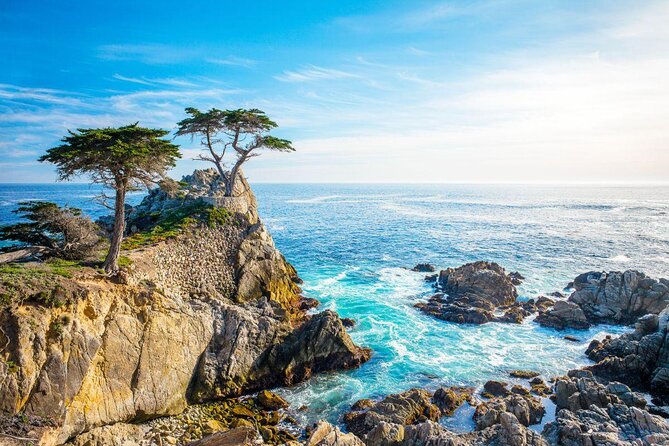
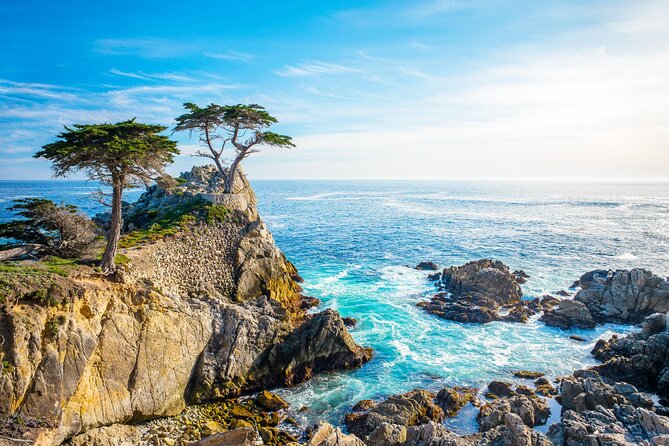
Then you reach the Lone Cypress. The audio frames it as dramatic and windswept, often shrouded in fog, rooted in a rough granite hillside and framed by pounding waves.
This stop is where the tour’s pacing really helps. Because the narration is tied to where you are, you’ll likely feel like you’re arriving with the story already in your head. Even if fog reduces visibility, the sound and atmosphere still deliver.
When I want to recommend a “don’t rush” stop on the whole route, this is it.
Pescadero Point: the spooky chapter
After the Lone Cypress, the tour includes Pescadero Point, where the audio covers paranormal-style tales. If that’s your kind of thing, it adds a fun twist to a drive that’s otherwise history and nature.
Even if you’re skeptical, it breaks the routine and gives you something to react to in the moment, which is exactly what good road-trip audio should do.
Pebble Beach finish: world-famous sand and cliffs
The tour ends at Pebble Beach, described as pristine white sand and coastal cliffs. Even though this is the finale, it’s still a stop you should treat like a landing, not just a drop-off.
The coast here tends to look polished and dramatic at the same time. After hours of narration and driving, the last stop feels like you’re arriving at the big closing scene of the movie.
Who this self-guided audio tour fits best
This works best if you:
- like structure without feeling trapped by a group schedule
- want stories tied to specific viewpoints
- enjoy wildlife spotting tips and shipwreck history
- are traveling as a car group (since it’s priced per group up to four)
It’s less ideal if you:
- want a live guide walking with you and handling questions on the spot
- hate downloading apps and doing setup steps at the start
- assume the tour price includes gate fees and attraction admissions (it doesn’t)
A few practical tips that improve your odds of a smooth drive
Here’s what I’d do to get the best experience:
- Drive at a steady pace so the GPS-triggered audio doesn’t jump ahead. Some feedback noted narration can get slightly ahead if you drive faster than the recommended pace.
- Plan for pauses. Many story segments are only a few minutes long, but the best part of this coast is usually the extra minute you spend staring.
- Use the car audio if possible. Bluetooth/AUX/USB setup can make the narration feel more natural while you keep both eyes on the road.
- Don’t skip the small animal stops. China Rock and the Bird Rock/Seal Rock area are where you get practical wildlife guidance, not just sweeping views.
Should you book the 17-Mile Drive self-guided audio tour?
I think it’s a smart buy if you’re doing the 17-Mile Drive for the first time or you want to make repeat trips feel fresh. For the price, you get a lot of story density, good pacing, and the kind of location-based audio that keeps your attention where your eyes should be.
Skip it only if you’re strictly budget-watching for gate fees and already have your own map-and-wonder plan with no interest in listening. And if you’re the type who hates apps, do one dry run at home so you’re not fighting setup at the curb.
If you want to turn Monterey and the 17-Mile Drive into a drive you remember for the right reasons, this is the easiest way to do it.
FAQ
Do I need a cellular signal during the drive
No. You download the tour first using strong wifi or cellular, then it works offline with offline maps.
How long does the 17-Mile Drive portion take
It’s typically about 2 to 3 hours to complete the long drive section with more than 35 audio stories. The full experience is listed as about 3 to 4 hours overall.
Is the audio tour included in the 17-Mile Drive entry fee
No. The tour is self-guided audio only, and attraction tickets or entry fees are not included.
Can I use the audio tour more than once
Yes. It’s sold as new, lifetime access, no expiry, so you can use it anytime on any trip.
Do I need to wait for someone at the meeting point
No. This is self-guided. You start the audio in the app at the starting point, then follow the route cues.
Can I play the audio through my car stereo
Yes. You can connect your phone to the car via Bluetooth, USB, or AUX. Headphones are an option too.
Can I cancel and get a refund
Yes. Free cancellation is available if you cancel at least 24 hours in advance for a full refund.