REVIEW · WASHINGTON
Self Guided Driving Audio Tour of Mount Rainier National Park
Book on Viator →Operated by GuideAlong (GyPSy Guide) · Bookable on Viator
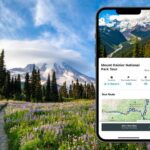
Rainier talks to you as you drive. This self-guided Mount Rainier audio tour uses GPS-triggered narration so the stories and directions start right when you reach each place, from the Nisqually gateway to Paradise viewpoints.
I especially like the strong narrator and the smart way each stop feels planned but not rigid. The main drawback: the tour is built for a fast, car-paced loop, so if you add multiple hikes (some are longer and uphill), 3 hours can turn into more time quickly.
In This Review
- Key things I’d zero in on
- A GPS audio drive that keeps you moving (and paying attention)
- Route basics: start in Ashford, end at Sunrise
- Nisqually Entrance: your easy on-ramp to Rainier country
- Tahoma Creek: glacier water explained in plain language
- Twin Firs Loop Trail: 0.4 miles of old-growth calm
- Longmire Museum: the park in context before you chase waterfalls
- Carter Falls Trailhead: a family-friendly hike with steady payoff
- Comet Falls: when easy turns into a real climb
- Christine Falls Bridge: iconic and close, with great photo geometry
- Ricksecker Point Road and viewpoint: panoramic payoff from a narrow pullout
- Frog Heaven: a quieter wildlife moment near the Nisqually Entrance
- Tatoosh Range: sharp peaks and summer wildflowers
- Narada Falls: accessible, misty, and rainbow-prone
- Unicorn Peak: this is for experienced climbers, not a casual hike
- Nisqually Vista Trail, Inspiration Point, and Reflection Lakes: easy legs, big views
- Nisqually Vista Trail
- Inspiration Point
- Reflection Lakes
- Price and phone setup: where this audio tour really pays off
- Should you book this Mount Rainier self-guided audio tour?
- FAQ
- What does this Mount Rainier audio tour cost?
- How long is the experience?
- Is the audio available in English?
- Where does the tour start and end?
- Do I need an internet connection during the tour?
- How does the audio know when I reach each stop?
- Can I pause and restart the tour?
- Are food and drinks included?
- Is this a private experience?
- Can I cancel for a full refund?
Key things I’d zero in on

- GPS-timed audio cues that begin automatically as you arrive
- 85+ location-based points covering waterfalls, forests, meadows, and viewpoints
- Offline touring after you download in the GuideAlong app
- Up to 8 people per $16.99 group purchase, so it can be a bargain for families
- Optional hike-and-return stops, where you can park, stretch, and rejoin the drive
A GPS audio drive that keeps you moving (and paying attention)
The best part of this tour is how it handles attention. When you’re driving through Mount Rainier National Park, the scenery is obvious—but the details take effort. This audio guide solves that problem by using your phone’s location to trigger stories, tips, and what-to-look-for moments right at the stops.
The narration style is a big win. I like that it feels personable and even lightly humorous, and it keeps the energy up instead of sounding like a long lecture. A lot of self-guided audio tours feel repetitive; this one keeps changing gears—glacier-fed creeks, old-growth forest, and waterfall mechanics—so you don’t just drive from one pullout to the next.
You also don’t have to treat it like a strict schedule. You can pause, start again, and control your pace. That matters because Mount Rainier is weather-driven. If clouds roll in, you’ll want to shift focus fast—this format helps you do that without ruining your “day plan.”
You can also read our reviews of more tours and experiences in Washington.
Route basics: start in Ashford, end at Sunrise
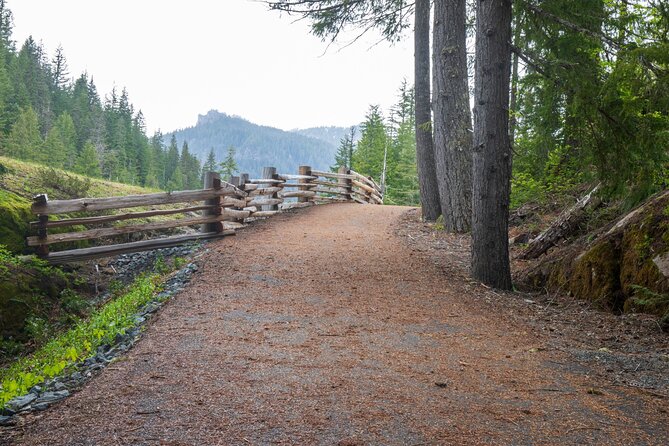
Your tour starts at 35707 WA-706, Ashford, WA 98304, and ends at Sunrise Visitor Center, Sunrise Park Rd, Ashford, WA 98304. The audio is built around a suggested driving route, but you’re not stuck to it. You can follow the trip planner’s ideas or create your own path.
Timing-wise, plan on about 3 hours for the core experience. Many stops are designed to be quick car moments—think brief narration, a short walk, then back in the car. That’s great if you’re limited on time. It’s also the reason you should treat hikes as add-ons, not guaranteed box-checks.
If you’re taking this in daylight, it helps that the end point (Sunrise Visitor Center) lists daily hours of 6:00 AM to 9:00 PM for the date range shown. Still, you’ll want to check day-of conditions—road access and weather can change fast in this area.
Nisqually Entrance: your easy on-ramp to Rainier country
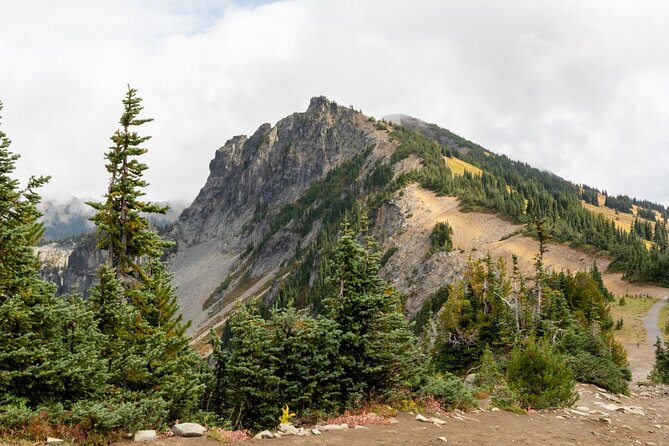
The Nisqually Entrance is a classic southwest gateway. The log gateway and forest setting make it feel instantly “park-like,” not like you just arrived at a parking lot.
What I like here is the setup role. The audio frames what you’re about to see next: the road connections to the Longmire area, Paradise, and other popular destinations. Even if you’ve driven past this area before, this kind of orientation helps you understand why certain stops are placed where they are—especially when you’re trying to get the most views in the least backtracking.
This stop is also a good place to sanity-check your timing. If you’re short on energy, you can keep the rest of the tour light. If you’re feeling strong, it’s a natural launch point for going after longer waterfall hikes later.
Tahoma Creek: glacier water explained in plain language
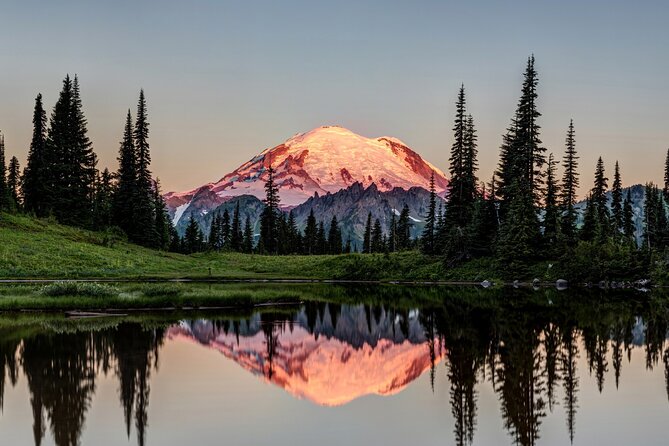
Next up is Tahoma Creek, fed by glacial meltwater. The audio makes the creek feel more alive by tying the rushing water to Tahoma Glacier and the mountain’s volcanic origins.
If you like science that doesn’t require a lab coat, you’ll appreciate this. You’ll hear what to notice—glacial sediment and debris carried by the flow—so the creek isn’t just pretty mist and rocks. It’s a moving clue about how Mount Rainier works.
A quick note: this is more of a stop-to-look-and-stand moment than a destination marathon. If your legs want a longer stretch, keep an eye on what’s next and save the bigger hike effort for the waterfall section.
Twin Firs Loop Trail: 0.4 miles of old-growth calm
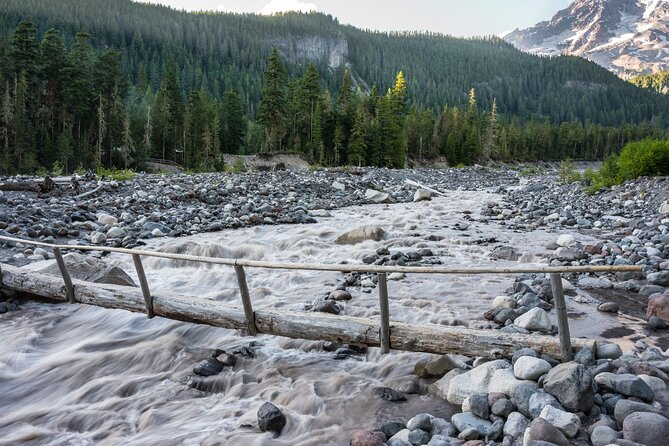
The Twin Firs Loop Trail is short—about 0.4 miles—and that’s exactly why it works as a mid-drive reset. The loop winds through old-growth trees like firs, cedars, and hemlocks, with a mossy forest floor and interpretive signage.
This is one of those stops that pays off even if you’re not a “big hike” person. You get to step into a different Rainier mood: quieter, cooler, and more grounded than the waterfall viewpoints.
The only consideration is simple: short trail, yes—but you’ll still want decent footwear. Wet moss and creek-side shade can be slick.
Longmire Museum: the park in context before you chase waterfalls
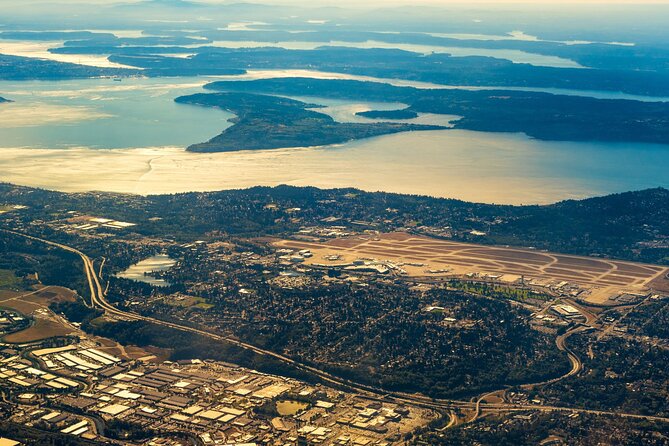
At Longmire, the Longmire Museum is in a rustic log building and works as both history and practical planning support. The audio helps you use it well: you’ll be looking for quick context on geology, wildlife, and the human story of early settlers and explorers.
I like this stop because it changes how you see everything afterward. When you understand what created the terrain—glacier activity, volcanic behavior, and how the park is organized—you stop treating views like random postcards.
Also, it’s a good “choose-your-own-adventure” moment. If you’re planning hikes later, you can grab maps and trail guidance here before the road turns into a waterfall festival.
Carter Falls Trailhead: a family-friendly hike with steady payoff
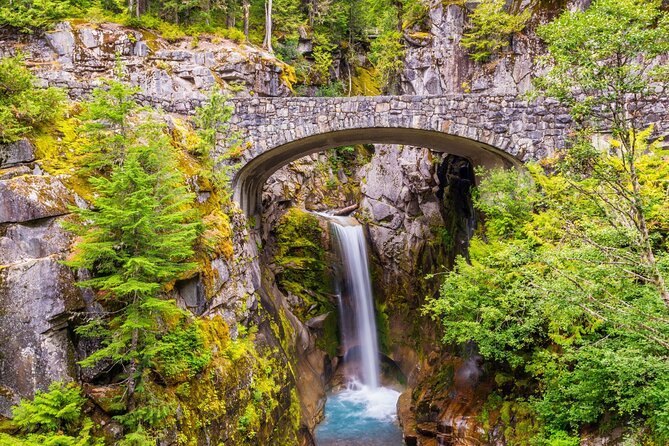
The Carter Falls Trailhead starts by the Nisqually River. The audio frames the hike as about 2.2 miles round-trip, following the Paradise River through dense forest before reaching the falls.
It’s described as relatively easy, which makes it a smart mid-level option if you’re traveling with mixed hiking abilities. You’re not scrambling. You’re not climbing for hours. But you do get a real waterfall reward and the “I walked to it” satisfaction.
If you’re the type who hates cutting it close, this is where you should start your timing. One common pattern with Rainier days is that you plan to do one hike, then add a second—and suddenly it’s later than you thought.
Comet Falls: when easy turns into a real climb
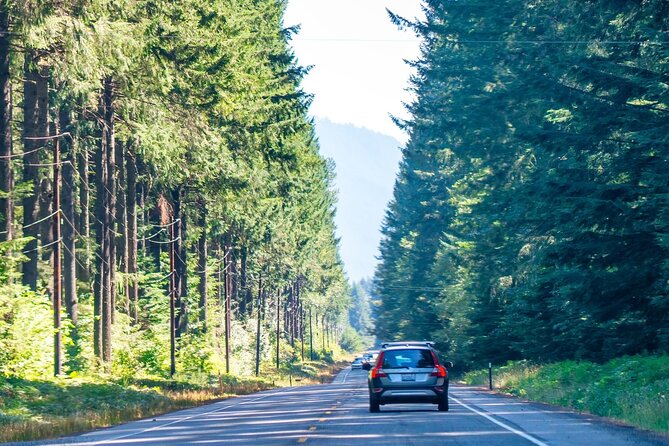
Comet Falls is one of the park’s taller cascades, dropping nearly 320 feet. The hike is 3.8 miles round-trip and described as moderately challenging, with more climbing as you follow the trail alongside Van Trump Creek.
I’m a fan of this stop because the audio doesn’t just describe the destination. It points out the smaller waterfalls you’ll pass along the way, so the trail stays interesting even if you’re not at the top yet.
If you’re considering Comet Falls, plan for effort. Rainier trails can feel steeper than their distance suggests, and forest shade can hide the fact that you’re working uphill the whole time.
Christine Falls Bridge: iconic and close, with great photo geometry
Christine Falls is accessible and photogenic. The falls drop 69 feet in two tiers, and the viewpoint near a historic stone bridge is a ready-made composition.
This stop is ideal when your schedule gets tight. You can park, do a short walk to the viewpoint, and get that “wow” factor without committing to a long trail. It’s a good counterbalance after Comet Falls or if your group includes people who prefer shorter outings.
Ricksecker Point Road and viewpoint: panoramic payoff from a narrow pullout
On the Ricksecker Point Road, you’ll find Ricksecker Point, which gives sweeping views of Mount Rainier, the Nisqually Valley, and the Tatoosh Range.
This is the kind of stop you want when the sky is clear. The audio makes the pullout feel worth the effort by describing what the viewpoint offers—panoramic scope, plus a ridge-level perspective that helps you read the rugged terrain.
Keep an eye on parking and turn carefully. This is a “stop and shoot” style location, not a place for lingering if roads feel busy.
Frog Heaven: a quieter wildlife moment near the Nisqually Entrance
Frog Heaven is a small wetland area near the Nisqually Entrance, known for amphibians and especially frogs. The audio points out that it’s a delicate wetland ecosystem and that you can often hear calls during spring and summer.
What I love about this stop is how it breaks the usual waterfall-only rhythm. Instead of chasing the loudest feature, you listen for life. Even when you don’t see frogs, the soundscape gives the area a different personality.
Tatoosh Range: sharp peaks and summer wildflowers
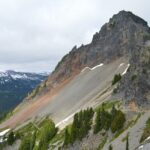
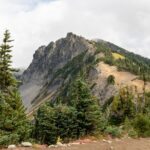
The Tatoosh Range is rugged and jagged, located south of Mount Rainier. The audio highlights why it matters: dramatic views from areas like Paradise and Reflection Lakes, plus a cluster of notable peaks such as Pinnacle Peak, Unicorn Peak, and Castle Peak.
It also notes summer wildflower meadows, which is helpful for planning. If you’re visiting in peak season, this is the kind of detail that turns a generic view into a seasonal “aha.”
Narada Falls: accessible, misty, and rainbow-prone
Narada Falls is one of the park’s most popular waterfall stops and it’s easy to access. The audio describes 188 feet of cascading water in two tiers and an ethereal effect, especially when sunny spray creates rainbows.
There’s also a trail element: it’s short but steep to a viewpoint below the falls. That means you’ll probably work a little, but you won’t lose your whole morning.
This is one of the places I’d keep as a priority. It’s high-impact and efficient.
Unicorn Peak: this is for experienced climbers, not a casual hike
The audio also covers Unicorn Peak, the highest point in the Tatoosh Range at 6,971 feet. But the tone is clear: reaching it involves scrambling and some technical climbing.
So this isn’t a “try it because it’s on the map” situation. If you’re not prepared for technical terrain, skip the idea and focus on the easier viewpoints and trail loops elsewhere in the tour.
The value of including Unicorn Peak in an audio tour, though, is that it helps you understand what you’re seeing from safer pullouts—why the peaks look the way they do and why climbers chase them.
Nisqually Vista Trail, Inspiration Point, and Reflection Lakes: easy legs, big views
After the taller peaks and waterfall energy, the audio takes you toward calmer, view-first spots.
Nisqually Vista Trail
The Nisqually Vista Trail is a short, easy loop about 1.2 miles, starting at the Paradise parking area. The audio says it winds through wildflower meadows and includes interpretive signs about glacial features and the ecosystem. It’s also described as accessible year-round and popular for winter snowshoeing.
Inspiration Point
Inspiration Point is an overlook along the road to Paradise. The audio calls out the panoramic payoff: views of the Tatoosh Range, Mount Adams in the distance, and the towering presence of Mount Rainier.
If you like photography, this is the kind of spot where a quick pause turns into a longer stop when the light hits right.
Reflection Lakes
Finally, Reflection Lakes are known for mirror-like still water. The audio frames them as pristine lakes just off the Paradise road, and the whole point here is the visual calm.
This is a great finish because you get variety: you’ve seen power (waterfalls), movement (creek and glacier clues), and then stillness.
Price and phone setup: where this audio tour really pays off
At $16.99 per group (up to 8 people), this can be good value—especially if you’re driving as a family or small group. The key is that the purchase covers the experience for your vehicle, not per person, so you’re not paying multiple times to hear the same 85+ audio points.
The included features are what make it work in practice:
- Location-based stories that autoplay as you drive using your phone’s GPS
- Flexible routes via suggested itineraries or your own plan
- Trip planners in-app, web, and PDF
- Offline touring after you download
A practical tip from the included instructions: bring a USB/C car charger. This tour is phone-driven, and you’ll want your battery healthy for GPS, audio, and maps.
Also, download ahead. The tour notes say you can download the tour in the GuideAlong app under My Tours using WiFi or cellular data, then go offline once it’s saved.
One last planning reality check: the tour is described as about 3 hours. If you want to do multiple hikes like Carter Falls plus Comet Falls, give yourself more time than the headline duration.
Should you book this Mount Rainier self-guided audio tour?
I’d book it if you want a smart way to turn a drive into a story-driven day—especially if this is your first trip to Mount Rainier or you don’t want to rely on a friend who knows every trail and viewpoint.
It’s also a strong fit if your group has mixed interests: you can do short loop walks like Twin Firs, quick-steep viewpoints like Narada Falls, and then choose whether to tackle a bigger hike like Comet Falls.
Skip or rethink if you’re hoping for a single, easy, universally accessible walk the whole time—there are options here that are clearly more demanding, and Unicorn Peak is technical.
FAQ
What does this Mount Rainier audio tour cost?
It’s $16.99 per group, with a group size of up to 8.
How long is the experience?
It’s listed as about 3 hours.
Is the audio available in English?
Yes, the tour is offered in English.
Where does the tour start and end?
It starts at 35707 WA-706, Ashford, WA 98304, USA and ends at Sunrise Visitor Center, Sunrise Park Rd, Ashford, WA 98304, USA.
Do I need an internet connection during the tour?
No. The tour is designed to work offline after you download it in the GuideAlong app.
How does the audio know when I reach each stop?
Audio plays automatically using your phone’s GPS location as you drive near each point of interest.
Can I pause and restart the tour?
Yes. You control the pace and can start, stop, and resume.
Are food and drinks included?
No. Food and drinks are not included.
Is this a private experience?
Yes. Only your group participates.
Can I cancel for a full refund?
Yes, you can cancel up to 24 hours in advance for a full refund. If you cancel less than 24 hours before the start time, the amount paid isn’t refunded.