REVIEW · LONDON
London Charles Dickens Puzzle Questo and Self-Guided Tour
Book on Viator →Operated by Questo · Bookable on Viator
One phone, one city, Dickens solved. This Questo puzzle walk sends you to Charles Dickens sites in Central London, with challenges that push you to look closely as you go. You can start whenever you want and pause when the plot (or the weather) calls a timeout.
I love the freedom: it’s private so you’re not boxed in with strangers. I also like that the game works offline, which means fewer headaches when you’re walking street to street.
The trade-off is simple: there’s no physical guide. You’ll be doing the storytelling yourself, reading clues on your phone and using what’s around you, so it’s best for people who enjoy figuring things out.
In This Review
- Key points I’d circle before you book
- How this Dickens puzzle tour feels on the ground
- Price and value: $8.33 per person for an hour of walking
- Your route: from 47 Doughty Street to 145 Fleet Street
- Stop-by-stop: Dickens, prisons of fame, and London institutions
- The Charles Dickens Museum (48 Doughty Street, Holborn)
- Vine Street and the Man in the Moon Passage area
- The inn that became the Three Cripples (Oliver Twist connection)
- Staple Inn (1585 wool staple, Fire damage, and restoration)
- Lincoln’s Inn Fields Theatre site (Duke’s Theatre, Tennis Court roots)
- The Maughan: a major university library in a landmark building
- Dr Johnson’s House (Samuel Johnson rented here, 1748–1759)
- Ye Olde Cheshire Cheese (built in the 1530s, rebuilt after 1666)
- Church of St Peter of all Nations (1863 basilica-style, organ details)
- Royal College of Surgeons origins (barbers and surgeons joining forces)
- St Dunstan-in-the-West and the Romanian Orthodox chapel
- How the offline game works (and what you’ll need)
- Timing and pacing: starting any hour and pausing as you like
- Comfort, crowds, and getting there without stress
- Who should book this Dickens Puzzle Questo tour
- Should you book it? My practical take
- FAQ
- How long is the London Charles Dickens Puzzle Questo tour?
- Can I start the tour at any time?
- Do I need internet to play?
- Is there a physical guide with this tour?
- What language is the tour in?
- Is this tour private?
Key points I’d circle before you book
- Start any time, play on your schedule: the tour runs 24/7 and lets you pause and resume.
- Offline mode: you don’t need internet to play the city game.
- Private and no human contact: it’s designed for a quieter, safer feel with just your group.
- A very budget-friendly price: $8.33 per person for about an hour of hands-on exploring.
- A mix of Dickens-related and classic London stops: from the Dickens Museum to Staple Inn and Ye Olde Cheshire Cheese.
- The Man in Black hunt: the game has an extra layer of mystery that feels fun, not test-y.
How this Dickens puzzle tour feels on the ground
This isn’t a sit-there-and-listen tour. It’s more like a movie script written for the streets—your job is to notice details, answer the challenge, and move to the next spot.
That format is exactly why I like it in London. The city is layered with history, and it’s easy to speed past the interesting bits. Here, the puzzle gives you a reason to slow down and look at things like doorways, street shapes, and plaques that you might otherwise walk right by.
It also helps that the experience is private. You’re not trying to keep up with a group tempo or dodge the bottleneck energy that can show up around major sights. If you want a calm, self-paced loop through literary London, this is built for that.
You can also read our reviews of more tours and experiences in London.


Price and value: $8.33 per person for an hour of walking
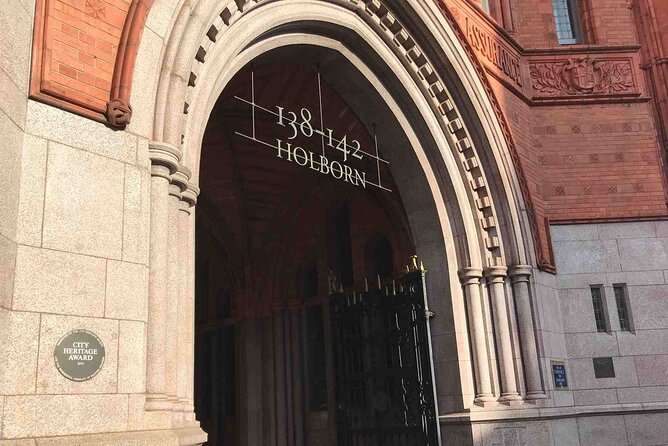
At $8.33 per person, the value is mostly about what you get for the money: structured route + phone-based challenges + a short time commitment (about an hour).
What you don’t get is the usual add-ons: there’s no physical guide, so you’re not paying for an expert to narrate every stop. Instead, you’re paying for momentum—each location feeds the next one, so you feel like you’re moving through a story rather than just checking boxes.
If you’re the type who enjoys reading a bit, spotting details, and solving a light mystery along the way, this price is hard to beat. If you want someone to fully explain every context point out loud, you may find yourself wishing for more guidance.
Your route: from 47 Doughty Street to 145 Fleet Street
The walk starts at 47 Doughty St, London WC1N 2LW and ends at 145 Fleet St, London EC4A 2BU.
Plan for roughly one hour on average, though the tour is designed for real life—take breaks whenever you want. Because you can start at any hour (it’s listed as open 24/7), you can fit it around your day: morning coffee nearby, an easy lunch break, or a late afternoon stroll.
Also, the route crosses parts of Central London where you’ll be near public transport. That matters because it makes it easier to shorten the walk if you’re tired—or to reach the start spot without turning the day into a logistics problem.
Stop-by-stop: Dickens, prisons of fame, and London institutions
You’ll hit a sequence of locations where the game tells you to look around, find the answer to the challenge, and then advance to the next point. Think of each stop as a mini chapter. Some will feel literary, some architectural, some plain London—until the Dickens connection snaps into place.
The Charles Dickens Museum (48 Doughty Street, Holborn)
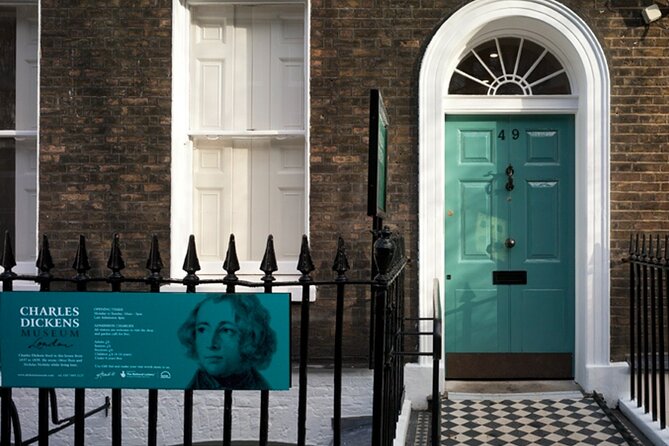
Your first stop is the Charles Dickens Museum at 48 Doughty Street, in a classic Georgian terraced house. It was Dickens’s home from 25 March 1837 (about a year after his marriage) until December 1839.
For the puzzle, this is a great starting point because there’s a lot to read and notice around a place that’s directly tied to his life. I like starting here because it gives you a real anchor: you’re not just guessing what Dickens “might have been like.” You’re standing where he lived during a key stretch.





Vine Street and the Man in the Moon Passage area
Next, you move to a street history that feels like a London time capsule. The area was laid out around 1686, and originally ran further along what is now the Man in the Moon Passage.
John Rocque’s London map from 1746 shows Vine Street running from Piccadilly northeast to Warwick Street. In 1720, the main properties were a brewery and a carpenter’s yard.
What I like here is the shift: you’re learning the city as a working place, not just a literary set. When the game asks you to find an answer, you’ll be looking for clues tied to this layered street past rather than only Dickens’s name.
The inn that became the Three Cripples (Oliver Twist connection)
Then you’re at a stylish inn dating to 1759. Dickens’s literary fingerprints show up in 1838, when he changed its name to the Three Cripples and used it as Bill Sykes’s watering hole in Oliver Twist.
This stop is fun because it turns reading into walking. You can stand in a real place and imagine the fiction version: the same location, a different character list, and a different kind of atmosphere. The puzzle challenge nudges you to look closely rather than gloss over it.
Staple Inn (1585 wool staple, Fire damage, and restoration)
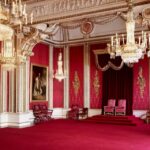
Now you get into a Tudor-era survivor: Staple Inn, dating from 1585. It used to be the wool staple, where wool was weighed and taxed. It survived the Great Fire of London, but it was damaged by a Luftwaffe aerial bomb in 1944 and later restored.
I love stops like this because they’re not “famous” in the way a big monument is, yet they carry a whole system of old London commerce in their bones. For the puzzle, this type of site gives you plenty to notice—details that reward looking, not just snapping photos.
Lincoln’s Inn Fields Theatre site (Duke’s Theatre, Tennis Court roots)
The puzzle next sends you to Lincoln’s Inn Fields Theatre, which stood in the Fields from 1661 to 1848. It originally went by Duke’s Theatre, and it was created in 1695 by converting Lisle’s Tennis Court.
There’s a special kind of energy in theatre locations. Even if you’re standing outside a modern version (or near the site), you can sense how London’s entertainment culture kept reinventing itself. The challenge here feels like it belongs: it asks you to look around and solve your way forward, matching the theme of turning old spaces into new purposes.
The Maughan: a major university library in a landmark building
Next up is the Maughan—after a £35m renovation designed by Gaunt Francis Architects, it’s the largest new university library in the UK since World War II. The building was constructed in 1851 by Sir James Pennethorne, with extensions added between 1868 and 1900. It’s also listed as Grade II.
This stop is a nice “wait, why is this in a Dickens game?” moment—in a good way. It broadens the walk beyond just author branding and into how London keeps repurposing impressive buildings for new uses. When the puzzle asks you to hunt for an answer here, you’ll likely be scanning details that help you connect past architecture to present function.
Dr Johnson’s House (Samuel Johnson rented here, 1748–1759)
Then you’re at the house now known as Dr Johnson’s House. It was probably originally built for a City merchant, and the famous resident is Samuel Johnson (1709–84), who rented it from 1748 to 1759.
Even though this tour centers on Dickens, Johnson fits the literary ecosystem. He’s part of the broader English writing tradition. The puzzle challenge at this stop keeps you actively engaged, so you’re not just walking past another plaque.
Ye Olde Cheshire Cheese (built in the 1530s, rebuilt after 1666)
Now you reach a classic London pub landmark: Ye Olde Cheshire Cheese. The pub was built in the 1530s, though the original pub was lost during the Great Fire of London in 1666. The current pub dates to 1667 and was among the first London buildings reconstructed after the fire.
This is one of those stops where the puzzle format pairs perfectly with a real-life treat. If you feel like pausing for a drink, it’s the kind of location where taking a short pub break makes sense. The game keeps you moving, but it also lets you stop and reset.
Church of St Peter of all Nations (1863 basilica-style, organ details)
Next comes The Church of St Peter of all Nations, consecrated on 16 April 1863. At the time, it was the only basilica-style church in the UK. The organ was built in 1886 by Belgian Anneesen. During World War II, when Italian immigrants were interned, the Irish Pallottines used the church.
Church stops can be hit-or-miss on tours, depending on how much time you get. With a puzzle, you’re not spending 30 minutes listening to a lecture—you’re spending enough time to notice and answer the challenge. That usually feels respectful and efficient.
Royal College of Surgeons origins (barbers and surgeons joining forces)
The puzzle then heads to the Royal College of Surgeons, tracing its origins to the 1540s, when the Company of Barbers and the Fellowship of Surgeons formed the Company of Barber-Surgeons. In the 1700s, medicine became an academic discipline, and surgeons pushed for recognition of their expertise.
This is a very London angle: big institutions weren’t always one streamlined brand. They formed from trade groups and evolving science. The puzzle helps you engage with that kind of shift instead of treating it like random trivia.
St Dunstan-in-the-West and the Romanian Orthodox chapel
Your final stop is St Dunstan-in-the-West, specifically the Romanian Orthodox chapel St Dunstan-in-the-West. The building shares space with the Romanian Orthodox community’s St George church. The chapel area to the left of the main altar is closed off by an iconostasis, formerly from Antim Monastery in Bucharest, dedicated in 1966.
What I like about ending here is that it adds a modern, international layer to a walk that starts with one of the UK’s best-known writers. London is full of these overlapping faith and community stories. The puzzle challenge gives you a reason to look past the street view and notice the specific chapel detail.
How the offline game works (and what you’ll need)
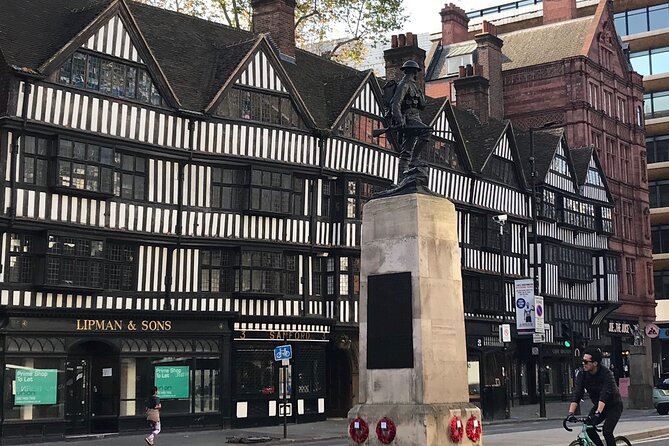
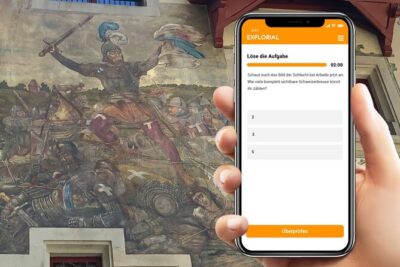
This tour is a mobile ticket and you can play offline, meaning you don’t need internet connection to solve the challenges.
Because it’s self-guided, the phone becomes your guide. You’ll need a working battery and the willingness to read the prompt at each stop. The experience is also described as the safest option you can book because it’s private and has no human contact, which is a real plus if you prefer not dealing with groups.
You should expect a “walk, look, answer, move” rhythm. Some clues may feel quicker to spot; others may require extra attention. Based on the tone of the puzzle (and the fact that it includes a game-the-world quest like the Man in Black), it’s usually meant to be engaging rather than punishing.
Timing and pacing: starting any hour and pausing as you like
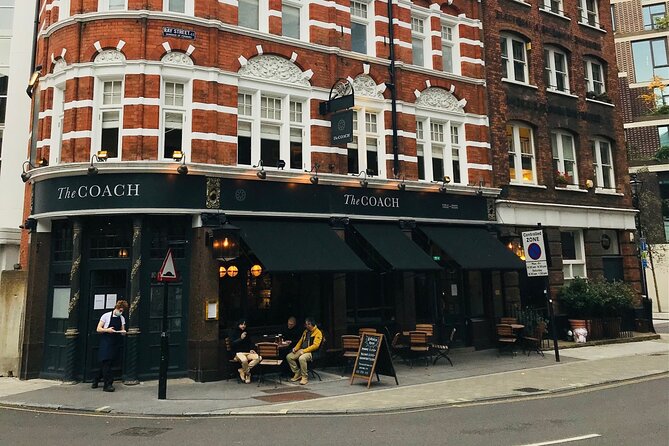
One of the best practical features here is the flexibility. You can start at any hour, and you can take breaks and resume later.
That matters because one hour in London can become 90 minutes just from a coffee stop, a photo you don’t want to skip, or a detour that looked interesting. With this format, you’re not stuck finishing on someone else’s schedule.
If you plan to stop for food or a pub break, build that into your time budget. The itinerary includes pub-adjacent options, so it’s easy to turn this into a relaxed half-morning or early afternoon activity.
Comfort, crowds, and getting there without stress
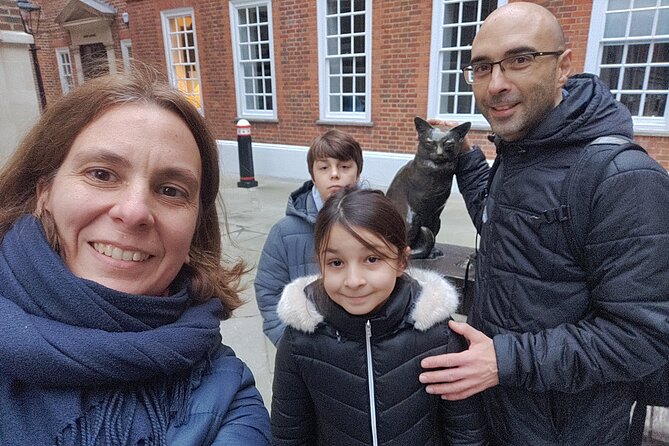
The tour is private, so you’re not wrestling with crowd movement at check-in points. It’s also designed to help you avoid crowds, which is exactly what I look for in central London activities.
It’s near public transportation, which reduces the friction of starting at Doughty Street and ending at Fleet Street. That end point is useful too: once you finish, you’re in a part of the City where it’s easy to keep walking, catch a ride, or grab a meal.
Also, the experience allows service animals, and it notes that most people can participate. If you’re planning this with mobility constraints, you should consider that it’s a walking route across central London, but the tour being private can give you more room to move at your own pace.
Who should book this Dickens Puzzle Questo tour
I think this is a great fit if you:
- Enjoy puzzles and prefer learning by exploring rather than listening.
- Want a low-stress activity with flexible start times and break-friendly pacing.
- Like Dickens connections but also enjoy classic London side stories (pubs, institutions, historic streets).
- Want a budget option that still feels like something more than just sightseeing.
I’d skip it (or pair it with a different plan) if you want:
- A live guide to explain every stop in detail.
- A museum-style deep lecture format.
- A tour that never requires you to read prompts and hunt for answers.
Should you book it? My practical take
If you’re on the fence, here’s the deciding factor for me: do you want Dickens London as a self-paced mystery walk, or do you want a traditional guide doing the heavy lifting?
For $8.33 per person and about an hour of structured exploring, this is strong value—especially because it’s private and built to run offline. If you’re the kind of person who likes noticing details and solving your way forward, you’ll probably have a good time with the Man in Black* angle and the Dickens stops from Doughty Street to Fleet Street.
FAQ
How long is the London Charles Dickens Puzzle Questo tour?
The duration is listed as about 1 hour on average.
Can I start the tour at any time?
Yes. The experience offers full flexibility and is open 24/7, every day of the week.
Do I need internet to play?
No. You can play offline, so you do not need an internet connection to play the city game.
Is there a physical guide with this tour?
No. This tour does not come with a physical tour guide.
What language is the tour in?
The tour is offered in English.
Is this tour private?
Yes. It’s listed as a private tour/activity, so only your group will participate.