REVIEW · CENTRAL SWITZERLAND
Zug Scavenger Hunt and Sights Self-Guided Tour
Book on Viator →Operated by Explorial · Bookable on Viator
Zug can feel small and friendly, yet full of surprises. This self-guided scavenger hunt turns Landsgemeindeplatz into the start of a walking game with hints, on-the-spot questions, and points for creative photo tasks. I like that it’s designed for real exploring on foot, not just reading a script. I also like the flexibility built into the app, since you’re not boxed into a strict time window.
One thing to consider: it’s only as fun as your interest in puzzles. If you want a traditional guided lecture, this may feel more like a self-run challenge than a story told to you. Still, the casual pace and “drop in, play when you’re ready” setup make it easy to fit into a day in Central Switzerland.
In This Review
- Key highlights you’ll feel right away
- Zug scavenger hunt basics: what it is and why it works
- The Landsgemeindeplatz start: how you get going without stress
- How the app-led clues and quizzes shape your walk
- Stop-by-stop in Zug: Zyttum and the fun of following hints
- Zyttum: where the game pushes you to notice details
- Unter Altstadt: turning an old-town vibe into questions
- Why Unter Altstadt fits this format
- Kolinbrunnen and photo tasks: creativity meets sightseeing
- The photo-task element is more than a gimmick
- Pace and timing: play for 60 minutes or stretch it
- How to choose your start time
- Value and price: is $18.34 per person a good deal?
- Best for families, curious walkers, and spontaneous plans
- Who might want a different kind of tour
- Should you book the Zug Scavenger Hunt and Sights Self-Guided Tour?
- FAQ
- How long does the Zug scavenger hunt take?
- Where does the tour start and end?
- What do I do after I book?
- Is the tour self-guided or guided?
- What language is it offered in?
- Is it suitable for kids and adults?
- Can I get a full refund if I cancel?
Key highlights you’ll feel right away
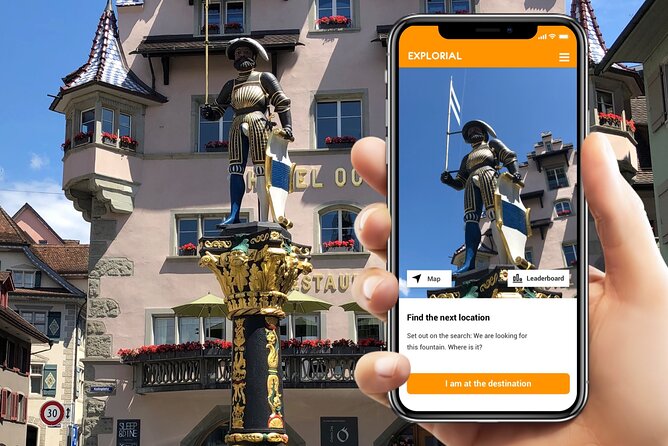
- App-based map and hints help you move city blocks confidently without second-guessing
- On-site questions use signs and pictures so you’re learning by looking
- Photo tasks for points add a playful edge for kids and adults
- Flexible timing: average 1–2 hours, but not strictly time-limited
- Start and finish at Landsgemeindeplatz keeps logistics simple
- Private format for your group means you won’t be blended into strangers’ pace
Zug scavenger hunt basics: what it is and why it works

This experience is a self-guided walk through Zug, run through an app. After you buy, you get an access code, then you can play the game starting at Landsgemeindeplatz, 6300 Zug, Switzerland. You finish back at the same place.
The core idea is simple: you move from place to place using a map, then you do tasks once you arrive. Some tasks are “find this sight” style challenges that use hints. Other tasks ask you questions about what you’re seeing, and the answers are usually hidden in things like signs or pictures at the location.
That design matters. When the answers are in front of you, you naturally slow down, look around, and notice details you’d otherwise miss on a normal stroll. It’s a nice way to learn a city without feeling like you’re cramming facts.
At the same time, it stays light. The experience includes photo tasks that reward creativity with points. That’s a fun hook if you’re traveling with kids, but it also works well for adults because you don’t need art-school talent—just curiosity and the willingness to try.
The Landsgemeindeplatz start: how you get going without stress
Your tour starts at Landsgemeindepl. (Landsgemeindeplatz). That’s a smart choice for two reasons. First, it keeps the whole adventure easy to plan: you don’t have to figure out where to meet a guide or match a specific route time. Second, because you end back at the meeting point, you’re not stuck at some far edge of town if you finish early.
You’ll go from there using the app’s map function. You can think of it as a guided route without the pressure of keeping up with anyone. If you stop for a coffee, pause to check your phone, or take a breather, you can. The tour is described as not limited in time, with an average duration of about 1–2 hours.
Also, the app approach fits real travel rhythms. In Switzerland, you often have good public transport, but cities can still feel like a maze when you’re only there briefly. Having a map in your pocket lets you focus on exploring instead of navigating.
How the app-led clues and quizzes shape your walk
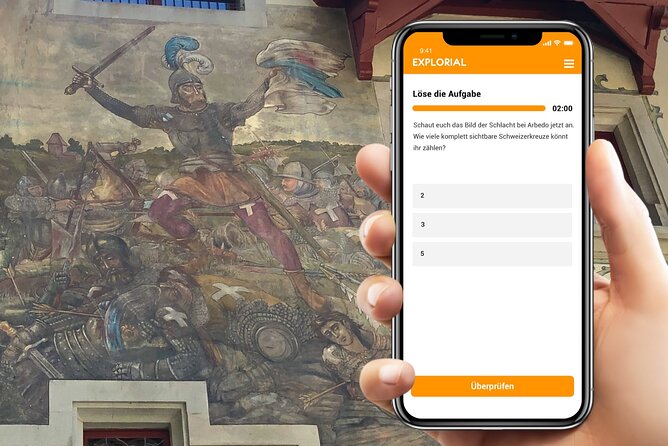
The game works in a loop:
- You get a hint for where to go next.
- You arrive at the sight or area.
- You answer questions tied to what’s in front of you.
- You may also do a photo task for extra points.
The “find and solve” structure does something helpful: it gives your walk a purpose. Instead of “I guess we’ll wander,” you’re moving with small missions. That keeps the adventure feeling active, even when you’re just a couple blocks apart.
The questions are also a big part of the value. They’re often not abstract trivia. The answers are commonly hidden in signs, pictures, and similar clues at the site. That nudges you to look closely at the city’s details—exactly the kind of learning you actually remember later.
Photo tasks add a different skill: framing. You’ll be asked to take creative snapshots as part of the points system. If you like taking photos, this gives you a reason to slow down and compose shots the way you might not on a casual walk.
Practical tip: before you start, make sure your phone is set up for normal walking. Keep your screen brightness reasonable, and have your access code ready. Once the game is running, you want the app working smoothly as you move from spot to spot.
Stop-by-stop in Zug: Zyttum and the fun of following hints

Your route includes several named places, including Zyttum and other stops along the way. While you may not have control over the exact order, you do control the pace.
At each stop, expect to switch from “walking mode” to “search mode.” The app gives hints so you can locate the right spot, and then the questions ask about what you find there. In other words, you’re not just touring the area—you’re solving a small mystery with your eyes.
Zyttum: where the game pushes you to notice details
When you reach Zyttum, the experience tends to reward that pause-and-look style travel. Since questions are usually tied to visible information (signs, pictures, and similar elements), you’ll do better if you take a moment to scan the area before trying to answer.
If you’re traveling with kids, this is where the scavenger hunt flavor can really land. Kids often love looking for the next clue, and the question format makes it feel like a real treasure hunt instead of a lecture.
Potential drawback here: if you rush, you’ll miss the exact details the questions point to. So build in a little patience. Even if you’re quick, slow down for the final 30 seconds near each stop.
Unter Altstadt: turning an old-town vibe into questions
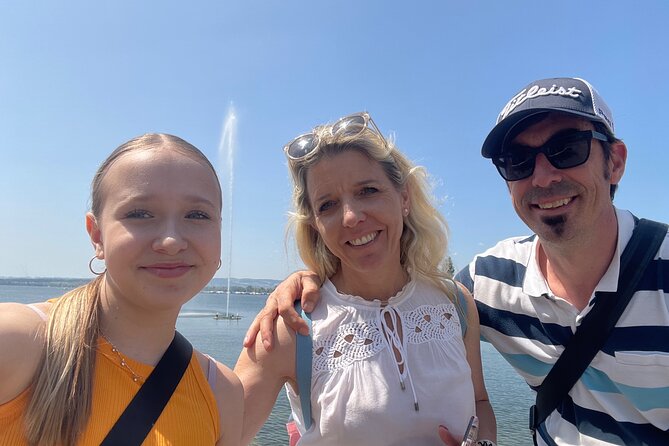
Another named stop on the route is Unter Altstadt. Even if you’re not sure what you’ll find there, the name alone suggests you’ll be in the older part of town. What matters for you as the participant is how the experience uses that setting.
This is still a scavenger hunt, so you’ll use hints to find your target spots within the area. Then you’ll answer questions that connect to what you can see around you.
Why Unter Altstadt fits this format
Old-town streets tend to be great for observation games because there’s often plenty to read and photograph—signage, building details, and small scenes. The scavenger-hunt design is made for that. It’s one thing to walk through an area. It’s another to be asked to figure something out using clues right where you stand.
If you enjoy photography, Unter Altstadt is also a natural place to do creative photo tasks. The route’s point system can help you focus your camera on shapes, streetscapes, and small details rather than trying to capture everything at once.
Kolinbrunnen and photo tasks: creativity meets sightseeing

You’ll also reach Kolinbrunnen as part of the adventure, plus other stops along the way. Where Kolinbrunnen fits into the experience is best understood as another checkpoint where the app asks you to look, answer, and sometimes take a creative snapshot.
The photo-task element is more than a gimmick
Photo tasks can go either way on tours: either they feel forced, or they feel like a fun way to give your eyes a job. Here, the tasks are tied to points, which makes them feel like part of the game rather than an extra chore.
If you’re the kind of traveler who likes taking photos but gets stuck in the usual “tourist shot” routine, these prompts can help. Instead of photographing whatever looks pretty, you’re photographing what the mission asks for.
Quick practical note: bring a charged phone and keep your camera clean. If you’re also walking, avoid spending too long redoing shots—choose what works and move on. The tour is designed to be flexible, but you’ll enjoy it most if you keep momentum.
Pace and timing: play for 60 minutes or stretch it
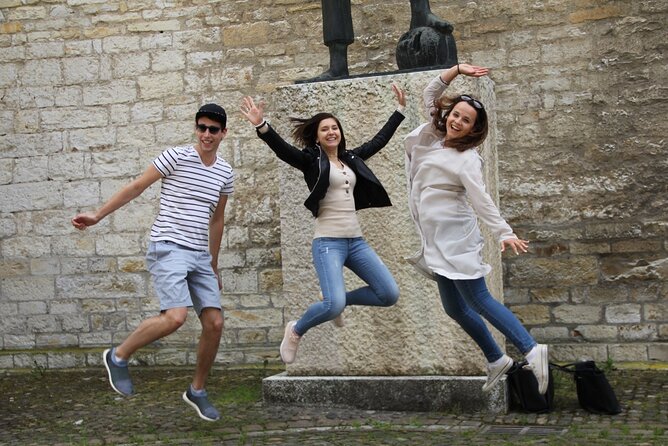
The tour is described as taking about 1–2 hours on average, and it’s not limited in time. That makes it easy to fit into real travel days.
Also, the operating window listed runs Monday through Sunday from 12:00 AM to 11:30 PM (within the date range shown). In practical terms, that means you can choose a time that matches your energy level. If you’re arriving in the late afternoon, you can still start. If you like walking in the early part of the day, you can do that too.
How to choose your start time
If you want the best mix of problem-solving and relaxed sightseeing, start when you’ll have enough stamina to stop and look at details. If your day is packed, start earlier so you’re not rushing through clues while hungry or tired.
Another smart move: if you plan to stop for photos or a snack, build that into your schedule rather than trying to “time it perfectly.” Since the experience isn’t constrained by a fixed end time, you can breathe.
Value and price: is $18.34 per person a good deal?

At $18.34 per person for a self-guided, app-based walking game, the value depends on what you want from your day.
Here’s the deal: you’re paying for three things—
- Route structure (hints and a map that guide you through the city)
- Learning by observation (questions tied to signs and pictures at each stop)
- Activity fuel (photo tasks and a points system that make walking feel like play)
If your typical travel style is wandering, reading plaques, and noticing small details, this pricing makes sense because you’re getting a built-in “why” for each stop. You’re also not paying for a live guide, so the cost stays low while still giving you direction.
If you don’t like puzzles or hate using apps while walking, then $18 may feel like you’re paying to do something you’d rather skip. But if you’re okay solving small tasks and enjoy a light challenge, this price is hard to beat for a couple hours of entertainment and learning in Zug.
Best for families, curious walkers, and spontaneous plans
The format is ideal for a few traveler types.
You’ll likely enjoy it if:
- you want a casual walk that still feels structured
- you like learning by looking rather than by listening
- you’re traveling with kids and adults together (the mix of quizzes and photo prompts helps keep different ages engaged)
- you want an option that’s easy to start without planning a whole guided tour
It also suits spontaneous travel days. If you’re already in the area and you want something active but not complicated, this kind of self-guided game is a simple add-on. You start when you want, follow the app, and call it done when you finish the route.
Who might want a different kind of tour
This isn’t a match for everyone.
Consider skipping or choosing something else if:
- you strongly prefer a guided, spoken narrative with context and deep explanations
- you don’t like answering questions on location
- you want a totally passive sightseeing experience with zero phone use
Also, if you only have a short window and you hate uncertainty about timing, you may feel better with a strict, scheduled tour. This one averages about 1–2 hours, but since it’s self-paced, you’re the one who decides how long you’ll spend per stop.
Should you book the Zug Scavenger Hunt and Sights Self-Guided Tour?
I’d book it if you want an easy win: Zug by foot, with clues that keep you moving, quizzes that make you look twice, and photo tasks that add fun without needing special skills. The starting point at Landsgemeindeplatz keeps it low-friction, and the flexible timing means you won’t feel trapped if your day runs long.
I wouldn’t book it if you’re not interested in puzzles or you’re looking for a traditional guided tour experience. This is a game first, sightseeing second. If that sounds like your style, it’s a strong value for the time.
If you’re deciding between “sit and wander” versus “do something purposeful,” this one leans toward purposeful—but in a relaxed, friendly way.
FAQ
How long does the Zug scavenger hunt take?
It lasts on average about 1–2 hours, and it is not limited in time, so you can explore at your own pace.
Where does the tour start and end?
It starts at Landsgemeindeplatz (Landsgemeindepl., 6300 Zug) and ends back at the same meeting point.
What do I do after I book?
After purchase, you receive an access code that you use in the app. Then you download the app, go to the starting point, and start the game.
Is the tour self-guided or guided?
It is self-guided. You explore on foot with the help of the app’s map function, hints, and on-site questions.
What language is it offered in?
It’s offered in English.
Is it suitable for kids and adults?
Most travelers can participate, and the format is designed for both kids and adults since it mixes quizzes with photo tasks.
Can I get a full refund if I cancel?
Yes. You can cancel for a full refund up to 24 hours in advance. If you cancel less than 24 hours before the start time, the amount paid isn’t refunded.