REVIEW · LONDON
London: Self-Guided Notting Hill Walking Tour with an APP
Book on GetYourGuide →Operated by Trippy Tour Guide · Bookable on GetYourGuide
Notting Hill works best on foot. This self-guided route uses the Trippy Tour Guide app so you can follow narration across iconic streets like Notting Hill Gate at your own pace. I like that it mixes movie-friendly stops with real neighborhood streets, so the walk feels like a place visit, not a checklist.
I also like the structure. You get 20+ narration points tied to specific spots, plus clear directions that help you find quieter corners like Ormrod Court without getting lost. One thing to consider: one French-language reviewer flagged that the audio voice can switch oddly when an English word appears, so you may want to test your preferred language before you start.
In This Review
- Key highlights to look for on this Notting Hill walk
- How the Trippy Tour Guide app runs your whole walk
- Starting at Notting Hill Gate: the neighborhood mood in minutes
- Pembridge Crescent and Simon Close: pretty streets that feel lived-in
- Portobello Road and film-scene photo stops
- Elgin Crescent and Lansdowne Crescent arches: architecture you can’t miss
- Ormrod Court: finding the hidden feeling without wandering
- St Luke’s Mews and Powis Mews: mews houses with movie energy
- Electric cinema and the walk to Westbourne Park Station
- Price and value: why $14 makes sense for a guided-feeling walk
- Timing, pacing, and what to bring so the walk feels easy
- Language and audio quality: what to expect from the narration
- Who this self-guided Notting Hill walk is for
- Should you book this Notting Hill app walking tour?
- FAQ
- How long is the Notting Hill walking tour?
- Where do I start and where do I finish?
- What do I need to bring?
- Is there an entry fee or in-person guide included?
- How do I access the tour on the app?
- Does the audio play automatically?
- What languages are available for the audio?
- What payment and cancellation options are available?
Key highlights to look for on this Notting Hill walk
- Blue door and the Hugh Grant bookshop photo moment
- Portobello Road, where market street energy meets classic film locations
- Elgin Crescent and Lansdowne Crescent arches for standout street views
- Hidden-pocket streets like Ormrod Court
- St Luke’s Mews and Powis Mews for the mews-house vibe
- Electric cinema and the easy finish at Westbourne Park Station
How the Trippy Tour Guide app runs your whole walk
This tour is built around one tool: the Trippy Tour Guide app. After you book, you’ll get an email with instructions and credentials to access the tour inside the app (it’s not part of the GetYourGuide app). Plan on a strong internet connection, because you must install the app and download the tour using Wi‑Fi.
Once you’re at the starting spot, you launch the tour in the app and it starts right there. The stories play automatically as you go, so you’re not constantly tapping while you walk. If you want control, you can start, stop, replay, or even rewind the audio whenever you like, which is great when you want an extra minute for photos.
This is where the value comes in: you’re paying for a guided route without paying for a live guide. For $14 per person and a two-hour loop, that’s a smart deal as long as you’re comfortable relying on your phone and headphones. Bring a charged smartphone, headphones, and water, because London walking plus low battery is never a fun combination.
You can also read our reviews of more tours and experiences in London.



Starting at Notting Hill Gate: the neighborhood mood in minutes
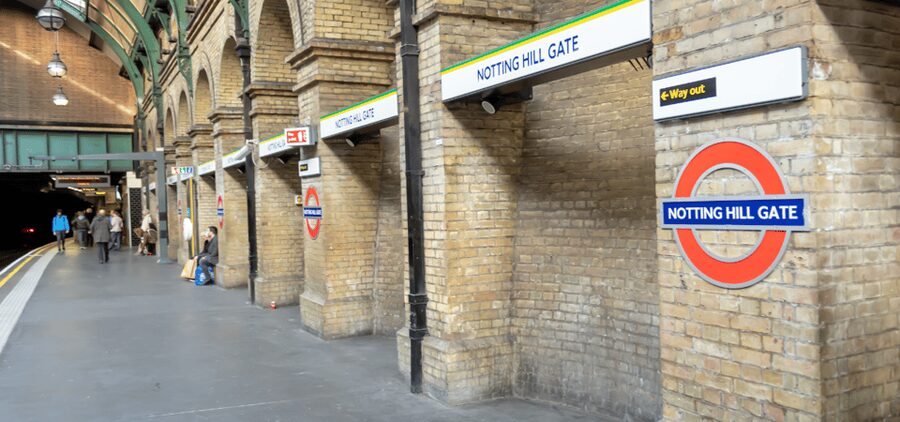
Your walk begins around Notting Hill Gate, a logical starting point if you’re arriving by tube. You immediately get that “London neighborhood” feel: front doors, window boxes, and the kind of residential streets where the buildings matter as much as the people.
From there, the tour nudges you toward nearby streets where the area’s charm shows up in small details. One of the first stops is Pembridge Crescent, which the tour frames as old-world and pretty—exactly the sort of place where you can pause, check the architecture, and take a photo without feeling rushed.
I like that this opening phase helps you settle into the area quickly. Instead of jumping straight to the most famous postcard scenes, you start with residential streets that make the later film and market moments feel earned. It’s a simple trick, and it works.
Pembridge Crescent and Simon Close: pretty streets that feel lived-in
After Pembridge Crescent, you’ll wander into smaller, calmer stretches like Simon Close. The tone here is more quiet and tucked-away. It’s the kind of street you’d never notice at speed, but with narration and directions, you actually slow down and look.
Then comes Denbigh Terrace, described as old and beautiful in the tour outline. This is one of those stops where houses themselves are the main attraction. If you’re into architecture, doorways, and street rhythm, you’ll get a lot out of Denbigh Terrace without needing any ticketed experience.
The main drawback at this stage is also simple: residential streets mean you’re walking through what feels like real life, not a themed attraction. If you’re hoping for big, obvious sights every 20 seconds, you might find the pacing calm. But that’s also why the tour feels authentic.
Portobello Road and film-scene photo stops

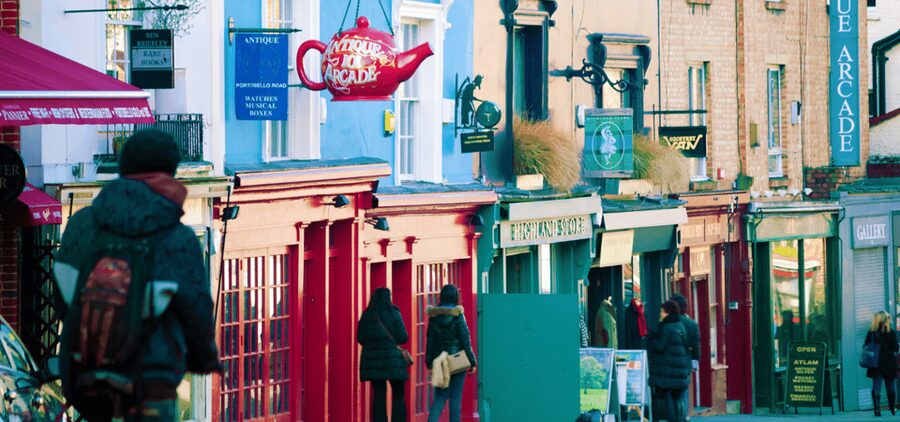
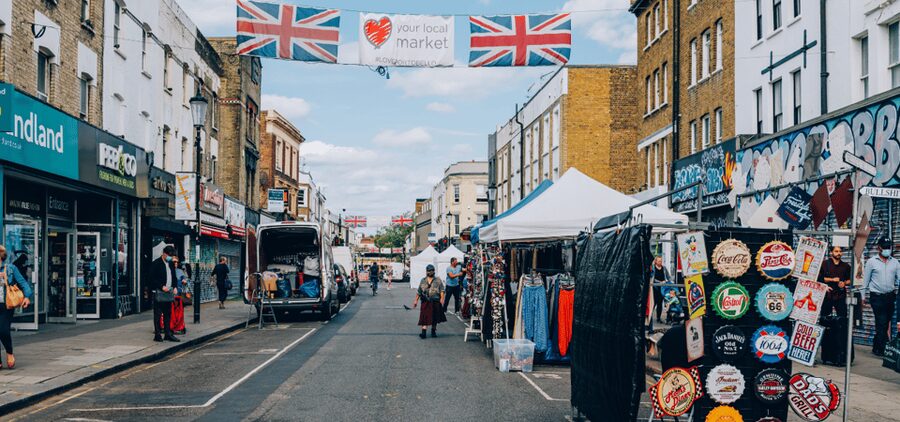
One of the highlights is Portobello Road, the go-to market street people associate with Notting Hill. The tour’s promise is clear: you’ll have time to wander this area as a bustling hub of shops and street life, not just glance at it.
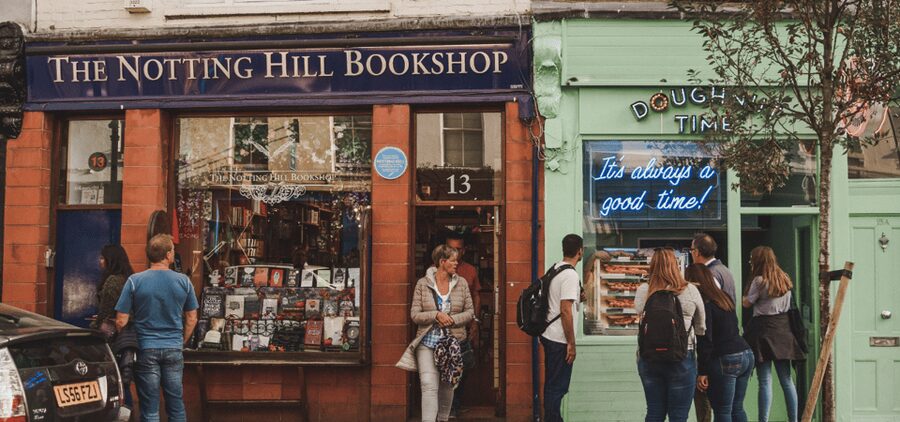
This is also where the movie magic shows up. You can snap a photo at the iconic blue door and at the bookshop location tied to Hugh Grant movie scenes. The appeal is obvious: you get recognizable pop-culture landmarks, but you’re pairing them with the surrounding street atmosphere, which is what makes the photos feel like you were there for a story, not just a snapshot.
A practical tip: keep your camera ready before you reach the door-and-shop spots. These are the kind of locations where someone might step into frame, a delivery might block the view, or a group might pause right where you want to stand. Having your timing ready saves you from doing the same photo ten times.
Elgin Crescent and Lansdowne Crescent arches: architecture you can’t miss

Next up are the crescent streets. You’ll hit Elgin Crescent, described as colorful and busy, which gives you a great change of pace from the quieter mews. If you like classic London visuals—curving street lines and rows of residential fronts—this area is built for photos.
Then the tour brings you to Lansdowne Crescent, known for its big arches. Even if you’re not an architecture nerd, the arches tend to pull your eyes upward. They also create a natural “walk-and-look” experience: you can stand back, then step closer, then reposition as you move through the curve.
I like that this section balances fame and style. You’re not only chasing movie references; you’re learning what makes Notting Hill visually distinctive. And since you’re self-guided with narration points, you can spend extra time at the spots that catch your attention and skim the ones that don’t.






Ormrod Court: finding the hidden feeling without wandering
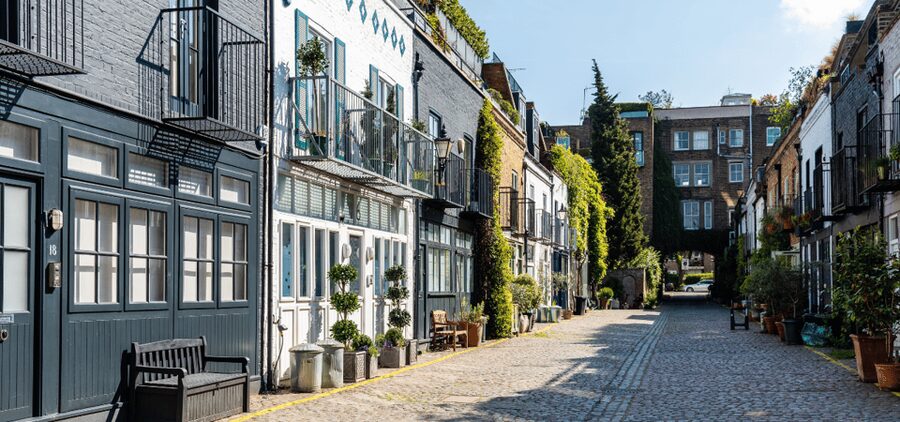
Some neighborhoods feel like they’re made of shortcuts and backstreets. This tour gives you one of those quieter moments with Ormrod Court. The tour description calls it a hidden spot, and that’s exactly the point: you’re not just walking the obvious main streets.
With clear directions and narration tied to the location, Ormrod Court becomes less of a puzzle and more of a reward. It’s a good stop if you want the sense of discovery that guided tours often promise but don’t always deliver.
The downside is only time. Because this is a two-hour walk, you can’t stop for a long coffee break at every corner. If Ormrod Court is your top priority, move through the busy sections a bit faster so you’re not cutting your own experience short.
St Luke’s Mews and Powis Mews: mews houses with movie energy
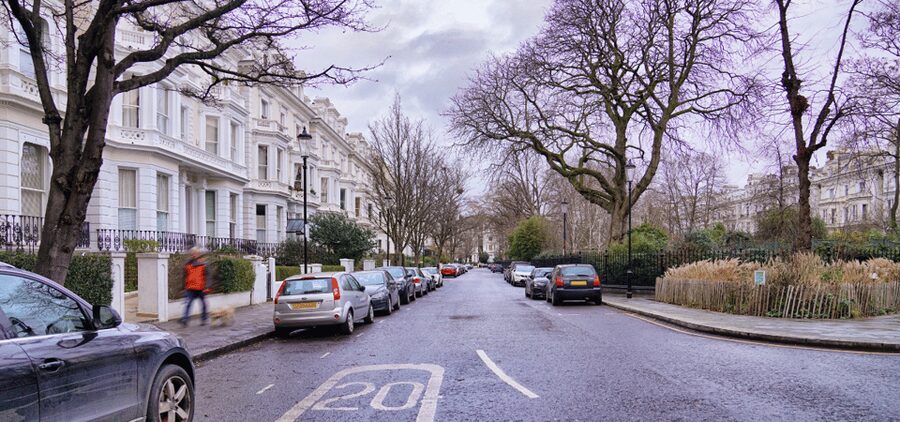
Mews streets are where London starts to feel cinematic, even without a film crew. The tour includes St Luke’s Mews, known for colorful houses and famous in movies. This is a spot where the architecture and the color do a lot of the storytelling for you.
Then comes Powis Mews, where the tour says you’ll hear history come alive. That narration angle matters because mews streets can look similar at first glance. With audio guidance, you get cues about why this lane and these buildings matter.
One thing I’d watch for: mews streets often attract people pausing for photos. Since the tour is self-guided, you’re sharing those narrow spaces with other photo-seekers, so keep your movement smooth. If you’re filming, step aside for a few seconds so you don’t block foot traffic.
Electric cinema and the walk to Westbourne Park Station
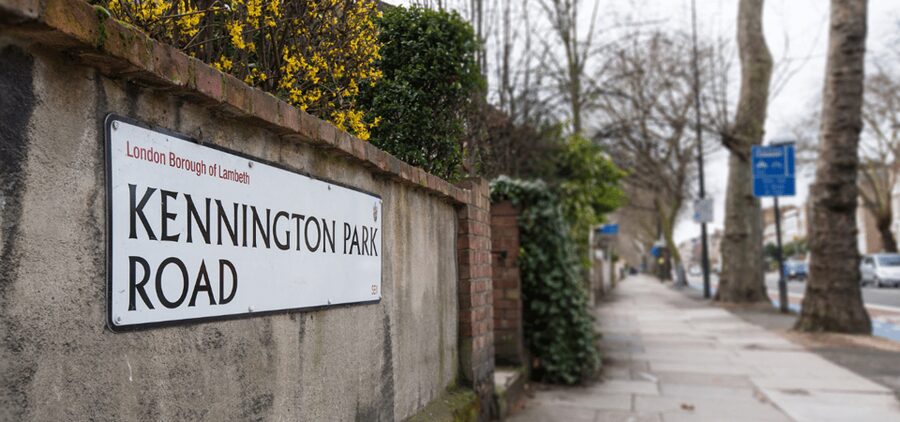
A standout highlight is Electric cinema, described as classic cinema at its finest. This is a smart inclusion because it grounds Notting Hill in the idea of film and storytelling, not just one famous movie street.
After that, you finish at Westbourne Park Station. Ending at a station is practical. It means you don’t have to “find” your way out of the neighborhood at the end of a long walk. You just continue on with public transport and keep your day moving.
If you like a tidy wrap-up, this works. You start at Notting Hill Gate, you work through crescents, mews, and the market street area, and then you end with transit right there. It’s a simple flow that makes the route feel like a half-day win.
Price and value: why $14 makes sense for a guided-feeling walk
At $14 per person for a two-hour self-guided experience, the value depends on one question: do you like walking with your own pace but with built-in guidance? If yes, this tour is a great way to see a lot of recognizable Notting Hill without paying for a private guide.
Here’s what you’re really getting for the price:
- Over 20 narration points at popular locations and hidden spots
- Detailed directions so you’re less likely to zigzag and lose time
- Multi-language audio in English, Spanish, German, French, Italian, and Chinese
You’re also saving money versus ticketed attractions, since entry fees aren’t included. That can be an advantage in London, where individual sights add up fast.
The other value is flexibility. Since the audio can be paused, replayed, and rewound, you can slow down for photos or speed up when you’re already familiar with a street. For the price, that’s real freedom.
Timing, pacing, and what to bring so the walk feels easy
This tour is designed for around 2 hours, which is long enough to cover multiple distinct zones in Notting Hill. But it’s short enough that you can still connect it to lunch, shopping, or another nearby stop without the day getting swallowed.
To keep it smooth:
- Wear comfortable shoes (some stops are on residential streets and mews that can feel uneven underfoot).
- Bring headphones and a charged smartphone so the audio and app stay reliable.
- Pack water, especially if you’re walking in warmer weather.
- Download using Wi‑Fi, then keep your phone ready so you can launch the tour at the start.
Audio works best when you can actually hear it. That’s why headphones matter more than you think on a market street like Portobello Road, where background noise can drown out narration fast.
Language and audio quality: what to expect from the narration
Audio is included, and you can choose from multiple languages: English, Spanish, German, French, Italian, and Chinese. Stories play automatically as you walk, so the experience is meant to feel guided even when you’re moving solo.
One practical consideration: an earlier French-language experience noted that the voice is generated by AI and sometimes switches to reading English words inside French narration for a few phrases. That doesn’t mean the audio is broken, but it’s the kind of distraction that could matter if you’re sensitive to text-to-speech style quirks.
If you want to avoid surprises, start the audio at the beginning and listen for a moment before you commit fully to the rhythm of the walk. If it bugs you, switch languages or prepare to rely more on the street views than the narration.
Who this self-guided Notting Hill walk is for
This tour is a great fit if you:
- Want cinema-adjacent Notting Hill without paying for a live guide
- Like photo stops tied to the blue door and the Hugh Grant bookshop scene
- Enjoy walking through real streets like Pembridge Crescent, Elgin Crescent, and the mews lanes
- Prefer self-paced sightseeing where you can pause, replay, and move on
It may be less ideal if you strongly dislike using your phone for navigation and audio. Since the tour depends on the app and your downloaded content, you’ll want your tech to cooperate.
It’s also a good choice if you’re short on time but want variety: market street, crescents with architectural drama, hidden corners like Ormrod Court, and a finishing point at Westbourne Park Station.
Should you book this Notting Hill app walking tour?
Book it if you want the look and feel of Notting Hill in a focused two-hour window, with built-in narration points and directions that keep you from wandering. The combination of movie-photo moments (blue door, Hugh Grant bookshop) plus real neighborhood streets (Pembridge Crescent, Elgin Crescent, mews lanes) is the sweet spot for value.
Skip it (or be cautious) if you know your phone battery is usually unreliable or you hate audio-guided walking. And if French audio is your plan, pay attention to how the voice sounds on your device, since one experience flagged an AI voice quirk.
If you’re an independent walker who likes cues, this tour delivers a lot for $14—and it ends where you can easily keep going.
FAQ
How long is the Notting Hill walking tour?
It lasts about 2 hours.
Where do I start and where do I finish?
You start at Notting Hill Gate and finish at Westbourne Park Station.
What do I need to bring?
Bring headphones, a charged smartphone, the downloaded app, and water.
Is there an entry fee or in-person guide included?
Entry fees are not included, and there is no in-person guide included. The tour is self-guided with the app.
How do I access the tour on the app?
Check your email for instructions and credentials to access and download the tour in the Trippy Tour Guide app. The download uses Wi‑Fi, and it is not part of the GetYourGuide app.
Does the audio play automatically?
Yes. Stories play automatically as you go along the route. You can also start, stop, replay, or rewind the audio.
What languages are available for the audio?
Audio is available in English, Spanish, German, French, Italian, and Chinese.
What payment and cancellation options are available?
You can reserve now and pay later. You can cancel up to 24 hours in advance for a full refund.