REVIEW · ISTANBUL
Bosphorus Sightseeing Cruise Tour with Audio Guide
Book on Viator →Operated by SeaLand Trip Bosphorus Cruise · Bookable on Viator
The Bosphorus is Istanbul’s best moving viewpoint. This 2-hour Bosphorus sightseeing cruise mixes classic landmarks from both the European and Asian sides with an audio guide in 11 languages and free onboard tea and coffee.
I especially like how fast it gets you oriented on the water, and how many major stops you can visually connect: Galata area, Ottoman palaces, and the Maiden’s Tower. Plus, you get WiFi onboard and a restroom, so you’re not stuck managing logistics while the scenery rolls by.
One thing to plan for: most of the explanation is handled by smartphone audio, and the boat’s sound can be hard to catch—so bring your own headphones and expect to rely on your phone.
In This Review
- Key highlights you’ll care about
- Why This Bosphorus Cruise Is a Great 2-Hour Primer to Istanbul
- Price and Schedule: What $12.07 Buys on the Water
- The Audio Guide Reality Check: 11 Languages, Phone GPS, and Headphones
- Where to Sit for the Best Sound and Photos
- Your Route: From Galata Bridge and Tower to the Maiden’s Tower
- Galata Bridge and the Galata Tower area
- Hagia Sophia and Topkapi Palace from the Bosphorus
- Galataport, Cihangir Mosque, and the “new waterfront” contrast
- Dolmabahçe Mosque and Dolmabahçe Palace: Ottoman meets European style
- Beşiktaş Stadium, Galatasaray University, and Ortaköy
- Bridges, fortresses, and the Bosphorus’s engineering story
- Küçüksu Pavilion, Kandilli, and military school views
- Istanbul yalıs and Beylerbeyi Palace
- Maiden’s Tower (Kız Kulesi): the final recognizable landmark
- Boarding at SeaLand Travel Agency: Make Your Start Smooth
- Is This a Real Tour or Just a Boat Ride?
- Who Should Book This Bosphorus Cruise?
- Should You Book This Bosphorus Sightseeing Cruise?
- FAQ
- How long is the Bosphorus sightseeing cruise tour?
- What is the price per person?
- Is there an audio guide, and what languages are available?
- Do I need to download an app to use the audio guide?
- What do I need to use the smartphone audio guide?
- Is WiFi available onboard?
- Is there a restroom on the boat?
- Where does the tour start and end?
- Can I cancel and get a full refund?
Key highlights you’ll care about
- Unrestricted Turkish tea and Nescafé while you watch the skyline go by
- 11-language smartphone audio (no app download) using GPS and your phone browser
- Views from both sides of the city, from Galata to the Maiden’s Tower entrance
- Front-deck visibility matters if you want the onboard audio and engine sound to be manageable
- Crowd levels can change fast, especially on popular departures and on the upper deck
Why This Bosphorus Cruise Is a Great 2-Hour Primer to Istanbul
If you want a quick feel for Istanbul’s shape, this cruise is a smart first move. The Bosphorus is the waterway that links the European and Asian sides, and from the deck you can actually see how neighborhoods line up along the shore instead of guessing from maps.
I like that the tour is built for sightseeing, not slow wandering. In about two hours, you’ll pass big-name landmarks and major architectural “eras,” from Byzantine-era icons to Ottoman palaces and later waterfront development. And while you’re busy scanning rooftops and domes, you can sip unlimited Turkish tea and Nescafé—a small thing that makes the whole trip feel easier.
The “best value” part is that you’re paying less than you would for a full-on guided day, yet you still get a structured way to understand what you’re seeing via an audio tour in 11 languages.
You can also read our reviews of more tours and experiences in Istanbul.


Price and Schedule: What $12.07 Buys on the Water
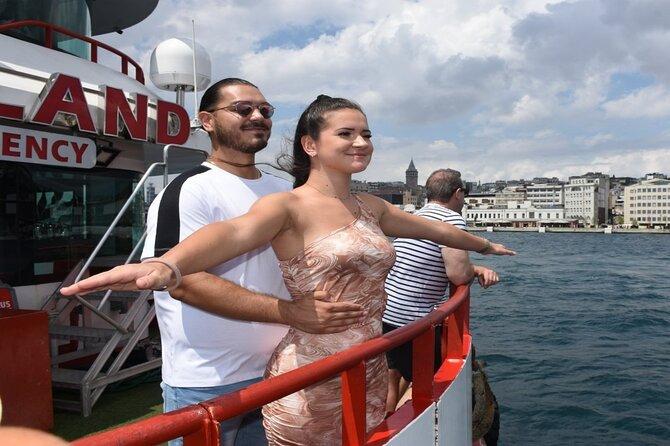
At about $12.07 per person for roughly two hours, this is one of those rare deals in Istanbul where the price doesn’t feel like a trade-off for basic comfort. You get WiFi on board, a restroom, and an audio setup that’s designed to cover the landmarks without needing a live lecturer.
The other practical advantage is timing. This cruise is typically booked about 9 days in advance on average, so it’s easy to fit into a real itinerary without overplanning. And if you book an evening sailing, you get a day-to-night experience: daylight views up front, then the city lighting up as you head back. That’s the kind of “you can’t get this walking” moment.
The only caution: this is a moving sightseeing format. You’ll see a lot, but you won’t linger long at any single point. If you’re hoping for close-up detail like you’d get inside a museum or palace, you’ll still want separate land visits.
The Audio Guide Reality Check: 11 Languages, Phone GPS, and Headphones
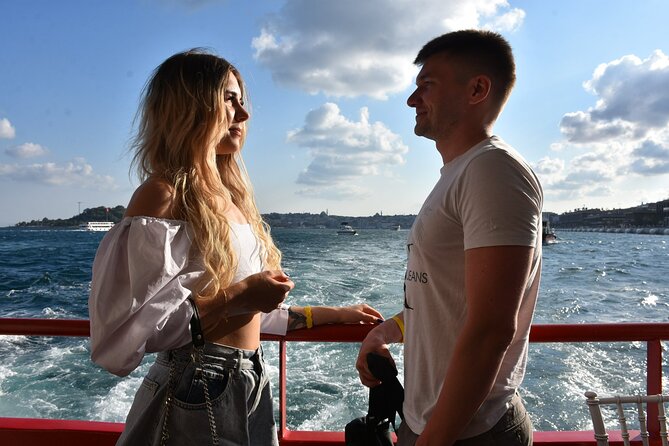
Here’s the key idea: the cruise uses a multilingual audio guide on your smartphone as the main source of explanation. Live loudspeaker announcements are limited to general information and safety messages, not full historical narration.
That means your success depends on three things:
- your phone being fully charged
- your own headphones
- your ability to use the audio guide through a website (no app download)
Instructions are posted on the boat, and the audio guide doesn’t require an app, which is great if you don’t want another thing to install. But you do need that charged phone and working headphones.
Also, don’t assume the loudspeakers will save you. The onboard broadcast sound can be muffled depending on wind and crowds, and it may be much clearer on the upper deck than downstairs. If you want consistent commentary, use the online GPS audio guide so the landmark descriptions match where you are as the boat moves.
Where to Sit for the Best Sound and Photos
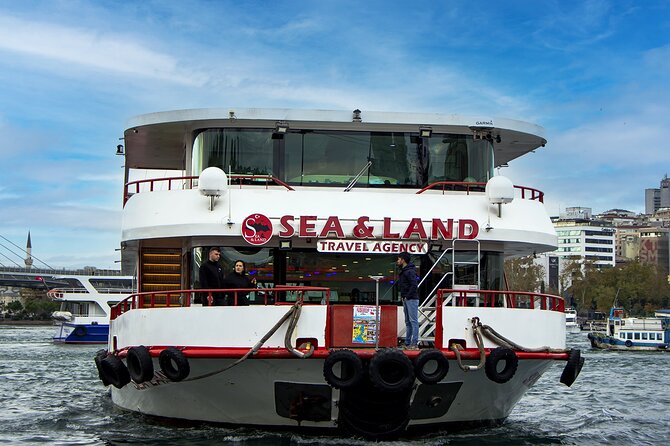
On a cruise, seat position affects everything: sightlines, comfort, and whether audio is actually usable. The boat has two levels, and the upper deck tends to be the place where onboard sound is easiest to hear. If you sit toward the back on the top deck, engine noise can interfere more than you’d expect.
My practical advice:
- If you care about onboard audio quality, aim for the front area on the upper deck.
- If you prefer more stable resting, take a seat on the lower deck, but plan to use the smartphone GPS audio if you don’t hear the broadcast clearly.
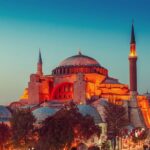
- On sunset-style departures, choose the left side if you want the darker, moodier look at sights like Hagia Sophia on the way back.
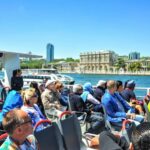
One more reality check: the boat can get crowded, and the upper deck can fill early. If you’re traveling in peak hours, go in with the mindset that you’ll be comfortable if you get in line early, but you might not get a wide open standing spot for the entire ride.
Your Route: From Galata Bridge and Tower to the Maiden’s Tower
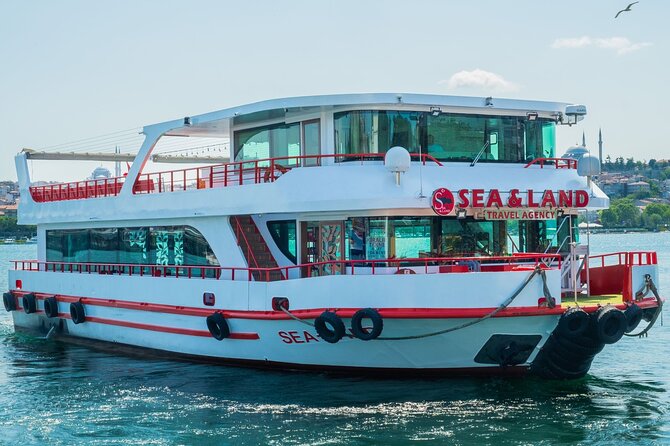
This cruise reads like an Istanbul highlight reel from the water. Some stops are “you see it close-ish,” and others are “you pass and recognize it,” but the flow is still satisfying because the coastline tells a story.
Galata Bridge and the Galata Tower area
You start with the Galata Bridge connecting the historic and modern districts over the Golden Horn. The current structure dates to 1994, while the bridge as a concept goes back to the 19th century. It’s especially notable for the contrast below and above: seafood restaurants underneath and fishermen up top.
From there, the Galata Tower comes into view. Built in 1348 by the Genoese, it’s about 67 meters tall and acts as a landmark you can orient to quickly. It’s also famous for the legend of Hezarfen Ahmed Çelebi’s flight, and today the tower includes a museum and a café.
Practical tip: tower views are best when the boat slows slightly near the sight or when you’re on the right side of the deck for your camera angle. Don’t rely on the loudspeaker here; use your eyes.
Hagia Sophia and Topkapi Palace from the Bosphorus
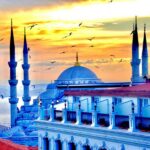
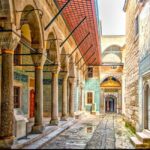
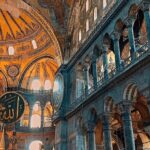
Then you get the big names that define Istanbul’s skyline. Hagia Sophia is described as built in 537 as a Byzantine cathedral, later used as an Ottoman mosque, and now a mosque again. It’s known for the massive dome and mosaics, and from the water it often feels like the city is showing off on purpose.
Topkapi Palace follows as an overlook from the water: it served as the grand residence of Ottoman sultans for nearly 400 years and includes royal treasures, sacred relics, and courtyards. Because it’s a large complex, you’ll see it as a broad silhouette more than a walk-through view, but it’s still powerful to recognize the location as you pass.
A key drawback to keep expectations realistic: the boat doesn’t stop for deep photo sessions. You’ll get angles, not slow inspection.
Galataport, Cihangir Mosque, and the “new waterfront” contrast
Near the Galataport area, you’ll see Galataport cruise port, also called Galataport. It opened in 2021 and includes a modern waterfront hub plus an underground terminal. There are luxury shops, restaurants, and museums there—so it’s a reminder that Istanbul’s waterfront keeps changing, not just repeating old scenes.
Moving along, Cihangir Mosque appears in the Cihangir neighborhood. It was built in the 16th century during Sultan Suleiman the Magnificent’s reign and is named after Cihangir, Suleiman’s son. It’s described as peaceful, and from the moving deck you’ll still feel that contrast against the busier streets inland.
You’ll also pass by the Mimar Sinan University of Fine Arts area. The university was founded in 1882 and is named for the Ottoman architect Mimar Sinan. Even if you aren’t visiting, it’s a visual reminder of how education and the arts sit right next to old waterways.
Dolmabahçe Mosque and Dolmabahçe Palace: Ottoman meets European style
Dolmabahçe Mosque is another strong marker. It was finished in 1855, and the description highlights a blend of traditional Ottoman design with Western influences. From the Bosphorus, that style mix becomes easy to spot because it doesn’t look purely “one era only.”
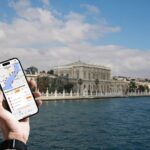
Right alongside that zone is Dolmabahçe Palace. It functioned as the main administrative center of the Ottoman Empire from 1856 to 1922. The cruise framing is helpful here: rather than you trying to guess where power was based, you get the palace positioned as part of the waterfront landscape.
You’ll also see Çırağan Palace on the Bosphorus. It’s another 19th-century Ottoman imperial palace. Seeing Dolmabahçe and Çırağan from the water helps you understand how heavily the shoreline was shaped by ruling presence and luxury architecture.
Beşiktaş Stadium, Galatasaray University, and Ortaköy
Beşiktaş Stadium, officially Vodafone Park, appears as a modern sports landmark tied to one of Istanbul’s leading football clubs. It’s a different kind of “sight,” but that change in tone is part of what makes the cruise enjoyable if you like contrast.
Galatasaray University also comes into view. The university was founded in 1481 as a school for the elite during the Ottoman Empire and is described as one of Turkey’s oldest and most prestigious institutions.
Ortaköy is next in the lineup. It’s known for cafés, art galleries, and Bosphorus views. From the boat, it often reads like a “hangout shoreline” rather than a monument district, which helps keep the cruise from feeling like only big stately buildings.
Bridges, fortresses, and the Bosphorus’s engineering story
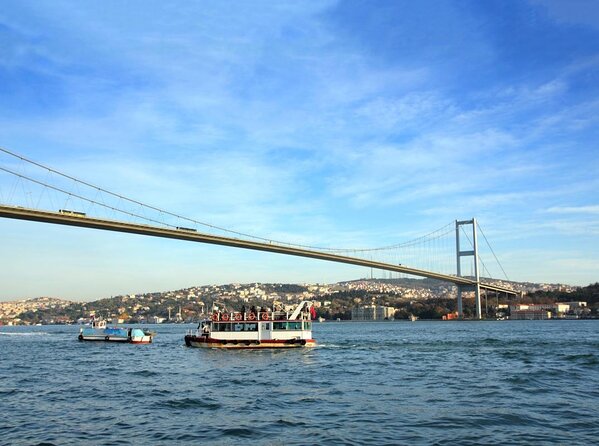
As you move forward, you’ll reach the Bosphorus Bridge, officially called the 15 July Martyrs Bridge. It connects the European and Asian sides, which makes it a natural point for passengers who want a sense of scale.
You’ll also pass by Galatasaray Island, which is a private island owned by Galatasaray University and used for educational and recreational purposes. It’s a strange and cool detail to recognize: a university-owned slice of water inside a major city corridor.
Kuruçeşme comes up as an upscale neighborhood on the European side known for scenic views and dining along the waterfront. Arnavutköy follows with a more traditional feel: narrow streets, old wooden houses, and Ottoman-era architecture that preserves a village-like vibe despite being close to the center.
Then you’ll start seeing fortifications that narrow the story down to defense. Rumeli Fortress (Rumeli Hisarı) is on the European side and overlooks the Bosphorus. On the Asian side, you’ll see Anatolian Fortress (Anadoluhisarı), also overlooking the water. Together, they frame the Bosphorus as both a route and a strategic boundary.
Along the way, the Fatih Sultan Mehmet Bridge (the Second Bosphorus Bridge) also appears, again reinforcing how modern connections layer over historic geography.
Küçüksu Pavilion, Kandilli, and military school views
Küçüksu Pavilion is described as a charming Ottoman-era palace built in the 19th century by Sultan Abdulmecid I, serving as a summer retreat for the sultans. It’s the kind of sight that looks like it belongs to a slower pace than a cruise allows, but you can still appreciate its position along the water.
Kandilli is noted as a historic and peaceful neighborhood on the Asian side. Kuleli Military High School appears as a historic military school overlooking the Bosphorus. These are not as photo-for-photo-famous as domes and towers, but they add texture—especially if you want the cruise to feel like more than a postcard loop.
Istanbul yalıs and Beylerbeyi Palace
You’ll also see references to Istanbul Yalı, historic waterfront mansions along the Bosphorus known for architecture and prime locations. On a moving boat, these mansions are often visible as repeating silhouettes along the shore—more pattern than single building.
Beylerbeyi Palace shows up as an Ottoman-era palace on the Asian side along the Bosphorus. It fits the same theme as Dolmabahçe: power and prestige sitting right on the waterline.
You’ll pass through Kuzguncuk and Üsküdar on the Asian side as well. Kuzguncuk is described as a charming historic neighborhood, while Üsküdar is listed as historic and located along the Bosphorus. If you’re trying to connect neighborhoods to geography, this is where your mental map starts clicking.
Maiden’s Tower (Kız Kulesi): the final recognizable landmark
At the end of the cruise’s landmark sweep is the Maiden’s Tower, or Kız Kulesi. It’s a small historic tower on a tiny islet at the entrance of the Bosphorus.
This is the stop that tends to feel like a full-circle moment. Even if you’re tired from scanning the shoreline, you can usually recognize the tower instantly. It’s the one last visual cue that Istanbul’s Bosphorus story is closing, not just continuing forever.
Boarding at SeaLand Travel Agency: Make Your Start Smooth
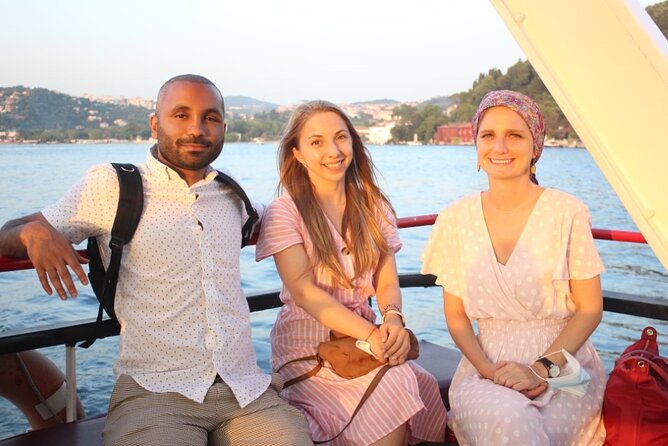
Your start point is SeaLand Travel Agency in Eminönü, at Rüstem Paşa, Ragıp Gümüşpala Cd. No:8/2, 34116 Fatih/İstanbul. The activity ends back at the meeting point, so you don’t have to worry about a one-way return.
Because it’s a smartphone-audio tour, don’t wait until you’re already sitting down to prepare your phone. Get your headphones ready, make sure the battery is topped up, and verify you can access the audio guide website before the boat leaves.
Also, if you’re a “need my own space” person, aim to be early. When the boat is crowded, the outside standing room can become tight quickly, and you’ll enjoy the cruise more if you’re not spending the first 15 minutes fighting for a spot.
Is This a Real Tour or Just a Boat Ride?
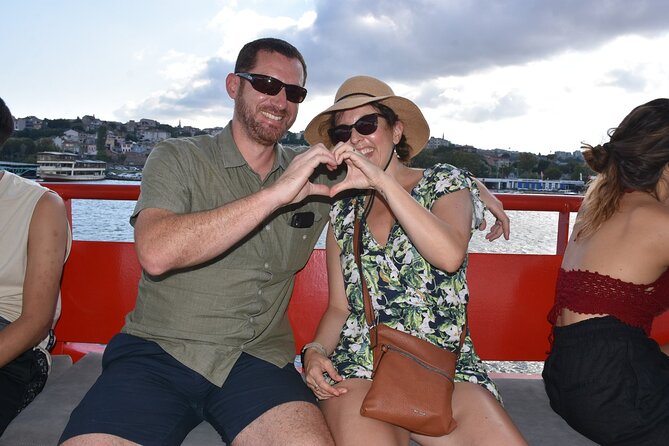
This is a sightseeing cruise, not a full guided walking tour with a host narrating every moment. The onboard sound narration can be hard to catch, especially with wind or engines, and that’s why the online GPS audio guide matters.
If your goal is:
- getting fast views of big landmarks
- learning the basics enough to connect what you see
- relaxing for two hours with tea and Nescafé
Then this works well. If your goal is:
- deep, uninterrupted commentary delivered like a museum docent
- lots of time at each site
- constant clarity from a loudspeaker host
Then you’ll likely find it limiting. The trade-off is the price and the time you get on the water.
Who Should Book This Bosphorus Cruise?
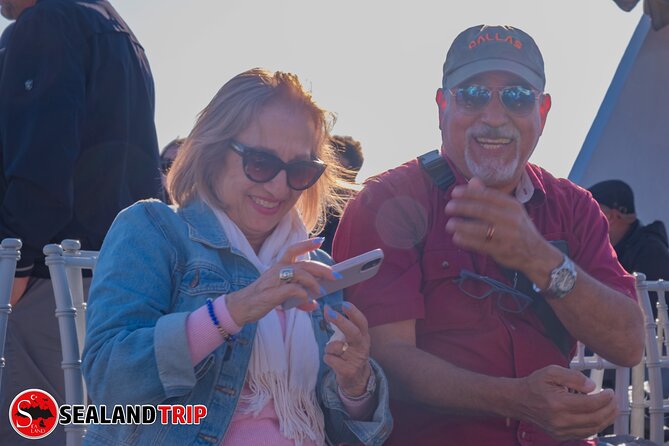
This fits best if you’re:
- visiting Istanbul for the first time and want orientation
- short on time but eager to see both coasts
- traveling on a budget and still want a structured experience
- okay using your smartphone as part of the tour
It can also work for families since it’s simple: sit, look, sip tea, listen via phone. Just plan for crowding on popular departures and bring headphones your whole group can share or use themselves.
If you’re the type who gets cranky when audio is unclear, treat the smartphone audio as the main plan, not the backup plan.
Should You Book This Bosphorus Sightseeing Cruise?
I’d book it if you want an efficient, good-value way to see Istanbul’s major waterfront landmarks in a single loop. The cruise shines when you think of it as a scenic orientation ride with helpful audio cues, not a high-detail lecture.
Do book it if:
- you can handle using your phone and headphones
- you want the Bosphorus views more than long stops
- you’re comfortable enjoying a lot of sights at passing speed
Skip it if:
- you strongly prefer a live guide speaking to the whole boat with consistent audibility
- you don’t want to deal with phone setup, even though it requires no app download
If you do go, my best advice is simple: charge your phone, pack headphones, and aim for a spot that matches your priorities. Front for easier onboard sound, left side for certain evening lighting effects, and the GPS audio as your reliable guide when the boat gets noisy.
FAQ
How long is the Bosphorus sightseeing cruise tour?
It runs for about 2 hours.
What is the price per person?
The price is listed at $12.07 per person.
Is there an audio guide, and what languages are available?
Yes. The tour includes an audio tour guide in 11 languages, and it’s offered in English.
Do I need to download an app to use the audio guide?
No. The audio guide requires no app download, and instructions are posted on the boat.
What do I need to use the smartphone audio guide?
You need your own headphones and a fully charged smartphone to access the audio guide website. The guide uses GPS.
Is WiFi available onboard?
Yes, WiFi is provided on board.
Is there a restroom on the boat?
Yes, there is a restroom on board.
Where does the tour start and end?
It starts at SeaLand Travel Agency (Eminönü) at Rüstem Paşa, Ragıp Gümüşpala Cd. No:8/2, 34116 Fatih/İstanbul and ends back at the meeting point.
Can I cancel and get a full refund?
Yes. Free cancellation is available up to 24 hours in advance for a full refund.