REVIEW · ROMANIA
Orsova: Danube’s Cauldrons Boat Tours with Audio Guide
Book on GetYourGuide →Operated by Water Taxi Orsova · Bookable on GetYourGuide
Danube Cauldrons look unreal until you’re on the water. This Orșova boat trip turns dramatic geography into a guided story, with photo stops for the big sights and an audio guide that keeps things moving without rushing. The whole vibe is built around comfort too: a small boat, a sunroof, and life jackets.
What I like most is the way you get variety in 110 minutes. You’re not stuck staring at one view. You’ll see Roman-era landmarks like Tabula Traiana and modern engineering markers like the Tabula Széchenyi, then jump to caves and a monastery.
One heads-up: it’s not for everyone physically, and the ride can get loud. If you have back issues or mobility limits, or if you struggle with hearing in noisy conditions, plan carefully—this is a speed-boat style experience and you’ll be outside a lot.
In This Review
- Key highlights you’ll actually care about
- The Danube Cauldrons: why Orșova is such a good starting point
- Getting on board at Debarcader WT without stress
- Inside the ride: 14 seats, sunroof comfort, and sound reality
- Trajan’s Plaque: where Roman pride meets cliffside views
- Decebalus Rock Sculpture: Europe’s tallest rock monument in plain sight
- Mraconia Monastery: a calm break from the speedboat energy
- Veterani Cave: optional, short, and worth it if you want underground history
- Peștera Ponicova – Vest: the cave with a through-and-through formation
- Tabula Széchenyi, Ada Kaleh, and the Iron Gates: engineering you can see
- Time on the water: how the 110 minutes really work for photos
- Price and value: what $277 per group gets you
- Who this tour fits best (and who should think twice)
- Should you book the Orșova Danube Cauldrons boat tour?
- FAQ
- How long is the boat tour from Orșova?
- How much does it cost, and is it private?
- What sights will you stop at during the tour?
- Is the audio guide included, and what languages are available?
- Do you have to pay extra for Veterani Cave?
- How long is the Veterani Cave visit?
- Where do you meet the tour?
- What should you bring, and what’s not allowed?
Key highlights you’ll actually care about
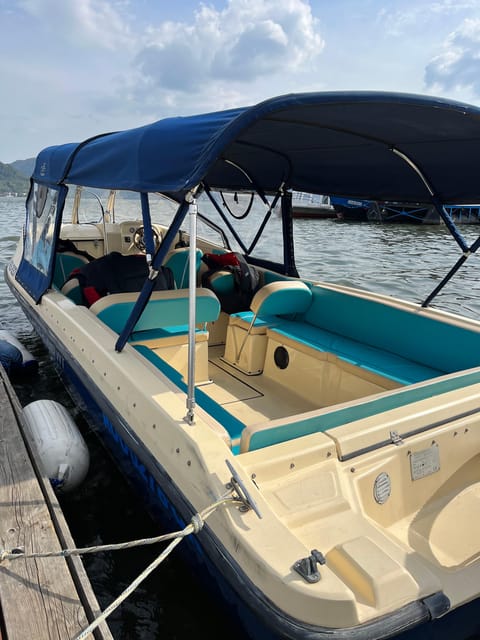
- 14-seat boat + sunroof: intimate feel, good sightlines, and less crowd pressure for photos.
- Six main attractions plus extra stops: geology, Roman history, caves, and monastery all in one run.
- Multilingual audio guide: English, Hungarian, Spanish, and German, so you can match your language.
- Photo stops that make sense: you’re allowed to get your bearings before moving on.
- Veterani Cave entry is optional and costs extra: you decide on the spot, with boat audio provided if you skip.
The Danube Cauldrons: why Orșova is such a good starting point
Orșova is a practical launch pad for one of the Danube River’s most dramatic stretches. After the Iron Gates I Dam came online in the early 1970s, the area around Cerna Bay took on a calmer, enclosed feel—perfect for a boat tour that’s meant to be comfortable, not chaotic.
From the water, the “Cauldrons” concept makes more sense. You’re looking at fast-changing angles of rock walls and cliffs, with landmarks placed like historical signposts. It’s the rare kind of sightseeing where the scenery explains the history, and the history explains why people built things exactly here.
You’ll also like that this tour is designed around short pauses. You don’t need to sprint through everything to feel like you saw the area.
You can also read our reviews of more tours and experiences in Romania.
Getting on board at Debarcader WT without stress
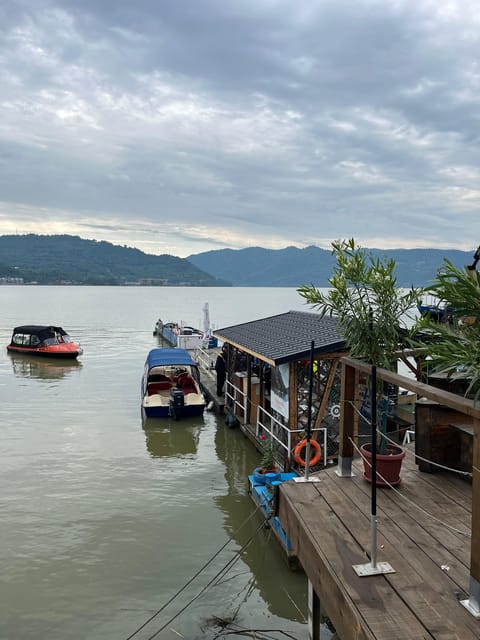
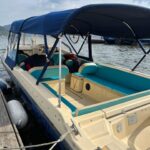
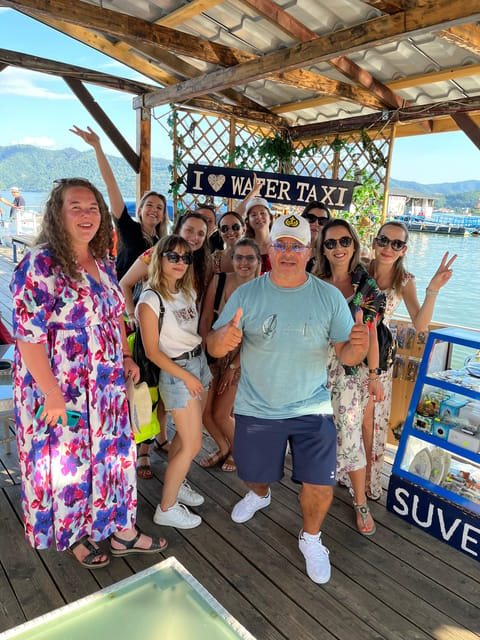
Meeting point is clearly set: a wooden platform by the shore’s walking path. Look for a pontoon with a black roof and two banners with the company logo, near Hotel Apolodor. If you arrive a few minutes early, you’ll have time to get your bearings and grab the right gear.
On board, safety is handled with provided life jackets for all passengers. That matters here because you’ll be taking photos and looking around while the boat is moving, not parked at a dock for long stretches.
Practical tips:
- Bring comfortable shoes. Even if the boat ride is the star, you’ll still walk a bit at the start.
- Bring headphones. The audio guide is included, and you’ll have a smoother experience if you can hear clearly over engine noise.
- Pack sunglasses and sunscreen. The sunroof helps, but you’ll still be exposed while scanning caves and cliffs.
Inside the ride: 14 seats, sunroof comfort, and sound reality
The boat holds up to 14 guests, which is a big part of why this tour feels manageable. With fewer people, photo stops feel less like a crowd funnel and more like timed breaks.
The sunroof is more than a nice touch. It gives you a sheltered look at the sky and rock faces without making you feel boxed in. If it’s sunny, you’ll be happier under it. If it’s bright, it can also reduce glare.
The only caution is sound. You’ll be cruising along the river with a working engine, and that can make spoken audio harder to catch. The good news: the tour includes a multilingual audio guide (English, Hungarian, Spanish, German). Still, do yourself a favor and use headphones, keep volume at a level you can handle, and expect some parts to be more audible than others depending on speed and wind.
Trajan’s Plaque: where Roman pride meets cliffside views
Your first major stop is Trajan’s Plaque, a classic “read the place” moment. You’ll have a photo stop and a guided tour component here, which is exactly what you want early on.
This is where the tour sets up the big theme: this stretch of the Danube wasn’t just scenic. It was strategic, historical, and worth marking. Even if you don’t consider yourself a history buff, Roman-era landmarks tend to make the river feel less random and more intentional.
Decebalus Rock Sculpture: Europe’s tallest rock monument in plain sight
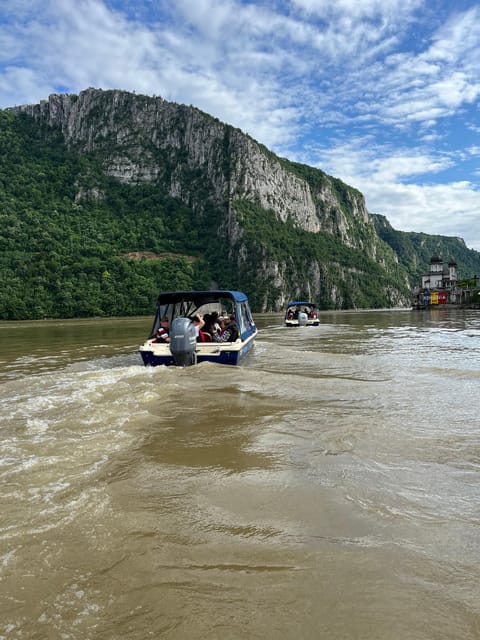
Next comes the Rock Sculpture of Decebalus. This is one of those landmarks that looks unbelievable at first. The scale hits you when you’re close enough to see it as a whole, not a postcard.
You get another photo stop and guided tour time. Take a moment to stand back and look at how the monument sits against the cliff face. The point isn’t just the size. It’s how the art is made to live in the landscape, tied to the river route people use to this day.
If you’re traveling with kids, this is also a great “wow” anchor stop. It gives everyone something concrete to point at while the guide explains context.
Mraconia Monastery: a calm break from the speedboat energy
Then the tour shifts tone at Mraconia Monastery. You’ll have a photo stop, guided sightseeing, and time to absorb the setting.
Monasteries along big rivers often feel like they’re holding time still. The river moves, boats pass, and then you get a place that’s older than modern travel habits. Even in a short visit, it helps you feel the long timeline of the area.
This stop is a nice contrast if you’re mostly coming for caves and engineering. It adds spirituality and human scale to the rock-heavy scenery.
Veterani Cave: optional, short, and worth it if you want underground history
Veterani Cave is a guided visit of about 20 minutes. You’ll also have to consider an extra entry fee (around $2), and visiting this cave depends on security measures at the time. The cave drop-off depends on those conditions, so be ready for the plan to be adjusted.
Here’s the practical part: you must agree to the extra cave visit. If you choose not to go, you’ll still get the audio guide on the boat, so you won’t feel like you lost the tour.
This stop suits you if:
- you enjoy short cave visits without a long hike
- you like military and strategic history themes
- you’re curious how people used natural features for shelter
One caution for comfort: caves often mean cooler air and uneven surfaces. If you’re sensitive to enclosed spaces, think twice.
Peștera Ponicova – Vest: the cave with a through-and-through formation
After Veterani, you’ll reach Peștera Ponicova – Vest. You’ll have a photo stop plus a visit and guided tour.
The standout detail here is the cave’s through-and-through formation. That means it can feel less like a one-way tunnel and more like a natural passage that frames views as you move through. It’s exactly the kind of feature that helps the audio guide click into place, because the geology isn’t abstract—it’s visible and physical.
As with any cave stop, wear comfortable clothes and keep your expectations realistic for the time you have. You’re not going to do a full spelunking expedition. You’re getting a guided taste.
Tabula Széchenyi, Ada Kaleh, and the Iron Gates: engineering you can see
Tabula Széchenyi is a history-and-engineering marker that ties this river segment to progress. You’ll have a photo stop and guided sightseeing time, and you’ll likely appreciate it most if you like when people explain why something exists, not just what you’re looking at.
Then you’ll move on toward Ada Kaleh and the Iron Gates area. Ada Kaleh is described as an island now about 30 meters under the water, so you’re learning about a place you can’t simply walk to anymore. That twist makes the story more than sightseeing trivia. It’s about how dams and river changes rewrite geography.
The Iron Gates are a must-see theme in this region. Even without going into extreme technical detail, you’ll feel how this stretch of the Danube demanded engineering and planning. Standing on a boat here gives you a moving perspective that fixed viewpoints can’t match.
There’s also an additional downstream tour option: a 40-minute extension close to the Iron Gates with a stop for sightseeing and historical information about Ada-Kaleh. You’ll want to consider this if you think 110 minutes will feel a bit too short.
Time on the water: how the 110 minutes really work for photos
The tour is 110 minutes total, including time for guided stops and visiting at least one cave. That’s a good length for first-timers because you get real variety without needing half a day.
The structure is built around:
- photo stops at major landmarks
- shorter guided segments so you don’t lose momentum
- one longer cave visit (Veterani at about 20 minutes)
If you care about photos, here’s how to get better results without slowing the group down: when you arrive at a stop, do one wide shot first, then one closer shot. After that, look for where the monument or cave opening frames the river bend. These landmarks are meant to be read from the water’s angle.
Price and value: what $277 per group gets you
This tour is priced at $277 per group up to 6. That’s important. It means the cost can be very reasonable if you’re traveling with a small group of friends or family.
For that money, you’re getting:
- a round-trip boat ticket from Orșova
- a guided tour experience along the river
- stops at six main attractions with photo opportunities
- a multilingual audio guide
- a comfortable boat with sunroof features
So the real value question is: how expensive is one of those major sightseeing stops on its own? Here, you’re bundling multiple landmark types—Roman sites, a sculpture, a monastery, caves, and engineering markers—into one powered ride with interpretation.
If you’re traveling solo or as a couple, the per-group pricing can feel less “small” than it looks on paper. If that’s you, check whether joining is possible within your plan. If you’re set on privacy, this format can still be good, because it keeps the experience compact.
Who this tour fits best (and who should think twice)
This is designed for people who want a mix of nature and history without heavy hiking. It also works well for families and couples because the boat experience keeps everyone together.
It is not suitable for:
- pregnant women
- people with back problems
- people with mobility impairments
- wheelchair users
- people with recent surgeries
That list matters. The river ride involves movement, and you’ll likely be standing and shifting positions at stops. If you or someone in your group has limitations, a different style of tour with fewer physical demands might be safer.
Also, if you’re very noise-sensitive, plan for the fact that speed and engine sound can affect clarity, even with the audio guide. Bring headphones and keep expectations flexible.
Should you book the Orșova Danube Cauldrons boat tour?
If you want a fast, well-rounded way to see the Danube Cauldrons region, I’d book it. The combination of Decebalus Rock Sculpture, Roman-era Tabula Traiana, monastery time, and cave visits gives you more than one flavor of “why this place matters.”
I’d hesitate if:
- you can’t handle motion or standing for periods
- you need quiet audio to enjoy guides (engine noise can be a factor)
- you’re not interested in short cave stops that may depend on access/security at the time
If you can handle those trade-offs, this is a smart use of 110 minutes and a great first look at the Iron Gates area from the water.
FAQ
How long is the boat tour from Orșova?
The total duration is 110 minutes.
How much does it cost, and is it private?
It costs $277 per group up to 6. This is a private group experience.
What sights will you stop at during the tour?
You’ll have stops and photo opportunities at six main attractions, including Trajan’s Plaque, the Rock Sculpture of Decebalus, Mraconia Monastery, Peștera Ponicova – Vest, Tabula Széchenyi, plus other guided sights such as Ada Kaleh and the Iron Gates.
Is the audio guide included, and what languages are available?
Yes, the audio guide is included. Languages listed are English, Hungarian, Spanish, and German. A host or greeter is available in English and Romanian.
Do you have to pay extra for Veterani Cave?
There is an entry ticket cost for Veterani Cave, listed as approximately $2. Visiting it is optional and depends on agreed participation and on-site security measures.
How long is the Veterani Cave visit?
Veterani Cave has a guided visit time of about 20 minutes.
Where do you meet the tour?
You meet at Debarcader WT: a wooden platform by the shore’s walking path with a pontoon covered by a black roof. It’s near Hotel Apolodor, and you should look for two banners with the logo.
What should you bring, and what’s not allowed?
Bring comfortable shoes, sunglasses, sunscreen, comfortable clothes, headphones, and cash. Oversize luggage, large bags, alcohol, and drugs are not allowed.