REVIEW · ATHENS
Athens: Acropolis Ticket with Audio Guide
Book on GetYourGuide →Operated by Clio Muse Tours - Greece · Bookable on GetYourGuide
Timed entry changes the mood at the Acropolis.
This Athens Acropolis e-ticket with audio guide is built for self-paced sightseeing, with a specific time slot for Acropolis Hill and optional upgrades to the Acropolis Museum and several other major archaeological stops. You get the stories on your smartphone (downloadable and usable offline), so you can walk the ruins at your speed without hunting for a guide.
I especially like the skip-the-line advantage that comes with prearranged e-tickets, plus the freedom of a smartphone audio tour that you can start anytime and replay later. There’s also real value in the optional combo choices, since the ticket can help you stitch together a full ancient-Athens loop in one booking.
One thing to watch: the experience is self-guided, so you’ll need to be ready to follow directions and manage your own pacing—some people find navigation between points a little tricky without a live voice leading them.
In This Review
- Key Things I’d Focus On Before You Go
- Acropolis Hill Timed Entry: Fast Access Without the Guesswork
- Getting There Like a Local: The Metro Exit That Actually Works
- The Offline Audio Guide: How to Use It So It Doesn’t Become Background Noise
- Acropolis Hill: What You’ll See (and How to Keep Your Day Comfortable)
- Optional Upgrade: Acropolis Museum When You Want the Whole Story
- Optional Combo Tickets: Agora, Kerameikos, Temple of Zeus, National Archaeological Museum
- Timing Tips: When to Arrive for Better Views and Less Crowd Pressure
- Navigating Without a Live Guide: What’s Easy, What Takes Patience
- Practical Stuff That Makes or Breaks the Day
- Price and Value: Is $47 Worth It?
- Who This Works Best For
- Should You Book the Acropolis Ticket With Audio Guide?
- FAQ
- What’s included with the Acropolis Hill e-ticket?
- Do I need a live guide for this experience?
- Can I pick the time I enter Acropolis Hill?
- Which languages are available for the audio guide?
- Does selecting options automatically include other attractions besides the Acropolis?
- How long does the visit take?
- Can I use the audio guide more than once?
- Is there a refund if I change my plans?
- How do I reach the Acropolis from the metro?
Key Things I’d Focus On Before You Go

- Timed entry to Acropolis Hill means less time stuck at the front door.
- Offline audio tours on your phone let you control the pace and replay sections anytime.
- Optional combo access can turn one visit into a multi-site ancient Athens day.
- Enter each attraction once within 5 days, which helps if you’re mixing days or adapting to crowds.
- Smart packing matters: no strollers, and avoid luggage/large bags.
Acropolis Hill Timed Entry: Fast Access Without the Guesswork

The biggest practical win here is that your Acropolis Hill entry isn’t a free-for-all. You choose a time slot for the hill, then you go in when your window starts. That matters because the Acropolis area can turn into a traffic jam—both for ticketing and for moving from checkpoint to checkpoint.
What you’re really buying for your $47 price is time and sanity. You don’t have to spend precious morning or afternoon hours at ticket booths, and you’re less likely to lose momentum after you get there. The e-ticket approach also helps if your day has multiple moving parts—especially in Athens, where heat, lines, and walking distance all pile up fast.
A small heads-up: some reviews mention that later time slots can feel tight near closing, like arriving for a 4pm slot and having the site wrap up around 4:55pm. So if you book a later entry, plan to walk confidently through the highlights during your allotted time.
You can also read our reviews of more tours and experiences in Athens.



Getting There Like a Local: The Metro Exit That Actually Works

You’re not left wandering in circles. The route to the Acropolis is clearly described: exit Acropolis metro station (Line 2), head toward Dionysiou Areopagitou Street, and walk along it. The Theatre of Dionysus should be on your right.
That’s a useful anchor because the Acropolis area is bigger and steeper than it first looks on a map. If you can find the Theatre of Dionysus landmark, you can keep orienting yourself even if the entry line (or crowd flow) is doing its own thing.
Also note the meeting point can vary depending on the option you booked. In practice, don’t assume the same spot every time—use the instructions you receive after booking, and check your spam folder if you’re expecting a separate email with the booking-page link.
The Offline Audio Guide: How to Use It So It Doesn’t Become Background Noise

This ticket’s star tool is the self-guided audio tour on your smartphone, with offline content. You don’t need to rely on spotty data while you’re walking among stone ruins and windy staircases.
Here’s what I love about this setup: you can choose your listening style.
- Listen a bit ahead before you arrive, so you understand what you’re looking at.
- Then switch to “on-site mode” and follow along at each stop.
One common frustration is that directions can be a little challenging to follow if you’re bouncing around or if you miss where the next audio segment starts. So I recommend two habits:
1) Keep your headphones plugged in (and your phone charged).
2) Pay attention to the first few chapters so you know what area you’re in.
A tip from experience shared by other visitors: some audio pacing starts with context about the slopes. If you prefer seeing the Acropolis top areas first, you might find it helps to start by looking up at the main structures, then use the slope-related sections as you work your way down.
And yes—people do note the audio can be long-winded. That’s not a flaw if you treat it like a menu: play when you want the story, pause when you want silence and photos.
Acropolis Hill: What You’ll See (and How to Keep Your Day Comfortable)

Acropolis Hill is the whole point of your timed entry, and it’s also where you’ll feel the biggest physical difference between a casual photo stop and a real visit. Expect steep walking, lots of stairs, and very little shade when the sun is strong.
From the details shared, you’ll likely encounter major highlights such as the Parthenon area (even with some scaffold mentioned) and the Temple of Nike. You may also notice how the site is organized across different levels, including slope areas.
The self-guided format helps because you can match your pace to your energy:
- Want a slow, story-heavy walk? Keep listening and stop often.
- Want quick key photos? Skip ahead and focus on views.
Comfort tips matter here more than you’d think. Bring comfortable shoes, water, and consider a sun hat and sunscreen. One visitor even suggested an umbrella after rain, since shelter can be limited.
Optional Upgrade: Acropolis Museum When You Want the Whole Story
If you add the Acropolis Museum option, you turn your visit from “ruins first” to “ruins plus meaning.” The Acropolis Museum is included only if you select that option, so make sure your booking reflects what you want to see.
Why it’s worth considering: artifacts and displays help you connect myths, politics, and daily life to objects you can actually examine. On the hill, you’re mostly absorbing architecture and layout. In the museum, you get more context—so the stories the audio guide is telling can click into place.
Another practical reason: if the weather is intense, the museum can act like a “reset button” with controlled indoor time. It’s also a great follow-up once you’ve stood in front of the stones and want to understand what they meant.
My advice: if you only have a half day and you already feel “museum fatigue” coming on, you can skip it. But if you enjoy history that connects to real objects, the museum upgrade usually makes the whole day feel more complete.






Optional Combo Tickets: Agora, Kerameikos, Temple of Zeus, National Archaeological Museum

This ticket can expand into a multi-site Athens day with optional access to big hitters like:
- Ancient & Roman Agora
- Kerameikos
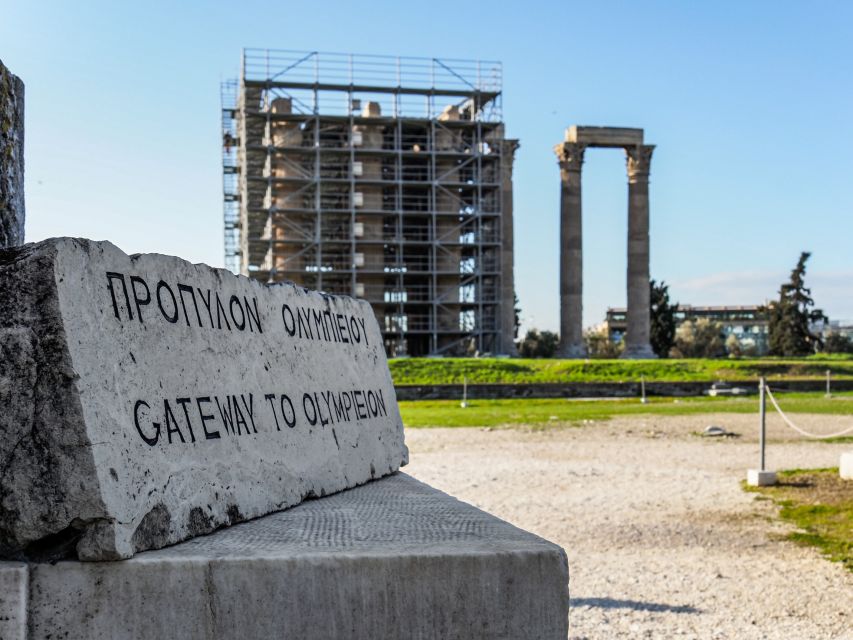
- Temple of Zeus
- National Archaeological Museum
The value here is scheduling. You can plan a route that doesn’t force you to backtrack for tickets. And since you can enter each attraction once within 5 days, you’re not locked into one single day if timing or crowds get weird.
How to decide which add-ons to pick:
- If you like political life and public space, prioritize the Agora and its related museum context (when selected).
- If you want something a bit quieter and “less photo-pipeline,” Kerameikos can be a good choice.
- If you want the grand monumental feel, the Temple of Zeus fits that mood.
- If your priority is sheer artifact variety and a bigger museum experience, the National Archaeological Museum is a strong option.
Just keep your expectations realistic: adding multiple sites means more walking and more heat management. The audio format helps because you can pause and listen only when it feels worthwhile, but your legs still have to do the work.
Timing Tips: When to Arrive for Better Views and Less Crowd Pressure

You’ll see a clear theme in the feedback patterns: timing changes everything.
Some people love going early—like an 8am start—because the morning crowds are lighter and it’s cooler. Others recommend coming later in the afternoon, after the big tour groups have dispersed. One visitor even said an afternoon approach felt smoother after crowds of the morning cycle.
There’s no perfect time because Athens crowd flow shifts daily. But you can use a couple of strategies:
- If you hate crowds more than you hate early mornings, book the earliest slot you can tolerate.
- If you prefer not to rush and you like the idea of calmer walking, aim for later, but don’t plan on lingering if the site is nearing closing (that 4pm/4:55pm example is worth respecting).
Also, consider the specific entrance/crowd behavior. One review notes using a smaller entrance on the south side opposite the museum helped avoid queues. The audio guide won’t do magic for line lengths, but knowing which entrance feels calmer can save your day.
Navigating Without a Live Guide: What’s Easy, What Takes Patience

This experience is designed for self-guided touring. That’s liberating, but it does mean you’re responsible for keeping your bearings.
The good news: the audio guide is built to support you. It’s provided in multiple languages (including English and several others), and it’s meant to run on your phone with offline content. You can also use the audio tour repeatedly anytime, before or after your visit.
The tricky part is “handoff moments,” when you move from one location to the next. Some visitors report that directions between highlights can require patience to locate the next point. If you run into that, don’t panic—slow down, look for the landmarks your audio is referencing, and give yourself a little extra time rather than trying to cram everything.
One practical move: don’t wait until you’re already at the entrance to start the audio. If you listen briefly beforehand, you’ll know what area you’re targeting and which gate/zone you’re aiming for—this alone can cut down confusion.
Practical Stuff That Makes or Breaks the Day

Here’s the practical checklist that keeps the Acropolis experience enjoyable rather than exhausting.
What to bring
- Comfortable shoes
- Water
- Sun hat and sunscreen
- Headphones
- A charged smartphone
- Passport or ID card (a copy is accepted)
What not to bring
- Baby strollers
- Luggage or large bags
Small safety note: one visitor reported an encounter at the entrance involving very young pickpockets and later alerted staff. That doesn’t mean you should live in fear, but it does reinforce a smart habit: keep your valuables secure and be extra aware in entry queues.
And remember: your time slot is for Acropolis Hill, but other attractions may be part of an optional combo. Make sure you’ve selected the right options so you’re not disappointed once you’re already there.
Price and Value: Is $47 Worth It?
At $47 per person, you’re paying for three things more than just a ticket:
1) Prearranged entry into Acropolis Hill with a time slot.
2) Skip-the-line convenience that saves time and reduces stress.
3) A downloadable audio guide that gives meaning to what you’re seeing.
If you’re comparing this to showing up and waiting in multiple lines for tickets and entry, the value becomes clearer. You’re less likely to lose half your day to queues—and that’s important when walking, heat, and crowd surges are part of the bargain.
Also, the optional upgrades can increase value without turning your trip into a logistical nightmare. If you were already planning to visit the Acropolis Museum or add one or two major archaeological sites, choosing the combo option means you’re not paying again for separate ticketing workflows.
One more value angle: each attraction can be entered once within 5 days. That flexibility can be surprisingly helpful if your itinerary changes due to weather or timing.
Who This Works Best For
This ticket is a strong fit if you want control.
You’ll probably love it if:
- You prefer self-paced touring over waiting on a group.
- You want a story guide without the rigidity of a fixed schedule.
- You’re planning multiple ancient sites and want a convenient e-ticket structure.
It’s also a good choice for people who hate wasting time at ticket counters, since the e-ticket approach is built for fast scanning and smooth entry.
If you’re the type who wants constant human interaction and Q&A, you might find a purely audio approach less satisfying. Still, even in that case, audio plus timed entry can be a practical way to see the Acropolis efficiently, then pair it with whatever kind of guided experience you prefer at another stop.
Should You Book the Acropolis Ticket With Audio Guide?
Yes—book it if your top goal is fast Acropolis entry and you’re happy touring independently with an audio story in your headphones. The timed slot plus offline audio is a solid combination for squeezing a meaningful visit into a tight day.
I’d think twice if:
- You strongly prefer a live guide for all context and navigation.
- You don’t want to manage your own pacing and directions between stops.
- You’re traveling with equipment that won’t work for the site rules (like strollers or large bags).
If you can handle a little self-navigation and you pack for heat and walking, this is one of the more practical ways to experience the Acropolis area without spending your day trapped in lines.
FAQ
What’s included with the Acropolis Hill e-ticket?
You get an Acropolis Hill adult e-ticket with a time slot, plus a self-guided audio tour on your smartphone with offline content. If you choose the relevant option, you’ll also get entry to the Acropolis Museum.
Do I need a live guide for this experience?
No. The tour includes self-guided audio tours, and it does not include a live guide.
Can I pick the time I enter Acropolis Hill?
Yes. You choose a time slot for Acropolis Hill during the booking process via the provider’s separate email and booking page.
Which languages are available for the audio guide?
The audio guide is available in English, Chinese, French, Italian, Greek, Spanish, and German.
Does selecting options automatically include other attractions besides the Acropolis?
Other sites are available as optional combo upgrades, such as the Acropolis Museum, Ancient & Roman Agora, Kerameikos, Temple of Zeus, or the National Archaeological Museum. Your entry depends on which options you select.
How long does the visit take?
The duration range is 40 minutes to 3.5 hours, depending on your starting time and how long you spend exploring.
Can I use the audio guide more than once?
Yes. The audio tours can be used repeatedly and anytime, before or after your visit.
Is there a refund if I change my plans?
No. The activity is non-refundable.
How do I reach the Acropolis from the metro?
Exit Acropolis metro station (Line 2), walk toward Dionysiou Areopagitou Street, and follow it. You should see the Theatre of Dionysus on your right.