REVIEW · ISTANBUL
Istanbul: Bosphorus Cruise w/Audio Guide and Sunset Option
Book on GetYourGuide →Operated by Royal Line Holidays · Bookable on GetYourGuide
A Bosphorus cruise is the fastest way to read Istanbul. From the water you get the big landmarks lined up in one sweep, plus an offline smartphone audioguide that explains what you’re seeing as you pass it. It’s a simple 2-hour plan with a clear goal: sights from the Golden Horn to the bridge crossings.
What I like most is the mix of payoff and structure. You cruise by major waterfront icons like Hagia Sophia and Topkapi Palace (heard in the audio) while the boat route also hits places such as Galata Tower, Dolmabahçe Palace, Ortaköy, and Maiden’s Tower. The other big win is practical comfort: there’s indoor seating when wind kicks up, and the guide app works offline after you download it.
The main drawback to plan for is weather and timing. The Bosphorus can get chilly and windy, especially if you sit outside, and the meeting point requires a short walk down to the pier.
In This Review
- Key takeaways before you go
- Why this Bosphorus cruise is a smart Istanbul overview
- Meeting at Gazete Market: how to avoid the first 15 minutes of stress
- Audio guide on your phone: the best way to get value from the $14 price
- Golden Horn start: why the cruise feels different in the inner harbor
- Galata Tower to Dolmabahçe: the Europe-side stretch you’ll remember
- Ortaköy to the bridges: the moment you cross the true divide
- Beylerbeyi and Maiden’s Tower: end with a classic Istanbul icon
- Price, value, and what you should watch for on board
- Who should book this Bosphorus cruise, and who might skip it
- Should you book the Bosphorus Cruise with Audio Guide and Sunset Option?
- FAQ
- FAQ
- Where is the meeting point?
- How long is the cruise?
- Is the audioguide available in multiple languages?
- Do I need internet to use the audio guide?
- Is hotel pickup included?
- Are food and drinks included?
- Is there indoor seating on the boat?
- What should I bring for the cruise?
Key takeaways before you go
- Offline audioguide on your phone: download before you board so you don’t rely on internet.
- A route that hits both continents: you’ll see the coast that forms the Asia/Europe divide.
- Landmarks come in sequence: Golden Horn sights early, then Galata, Dolmabahçe, Ortaköy, and bridge fortresses.
- Plan for wind: bring a layer; get comfortable either inside or on the open decks when conditions are good.
- Add-ons are optional: photos and onboard extras cost extra, so choose calmly and check before you pay.
- Two meeting options: Gazete Market (opposite Hagia Sophia) or Cafe Minared if that’s easier for you.
Why this Bosphorus cruise is a smart Istanbul overview
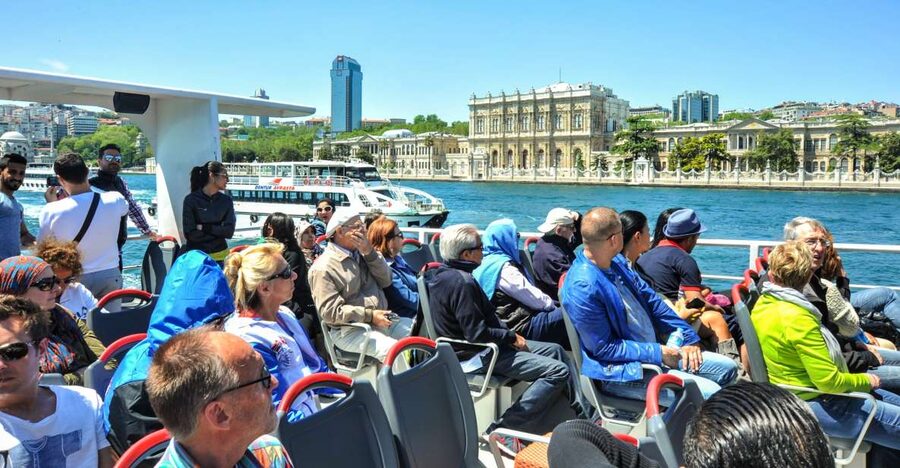
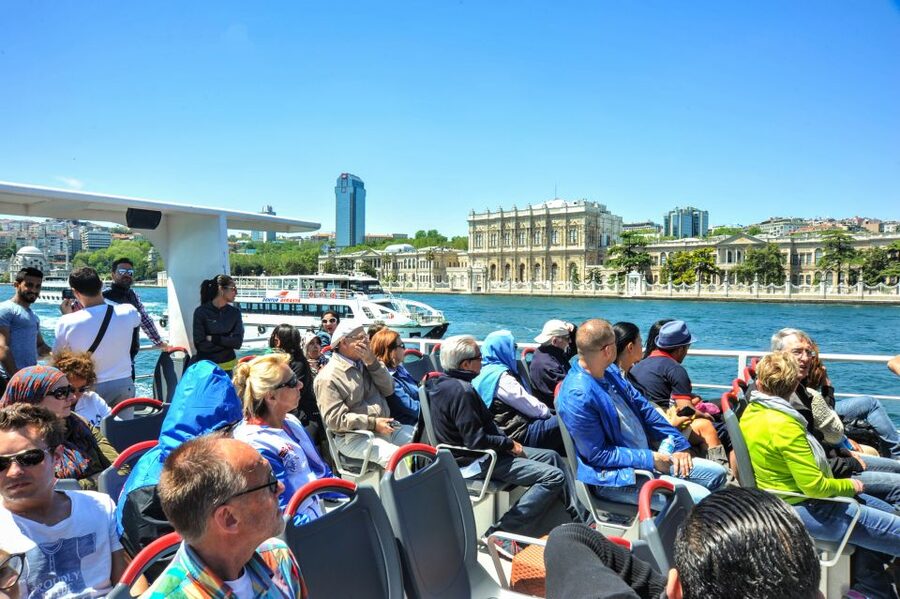
Istanbul from land can feel like a puzzle. Streets curve, neighborhoods change fast, and you can spend half a day just getting from one viewpoint to another. This cruise cuts that effort by giving you one long sightline: waterfront palaces, mosques, fortresses, and towers sliding past on the Bosphorus and the Golden Horn.
What makes this particular option feel good is that it’s not only scenic. You don’t just watch the skyline—you get context. The audioguide is on a smartphone and is multilingual, so you can match the landmark names to what you’re seeing in real time. That matters because many of Istanbul’s best-known buildings are massive, layered, and easy to misread if you only see the exterior once.
Also, this route is built around the geography. The boat goes along the Golden Horn (Istanbul’s famous inner harbor) and then transitions into the Bosphorus strait, which acts like the continental boundary between Asia and Europe. You’re not learning Istanbul in a lecture—you’re seeing how the city looks when it’s shaped by water.
If you’re short on time or you want a “reset” day after temples and museums, this works as your middle-of-trip perspective check. Even if you already know Istanbul’s poster buildings, seeing how they sit along the shoreline usually changes your mental map.
You can also read our reviews of more tours and experiences in Istanbul.


Meeting at Gazete Market: how to avoid the first 15 minutes of stress
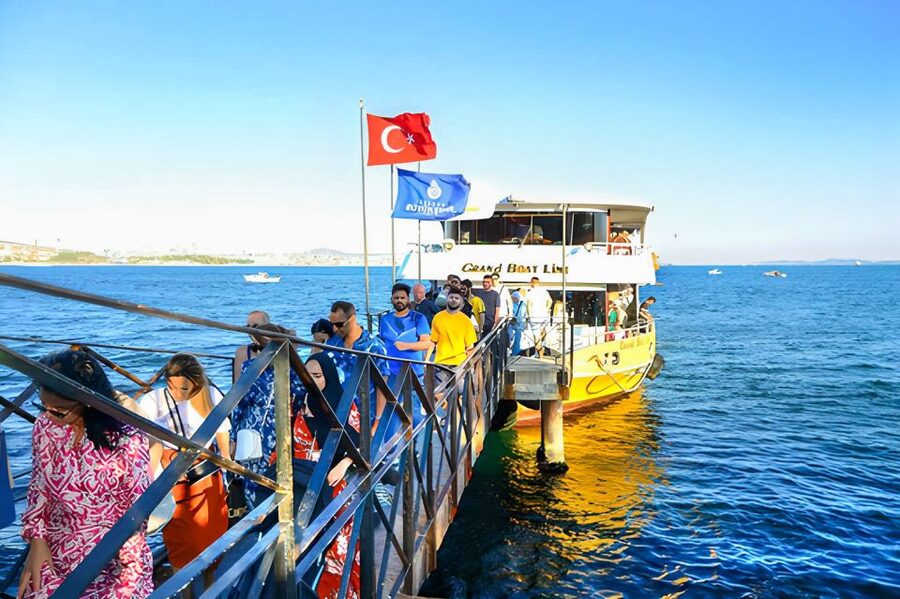
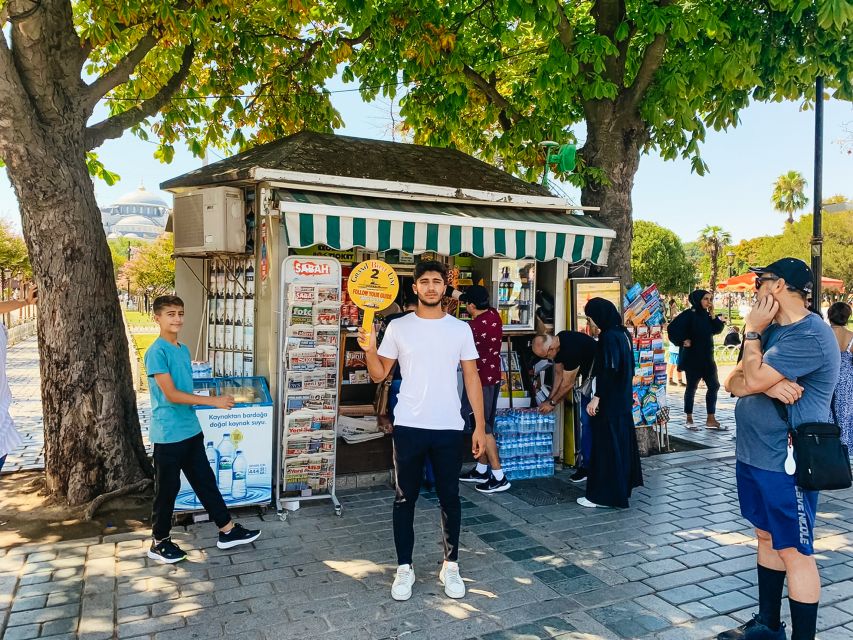
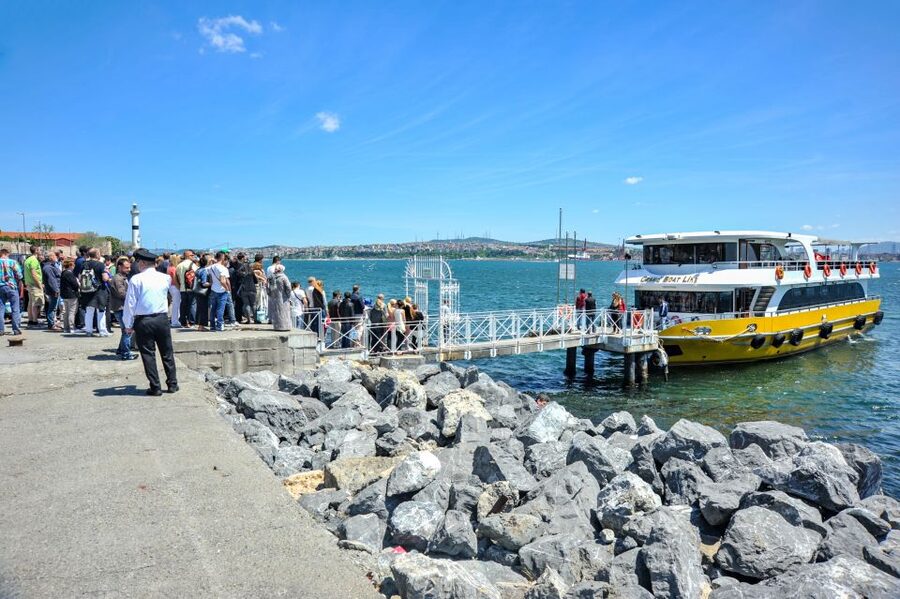
The meeting point is set up for an easy visual cue, but it still helps to arrive with a calm plan. Meet your host in front of the Gazete Market kiosk opposite Hagia Sophia. Look for the Grand Boat Line sign and the guide holding a yellow umbrella. From there, you’ll walk down to the pier behind the grand mosque—about 10 minutes.
There’s also an alternative meeting option at Cafe Minared. If you choose that one, it can be helpful to ask staff on-site where the group is lining up, because the location can be easy to miss if you’re just scanning for a sign.
Two practical tips I’d use:
- Give yourself buffer time for the walk to the pier. People report it can be closer to 10–15 minutes depending on the flow of the crowd.
- When you reach the pickup area and see lots of groups, ask which boat your host is assigning. Some trips may run with more than one boat if lines get busy.
Once you’re at the dock, it’s straightforward: get on, find your seat, and start the audioguide download before you leave the shore area.
Audio guide on your phone: the best way to get value from the $14 price
This isn’t a “you can listen later” cruise. The audioguide is part of the experience, and it’s designed for smartphones. The good news is that it’s built to work without internet after you download the app. So you’re not stuck hunting for signal around Hagia Sophia and the pier.
The guide content is multilingual. The audio app options include English, Spanish, Russian, Arabic, German, Italian, French, and Portuguese. Hosts are also listed in multiple languages, including English, Russian, Arabic, Spanish, German, French, Italian, and Portuguese. That means you’re not limited to just one narration style if you’re traveling as a group.
Here’s the smartest way to use it:
- Start listening right after boarding so you can connect the landmark names to the first major visuals on the route.
- If you’re planning photos, pause audio for a few seconds while you frame shots, then resume. You’ll catch the next landmark more cleanly if you aren’t multitasking constantly.
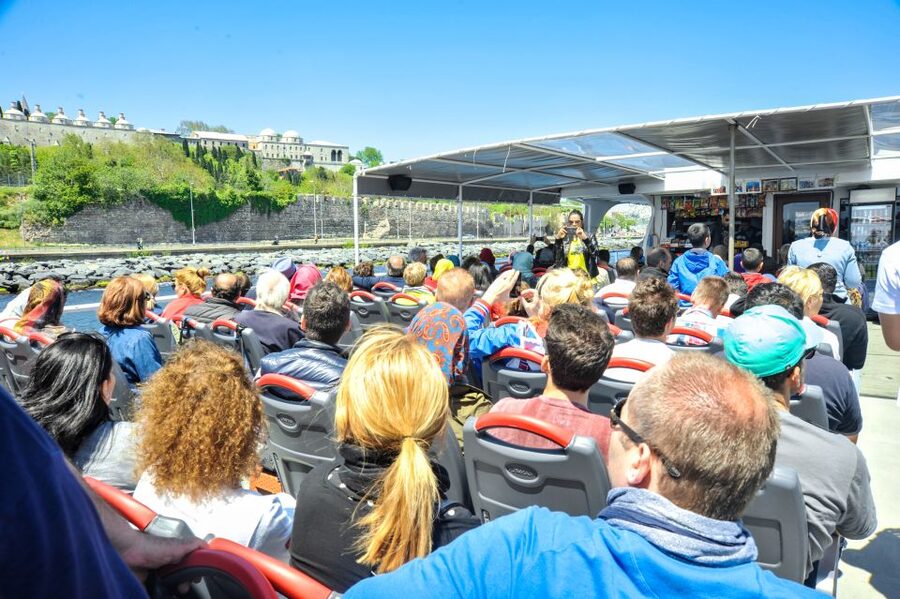
Also, the boat has an indoor area. That matters for audio clarity because wind can make outdoor listening harder. If you’re sensitive to cold, you can stay indoors for the later parts of the ride and still follow along.
Golden Horn start: why the cruise feels different in the inner harbor
Your cruise begins on the Golden Horn side. This harbor is often described as the world’s largest natural harbor, and from the water the shape of it becomes obvious quickly. You’re not dealing with open-sea waves; you’re seeing how Istanbul gathers itself around water corridors and dense shoreline neighborhoods.
This early segment is a good warm-up. The skyline reads more like a city portrait: the historic silhouettes, waterfront buildings, and the way bridges and towers organize the view. It’s also where the audioguide helps you “name” what you’re seeing so you’re not just watching pretty waterfronts.
Even if you’ve visited Hagia Sophia on land, you’ll likely get a different sense of scale from the water. On this cruise, Hagia Sophia and Topkapi Palace show up as part of the landmark highlights in the narration, giving you a guided framework as the boat shifts into the Bosphorus.
One caution: on the Golden Horn, it’s easy to keep your eyes glued to the most famous buildings and miss the smaller waterfront details. If photography is your thing, make a habit of shooting one wide view early, then a close detail view a few minutes later. That gives you both the “Istanbul postcard” and the personal texture of the shoreline.
Galata Tower to Dolmabahçe: the Europe-side stretch you’ll remember
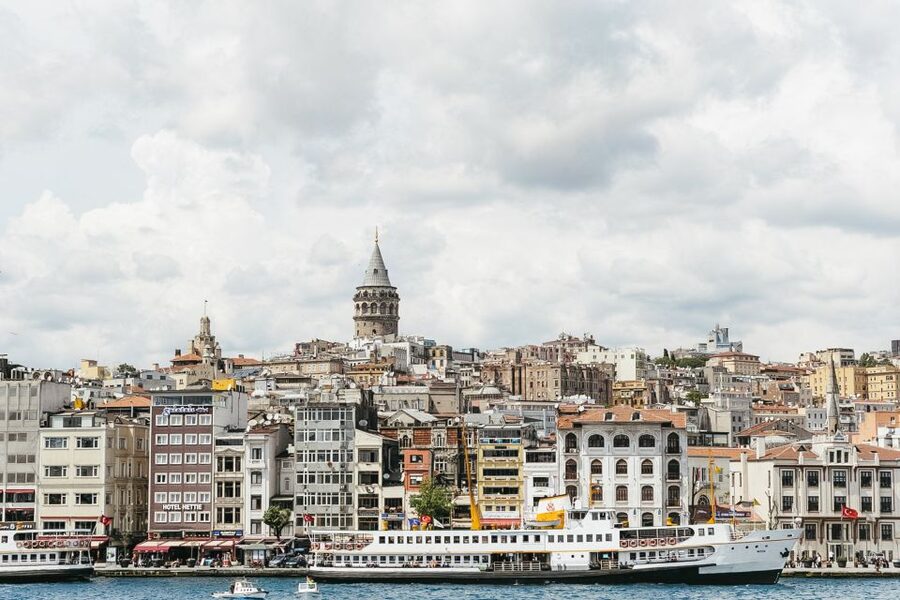
After the Golden Horn, the route brings you into the main showpiece area on the European side. Galata Tower appears in the itinerary, and it’s one of those landmarks that reads instantly even if you’re seeing it for the first time. From the boat, it looks like an exclamation point rising above the waterfront.
A little farther along, you pass by Dolmabahçe Palace. Even if you’re not a palace person, this stop is valuable because the Bosphorus frontage shows you the relationship between imperial power and the sea. It’s architecture that faces the water, not just the streets.
You’ll also see Ortaköy Mosque and the Ortaköy area from the water. Ortaköy is known for its seaside presence, and from the cruise you get a calmer, clearer angle than you’d get from a street. This is the part of the trip where the light can make a big difference. If you’re doing a sunset option, this area is usually the kind of scenery that looks best with softer evening tones, but even in daylight you’ll get strong views.
Practical seat advice here: ask your host which side to sit on. One review explicitly recommends doing that, and it’s the kind of small step that can upgrade your photos instantly. The route is fixed, but where you sit changes what lands in your camera frame.
Ortaköy to the bridges: the moment you cross the true divide
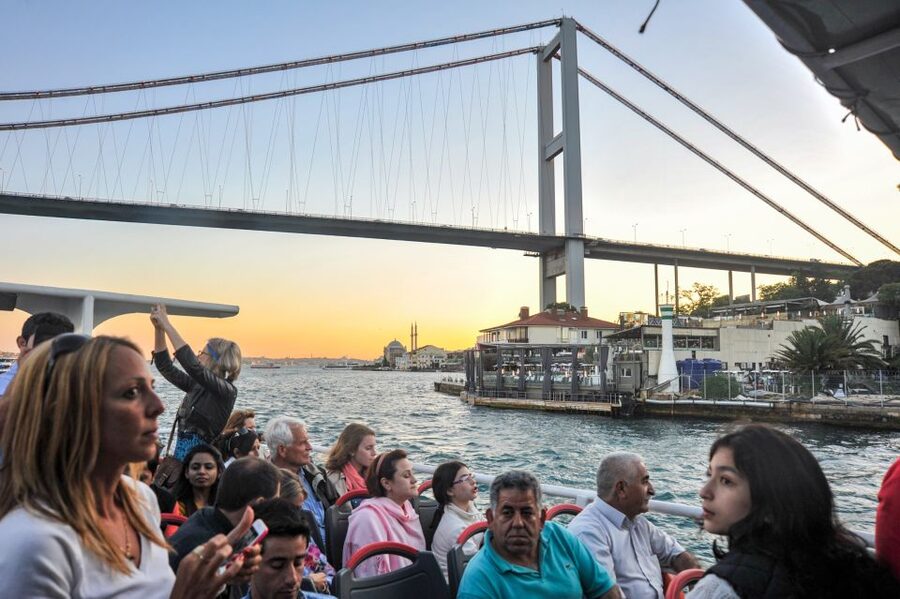
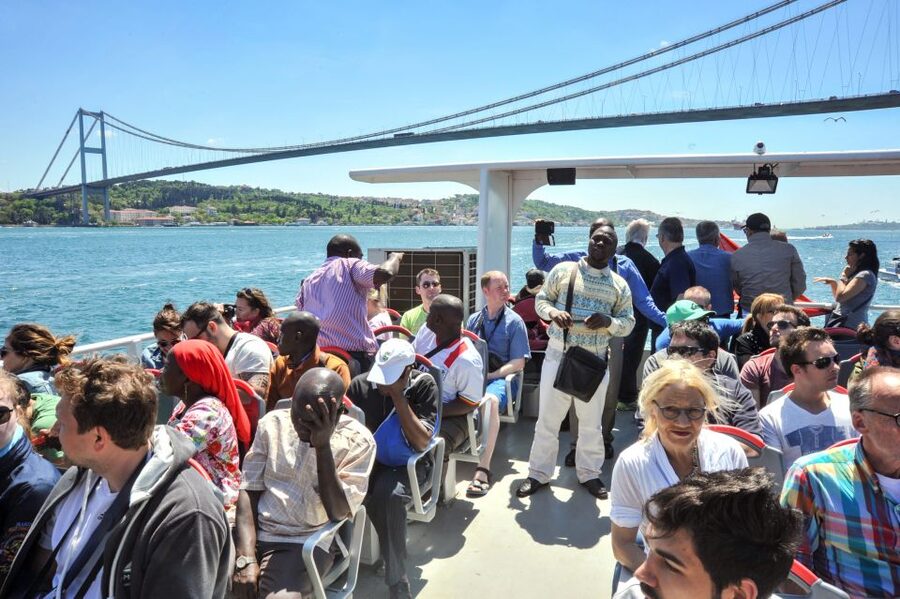
The cruise moves toward the iconic bridge crossings. You’ll pass the Bosphorus Bridge and, later, the Fatih Sultan Mehmet Bridge. Those bridges are more than infrastructure in Istanbul—they’re how the city compresses distance between continents and neighborhoods.
This is also where the fortifications come into focus. The itinerary includes Rumeli Fortress and an Anatolian Fortress. Seeing them from the water gives you a better sense of why they were built where they were. From land, fortresses can look like isolated history pieces. From the Bosphorus, they read like strategic markers in a living corridor.
You’ll also pass by major seaside residences and parks along the coast. The narration covers the layers of time, so you can connect what you see to the landmark names the guide calls out.
And if you like to photograph bridges specifically, don’t treat this as a single shot moment. Grab one photo as the bridge first comes into view, then another after you’ve adjusted your angle. The water perspective changes quickly, and you’ll thank yourself later when you sort the images.
Beylerbeyi and Maiden’s Tower: end with a classic Istanbul icon
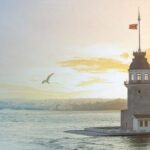
As the cruise continues, you’ll come across Beylerbeyi Palace and then Maiden’s Tower near the finish. Both are strong “wrap-up” landmarks because they’re visually distinctive and they tend to anchor the shoreline.
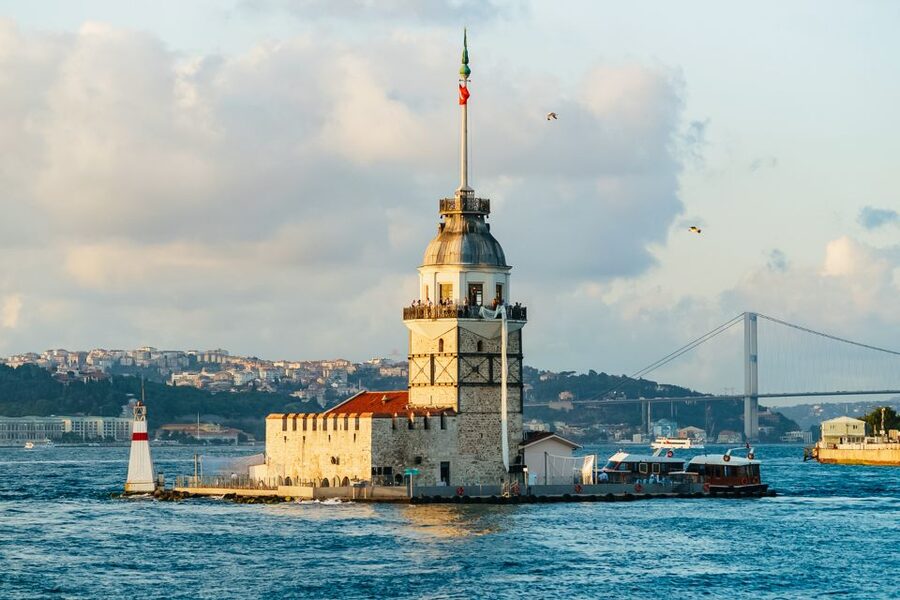
Maiden’s Tower is often the tower people remember long after the trip. From the Bosphorus it feels both close and far at the same time—the tower sits like a focal point in the middle of the waterway, while the shoreline keeps moving behind it. The audioguide helps here because it gives you a quick historical framing so you’re not just enjoying the view; you understand why the tower has stayed in the city’s imagination.
Comfort matters during the last portion. The boat can be windy, and multiple reviews recommend bringing a sweater or shawl because it gets chilly outside. If you start feeling cold, move indoors and keep the audioguide running. You’ll still have plenty of views, especially if your seating has an unobstructed sightline.
Also, if you care about photos, you’ll get the best results by mixing:
- one steady wide shot for each “big moment” (palace, bridge, tower)
- one focused shot when there’s a calmer angle and you can steady your framing
Price, value, and what you should watch for on board
At about $14 per person for a 2-hour cruise, this is priced as an affordable overview. You’re paying for the boat time plus the structure of an audioguide that names what you’re seeing as you go.
Here’s what makes it feel like good value:
- You get a curated route that passes multiple top Istanbul landmarks rather than doing one short out-and-back.
- You’re not relying on buying individual tickets for a dozen separate viewpoints.
- The audioguide is included and is available in many languages.
- There’s indoor seating, which means you’re not forced into discomfort if the weather turns.
What’s not included is also part of the calculation. Food and drinks aren’t included, and photos aren’t included. That’s where you should stay in control. On some boats, you may see paid photo add-ons or onboard vendors. Keep your decision simple: if you want one, confirm the total price upfront before you agree.
One more subtle value tip: this is “sightseeing-first.” If you’re expecting a meal, this won’t replace dinner. If you’re expecting a long guided walking tour, it’s not that either. Instead, it’s a high-yield way to see Istanbul’s waterfront in limited time.
Who should book this Bosphorus cruise, and who might skip it
This cruise is a great fit if you want:
- an easy Istanbul overview without hopping between neighborhoods
- landmarks seen from the water with an audio framework
- a plan that works for a range of travel styles, including solo travelers and couples
It may be less ideal if you:
- hate boat rides or get motion-sick easily (no motion-sickness details were provided, so you’d want to judge your own sensitivity)
- want a full-day cultural deep program (this is a compact 2-hour loop)
- expect food to be included as part of the ticket
If you’re pairing this with a day of sightseeing, I’d place it after you’ve seen a few major sights on land. It helps you connect what you learned to the city’s waterfront layout. If you’re doing a shorter trip, it can also serve as your first “map builder,” so later visits feel more connected.
Should you book the Bosphorus Cruise with Audio Guide and Sunset Option?
Yes—if your priority is skyline views plus simple context at a budget-friendly price. The offline audioguide is the difference-maker, because it turns a pretty cruise into a navigable introduction to Istanbul’s key landmarks. Add the fact that you can stay warm indoors when needed, and this becomes one of the easiest “win” activities in the city.
I’d book it if you can handle:
- a short walk from Gazete Market down to the pier
- some wind exposure when you’re outside
Choose the sunset time slot if you like softer light and a more relaxed end-of-day vibe. If you’re not sure, regular times still deliver the same route, the same landmark sequence, and the same smart value.
FAQ
FAQ
Where is the meeting point?
Meet your guide in front of the Gazete Market kiosk opposite Hagia Sophia, with a Grand Boat Line sign and a yellow umbrella. You can also meet at Cafe Minared.
How long is the cruise?
The duration is 2 hours.
Is the audioguide available in multiple languages?
Yes. The smartphone audio guide includes English, Spanish, Russian, Arabic, German, Italian, French, and Portuguese.
Do I need internet to use the audio guide?
No. The app works without internet after you download it ahead of time. Follow the instructions on your voucher.
Is hotel pickup included?
No. Hotel pickup and drop-off are not included.
Are food and drinks included?
No. Food or drinks are not included.
Is there indoor seating on the boat?
Yes. The boat has an indoor area.
What should I bring for the cruise?
Bring a sweater or shawl. It can get windy and chilly, especially if you sit outside.