REVIEW · BOLOGNA
Bologna: A Self-Guided Audio Tour from Porta Galliera to Le Tre Frecce
Book on Viator →Operated by VoiceMap Audio Tours · Bookable on Viator
Bologna has stories you can walk right into. This self-guided VoiceMap audio tour strings together big-name sights and lesser-known twists, from the 1848 rebellion at Porta Galliera to the legend-heavy ending at Le Tre Frecce. I love how it keeps moving with stop-and-start narration, so you always know why you’re standing somewhere specific.
My two favorite parts are the offline audio/maps/geodata (no hunting for signal) and the way the route mixes major landmarks with short, funny human details. One moment you’re near the city’s massive church, and the next you’re hearing an oddball legend about art censorship or secret whispers in stone.
The main drawback is simple: it’s self-guided. You’ll need a smartphone and headphones to run it, and the tour won’t take you through museums or attractions inside buildings—so if you want to enter places, you pay separately and plan extra time.
In This Review
- Key things to know before you go
- Porta Galliera to Le Tre Frecce: a Bologna walk you control
- Price and value: what $11.99 really buys
- Using VoiceMap: headphones, phone battery, and navigation that follows you
- Start at Porta Galliera: 1848 rebellion and the Austrian retreat
- Parco della Montagnola via Il Pincio: Napoleon’s French-style garden entrance
- Piazza Otto Agosto: a pause with political energy
- Canale delle Moline and Via Indipendenza: when Bologna felt like Venice
- San Pietro, Piazza del Nettuno, and the Neptune fountain legend
- Torre dell Arengo Whispering Gallery: love stories you can hear
- San Petronio: the largest and most important church in Bologna
- Quadrilatero and Via Rizzoli: cafes, restaurants, and old-city lanes
- Garisenda and Asinelli: two towers that anchor the story
- Piazza della Mercenzia: a quieter square with a named role
- Le Tre Frecce: closing legends of the Three Arrows
- Best times and pacing: how to fit 90 minutes or stretch to a half-day
- Who should book this self-guided Bologna audio tour
- A few good-to-know notes before you press play
- FAQ
- How long is the Porta Galliera to Le Tre Frecce audio tour?
- Do I need internet on the walk?
- What do I need to bring?
- Where do I start and end?
- Is the tour guided by a person?
- Can I get a refund or make changes after booking?
- Should you book this audio tour?
Key things to know before you go
- VoiceMap tracking works on the ground so the narration follows your walking pace instead of turning into a lecture on a timeline
- Offline audio and maps help if your phone struggles with Bologna coverage
- A tight 90-minute plan is possible, but the route is easy to stretch to 3–4 hours with pauses and quick detours
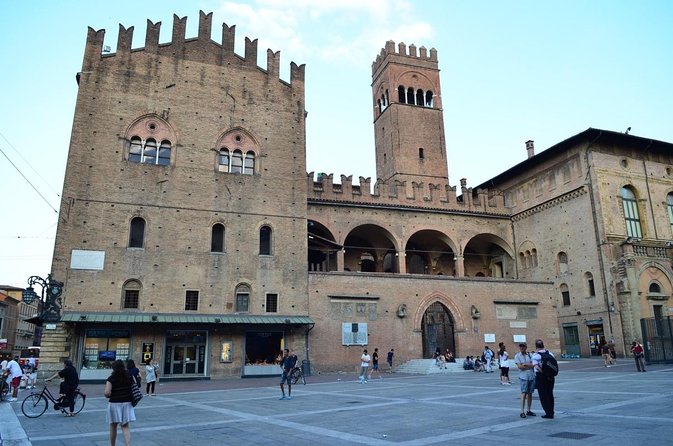
- Bologna’s towers and churches are built into the story, not treated like checklist items
- Stop-and-go legends include playful details you won’t get from a standard photo stop
- Your ending at Le Tre Frecce ties the walk to local folklore rather than only architecture
Porta Galliera to Le Tre Frecce: a Bologna walk you control
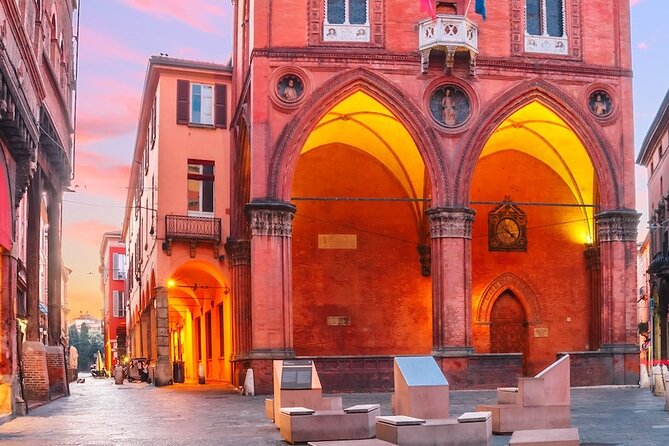
This tour is designed for walking at your pace, with audio that answers the question What am I looking at? You start at Porta Galliera (P.za XX Settembre) and finish at Le Tre Frecce (Str. Maggiore, 19). The whole experience runs about 1 hour to 1 hour 30 minutes if you keep things moving, but you can absolutely take longer if you stop to read signs, step into a church courtyard, or grab a quick drink.
What makes this work so well is the balance. You get the big Bologna hits—towers, a landmark church, the classic inner-city lanes—while the narration also adds quirky context that makes the streets feel less like a set and more like a living place. You’re not trapped in one long talk either. You get short background pieces tied to where you are.
And yes, there’s humor. Bologna’s famous for food and politics, and the audio leans into that with legends that range from romantic to slightly ridiculous in the best way.
You can also read our reviews of more tours and experiences in Bologna.

Price and value: what $11.99 really buys
At $11.99 per person, this is one of those deals that makes sense when you compare it to the cost of a half-day guide. You’re not paying for a ticket into one big attraction. You’re paying for a guided walk-style experience across multiple outdoor sights, delivered through an app.
Here’s how I think about the value:
- You’re getting lifetime access to the tour in English. That means if you return to Bologna later, you can reuse the exact route.
- You also get offline access to audio, maps, and geodata. That’s practical value because you’re not stuck when the phone signal is bad.
- The duration is short enough to fit into a busy day, but long enough to feel like more than a quick stroll.
If your travel style is walking, wandering, and stopping when something catches your eye, this price feels fair. If you want a live guide that can answer questions in real time or manage museum entries, you’ll want a different option.
Using VoiceMap: headphones, phone battery, and navigation that follows you
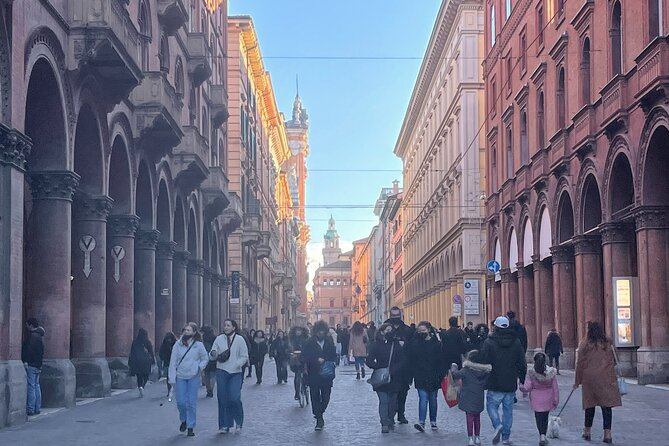
This experience runs through the VoiceMap app. The tour provider gives you offline audio and maps, which is great, but it also means you should set up before you start.
Practical tips I’d use:
- Bring headphones. The audio is not included with the tour.
- Make sure your phone battery is healthy. Walking + GPS + screen brightness adds up.
- Before you set off, download the tour content while you have a stable connection, so you don’t waste time at the start.
What you don’t have to worry about is guessing where to go. The app tracks your location and gives directions so the narration lines up with your walking route. Multiple people note that the app is easy to follow and that it starts and stops at the right moments as they reach each place.
Also note the tour does not guide you through museums or indoor attractions mentioned en route. If you want to enter any building, you handle it independently.
Start at Porta Galliera: 1848 rebellion and the Austrian retreat
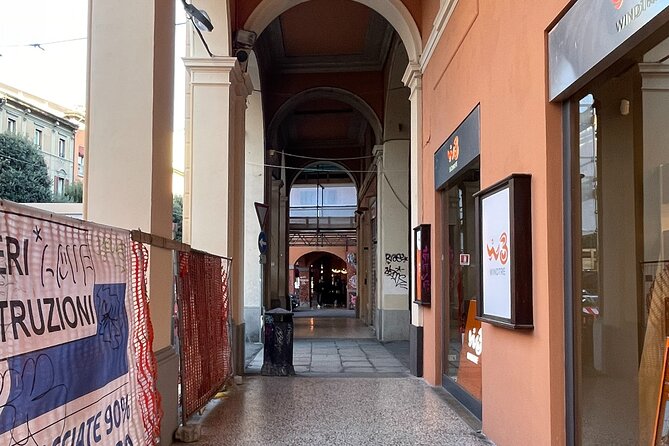
Your walk begins at Porta Galliera, the city gate at P.za XX Settembre. The audio frames Bologna’s identity right away with a story about the 1848 uprising by the Bolognese and how a retreating Austrian army left the city. It’s a sharp way to begin because it reminds you Bologna wasn’t always a polished postcard. It was political, stubborn, and loud about it.
Standing near the gate, you get a sense of why cities build walls in the first place. Even if you’ve seen other Italian gates before, this one hits differently because you’re not just admiring stone—you’re hearing the moment the city proved it could push back.
If you’re the type who likes your travel history tied to real places (not just dates), this start sets a great tone.
Parco della Montagnola via Il Pincio: Napoleon’s French-style garden entrance
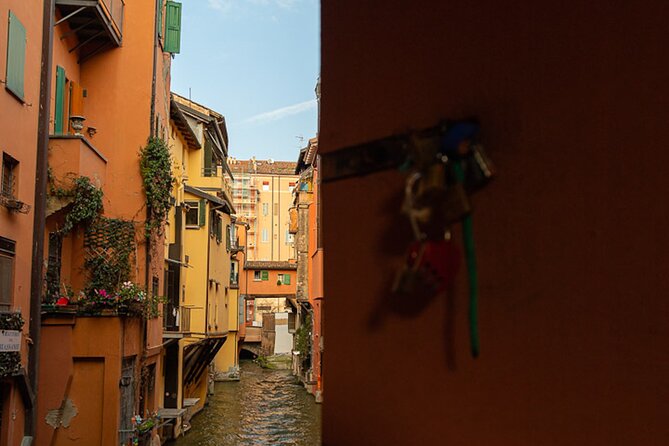
Next up you pass Il Pincio, the entrance to Parco della Montagnola. The narration connects the park to Napoleon and his taste for a French-style garden layout, commissioned for this setting.
This stop works even if you don’t stop for long. It’s a quick shift from city-stone to the idea of planned space. Bologna’s parks aren’t just for relaxing; they also reflect how power and taste moved across Europe.
If you’re walking on a warm day, this is a good place to slow down. Even a short break here makes the rest of the route more enjoyable.

Piazza Otto Agosto: a pause with political energy
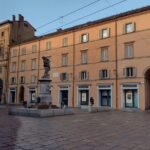
From there, you reach Piazza Otto Agosto. The audio doesn’t treat this square like filler. It’s one of the named breaks that keeps you oriented as the story moves through different layers of the city.
Squares in historic centers can look similar in photos, but the narration helps you treat each one as a stage. In Bologna, those stages often overlap—politics, religion, and daily life all share the same corners.
If you like short chapters instead of long continuous explanations, you’ll enjoy how the route punctuates the walk.
Canale delle Moline and Via Indipendenza: when Bologna felt like Venice
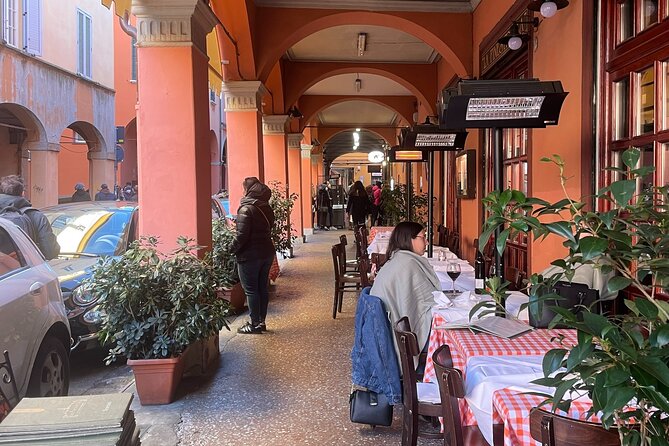
One of the most interesting parts of this audio route is the way it compares Bologna to Venice. You’ll pass Canale delle Moline and hear about Bologna’s older identity with criss-cross canals and rivers.
Then you walk down Via Indipendenza, where the audio shifts into the post-Risorgimento period—what things were like as Italy’s unification story unfolded and Bologna’s civic life adjusted.
This is where the tour becomes more than a sightseeing checklist. It helps you see that Bologna changed over time, and that streets reflect that change. If you’ve ever wondered why some cities feel layered even when buildings look “modern,” this kind of commentary answers that question.
San Pietro, Piazza del Nettuno, and the Neptune fountain legend
You’ll get a glimpse of San Pietro, then head toward Piazza del Nettuno. The fountain of Neptune is a centerpiece here, and the narration comes with an odd, memorable detail: how Neptune’s sculptor managed to create Neptune with a famously exaggerated look despite church rules that were supposed to prevent that kind of depiction.
That combination—iconic art plus institutional pushback—makes the square feel more human. You’re not just seeing a famous monument. You’re hearing how artists played the rules.
This is one of those places where you’ll likely take a few extra minutes, because you want the full picture of what you’re looking at. And the legend gives you a playful way to remember the fountain beyond the obvious.
Torre dell Arengo Whispering Gallery: love stories you can hear
In Piazza del Nettuno, the tour includes time at the Torre dell Arengo and its whispering gallery. Here the audio delivers a romantic secret: lovers could murmur sweet nothings without their legitimate partners realizing.
That’s the kind of detail that makes you look at architecture differently. Instead of stone as static backdrop, you start thinking about how people used spaces—how they hid messages, how sound carried, how daily life worked around power and propriety.
If you’re walking with a partner, it’s also a fun moment to share. Even solo, it adds personality to the city.
San Petronio: the largest and most important church in Bologna
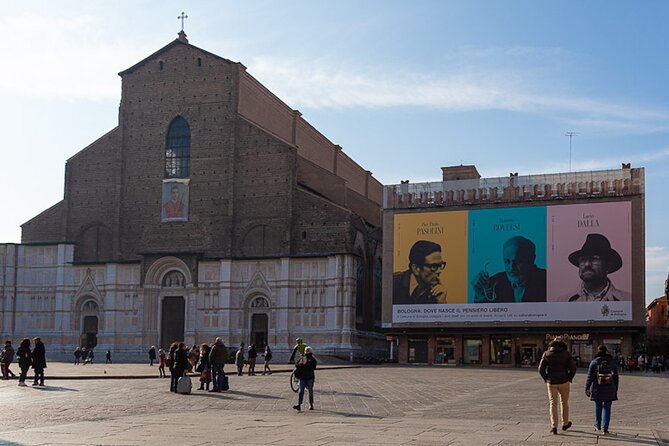
Then you hit San Petronio, described in the narration as the city’s largest and most important church. This stop matters because it grounds the walk in Bologna’s religious and civic identity.
Even if you only get a glimpse from outside or around the church area, the tour gives you a reason to care. Big churches can feel intimidating when you’re just passing by, but when the audio frames them as central to the city, you start looking with more intent.
This is also a good place to slow your pace and take in scale. When a building is the largest of anything, your brain needs a minute to register it.
Quadrilatero and Via Rizzoli: cafes, restaurants, and old-city lanes
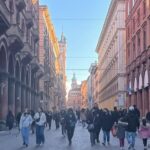
The route then moves into the Quadrilatero neighborhood, a zone known for cafes and restaurants. After that, you walk down Via Rizzoli, another classic street that pulls you into the day-to-day rhythm of the center.
This is where the audio tour becomes practical for food-lovers and casual walkers. The narration doesn’t force you to spend money, but it sets you up to make easy decisions: If you want a snack, a coffee, or a low-key meal, you’re walking through the right streets.
Also, because the tour is self-guided, you can time this part to match your energy. If you want a longer pause for a drink, this is an easy segment to do it. The walking pace fits well with short breaks.
Garisenda and Asinelli: two towers that anchor the story
No Bologna walk makes sense without the towers. Here, the audio brings you to Garisenda and Asinelli, the city’s two famous towers.
This is where the narration ties together the idea of Bologna being called the towered—once known for a forest of towers. You can see why the city earned that nickname. The towers aren’t just scenery. They are landmarks that help you orient yourself and understand how power was displayed.
If you like a clear “anchor points” style walking plan, this is one of the best parts. Once you see these towers in context, the rest of the route feels easier to imagine.
Piazza della Mercenzia: a quieter square with a named role
You also stroll through Piazza della Mercenzia. Even if you’re not spending a lot of time sitting here, the audio includes it as a named chapter in the route rather than letting you drift from one must-see sight to the next.
Squares like this can be hard to appreciate from a distance because they aren’t always famous on their own. When a tour includes them, it gives you permission to notice the space as a functional part of the city, not just a gap between highlights.
Le Tre Frecce: closing legends of the Three Arrows
Your walking route ends at Le Tre Frecce on Str. Maggiore. The audio saves some of its most specific legend talk for the finale, including stories linked to the Three Arrows, and one legend that involves nudity.
That last detail matters because it tells you what kind of tour this is: not stiff, not only educational, and not afraid of the odd. You finish with a local folklore vibe rather than another “look at the architecture” moment.
It’s also a nice final contrast after the heavier church and tower stops. You end with storytelling—exactly how cities like Bologna often live in people’s minds.
Best times and pacing: how to fit 90 minutes or stretch to a half-day
Because the experience is 1 to 1.5 hours on paper, you can use it as:
- A morning orientation walk to learn how Bologna’s pieces fit together
- A pre-dinner stroll that keeps you moving and informed
- A flexible day activity you can slow down as you like
In real use, you may finish in about 90 minutes if you keep going. If you like to pause, step into a couple of places, and look up details on the fly, it’s easy to stretch into a more leisurely 3.5-hour outing. The route design supports both styles.
If you’re visiting in hot weather, start earlier in the day. If it’s cooler, you can linger more at the squares and tower areas.
Who should book this self-guided Bologna audio tour
This is a strong match if:
- You want an easy-to-follow walking route with narration timed to your location
- You like short background stories that make landmarks feel connected
- You prefer control: stop for photos, duck into a nearby spot, or keep moving
- You’re traveling with a group and want everyone on the same route without coordinating a live guide
It may not be ideal if:
- You expect museum-style guidance inside buildings
- You don’t want to use your phone for navigation and audio
- You want answers tailored to your specific questions in real time
A few good-to-know notes before you press play
- The audio is in English, and you get lifetime access.
- The tour is private in the sense that only your group participates.
- You’ll still pay separately if you choose to enter any museums or attractions along the way.
- The listing notes availability all day during the stated opening hours window, so timing is mostly about your schedule and comfort rather than an appointment slot.
FAQ
How long is the Porta Galliera to Le Tre Frecce audio tour?
It’s listed at about 1 hour to 1 hour 30 minutes.
Do I need internet on the walk?
No. The tour includes offline access to audio, maps, and geodata in the VoiceMap app.
What do I need to bring?
You’ll need your smartphone and headphones. Those are not included.
Where do I start and end?
Start at Porta Galliera (P.za XX Settembre, 40121 Bologna) and end in front of Le Tre Frecce (Str. Maggiore, 19, 40125 Bologna).
Is the tour guided by a person?
No. It’s a self-guided audio tour using the VoiceMap app. It also notes you won’t be taken through museums or other indoor attractions mentioned.
Can I get a refund or make changes after booking?
No. This experience is non-refundable and cannot be changed for any reason.
Should you book this audio tour?
If you want a practical introduction to Bologna that doesn’t lock you into a rigid schedule, I’d book it. The offline setup is the big advantage, and the narration does a good job connecting major sights like San Petronio and the Two Towers with entertaining stories like the Neptune fountain sculptor trick and the whispering-gallery romance.
Book it especially if you like walking and you want to feel oriented fast. It’s also a good Plan B when you can’t line up a live guide and still want a “real guide in your pocket” vibe.