REVIEW · ROME
Rome Colosseum, Roman Forum & Palatine Hill Entry with AudioGuide
Book on Viator →Operated by Reliant Tours · Bookable on Viator
Colosseum day goes smoother with a plan. This experience pairs a precise timed entry into the Colosseum with access to the Roman Forum and Palatine Hill on the same visit, so you’re not stuck choosing just one big site. You keep your own pace, and the audio support is handled through your phone.
I especially like two things. First, the timed Colosseum entry helps you avoid the worst of the ticket-office chaos and keeps your day from turning into a long shuffle. Second, you get a full arc of ruins—from the arena setting of the Colosseum to the civic center of the Forum and then up to imperial power on Palatine Hill—without needing a live guide to herd you along.
One thing to keep in mind: the experience leans on your phone. The English digital audio guide is sent via WhatsApp, and you’ll use your own headset—so if your phone can’t access WhatsApp (or you arrive with low battery), you may need a quick fix on the spot.
In This Review
- Key Highlights to Know Before You Go
- Entering the Colosseum on a Timed Ticket
- Inside the Colosseum: Big Engineering, Smart Stops
- Roman Forum: How One Area Ran a Whole City
- Palatine Hill: From Early Rome to Imperial Headquarters
- The Phone Audio Guide via WhatsApp (and Why It Matters)
- Price and Value: What You’re Really Paying For
- Timing, Crowd Reality, and How to Plan Your Route
- Where People Get Stuck (and How You Can Avoid It)
- Who This Is Best For (and Who Should Skip It)
- Should You Book This Rome Colosseum + Forum + Palatine Audio Tour?
- FAQ
- Where does this tour start?
- What time format is used for the Colosseum entry?
- Is this a guided tour?
- How do I receive the audio guide?
- Do I get a headset with the audio guide?
- What attractions are included besides the Colosseum?
- How long should I plan for the experience?
- Can I cancel or change the booking?
- Is it available in English?
Key Highlights to Know Before You Go
- Timed Colosseum slot that’s set to your entry time
- Same-day access to Roman Forum and Palatine Hill
- Self-paced wandering with no need to keep up with a group
- Audio guide via WhatsApp on your own device (headset not included)
- Security still applies once you reach the site gates
- Good comfort touches like toilets on site and clear wayfinding
Entering the Colosseum on a Timed Ticket
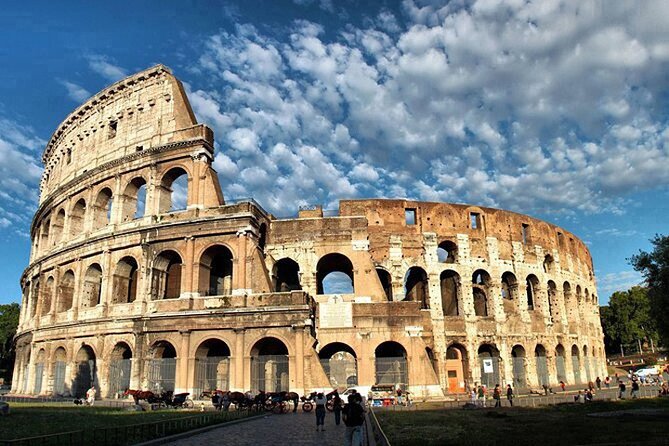
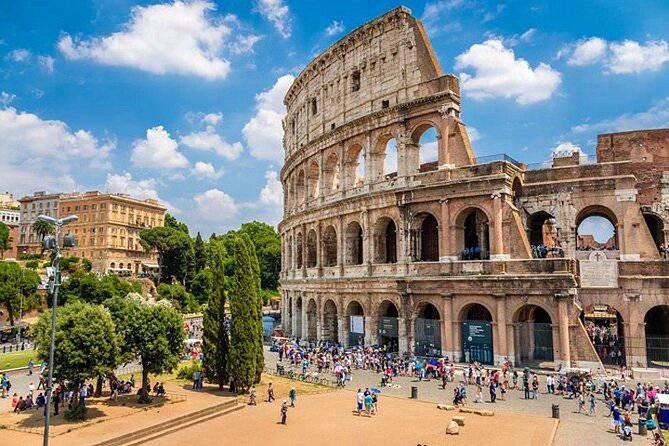
Your day starts at Piazza del Colosseo, 1. The Colosseum entry comes with a precise time, which is the main practical advantage here: you arrive, you go through the required steps, and you’re inside with less waiting than the classic walk-up routine.
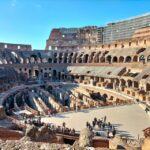
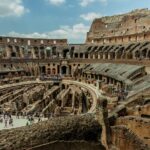
This ticket covers access to the first and second tiers of the Colosseum. That matters because most first-timers want the big interior views and the sweeping perspectives that come from being able to move around the main levels. Even if you’re not chasing every single detail, the tiers help you see the space in a more complete way, not just from one standing angle.
A heads-up on expectations: many people hear skip-the-ticket-line and assume it means you’ll never queue. Based on how security works in the Colosseum area, you should plan that security is still part of the process—you’re primarily avoiding the ticket counter line, not bypassing the whole site check.
You can also read our reviews of more tours and experiences in Rome.
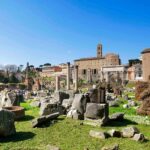


Inside the Colosseum: Big Engineering, Smart Stops
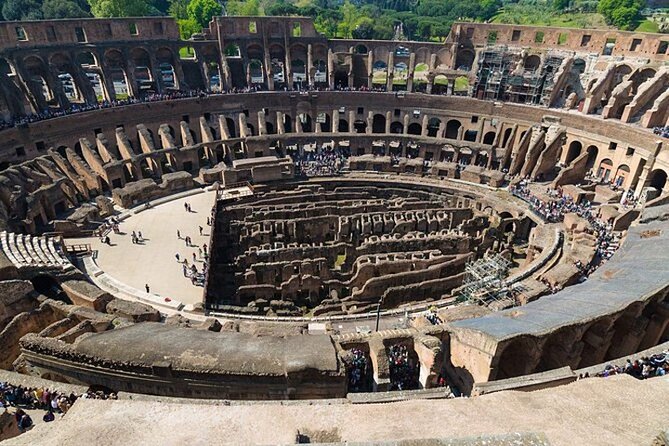
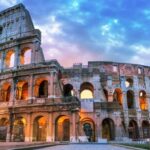
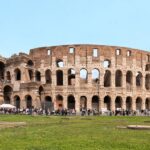
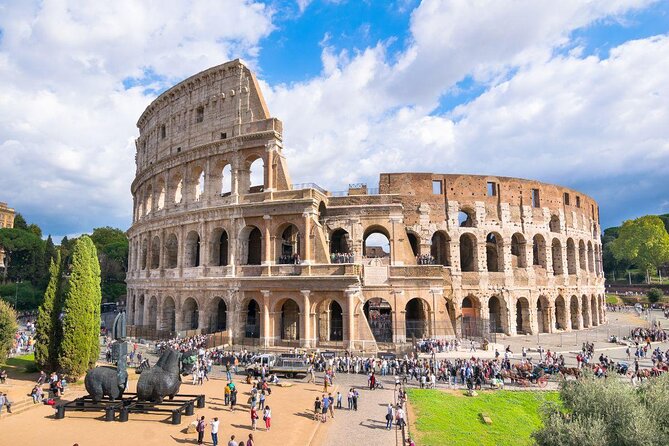
The Colosseum—also called the Flavian Amphitheatre—is in Rome’s archaeological core. It was built in the 1st century CE under the Flavian dynasty, and it became famous for popular spectacles like gladiatorial games and animal hunts.
What I find most interesting is how the building was not just a “big hole” for crowds. The Colosseum was designed as a working performance machine. It had surprisingly complex stage machinery and services for spectators—so when you look at the structure, you’re looking at infrastructure meant to run shows, not just a monument meant to impress.
Because this is a self-guided format, you can set your own pace. I like doing it in small loops. First, take a few minutes to orient yourself in the interior space. Then pick one viewpoint for photos and one for just watching the arena geometry. Finally, slow down around the areas where signage helps connect what you’re seeing to what the building was used for.
Comfort tip: the Colosseum is crowded and sun-baked on many days. Bring water, and accept that you’ll spend some time standing. The win is that you’re not stuck listening to a group schedule—you can dip out, regroup, and continue when the flow makes sense.
Roman Forum: How One Area Ran a Whole City
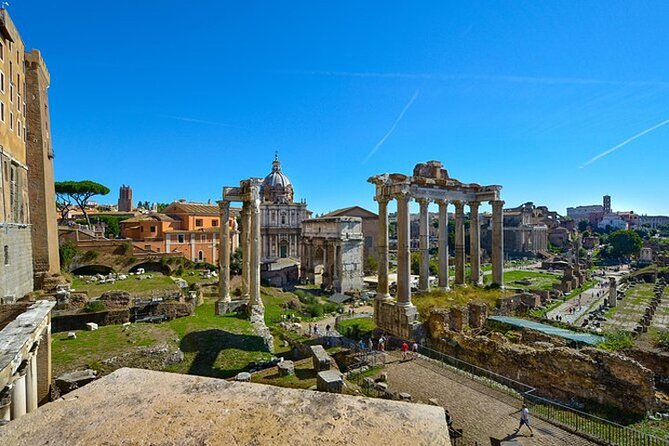
After the Colosseum, you head into the Roman Forum—Rome’s long-running public center. The story starts far earlier than the visible ruins. The valley was once covered by swamp, and it wasn’t until the late 7th century BCE that the land was reclaimed and the Forum began to form.
Over the centuries, the Forum shifted as Rome changed. You’ll see monuments that grew out of political, religious, and commercial needs, then later expanded with major civic functions. By the 2nd century CE, civil basilicas became central for judicial activities, reflecting how the area kept adapting rather than staying frozen in time.
What you should look for: the way the Forum reads like a timeline. If you move slowly, you can feel how dynasties layered prestige onto existing space. Key examples tied to different eras include the Temple of Vespasian and Titus, the Temple of Antoninus Pius and Faustina, and the Arch of Septimius Severus, built in 203 CE to celebrate victories over the Parthians.
A practical note: the Forum can feel like a lot of “stones and columns” unless you anchor your walking with a simple plan. I’d treat it like three mini-areas: first the civic monuments, then the judicial basilica zone, then the imperial additions. That keeps the scale manageable and makes your photos look more intentional.
Palatine Hill: From Early Rome to Imperial Headquarters
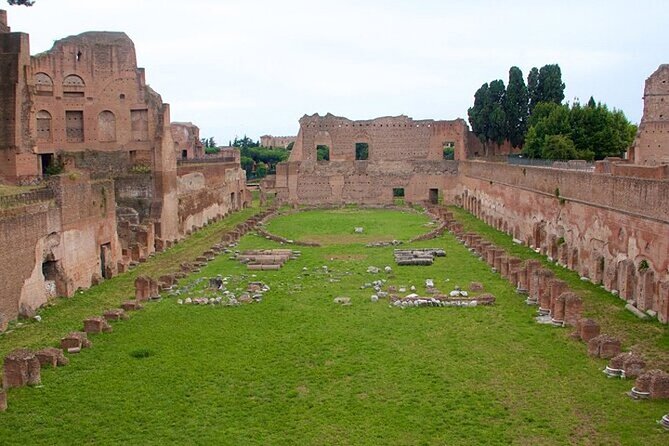
Palatine Hill is where the city’s story turns into power and prestige. The hill preserves remains of early Iron Age settlements, tied to Rome’s earliest core. It also hosted important civic cults, including Magna Mater (Cybele).
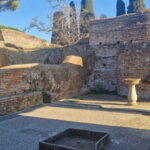
Later, especially between the 2nd and 1st centuries BCE, Palatine became the residential district for the Roman aristocracy. The elite houses here were known for exceptional decorations—things like preserved painted surfaces and paved details, including the House of the Griffins.
One of the most meaningful shifts: Augustus chose Palatine as the site for his own residence. His complex included multiple buildings, including the House of Livia. Then Palatine slowly transformed again—this time into a base for imperial palaces like the Domus Tiberiana, Domus Transitoria, and Domus Aurea, then later the Domus Flavia, which was divided into public and private sectors (with the private sector known as the Domus Augustana).
When you walk Palatine, you’re not just seeing views—you’re seeing the physical idea of rule. Even the name has a clue: Palatium became linked in modern languages to the idea of a royal palace.
If you want this part to feel rewarding rather than exhausting, pace it like a viewpoint hike. Stop often. Choose one direction to orient yourself. Then let your eyes connect the ruins to what life must have looked like when this hill functioned as an address for the empire.
The Phone Audio Guide via WhatsApp (and Why It Matters)
The audio guide is digital and in English. It’s provided by sending it via WhatsApp, and you listen using your own phone and headset. The headset isn’t included, so you’ll either bring earbuds/headphones or you’ll be stuck without the audio layer that’s part of the product value.
This detail becomes important because it can change your day. If your phone battery is low, or you don’t have a solid internet connection when the message arrives, you can lose time. One common snag is trying to access items on a phone that’s not connected to Wi-Fi. If you’re relying on downloads or loading messages, it’s smart to test your setup before you arrive.
Also, calibrate your expectations about audio. Some people find audio guides helpful for understanding what you’re looking at. Others feel the site signage does enough of the work. In a place like the Colosseum, the stones are already dramatic—audio can add context, but it won’t replace good pacing and time to look.
One more practical point: since the audio is on your phone, you’ll want to keep your hands free for photos and steady movement. If you’re juggling a full camera kit and a phone, set a simple system before you start.




Price and Value: What You’re Really Paying For
At $54.07 per person, this isn’t a bargain ticket. But it can be good value depending on what you need from your day.
Here’s the math the ticket is built around: the Colosseum admission is listed at €18, plus a €2 reservation fee. That means part of your payment covers the core access itself, while the remainder goes to the service side—handling timed entry and bundling the day’s access with audio delivery and site support like toilets.
So when does the price make sense? If you’re trying to avoid wasted hours, want a scheduled Colosseum time, and prefer a self-guided flow (instead of joining a live tour), this format can save stress. When the price feels steep is when you’d happily buy tickets yourself and you’re okay dealing with a longer, less predictable arrival.
My rule: if you want your Rome archaeology day to feel organized without feeling like a classroom, the structure here is a strong fit. If you’re chasing the lowest cost and don’t care about convenience, you might prefer a simpler DIY approach.
Timing, Crowd Reality, and How to Plan Your Route
The total visit runs about 2 hours 30 minutes to 3 hours. That’s a real sweet spot for first-timers. It’s long enough to do Colosseum interior + Forum + Palatine without feeling like you only got a quick look. It’s also short enough that you can still step out if you need shade, water, or a break.
You can also choose a morning or afternoon Colosseum entry, which helps a lot. If you can enter later in the day, you may find a less intense flow. The Colosseum area is always busy, but the tempo can change with the hour, and your own energy level should guide your choice.
Once you’re on site, keep your route simple. Don’t try to “finish” everything like a checklist. Instead, aim to:
- take a clear Colosseum viewing pass,
- connect Forum monuments into one story,
- and treat Palatine as viewpoint time with context.
And yes, it’ll be hot. That’s not unique to this tour—it’s Rome’s summer routine. Dress and plan for that. You’ll enjoy the ruins more when your comfort doesn’t collapse midway.
Where People Get Stuck (and How You Can Avoid It)
This experience is straightforward when your phone cooperates. The biggest friction points are technology and date/time matching.
First: ticket access. If your tickets arrive by email as a PDF and your phone is offline or you can’t load attachments, you can lose time. A better approach is to make sure you can access messages the moment you arrive, and to keep WhatsApp working. If something doesn’t load, have a backup plan—like using another device if you must.
Second: confirming your exact entry time. Since the Colosseum entry is timed, you should arrive close to the start window. A good habit is arriving about 10 minutes early so you’re not stressed by crowds and security checks.
Third: know where you’re going. Your start point is Piazza del Colosseo, 1, and the activity ends back there. You don’t need to chase a separate office. If you’re relying on directions, use your map app so you can focus on the sites, not the logistics.
Who This Is Best For (and Who Should Skip It)
I’d recommend this for you if:
- you want a self-paced day rather than a rigid guided pace,
- you like the idea of doing Colosseum + Forum + Palatine together,
- you’re comfortable using your phone for an audio guide,
- you prefer to control your stops and photo time.
I’d think twice if:
- you don’t want to rely on WhatsApp or you expect the audio guide to work without your phone setup,
- you wanted a live guide or included headset (both are not part of the deal),
- you’re hoping for a total bypass of all lines, because security is still part of entering.
Should You Book This Rome Colosseum + Forum + Palatine Audio Tour?
Book it if you’re aiming for a planned, timed Colosseum entry that still feels like your day. The value comes from convenience and smart bundling: one ticket rhythm for three heavy-hitters—arena, civic center, and imperial hill—all in about three hours.
Don’t book it if you want a low-cost ticket-only approach or you’re the type who hates troubleshooting phone apps on the day of travel. If your phone is reliable, though, this is a solid way to see the big landmarks without being dragged through them at someone else’s pace.
FAQ
Where does this tour start?
It starts at Piazza del Colosseo, 1, 00184 Rome, Italy. The experience ends back at the same meeting point.
What time format is used for the Colosseum entry?
Your Colosseum admission is on a precise timed entry slot. The Roman Forum and Palatine access is open entrance on the same day.
Is this a guided tour?
No. This is self-guided with a digital audio guide provided in English.
How do I receive the audio guide?
The English digital audio guide is sent only via WhatsApp, and you listen using your own phone.
Do I get a headset with the audio guide?
No. Headset is listed as not included, so you should bring your own headphones/earbuds.
What attractions are included besides the Colosseum?
You also get open entrance to the Roman Forum, Palatine and Imperial Forum, plus admission to temporary exhibitions.
How long should I plan for the experience?
Plan for about 2 hours 30 minutes to 3 hours.
Can I cancel or change the booking?
No. The experience is non-refundable and cannot be changed for any reason.
Is it available in English?
Yes, the digital audio guide is in English, and the tour offer indicates English.