Bologna turns into a game board. This self-guided app quest helps you spot stories in plain sight. I like that it’s built for real wandering time, not a rushed checklist.
What I really like most is the offline-friendly format—download, then play without hunting for signal. You also get 14 puzzle steps tied to specific places, so you’ll look longer (and learn faster) than you would on a casual walk. The one drawback to consider is tech risk: if the app won’t download or the map links don’t match the clue spots, you may lose time or feel stuck.
In This Review
- Quick hits before you go
- Price and value: $6.60 for 90 minutes in central Bologna
- How the offline app quest works (and what to do if it glitches)
- Stop 1: Piazza di Porta Ravegnana and the Two Towers spot
- Stop 2: Palazzo Isolani and Piazza Santo Stefano’s portico maze
- Stop 3: Piazza Galvani and the silk market story
- Stop 4: Neptune’s Fountain, Giambologna, and Porta Nova wall history
- Stop 5: Torre Prendiparte and the fortress-style brick look
- Stop 6: Piazza Giuseppe Verdi to wrap up near Via Giuseppe Petroni
- Who this quest suits best (and who should pair it with something else)
- Final call: should you book this Bologna Secrets Quest?
- FAQ
- How long is the Bologna Secrets Quest?
- How much does it cost?
- Do I need an internet connection to play?
- Are there puzzle challenges?
- What are the start and end points?
- Is there a physical tour guide?
- Can I pause and resume?
- What language is the quest offered in?
- Is it private or shared with other groups?
- Can I cancel for a refund?
Quick hits before you go
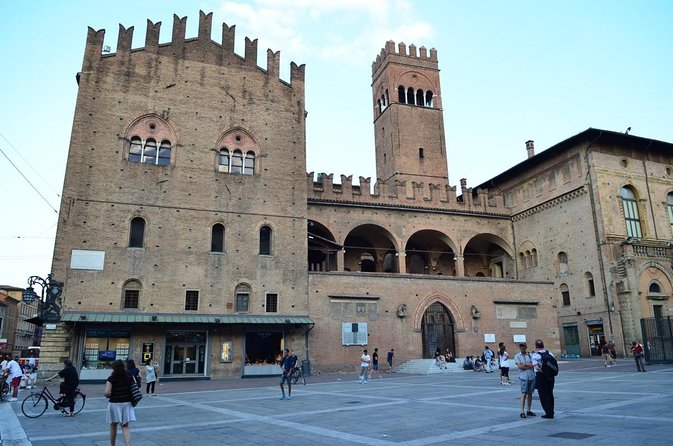
- 14 puzzle-based challenges with a story thread that keeps your walking purposeful
- Offline play after you’ve got the quest access code loaded on your phone
- Pause and resume anytime, so breaks don’t break the game
- Free admission spots at each stop (all the key sights are public/outdoor or accessible)
- Family- and group-friendly pace and format, since you can go as a team
- Smart start/end by your schedule, within the day-long operating window
Price and value: $6.60 for 90 minutes in central Bologna
At about $6.60 per person for roughly 1 hour 30 minutes, this is one of the lowest-cost ways to see Bologna beyond the main plaza circuit. The big value isn’t just price. It’s that you’re paying for structure: the app nudges you to look at details you’d otherwise pass by—towers, gates, fountains, and the architectural quirks that make Bologna feel different block to block.
Also, the format is flexible. You can pause and resume, and the game is designed to start and finish based on your own timing rather than a strict guided group schedule. That matters in Bologna, where you’ll likely pause for espresso, gelato, or a quick photo stop.
One practical note: this is self-guided, so it’s not a live explanation from a person. If you love being “told the why” and not just shown the what, you’ll want to balance this with a short guided moment elsewhere.
You can also read our reviews of more tours and experiences in Bologna.


How the offline app quest works (and what to do if it glitches)
You’ll use a mobile access code and unlock the quest in the app on your phone. The key detail is that the experience doesn’t require an internet connection to play, which is great for a city center where reception can be inconsistent.
The flow is straightforward: at each stop, you look around and answer a challenge tied to the location. The itinerary is built around short time windows, so you’re meant to keep moving—but the app lets you pause and resume, which is perfect for families and for anyone who likes a slower pace.
Now the caution based on real-world issues that have shown up in feedback you can learn from:
- Some people reported trouble downloading the app on their phones, which prevented them from unlocking the experience.
- Others ran into map link problems where the clue location didn’t line up with where they were standing.
If you want the smooth version, plan like this:
- Download and check the app before you leave your hotel or wherever you’ll have Wi-Fi.
- Give yourself a small buffer time. Construction can affect signage and exact placement, and a clue can take longer when you’re scanning around.
- If something does go wrong, the provider support email listed in help responses is [email protected].
This isn’t a reason to avoid the quest—it’s just good prep. Bologna rewards attention. The quest simply asks you to pay it.
Stop 1: Piazza di Porta Ravegnana and the Two Towers spot
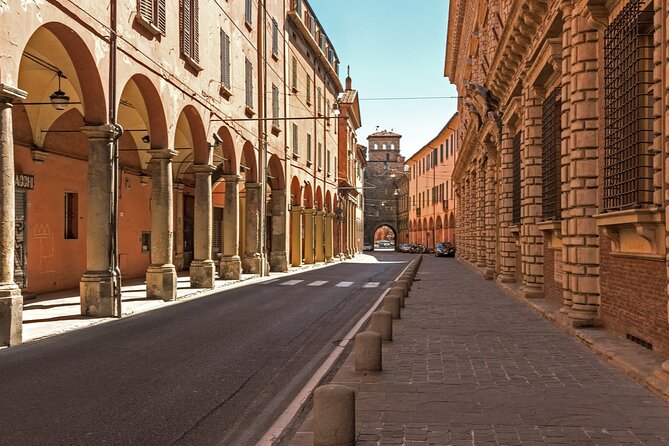
Your adventure begins at Two Towers, Piazza di Porta Ravegnana (40126 Bologna). This area is famous for a reason: it’s the setting tied to the Two Towers of Bologna, and it sits just a short distance from bigger landmarks like Piazza Maggiore and the Cathedral area.
What the game makes you do here is simple and effective: instead of arriving, taking one photo, and moving on, you’re prompted to look around for the answer to the first challenge. That changes your whole experience. You start noticing positioning—how buildings frame the view, how streets open up, and how the tower story feels part of everyday city movement.
A quick, practical tip: if you’re coming from another part of town, arrive a few minutes early. This first location sets the game rhythm, and you’ll want a calm start rather than wrestling with your phone right next to the towers.
Stop 2: Palazzo Isolani and Piazza Santo Stefano’s portico maze
From the Porta Ravegnana area, the quest shifts toward Palazzo Isolani, located on Via Santo Stefano #16, facing Piazza Santo Stefano. This palace is a mix of Gothic and Renaissance architecture, and the app challenge pushes you to spot clues in the building details and setting.
Then you move into Piazza Santo Stefano, a place Bologna uses for real life: cultural events, flea markets, and concerts. The structure is distinctive—there are porticos along both long sides, while the basilica takes the short side of the square. Also, to the left of the basilica, you’ll find a cluster of buildings linked to the powerful Isolani family.
This stop is where the quest becomes more than a quiz. Porticoes in Bologna aren’t just pretty. They shape how you walk, where shadows land, and how you frame views while you hunt for answers. Expect to slow down and re-read what you’re seeing—arch lines, building edges, and the way the square holds space like a stage.
Stop 3: Piazza Galvani and the silk market story
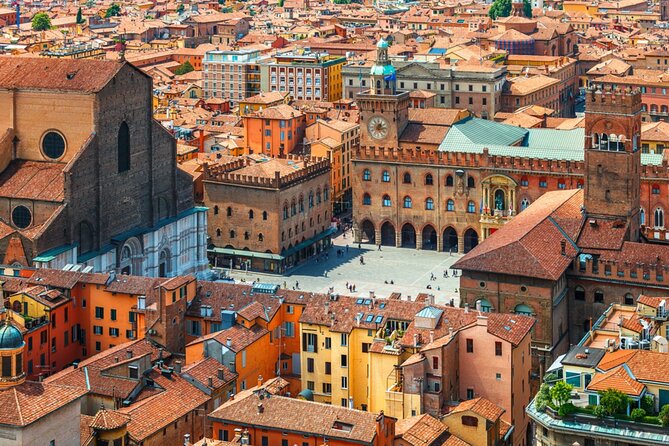
Next up is Piazza Galvani. The setting has a clear economic past: from the 15th to 17th centuries, this space was dedicated to the silk market. Later, the Palazzo dell’Archiginnasio began construction in 1563, which changed the layout by removing nearby blocks and opening up a larger square designed to give the building more prominence.
In the game, you’re not just learning dates. You’re being asked to connect time to place. Piazza Galvani becomes a visual “before and after” lesson: you’re meant to notice the square as an intentional space, not random open ground.
Right after, the route threads into the Quadrilateral, one of the most interesting sections for anyone who likes markets that still feel like markets. The area has a craft and trading tradition reaching back to the Middle Ages. You enter after passing tall arches that lead away from Piazza Maggiore, and then you slip into narrow lanes with a signature look—archways with the characteristic “holes.” Shops often stay in the same specialty categories, with some businesses passed down through generations.
If you’re a shopper, this stop can feel like a bonus. If you’re not, it still works as a cultural snapshot. Either way, keep your phone handy because the quest nudges your attention right where old Bologna still shows up: the storefront rhythm, the alley shape, and the old-school atmosphere of spaces like historic chemist shops.

Stop 4: Neptune’s Fountain, Giambologna, and Porta Nova wall history
Then comes Neptune’s Fountain, one of Bologna’s iconic photo moments, with a detail level that makes it worth lingering. The fountain was completed in 1565, and the bronze Neptune figure was finished and fixed in place around 1567. The design ties to artist Giambologna, who had submitted a model for a Fountain of Neptune in Florence but lost the commission to Baccio Bandinelli.
The quest experience here is smart. It doesn’t ask you to know art history up front—it asks you to observe the fountain as a landmark. Once you start hunting for the puzzle answer, your attention shifts from “pretty fountain” to “specific sculptural moments and layout choices.”
After the fountain, the game brings you to the torresotto, also known as the Porta Nova gate. This connects you to the city’s defensive story in a tangible way. Porta Nova belongs to the second ring of walls, the Torresotti ring, completed in 1192. That wall circuit was about 4 km long, with 16 gates and 2 posterns. The walls were about 8 m high, with brick merlons. Bologna didn’t grow from one wall set; it grew in layers, and the oldest ring used seleni-te (local stone) blocks, older than the latest inner-ring road.
This is a satisfying stop if you like city structure. It also helps kids, since walls and gates are easy objects to understand visually. You’ll feel the city as a system, not just a set of monuments.
Stop 5: Torre Prendiparte and the fortress-style brick look
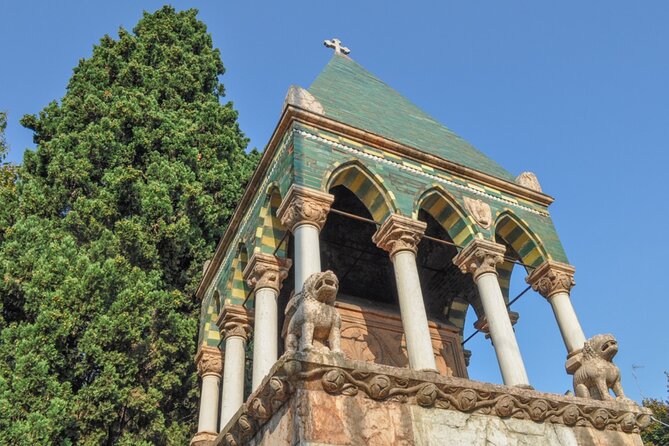
Next is Torre Prendiparte, also known as Coronata Tower. This tower was built in the 12th century by the Guelph Prendiparte family as a defensive structure.
What makes this tower especially Bologna is the building language: you’ll see the typical Bolognese red bricks and strong selenite blocks, which give it a heavy, fortress-like presence.
In quest terms, this stop is about reading the surface. Instead of treating towers like background skyline, the puzzle asks you to look closely. You’ll likely notice how brick and stone create patterns, thickness, and edges that don’t show up in a quick walk-by photo.
One practical thought: towers and gates can feel better in the late afternoon light. If you have flexibility, try to time your game so the shadows help you “see” the architectural clues.
Stop 6: Piazza Giuseppe Verdi to wrap up near Via Giuseppe Petroni
Your final segment lands in Piazza Giuseppe Verdi, located halfway along the student street Via Zamboni. The square is described as full of activity day to day, with students and people who enjoy a night out.
This is also a social hub. It’s home to La Scuderia Café, and it’s considered a key meeting point for il giro di Bologna—Bologna’s social scene with concerts, markets, street performances, and club nights. Even if the nightlife isn’t your thing, Piazza Verdi is an excellent ending because it feels like current Bologna, not just old Bologna.
In this last portion, the quest still keeps the same rhythm: look around, answer, and keep moving. When you finish, the experience ends at Via Giuseppe Petroni, 37 (40126 Bologna). That matters because your return plans are easier if you end in a lively area rather than a dead-end street.
If you’re traveling with kids, this is also a decent place to relax. You can treat the end as a natural break before dinner, with lots of people around and a “normal city” vibe.
Who this quest suits best (and who should pair it with something else)
This Bologna Secrets Quest works best for:
- Families and kids who like games and can handle scanning details on a phone while walking
- Friends who want a low-cost activity that feels like an adventure rather than a museum visit
- Independent travelers who enjoy planning lightly but still want meaningful stops
- Anyone who prefers a flexible pace—because the app lets you pause and resume
It may be less satisfying if:
- You want a speaking, live guide to answer “why does this matter?” questions
- You need the experience to be absolutely frictionless with tech, because app downloads and map matching can make or break the flow
A smart strategy: treat this as your “framework walk,” then add one guided moment (even short) during the same day to get deeper context on what you saw.
Final call: should you book this Bologna Secrets Quest?
If you want a budget-friendly, structured way to see central Bologna in about 90 minutes, and you’re comfortable using your phone like a guide, I think this is a strong choice. The offline play is a real advantage, and the puzzle format turns common landmarks—Two Towers area, Santo Stefano, Galvani, Neptune’s Fountain, Porta Nova walls, Torre Prendiparte—into something you actually pay attention to.
If you hate tech dependence, or you know your phone has spotty app performance, give yourself extra prep time. And if you’re unlucky enough to hit app download or map mismatch issues, use the provider support contact ([email protected]) so you’re not left troubleshooting all evening.
FAQ
How long is the Bologna Secrets Quest?
It takes about 1 hour 30 minutes (approx.).
How much does it cost?
The price is listed as $6.60 per person.
Do I need an internet connection to play?
No. The quest is described as not requiring an internet connection to play after you access it in the app.
Are there puzzle challenges?
Yes. The quest includes 14 puzzle-based challenges.
What are the start and end points?
It starts at Two Towers, Piazza di Porta Ravegnana, 40126 Bologna, Italy and ends at Via Giuseppe Petroni, 37, 40126 Bologna, Italy.
Is there a physical tour guide?
No. It’s an app-based experience and does not include a physical tour guide.
Can I pause and resume?
Yes. The experience includes flexibility to pause and resume anytime.
What language is the quest offered in?
It’s offered in English.
Is it private or shared with other groups?
It’s listed as a private tour/activity, meaning only your group participates.
Can I cancel for a refund?
Free cancellation is offered. You can cancel up to 24 hours in advance for a full refund.