REVIEW · LISBON
Alcobaça & Óbidos: Self-guided tour
Book on Viator →Operated by Cityrama · Bookable on Viator
Walls and monasteries, all in one half-day. Óbidos is a perfect day-trip stop from Lisbon, and this tour keeps you moving with an interactive smartphone guide instead of chasing a group. I like that you get round-trip transport included and time inside both Alcobaça and Óbidos without doing the planning math. The one thing to watch: once you’re on your own in Óbidos, the phone guidance and map do most of the work, so if you expect lots of spoken storytelling, you might want more on-the-ground explanation.
If your idea of a great trip is: see a lot, then wander with purpose, this works. The tour runs for about six hours, with a maximum of 20 people, and it’s built for moderate walking through old streets and church stops.
In This Review
- Quick hits before you go
- Why this Lisbon to Óbidos setup works (smartphone self-guided done right)
- Meeting at Cityrama Gray Line: the 9:00 am rhythm
- Alcobaça monastery: UNESCO scale and the tombs that stop time
- Óbidos inside the walls: history you can walk through
- Rua Direita: Manueline details and the walk to Santa Maria
- Castle de Óbidos: built by Arabs, taken by Afonso Henriques
- Igreja de Santa Maria and Igreja de São Pedro: two church stories in one day
- Igreja Matriz de Óbidos (Santa Maria)
- Church of Saint Peter
- The Pousada stop: when a hotel has a backstory
- How the interactive guide fits the real pace of travel
- Value check: is $50.88 a smart spend from Lisbon?
- Who this tour suits—and who should rethink
- Should you book this Alcobaça & Óbidos self-guided tour?
- FAQ
- How long is the Alcobaça & Óbidos self-guided tour?
- Is this a guided tour or self-guided?
- What’s included in the price?
- What about admission tickets?
- Where do we meet, and what time does it start?
- Is there a bathroom on the bus?
- Can I cancel and get a full refund?
Quick hits before you go

- Smartphone-led routing inside Óbidos means you can pause, backtrack, and keep your pace.
- Alcobaça monastery in UNESCO territory plus famous tombs makes the day feel “bigger” than a typical half-day.
- Free church stops balance out the paid castle entry you’ll handle separately.
- A map + info folder helps you build a simple loop around the walled town.
- Comfortable bus time from Lisbon with an on-the-spot guide assistant when you need it most.
Why this Lisbon to Óbidos setup works (smartphone self-guided done right)
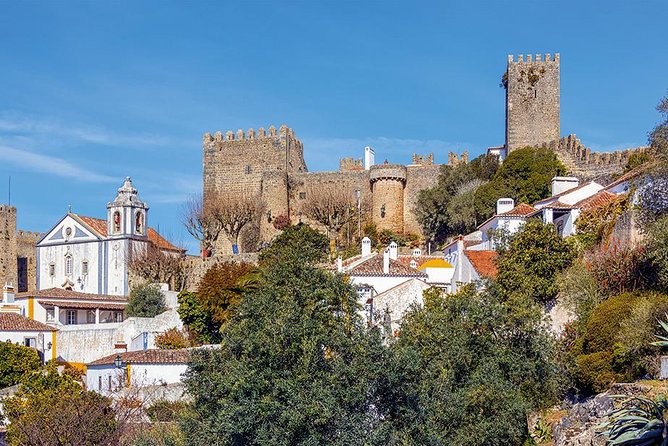
This is the kind of tour I like for old towns. You’re not stuck waiting for everyone to finish a photo. You’re also not wandering with zero plan and hoping you stumble into the right streets.
You get a smartphone device (one per person, including kids) that acts like your guide. That matters in places like Óbidos, where the lanes twist and the sights are close—but not always obvious. Instead of a thick guidebook, you can follow a clear route and get spot-level context as you move.
The tour also includes a guide assistant for support and tips, so you’re not totally on your own. When things feel confusing—meeting point questions, what to do next, how to make the route work—that assistant is there to help you get unstuck.
The trade-off is simple: this is not a long, talk-heavy guided lecture. If you love lots of live commentary, you might find the phone does most of the explaining.
You can also read our reviews of more tours and experiences in Lisbon.



Meeting at Cityrama Gray Line: the 9:00 am rhythm
The tour starts at 9:00 am and meets at Cityrama Gray Line Portugal at Alameda Edgar Cardoso, 1070-051 Lisboa. It’s not a hotel pickup, so you’ll need to make your way there on your own.
Getting there a few minutes early is smart. The day runs like a schedule: you board, you go, and then you use your time on-site rather than burning it waiting around.
Also note one practical detail: there’s no bathroom on board the bus. That affects your comfort level. If you’re heading straight from breakfast, consider timing it so you can handle the bus ride without rushing.
Dress is smart casual. For walking, that usually means “comfortable shoes,” even if the outfit is neat. You’ll do a moderate amount of moving between spots.
Alcobaça monastery: UNESCO scale and the tombs that stop time
Alcobaça is the strong start. You’ll head to the Monastery of Alcobaça, also known as the Royal Monastery of Santa Maria de Alcobaça. It’s a UNESCO World Heritage site, designated in 1989, and the building story is impressively long.
Construction began in 1178 by order of King D. Afonso Henriques. The monks took up residence in 1223. One-hour here can sound short, but the scale is big enough that you’ll feel like you used your time well if you focus on the highlights the phone guide flags.
This monastery is part of the Cistercian Order and is described as one of the largest and best-preserved complexes of that order. What you’re really there for, though, is the burial connection: King D. Pedro chose the church of the monastery as the burial site for himself and Inês de Castro. Their impressive tombs are a must if you want the day to feel emotionally grounded, not just architectural.
Admission is free for this stop, which adds value. With transport already handled, your money goes to time and access rather than ticket stacking.
Practical tip: treat the monastery like an art-and-craft stop, not a quick hallway. Look up, slow down for a minute, then head back to your route.
Óbidos inside the walls: history you can walk through
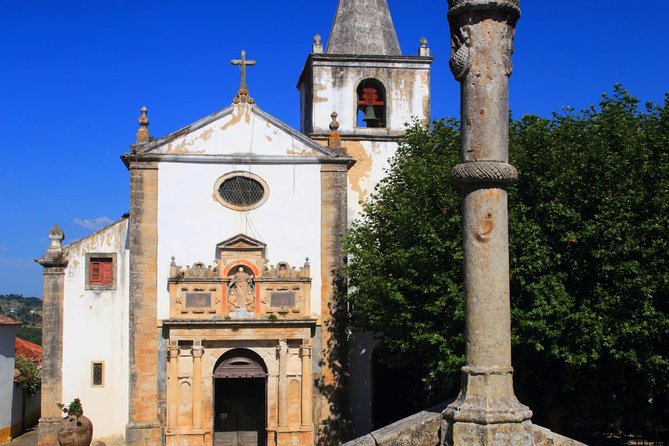
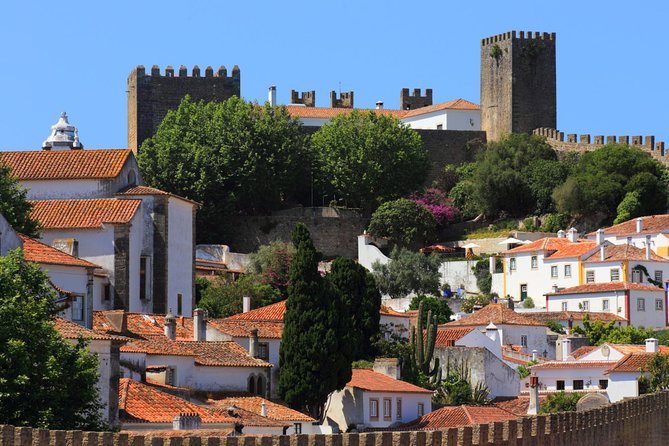
Óbidos is the “wow” moment. You arrive and set off exploring within the medieval walls, with about two hours to roam. The town is small enough to feel intimate, but it’s packed with layers.
You’ll see how the story goes back far beyond Portugal’s modern borders. The village is described as likely founded by the Celts in 308 BC, and later connected to the ancient Roman city Eburobrittium (as suggested by recent studies). After that, the area cycles through occupations, including barbarians and then the Moors.
Portuguese nation-building shows up too. Afonso Henriques, the first king of Portugal, conquered the village from the Moors. Later, in the 18th century, Óbidos remained a royal summer destination. King John V stayed there for eight years after medical advice to go bathing in nearby Caldas da Rainha to treat arthritis and obesity.
This is why Óbidos works for a half-day: you don’t just look at a castle. You see a living town shaped by centuries of rulers and everyday residents.
How to enjoy your time: let the phone route get you oriented, then choose one main street stretch and one church/castle block to focus on. You’ll cover more with less stress.
Rua Direita: Manueline details and the walk to Santa Maria
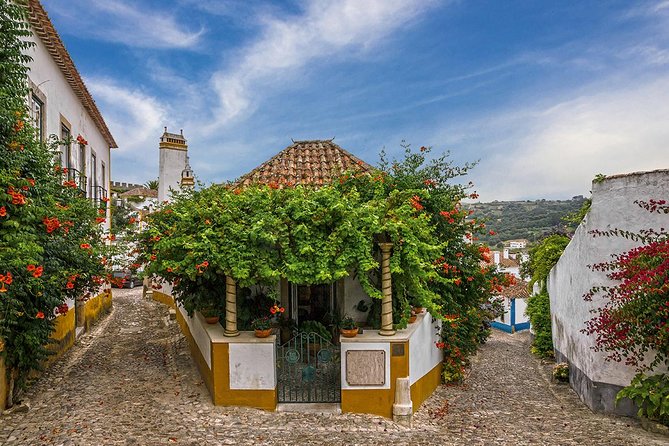
Once you’re in Óbidos, your route channels you toward the town’s center through Rua Direita, the main street. It’s a good “starter spine” because it leads you into the most important church area.
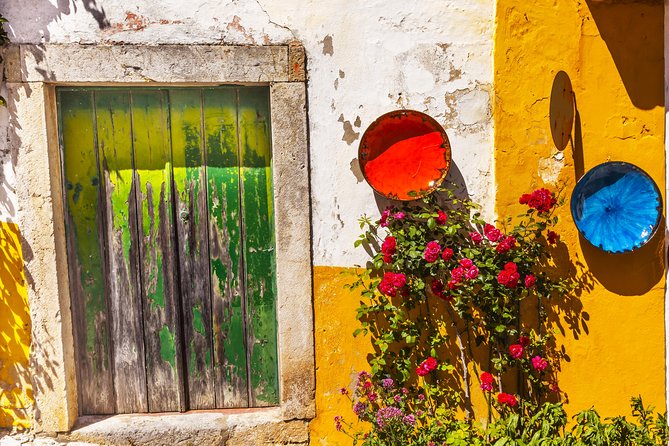
This stretch is often where Óbidos surprises you. Instead of only stone walls and views, you get decorative architecture too. Rua Direita takes you toward the Church of Santa Maria through a labyrinth of streets lined with Manueline porticos, flowered windows, and small open spaces (the vibe is more stroll-friendly than hurried).
You’ll spend about 45 minutes on this part of the route. It’s long enough to slow down for photos, but not so long that you lose momentum.
Here’s the real value: you learn the town layout by walking its main artery, then your phone guide helps you link the next stops. That reduces the common mistake of seeing everything in random order and then realizing you missed the best angles.
If you’re craving a smoother flow, you can treat Rua Direita like your warm-up lap—get bearings, then commit to churches and castle views.





Castle de Óbidos: built by Arabs, taken by Afonso Henriques
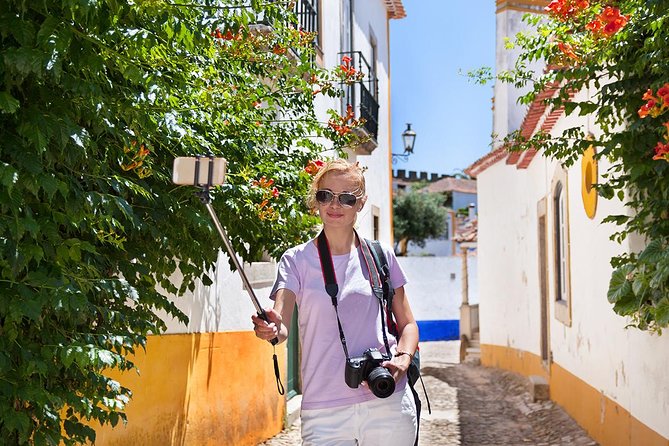
The castle stop is your vertical payoff. You’ll have about 45 minutes at Castelo de Óbidos.
The castle’s origins are described as Arabic construction, on land already occupied by Lusitanians, Romans, and Visigoths. Then comes the reconquest story: during the expansion of Portuguese territory and Christian reconquest, D. Afonso Henriques took the castle around 1148.
That mix matters because it explains why the stone looks the way it does and why the strategic position is so important. Even without a long guided talk, you can feel how this was built to defend a town.
A key practical point: castle admission is not included. So your budget needs a small extra ticket. In exchange, you’re not paying for something you might not use. If the views are your goal, this stop is worth planning for.
One more thing to keep in mind: castle time tends to involve uneven walking and stairs or ramps. The tour says moderate physical fitness is enough, so you don’t need to be an athlete. Just wear shoes that can handle stone.
Igreja de Santa Maria and Igreja de São Pedro: two church stories in one day
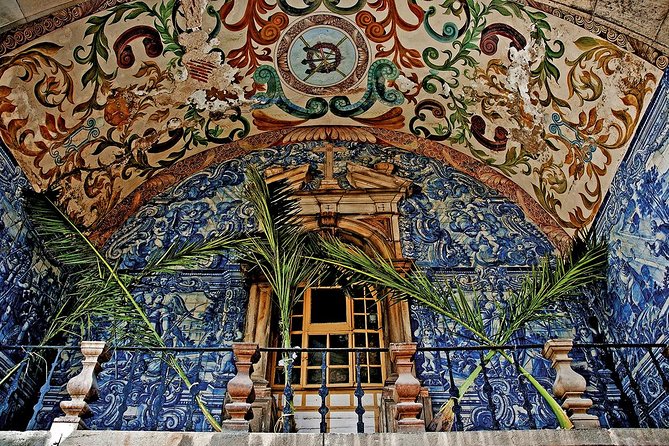
Óbidos’ churches aren’t just scenic stops. They’re different time periods packed into a small geography, which is exactly what you want from a half-day.
Igreja Matriz de Óbidos (Santa Maria)
You’ll visit Igreja de Santa Maria, also called the town’s main church, Igreja Matriz de Óbidos. It’s described as founded between 1148 and 1185. This makes it one of the anchors of the town’s religious center.
Plan around 45 minutes here. With the phone guide, you should be able to focus on the key elements without turning it into a “walk in, walk out” task.
Church of Saint Peter
Next is Church of Saint Peter. It’s described as medieval, but with a more complicated rebuilding timeline: founded in the seventeenth and nineteenth centuries, and rebuilt after the 1755 earthquake.
Also about 45 minutes, which is enough time to notice the difference in how it feels compared with Santa Maria. This is a good pairing if you like seeing how events (like the 1755 quake) reshape a town’s buildings.
Both church stops have free admission, which makes your money go further.
The Pousada stop: when a hotel has a backstory
One highlight promised in the itinerary is a look at the first Pousada restored from a historical building. That’s the kind of detail I appreciate because it shows you how Portugal preserves rather than freezes.
A Pousada is not just a place to stay. It’s a way historic structures stay in use. Even if you don’t plan to sleep there, seeing it up close gives context for why people feel proud of these buildings.
In a walled town like Óbidos, this kind of spot also helps you understand scale. When tourism returns money to maintenance, old streets stay walkable, not abandoned. Your phone guide and map should help you locate it in your route so it doesn’t feel like an afterthought.
How the interactive guide fits the real pace of travel
This is a self-guided smartphone tour, but with support. That combination is what keeps it from feeling like a gimmick.
Here’s what the phone guide can do for you:
- Help you route through labyrinthine streets without getting lost.
- Give enough context so you understand why each stop matters.
- Let you linger at the spots you care about and skip what doesn’t grab you.
But you should also know where self-guided tours can fall short. The guide assistant can point you in the right direction and offer tips, and that can be very helpful. Yet the amount of spoken commentary you get may be less than what you’re used to on a full guided tour. In practice, you’ll rely on the device and the included information folder and map.
So my advice is simple: don’t treat the phone like a background accessory. Pause and read. Plan to use it for at least the first stop in Óbidos so you understand the flow.
You’ll get more out of the day if you treat it as “guided routing, self-paced wandering.”
Value check: is $50.88 a smart spend from Lisbon?
At $50.88 per person for roughly six hours, the value is decent—especially because several things that often cost extra are included.
You get:
- Transport from Lisbon and back (by minibus or bus).
- A guide assistant.
- One smartphone per customer (including children).
- An information folder and map.
Then you have a built-in structure that includes free admission at Alcobaça and the church stops. Only the castle is explicitly listed as not included.
Is it “cheap”? Not really. It’s more like: you’re paying for the convenience layer. You avoid the work of planning the day’s logistics while still getting freedom to explore Óbidos your way.
For me, the question becomes: do you want structure without a crowded group? If yes, this is priced like a practical tool, not like a luxury experience. If you want deep live explanations, you may feel you paid for a device-based route rather than a guide-led storytelling day.
Also, the tour is capped at 20 travelers, which helps keep the experience feeling organized without turning it into a mass day trip.
Who this tour suits—and who should rethink
This is a good match for:
- People who want an easy way to cover Alcobaça + Óbidos in one go.
- Travelers who like to set their own pace once they arrive.
- Families and groups, since everyone gets a smartphone device.
- Anyone who enjoys architecture and monuments but doesn’t need a long lecture to appreciate them.
It might be a less perfect match if:
- You strongly prefer a live guide explaining the story at every step.
- You hate any self-navigation. This tour gives you routing help, but you’re still doing your own exploring inside Óbidos.
- Your main priority is spending all day in one place rather than splitting time between Alcobaça and the walled town.
If you go in expecting smartphone-led guidance with light-to-moderate human prompting, you’ll feel right at home.
Should you book this Alcobaça & Óbidos self-guided tour?
I’d book it if you want a low-stress half-day trip from Lisbon that still hits the big-ticket sights: a UNESCO monastery stop at Alcobaça and the medieval-walled town of Óbidos.
Book it especially if you like the idea of using a smartphone guide to move efficiently, then wandering at your own tempo. The free admission at key stops helps, and transport included makes the day simpler than running two separate trips.
Skip it if you mainly want a highly narrative, speaker-at-the-front experience. This one is more about you using the device and map to shape the day.
FAQ
How long is the Alcobaça & Óbidos self-guided tour?
The tour runs for about 6 hours (approx.).
Is this a guided tour or self-guided?
It’s self-guided with an interactive smartphone guide (one per customer). A guide assistant is also included to help with tips and support.
What’s included in the price?
Transport from Lisbon to Óbidos and back, a guide assistant, the interactive smartphone guide, an information folder, and a map.
What about admission tickets?
Alcobaça and the church visits are listed as free. The castle admission is not included.
Where do we meet, and what time does it start?
You meet at Cityrama Gray Line Portugal on Alameda Edgar Cardoso, 1070-051 Lisboa. The tour starts at 9:00 am and ends back at the meeting point.
Is there a bathroom on the bus?
There is no bathroom on board the bus.
Can I cancel and get a full refund?
Yes. You can cancel up to 24 hours in advance for a full refund.