REVIEW · LISBON
“Help the Marquis of Pombal save the king!” Self-Guided Walk Tour
Book on Viator →Operated by LiveHistory Adventure · Bookable on Viator
Pombal turns Lisbon into a story you play. This self-guided walk is built around an audio-driven thriller, and the best part is no waiting for a guide and no “now everyone follow me” stress. I like the interactive choices that change how the ending feels, not just how much you listen. One thing to keep in mind: several sites are viewable without included entry, so you may need to decide on the spot whether you want to pay for any indoor access that’s not included.
You’ll pace yourself through some of Lisbon’s most central landmarks, starting near Lg. Trindade Coelho and finishing at the famous viewpoint of Miradouro de São Pedro de Alcântara. It’s in English and designed for small groups (up to 2), so it works well if you want a flexible route more than a group lecture.
In This Review
- Key Highlights You’ll Feel on the Walk
- The Pitch: A Self-Guided Lisbon Thriller Named for Pombal
- How the Audio Drama Quest Works on Your Phone
- Price and What $60.08 per Group Really Buys
- Step-by-Step Stops: 9 Places That Build the Plot
- Stop 1: Igreja de São Roque (Jesuit Citadel Vibes)
- Stop 2: Santa Casa da Misericórdia de Lisboa (Past Headquarters Energy)
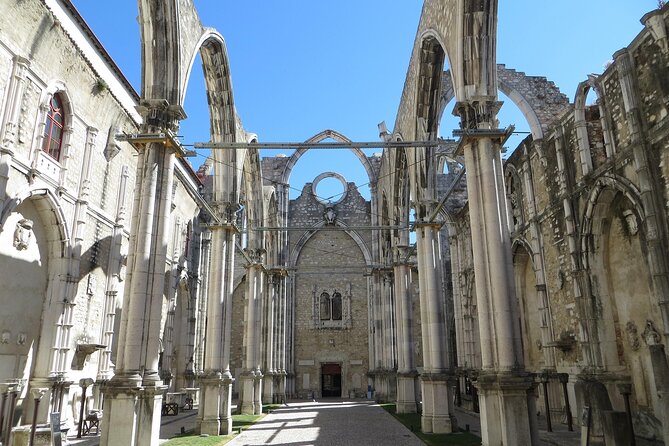
- Stop 3: Convento do Carmo Ruins (The Earthquake’s Aftermath)
- Stop 4: Praca Dom Pedro IV (Rossio Square)
- Stop 5: Estação do Rossio (Lisbon’s “Stop and Stare” Station)
- Stop 6: Palacio Foz (Power Rebuilt After 1755)
- Stop 7: Avenida da Liberdade (A Grand Avenue with Old Roots)
- Stop 8: Praca da Alegria (A Quiet, Cozy Reset)
- Stop 9: Miradouro de São Pedro de Alcântara (Finish with the View)
- What I Like Most: The Story Beats That Make Streets Meaningful
- Minor Friction to Know Before You Start
- Who This Is Best For (And Who Might Prefer Something Else)
- Should You Book This Marquis of Pombal Walk?
- FAQ
- How much does the Self-Guided Walk Tour cost?
- How long is the experience?
- What language is the audio available in?
- Where does the tour start and end?
- Are admission tickets included for the stops?
- Do I need to book time with a guide?
- What are the operating hours?
- What is the cancellation policy?
Key Highlights You’ll Feel on the Walk

- An audio drama you follow while walking, featuring characters like Angelica, Malagrida, and Isabel
- Quest-style moments that ask you to think, not just press play
- A route that mixes squares, streets, and major Lisbon sights, from Rossio to Avenida da Liberdade
- Free stops where you don’t need extra tickets like Rossio Square and Estação do Rossio
- A viewpoint finish at São Pedro de Alcântara, where the city looks like it’s been edited for postcards
The Pitch: A Self-Guided Lisbon Thriller Named for Pombal
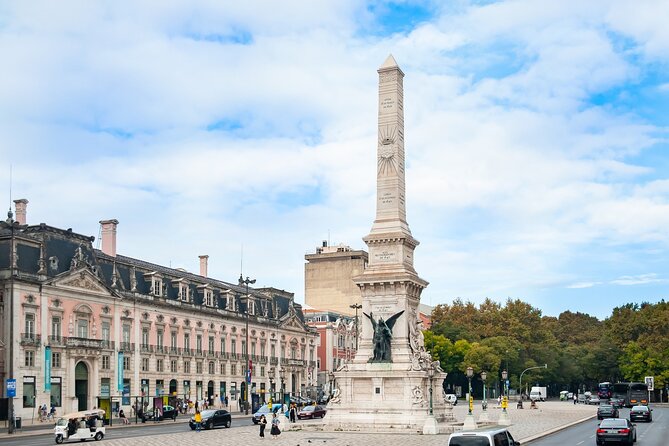
This is not a typical audio guide where you wander and hope the narration matches the scenery. The concept is simple: you follow a story tied to Lisbon’s political drama in the 1700s, with the Marquis of Pombal at the center of it. The narration is staged like a detective thriller, with dialogue and character energy rather than a flat “here’s a fact” approach.
The payoff is that the walk starts to feel like a mission. You’re in the city, but your attention is guided—by story beats, little tasks, and the slow shift from past details to present-day streets. That’s why it can change how you read Lisbon. You stop seeing it as background and start seeing it as a setting.
You can also read our reviews of more tours and experiences in Lisbon.


How the Audio Drama Quest Works on Your Phone

The experience uses a mobile ticket and is offered in English. In practice, you download or access what you need from your device and then follow the route at your own pace. Your phone becomes your guide, including cues for what to notice at each stop.
The structure is part of the fun: instead of just listening, you get points where you make choices or solve simple quest steps. The story also includes a strong theatrical quality, with voice acting that makes the characters feel like people—especially the guide figure named Angelica, who leads you along the way.
A key advantage of self-guided is control. You can slow down when the street views are good, pause when you want photos, or speed up if you’re on a mission. You also avoid the classic guided-tour problem: the group pace dragging you out of the mood.
Price and What $60.08 per Group Really Buys
The price is $60.08 per group (up to 2), for about 2 to 3 hours. That’s an unusual pricing model compared with per-person tours, and it changes the value math.
If you’re traveling as a couple or with one friend, you can split the cost and effectively get a “two-person private” feel without paying for a full private guide. And because it’s self-guided, you’re paying for the story package and access, not for someone’s time-based schedule.
Two extra value notes that matter:
- You’re not paying admission at every stop. Some parts are free and mostly outdoor or look-and-learn.
- The experience is small-group by design (maximum 2 travelers), so it doesn’t feel like an overcrowded audio-party.
If you’re a solo traveler, it can still be worth it, but you’re paying the full group price. If you’re considering it, compare against a standard group guided walking tour and ask yourself what you value more: a live guide or a scripted story you control.
Step-by-Step Stops: 9 Places That Build the Plot
The route is built to flow through Lisbon’s historical core, mostly flat-to-moderate walking with short time at each stop. Plan on about 2–3 hours total, depending on how often you pause for photos or a quick snack. The narration is timed to the route, so don’t jump ahead too far.
Stop 1: Igreja de São Roque (Jesuit Citadel Vibes)
This former Jesuit stronghold sets an immediate tone of power and influence. Even if you don’t go inside (admission isn’t included here), the exterior and surrounding context help the story feel grounded in real institutions.
What you’ll look for: the sense of Lisbon’s religious and political weight in the same streets.
Watch for: if you’re hoping for full interior access, you’ll need to plan for an extra ticket since admission isn’t included.






Stop 2: Santa Casa da Misericórdia de Lisboa (Past Headquarters Energy)
Next you’re near the Misericórdia complex, another place tied to old-school organization and authority. Again, admission is not included, so think of this stop as listening + observing more than touring rooms.
Why it matters for the story: it reinforces how institutions shaped everyday life, not just big national events.
Quick tip: keep your phone audio going as you scan the architecture and entrances—this kind of site is made for listening.
Stop 3: Convento do Carmo Ruins (The Earthquake’s Aftermath)
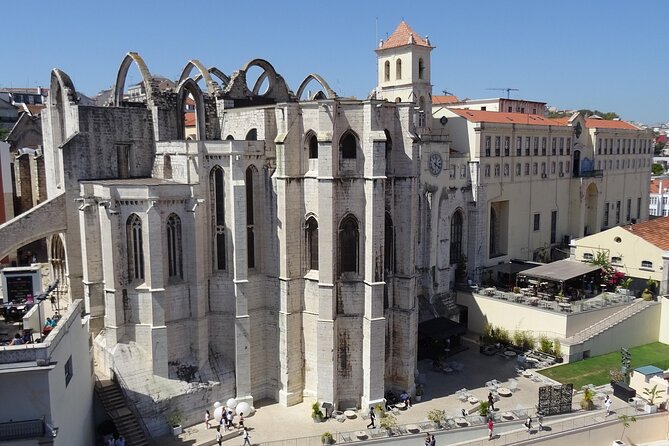
Then the route turns into visual history. The Convento do Carmo ruins are the aftermath of the Great Earthquake, and that physical destruction gives the narrative a sharper edge. Admission isn’t included, but the ruins themselves do the heavy lifting.
Why this is a must-spot: ruins hit differently when the story you’re hearing is about upheaval, risk, and consequence.
Consideration: the walking pace stays steady, so if you want slow contemplation, give yourself a little extra time here.
Stop 4: Praca Dom Pedro IV (Rossio Square)
You drop into the heart of Lisbon. This is the famous Praca do Rossio area, and it’s a natural break in the walk. Admission is free, so you’re not buying anything—just letting the square reset your senses.
What to notice: street energy and historical scale. This is where the city feels communal.
Good strategy: pause for a drink or a quick snack before you head into the station area.
Stop 5: Estação do Rossio (Lisbon’s “Stop and Stare” Station)
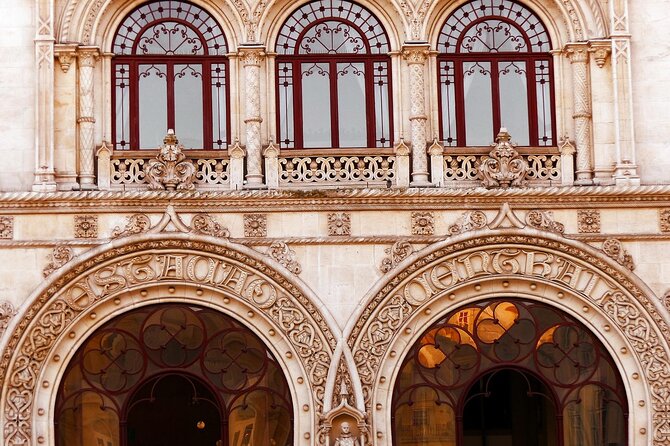
Estação do Rossio is described as Lisbon’s most beautiful historical station, and even if you’re not a transit nerd, you’ll likely understand why. Admission is free here, so you can enjoy the station atmosphere without paying for an entry ticket.
Why it works in a self-guided story: stations are natural pause points for narration because they feel like crossroads—exactly the vibe a thriller loves.
Tip: don’t rush through. Look up and take in the space.
Stop 6: Palacio Foz (Power Rebuilt After 1755)
Palacio Foz is one of the standout architectural moments on the route, built after the Great Earthquake. Admission isn’t included, so you’re mainly appreciating from the outside and letting the audio frame why the building matters.
What you’ll get: a sense of how wealth and authority restarted after disaster.
If you want more: you’d need to arrange interior access separately since admission isn’t included.
Stop 7: Avenida da Liberdade (A Grand Avenue with Old Roots)
Now you’re on the main historical avenue. Admission is free. This stretch is about scale and momentum—an easy way to walk off your “quest brain” while still hearing plot developments.
Why it’s a smart transition: the story keeps moving, but you also get a wide-open avenue view to reset your eyes.
Practical note: this is a place where you’ll want sunglasses and comfortable shoes.
Stop 8: Praca da Alegria (A Quiet, Cozy Reset)
After the big avenue, Praca da Alegria offers a calmer pace. It’s a small park with a fountain feel, and admission is free. This is a good moment to take a breather and let the story land.
What it does for your experience: it breaks up the intensity so you can finish strong at the viewpoint.
Tip: if you tend to get plot fatigue, this is where you’ll appreciate the quieter scenery.
Stop 9: Miradouro de São Pedro de Alcântara (Finish with the View)
The walk ends at Miradouro de São Pedro de Alcântara, a large terrace with a fountain and a picture-perfect Lisbon sweep. Admission is free.
This finish matters because it gives you the payoff moment. You look out over the city and your mind ties it back to what you just heard: fate, decisions, and consequence. The story’s final beats are designed to land around the end of the route, so give yourself a few minutes rather than sprinting to be done.
What I Like Most: The Story Beats That Make Streets Meaningful
Here’s why this route can work even if you’re not “history mode.”
First, the audio experience feels like theatre. The character energy makes the political intrigue easier to follow than a textbook lecture. The story includes real figures from the period, and it threads in major events—like the 1755 earthquake and the fate of the Jesuits—without turning them into dry bullet points.
Second, the quests don’t just test whether you can hear. They push you to make choices and think through moral and political consequences. That turns your walking pace into something you can control. You’re not just consuming information; you’re participating.
And lastly, self-guided is the right style for this particular content. Political suspense and detective rhythms need your attention. A live group guide can help, but it can’t recreate the same sense of being in on something private.
Minor Friction to Know Before You Start
Even a great self-guided experience has a few realities:
- Some stops are not included for admission, so you’ll mostly view from outside unless you buy tickets separately.
- You need a phone that behaves. If your battery is low, start charging early.
- Because it’s self-guided, you won’t have a human to immediately clarify confusion. If you miss a cue, you’ll need to rewind and re-listen.
None of this is a dealbreaker. It’s just the trade: you get freedom, but you’re running the show.
Who This Is Best For (And Who Might Prefer Something Else)
This tour style fits you if you want:
- a story-first way to see Lisbon’s center
- a smaller group feel (it’s capped at 2)
- a flexible schedule you can handle at your own pace
- an English audio experience with active quest moments
It might not fit if you want a classic “stop, listen, move on” guided narration, or if you dislike interactive storytelling and would rather stick to factual explanations only.
Should You Book This Marquis of Pombal Walk?
I think it’s a smart choice if you’re the type who enjoys walking while listening—and especially if you like stories that feel like a thriller instead of a history slideshow. The mix of Lisbon landmarks and a plot-driven audio drama is a good match. You also get value through free stops, a free outdoor viewpoint finale, and a two-person group price.
If you’re unsure, decide based on this one question: do you want Lisbon as a place you travel through, or a place you solve like a mystery? If it’s the second one, book it.
FAQ
How much does the Self-Guided Walk Tour cost?
It costs $60.08 per group, for up to 2 travelers.
How long is the experience?
It takes about 2 to 3 hours.
What language is the audio available in?
The experience is offered in English.
Where does the tour start and end?
It starts at Lg. Trindade Coelho 1200-365 Lisbon, Portugal, and ends at Miradouro de São Pedro de Alcântara, R. de São Pedro de Alcântara, 1250-238 Lisboa.
Are admission tickets included for the stops?
Not always. Admission ticket is not included for Igreja de São Roque, Santa Casa da Misericórdia de Lisboa, Convento do Carmo, and Palacio Foz. Admission is listed as free for Praca Dom Pedro IV, Estacao do Rossio, Avenida da Liberdade, Praca da Alegria, and Miradouro Sao Pedro de Alcantara.
Do I need to book time with a guide?
This is self-guided, with a mobile ticket and you follow the route on your own.
What are the operating hours?
The experience lists hours from 12:00 AM to 11:30 PM, for the date range 08/08/2025 to 11/26/2026.
What is the cancellation policy?
Free cancellation is available. You must cancel at least 24 hours before the start time for a full refund; within 24 hours, the amount paid is not refunded.