REVIEW · LIEGE
Liege Scavenger Hunt and Highlights Self Guided Audio Tour
Book on Viator →Operated by World City Trail · Bookable on Viator
One app turns Liège into a puzzle walk. I like the flexible start (any time, 24/7) and the way the GPS navigation keeps you moving without needing to line up with a human guide. It’s a smart, low-pressure way to see a lot of the city center in a couple hours, because the questions are tied to what you can actually spot outside.
What really works for me is that you’re not just passively listening. You’re solving short riddles at major spots like the Palais des Prince-Eveques and the Opéra Royal de Wallonie-Liege, using imagination and close observation. I also like that you can pause, resume, and even change your order—so you can keep your energy (or your schedule) on your side.
One drawback to plan for: this is outdoor-only and depends on your phone. You’ll need a charged smartphone and active mobile data, plus you should avoid VPNs and city Wi‑Fi because the app can malfunction.
In This Review
- Key highlights to know before you go
- How this self-guided Liège hunt really works
- Getting your phone ready (so the riddles don’t stall)
- Where you should start in Liège: Saint Paul’s vs Saint-Jacques
- The full route: 10 outdoor stops you’ll solve on the way
- Stop 1: Aquarium-museum De Liège
- Stop 2: Theatre de Liège
- Stop 3: Opera Royal de Wallonie‑Liege
- Stop 4: Palais des Prince‑Eveques (Palace of the Prince‑Bishops)
- Stop 5: Place Saint‑Lambert
- Stop 6: Eglise Saint‑Antonie de Liège
- Stop 7: St. Paul’s Cathedral
- Stop 8: Statue equestre de Charlemagne
- Stop 9: Eglise St‑Barthelemy (Church of St Bartholomew)
- Stop 10: Musee Curtius (Curtius Museum)
- The best parts of the experience: learning by looking
- Can you change the order, pace, and breaks?
- Value: is $9.45 a good deal?
- Practical tips to make the route easier
- Who this is best for (and who should skip it)
- Should you book the Liège scavenger hunt?
- FAQ
- Is this a guided tour with a person meeting me?
- Where do I start, and does it matter?
- How long does it take to complete?
- Do I need to buy entrance tickets?
- What do I need on my phone?
- Can I start at any time?
- How long do I have access to the tour?
- What languages are available?
- How do I get help if something goes wrong?
Key highlights to know before you go
- Start anytime, 24/7: no fixed appointment time
- Use a 10-digit booking reference: login in the World City Trail app
- About 4.2 km on foot: roughly 54 minutes walking, longer if you linger
- 10 outdoor stops with riddles: reading plaques and spotting details counts
- Mobile-data dependent: internet required, and VPNs can break it
- You choose the finish: the route can end back at the meeting point, but the app also lets you control where you stop
How this self-guided Liège hunt really works

This experience is 100% self-guided. That means no one is waiting for you at the start, and you’re free to start whenever you want. The operation is simple: download the World City Trail app, sign in with your 10-digit booking reference, then tap to begin.
The app does two important jobs: it gives audio context and it provides GPS navigation. In plain terms, the map helps you find each stop, while the audio and text help you understand what you’re looking at. You still do the fun part—answer the prompts by observing the building details or nearby plaques.
Timing is flexible, which is great in a city where coffee breaks and side streets happen. The route is about 4.2 km with an estimated ~54 minutes of walking, but the overall activity commonly runs closer to ~3 hours depending on your pace, stops for photos, and breaks. Also, there’s no time limit. Your access lasts for a full year, so if you want to start one day and finish another, you can.
You can also read our reviews of more tours and experiences in Liege.
Getting your phone ready (so the riddles don’t stall)

This is one of those tours where your phone setup matters more than usual. The tour requires:
- a fully charged smartphone
- an active mobile data connection
- no VPN, and avoid city Wi‑Fi
If the app disconnects, you’ll likely feel it—because the tour is outdoor and GPS-driven. I’d treat this like a mini tech checklist: put your phone in a comfortable, weather-safe spot; bring a power bank if you know your battery runs warm in the sun or cold wind; and keep mobile data available.
Good news: you can listen with your phone’s speaker, or use headphones if you prefer. And there’s 24/7 support through a chat page (no phone support), which can save you if you get stuck mid-riddle.
Where you should start in Liège: Saint Paul’s vs Saint-Jacques
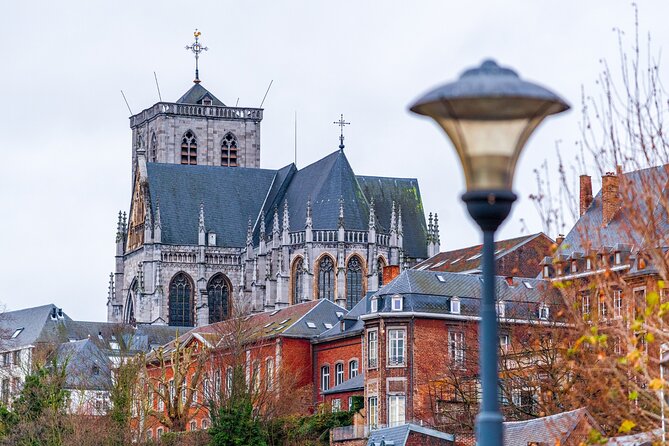
The tour suggests starting at the Collegiate Church Saint‑Jacques for the best route. But the listed meeting point is Saint Paul’s Cathedral of Liège (Pl. de la Cathédrale).
In practice, you’ll win by following the app’s directions once you’re logged in. If you start where the app recommends, you’ll likely get the smoother flow. If you start where the meeting point is listed, the navigation should still get you to the sequence of stops.
One more tip from the route pattern: the walk loops through a central cluster of sights. If you miss a turn, you may end up wandering for a minute—especially near the finish area—so keep an eye on your map as you approach the later stops.
The full route: 10 outdoor stops you’ll solve on the way
This hunt takes you to 10 sights across Liège, each one paired with a puzzle you can handle just by looking around. Also, the activity doesn’t require paying entrance fees, because the questions focus on the outdoor areas and what you can read outside.
Here’s what each stop brings to the table—and how to make the most of it.
Stop 1: Aquarium-museum De Liège
Begin with a stop that’s visually distinctive and easy to anchor your attention. Since this is an outdoor-oriented puzzle, don’t rush past the building. Pause, scan the facade details, and read anything posted nearby. This first riddle sets the tone: slow looking beats speed.
Stop 2: Theatre de Liège
Next comes the theatre area, where architecture and signage tend to help. The puzzle here is designed for street-level observation—so focus on the features you’d normally treat as background. If you’re tempted to take photos first, do that after you answer the prompt. It’s faster than backtracking.
Stop 3: Opera Royal de Wallonie‑Liege
The opera house adds bigger scale and more “story potential.” Expect the audio/text part of the tour to provide context you can connect to what you see outside. This is a good place to step back and do a 360-degree glance—especially if your riddle references multiple elements.
Stop 4: Palais des Prince‑Eveques (Palace of the Prince‑Bishops)
This is one of the anchor points of the walk. The Palace of the Prince‑Bishops is a major visual target, and the puzzle here encourages you to look closely instead of just admiring at a distance. If you like history, you’ll get more from it by reading what’s posted outside and matching it to the building elements the audio nudges you toward.
Stop 5: Place Saint‑Lambert
Place Saint‑Lambert is one of those open public squares that works well for a scavenger-hunt moment. It’s also where I’d be most careful about navigation. One practical detail: the route can take you through a multi-story shopping mall to reach this area. If you miss a turn there, it can feel confusing for a moment, so watch the app’s direction changes.
Stop 6: Eglise Saint‑Antonie de Liège
Church exteriors can be tricky if you’re walking fast, so treat this stop like a “read and look” checkpoint. The puzzle style here is meant for casual visitors: you shouldn’t need specialized knowledge—just the patience to spot the right feature and match it to the clue.
Stop 7: St. Paul’s Cathedral
Even if you didn’t start here, you’ll pass this landmark again. As a puzzle stop, it’s useful because it’s easy to recognize. When the audio kicks in, it helps turn a big building into something you can interpret. This is a nice moment to reset your pace before continuing.
Stop 8: Statue equestre de Charlemagne
Public monuments are ideal riddle locations. The prompts often work best when you stand at a consistent spot and look for the exact detail the clue expects—rather than walking around endlessly. If your answer isn’t coming together, use the hints. The skip option is there for a reason, and you’ll still move forward to the interesting parts.
Stop 9: Eglise St‑Barthelemy (Church of St Bartholomew)
This is another place where the audio/text can bring the building to life. The clue should be solvable through outdoor observation and nearby plaques, so don’t feel pressure to enter anything. Even a short stop helps, because it’s one of the more “readable” stops on foot.
Stop 10: Musee Curtius (Curtius Museum)
Finish with a museum stop that feels like an ending even if you don’t go inside. The outdoor area gives you enough to solve the puzzle, and the audio can help you understand why the building matters in the city. By the time you reach this point, you’ll have practiced the core skill: notice small details on purpose.
The best parts of the experience: learning by looking
This hunt is praised for one simple reason: it helps you see Liège in a structured way. Instead of walking through the city and hoping you notice interesting stuff, the puzzles force you to slow down at the right moments.
Two things I’d treat as “must-know” about how you’ll enjoy it:
- You can still keep going. If a riddle stumps you, the app includes hints, and you can skip without breaking the rest of the route. That keeps the experience fun rather than frustrating.
- Some of the coolest moments are in-between stops. One notable example is a 378-step staircase that can appear between planned locations. It’s the kind of thing you might miss if you only go point-to-point. If you spot it, stop and read. It’s the sort of detour that turns a checklist walk into a real wandering memory.
Can you change the order, pace, and breaks?
Yes. The tour is designed for your rhythm. You can pause for a break, explore a sight longer, then jump back into the route where you left off. There’s also flexibility to change your path and skip stops if you’re short on time.
This is especially helpful if:
- you want a shorter walk on arrival day
- you’re touring with kids or anyone who moves slower
- you like spontaneous side streets but still want a plan
Also, you can start and finish where you want depending on how the app is set up for your run. Still, do expect that the route can feel like a loop; some people find the ending area confusing if they stop checking navigation at the wrong moment.
Value: is $9.45 a good deal?
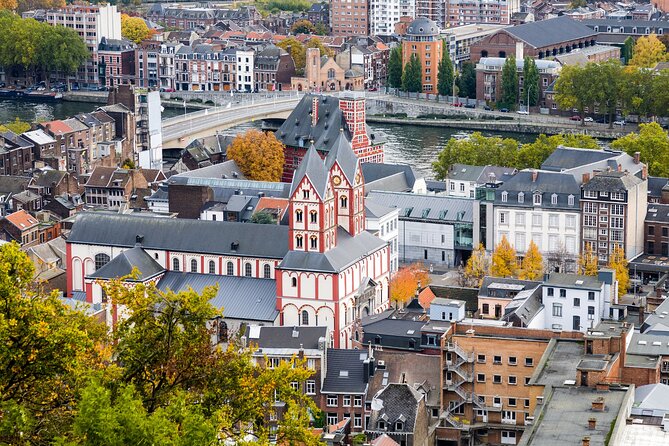
At $9.45 per person, this is priced for “lightweight but high utility.” You’re paying for:
- the app
- audio guidance
- GPS navigation
- puzzle content tied to the city center
- and insider tips for nearby food and shops
In other words, you’re not paying for entrance tickets, and you’re not paying for a live guide. That’s why the price can stay low. And because you have a full year of access, it also acts like a flexible city activity you can repeat if you want a second pass at a different pace.
If you enjoy self-guided experiences and you’re comfortable using your phone for navigation, this is a good match for the money. If you hate relying on a device, you’ll feel the limits fast.
Practical tips to make the route easier

A few small things that matter more than you think:
- Wear comfortable walking shoes. The route is only a few kilometers, but it’s still a lot of short stops.
- Dress for weather. This is outdoor-only, so wind and rain will affect how long you’ll want to stay.
- Keep an eye on the map near the end. The finish can feel like it’s not where you expect if you lose navigation for a bit.
- If you want the best flow, start where the app suggests (often Saint‑Jacques), then let the GPS take over from there.
Who this is best for (and who should skip it)
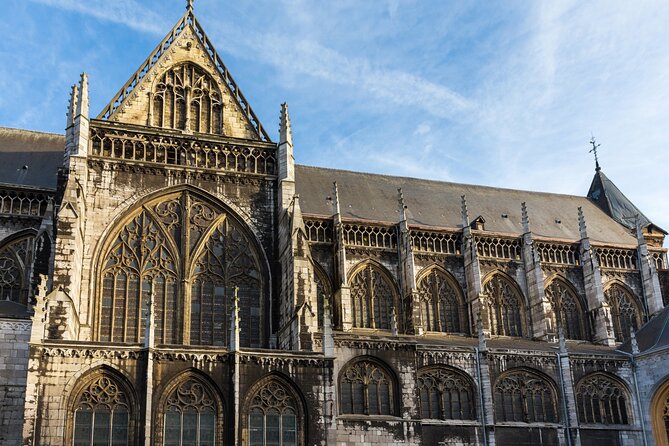
This works especially well for you if you:
- like puzzles and short challenges
- want to explore at your own tempo
- prefer walking tours that are easy to resume later
- travel in pairs or small groups and want a private experience (only your group participates)
It may not be your best choice if you:
- strongly dislike phone-based navigation
- don’t want to use mobile data on the go
- need a live guide to explain details in real time
Good to know: service animals are allowed, and the activity says most travelers can participate. You’ll just need to manage the walking and stop-and-start nature of a scavenger hunt.
Should you book the Liège scavenger hunt?
I’d book it if you want a city-center walk that turns sightseeing into a game—without the stress of reservations, waiting, or paying entry fees. The combination of GPS guidance, audio context, and outdoor puzzle stops is what makes it feel like a smart use of a couple hours.
Skip it (or think twice) if your phone battery is a constant worry or you’d rather not rely on mobile data and GPS. Also, if you’re the type who hates any chance of getting turned around, remember the route includes navigation moments where paying attention to the map helps.
If you do book, treat the app as your guide, take your time at Place Saint‑Lambert, and don’t be afraid to stop for that 378-step staircase when it appears.
FAQ
Is this a guided tour with a person meeting me?
No. This is a fully self-guided experience. No one will be waiting for you at the start.
Where do I start, and does it matter?
The tour suggests starting at the Collegiate Church Saint‑Jacques for the best route, but the listed meeting point is Saint Paul’s Cathedral of Liège. Use the app instructions once you start.
How long does it take to complete?
The walking route is about 4.2 km (around 54 minutes of walking), and the whole activity usually takes about 3 hours depending on pace and breaks.
Do I need to buy entrance tickets?
No. The activity is designed so you won’t need to pay extra entrance fees, since the puzzles relate to outdoor areas.
What do I need on my phone?
You need a fully charged smartphone and active mobile data. You should disable any VPN and avoid city Wi‑Fi to prevent the app from malfunctioning or disconnecting.
Can I start at any time?
Yes. You can start anytime 24/7, and there’s no fixed schedule.
How long do I have access to the tour?
Your access lasts for a full year.
What languages are available?
The audio/text experience is available in six languages: EN, DE, FR, NL, IT, and ES.
How do I get help if something goes wrong?
There is 24/7 live assistance through worldcitytrail.com/chat. Phone support is not offered.