REVIEW · LISBON
Lisbon Walking Tour with Audioguide on Your Smartphone
Book on Viator →Operated by TouringBee · Bookable on Viator
Phone audio turns Lisbon into an easy story trail. This is a self-guided walk that strings together major squares and viewpoints, with 26 historian-narrated audio stops delivered through an app you can use offline. You follow the route on your phone map at your pace, with illustrations to help you spot each landmark.
I especially like the professional historian narration, which keeps the details clear instead of turning into random facts. I also like that the plan takes you through classic spots across neighborhoods like Baixa and Alfama, so you get city context without spending extra time booking guided add-ons.
The main drawback is also the nature of self-guided tours: you’re steering the experience. If your GPS or starting point feels off, it can be harder to locate a few stops, and you’ll waste time backtracking.
In This Review
- Key highlights worth your attention
- How this Lisbon audio walk works (and why it’s good value)
- Starting at Praça dos Restauradores: your route’s anchor point
- Rossio Station’s Neo-Manueline face: history in stone
- Martim Moniz Square: a multicultural break in the route
- Praça da Figueira and Confeitaria Nacional: a sweet historical detour
- Pedro IV Square (Rossio): the city’s heart at street level
- Carmo Convent ruins: quiet, dramatic, and worth the pause
- Luís de Camões Square: literature meets everyday Lisbon
- Santa Justa Lift: the ride that changes your perspective
- Rua Augusta and the Arch climb: the easiest big view in town
- St. George’s Castle: when the audio turns streets into a fortress story
- Alfama viewpoints and Lisbon Cathedral: photos plus layered time
- Finishing with Praça do Comércio: the Tagus as the grand finale
- Price and logistics: what you should know before you start
- Who this Lisbon audio walk suits best
- Should you book it
- FAQ
- FAQ
- How long is the Lisbon walking tour with smartphone audio?
- How much does it cost?
- Is there a human guide on this tour?
- Do I need to bring headphones or a smartphone?
- Does the audio guide work offline?
- Where does the tour start and end?
- What languages is the tour offered in, and can I cancel for free?
Key highlights worth your attention

- 26 audio recordings by a professional historian so the stories come with real context
- Offline map + route guidance for a walk you can actually manage on the move
- Illustrations to identify landmarks, helpful in Lisbon’s maze of streets
- A route stitched through Baixa and Alfama, not just one postcard area
- You control the pace, with natural chances to pause for views and snacks
- Start at Praça dos Restauradores and follow the order to avoid confusion on markers
How this Lisbon audio walk works (and why it’s good value)
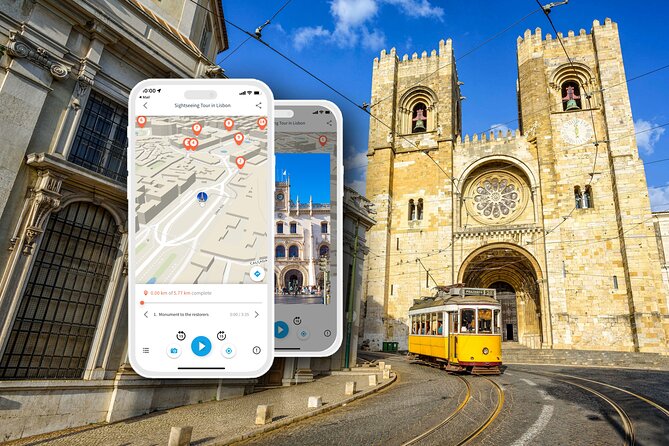
For $8.45, you’re buying time-saving help and storytelling, not museum access. The tour comes as a mobile ticket and an app for iPhone and Android, with an offline map and illustrations so you can find the places the audio is talking about. The narration is packaged as 26 recordings by a professional historian, and you get access for 1 year in your chosen language.
What makes this a good deal in Lisbon is how many of the stops are the kind you can enjoy without paying a ticket just to stand there: squares, streets, exterior views, churches, and public monuments. You’ll still likely want separate tickets for bigger rides and major sites (think Santa Justa Lift and St. George’s Castle), but the audio portion itself is built to give meaning to what you’re already seeing.
And you get flexibility. This kind of walk fits travelers who don’t want rigid group timing, especially if you like pausing for photos, a coffee, or just sitting where the city opens up.
You can also read our reviews of more tours and experiences in Lisbon.



Starting at Praça dos Restauradores: your route’s anchor point
The walk begins at Praça dos Restauradores (Praça dos Restauradores, 1250-001 Lisboa). This is a smart first move because it’s a central meeting style location, and it sets the theme: Portugal’s restoration of independence in 1640. The Monument to the Restorers (an obelisk with symbolic statues and inscriptions) is the kind of landmark that helps you quickly understand the city’s layered identity.
You’ll also notice the square’s 19th-century character, plus nearby cues like the Eden Theatre and classic cafés. It’s a good place to get oriented before you start threading through the more winding parts of Lisbon.
Practical note: because the tour is self-guided, start exactly where the app expects you to start. One of the common frustrations with phone-based routes is when people begin from the wrong end or skip ahead. In this case, starting at Praça dos Restauradores is how you keep the storytelling flowing in the right order.
Rossio Station’s Neo-Manueline face: history in stone

Next up is Rossio Station. Opened in 1890, it’s famous for its Neo-Manueline façade, including intricate stonework and twin horseshoe arches. Even if you’re not taking a train, the station is a landmark in its own right—part transport hub, part architectural showpiece.
One useful thing the audio does for you here is connect Lisbon to the wider region. Rossio Station is known as a gateway toward Sintra, so you get a reminder that Lisbon isn’t just streets and viewpoints. It’s also a launch pad for day trips.
If you’re the type who likes reading buildings, this stop will feel satisfying. If you only have quick photo time, keep moving—the best payoff of a walking audio tour comes from letting the story pace your eyes, not rushing through every façade.
Martim Moniz Square: a multicultural break in the route

Praça Martim Moniz is the tour’s change of tempo. This is one of those places where Lisbon’s modern, everyday life shows up—street food stalls, market energy, and live performances. It’s named after the knight Martim Moniz, tied to the conquest of Lisbon, so the audio isn’t just talking about vibes. It’s linking the name to the deeper timeline.
Why this stop matters: it gives you a practical pause point in the middle of the walking rhythm. Expect it to feel lively, and plan your timing if you prefer quieter moments. This is also a great place to grab something simple without turning your sightseeing day into a meal planning project.
Praça da Figueira and Confeitaria Nacional: a sweet historical detour

At Praça da Figueira, you get open square space in the middle of the city’s historic Baixa area. The square once served as the city’s biggest marketplace, and now it functions as a people-watching hub with Portuguese-style architecture, cafés, and a view toward São Jorge Castle.
The equestrian statue of King João I anchors the center, making it easier to orient yourself while you walk.
Then there’s the food stop: Confeitaria Nacional, Lisbon’s oldest patisserie, founded in 1829. If you want a classic Portuguese treat, this is where the tour nudges you toward one: Bolo Rei. Even if you only do a quick pastry snack, it’s a fun way to make the history you’re hearing feel real. You’ll be paying for pastries here (the tour doesn’t include entrance fees or food), but the experience is more about atmosphere than a rushed shopping stop.






Pedro IV Square (Rossio): the city’s heart at street level
Praca Dom Pedro IV, commonly called Rossio, is a major Lisbon stage. Look down at the wave-patterned cobblestones, then up at the tall statue of King Pedro IV and the fountains around it. This is the kind of square where you can feel the city’s calendar—people meeting, walking through, and lingering for a coffee.
You’ll also pick up nearby cultural landmarks in the audio cues, including D. Maria II National Theatre. Even if you don’t go inside, knowing the building’s name gives you something to latch onto.
This stop works well because it helps you reset your mental map. After a few squares and a station, you come back to a big open center. It’s a good moment to decide: do you keep moving for viewpoints, or slow down for a snack and a sit?
Carmo Convent ruins: quiet, dramatic, and worth the pause

Carmo Convent is one of the more emotionally memorable parts of the route. The ruins are a Gothic treasure tied to the 1755 earthquake, with skeletal arches and an open-air nave that reads like a chapter torn from a book.
This stop is less about moving fast and more about slowing down for a few minutes. If you’re tired from Lisbon’s cobblestones, this is a good place to let your feet recover while your eyes absorb the architecture.
The audio also points you toward the attached Carmo Archaeological Museum. Entrance isn’t included in the tour package, so decide on the spot if you want to pay for museum time or just enjoy the exterior ruins and cloister feel.
Luís de Camões Square: literature meets everyday Lisbon

Moving into Chiado, you reach Luís de Camões Square, named for Portugal’s respected poet. You’ll see a statue of Luís de Camões and the surrounding blend of cafés, shops, and meeting-point energy.
Why it’s a smart stop in an audio walk: it bridges “Lisbon as monuments” and “Lisbon as a lived-in place.” The poet’s name gives the area a cultural anchor, while the square itself functions as a place locals and visitors naturally use to regroup.
If you like people-watching, this is a nice break before the route starts pushing you toward big viewpoints.
Santa Justa Lift: the ride that changes your perspective
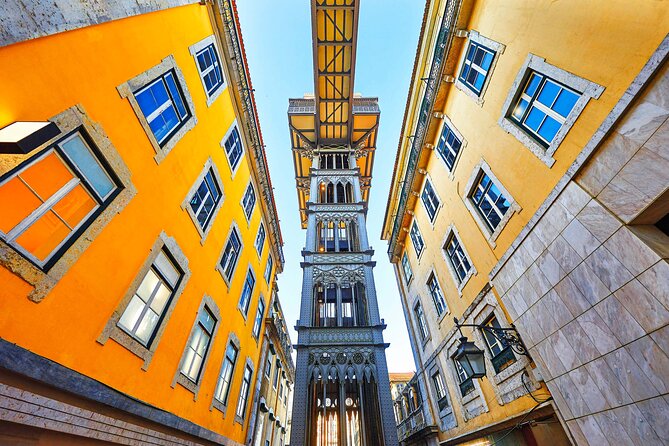
The tour includes a stop for the Santa Justa Lift, a neo-Gothic elevator opened in 1902 and designed by Raoul Mesnier du Ponsard, a protégé of Gustave Eiffel. The key idea here is perspective: the lift takes you between Baixa and Carmo Square, and the panoramic viewpoints make Lisbon feel arranged like a model.
This is one of those moments where the audio helps even if you decide not to ride. The structure’s ironwork and design matter, and knowing who designed it makes it easier to appreciate it instead of just snapping a quick picture.
Heads up on planning: the ride likely requires a separate ticket, since entrance fees and ride costs aren’t included. If you’re trying to keep the day budget tight, you can still use the area for views, but plan on paying if you want the full experience.
Rua Augusta and the Arch climb: the easiest big view in town
From there you walk Rua Augusta, one of Lisbon’s iconic pedestrian avenues. It runs from Rossio Square toward Commerce Square, and it’s flanked by Pombaline buildings with mosaic pavement details and street entertainment energy.
The route then leads you toward the Arco da Rua Augusta. This neoclassical triumphal arch commemorates Lisbon’s reconstruction after the 1755 earthquake. The sculptures and the statue of Glory with the idea of rewarding Valor and Genius are the kind of things you appreciate more when a voice explains what you’re looking at.
There’s also an option to ascend the arch for views over the historic Baixa district and the Tagus River. Since the tour is designed for walking time, this is where you’ll feel the value of mixing movement with a payoff view.
St. George’s Castle: when the audio turns streets into a fortress story
The route includes St. George’s Castle, perched on one of Lisbon’s highest hills. The audio ties it to origins dating back to the 6th century and to major eras—Moorish times and then Portugal’s later rule.
Even if you’re not a fortress fanatic, the payoff here is walking through walls, towers, and gardens while the audio connects the place to Lisbon’s changing identities. You’ll also see the reference to an archaeological museum inside the castle. Entrance isn’t included, so if you’re on a tight schedule, you can choose the time you spend inside versus outside.
One consideration: hill walking and castle steps add up. Build buffer time. This stop is where you’re most likely to slow down just from stairs.
Alfama viewpoints and Lisbon Cathedral: photos plus layered time
The route turns toward Alfama with Miradouro de Santa Luzia. This viewpoint is famous for its terrace feel, sweeping views across red-tiled roofs, the Tagus River, and the dome of the National Pantheon. You’ll also notice azulejo tiles with historical scenes and fragrant bougainvillea, which makes it a nice spot for photos without feeling like a crowded squeeze.
Next is Lisbon Cathedral (Sé de Lisboa). Dating back to the 12th century, it’s Romanesque-Gothic with a robust façade, twin bell towers, and a rose window. Inside, the audio points you toward chapels, relics, and stained glass.
The cloisters are especially interesting in a “how Lisbon formed” way, since the cathedral site shows archaeological remains from Roman, Visigoth, and Moorish times. That means you’re not just visiting one building. You’re standing on evidence of different eras stacked in the same place.
This is a stop where the historian-style narration helps a lot. Without it, you might focus only on the façade and miss the deeper timeline the site represents.
Finishing with Praça do Comércio: the Tagus as the grand finale
The tour ends by looping back toward the monumental waterfront: Praça do Comércio (Terreiro do Paço). This is a huge, open square with striking yellow Pombaline buildings and a direct opening to the Tagus River.
At the center stands the equestrian statue of King José I, tied to the city’s reconstruction after the 1755 earthquake. The arcades along the square make it feel like a classic Lisbon social space, and the audio also references the nearby Lisbon Story Centre if you want to go deeper.
Even if you’re not entering anything extra, this ending works because you finally get a wide-angle view of the whole city shape. After hills, churches, and narrow lanes, the waterfront feels like a reset button.
Price and logistics: what you should know before you start
This tour costs $8.45 per person for a roughly 2 hours 30 minutes route. That price is about the audio pack: the app, the 26 recordings, offline map help, illustrations, and 1 year access. It does not include human guidance, smartphones, headphones, transportation, or entrance fees.
So the best way to evaluate value is simple:
- If you’ll actually use the app and listen to the stories, you’re paying for a low-cost education on foot.
- If you’re expecting a human guide to herd you from stop to stop, you’ll feel disappointed because this is truly self-guided.
Also bring your own headphones. They are not included, and you’ll need them to hear the recordings while walking. A working phone battery matters too. Lisbon is a day of walking and photos—top up earlier rather than later.
One more logistics tip from real-world experience with self-guided routes: don’t treat this like a choose-your-own-adventure where you skip around. Follow the order in the app, and start at Praça dos Restauradores. That’s how you avoid the frustrating feeling of searching for landmarks that don’t seem to match the audio.
Who this Lisbon audio walk suits best
This is a strong fit if:
- you like independence and controlling your walking pace
- you enjoy city storytelling tied to landmarks and names
- you’re comfortable using an app and checking a map on the move
It’s less ideal if:
- you hate phone-based directions
- you want a person to confirm where you are
- you prefer fully guaranteed find-it-for-me navigation without relying on GPS
If you’re traveling solo or as a couple, the self-guided format is especially friendly. You can pause whenever you want, and you can linger longer at places like Santa Luzia or the cathedral without feeling like you’re holding up a group.
Should you book it
Book it if you want Lisbon to feel guided but still free. For the price, you get historian-led audio, an offline route, and landmark help that makes a walk through Baixa and Alfama much more meaningful.
Skip or look for a different option if you know you’ll get stressed by navigation or you prefer someone physical to help you stay on track. In that case, the trade-off of self-guided tours can outweigh the savings.
FAQ
FAQ
How long is the Lisbon walking tour with smartphone audio?
It takes about 2 hours 30 minutes.
How much does it cost?
The price is $8.45 per person.
Is there a human guide on this tour?
No. It is self-guided, and there is no human guide at the meeting point.
Do I need to bring headphones or a smartphone?
Yes. You must bring your own headphones, and you’ll use your own smartphone with the audio guide app.
Does the audio guide work offline?
You get an offline map with the route for GPS navigation, and you download the audio guide mobile app.
Where does the tour start and end?
It starts at Praça dos Restauradores and ends back at the meeting point.
What languages is the tour offered in, and can I cancel for free?
It is offered in English, and you have 1 year access to the tour in your preferred language. The experience also has free cancellation up to 24 hours in advance for a full refund.