REVIEW · TRONDHEIM
Trondheim: Audio Guide Panorama Bustour
Book on GetYourGuide →Operated by Trondheim City Tours · Bookable on GetYourGuide
One city, a dozen angles, zero rush. This Trondheim City Tours audio bustour strings together big-name sights—especially the Sverresli viewpoint panorama and the climb to Kristiansten Fortress—with an easy on-and-off bus format. I like that you get guided storytelling through the free Voice of Norway app while the bus does the driving. One consideration: you won’t go inside Nidarosdomen because entrance isn’t included, so plan for mostly outside viewing and optional self-entry on your own time.
This is a practical tour for tight schedules, like cruise-day timing. It’s built around photo stops and pass-by scenes, so you get context without needing museum hours. If the weather is rough, the route can shift, and you’ll rely on those viewpoints being accessible.
In This Review
- Key things to know before you go
- A quick Trondheim orientation from the bus window
- The Voice of Norway app: your guide, your pace
- Getting on board at Pirbadet (and the short walk your day needs)
- Solsiden, Stiftsgården, and Ravnkloa: city life before the climb
- Granåsen and Sverresborg: folk-museum vibes from the roadside
- Sverresli Viewpoint: the skyline shot you came for
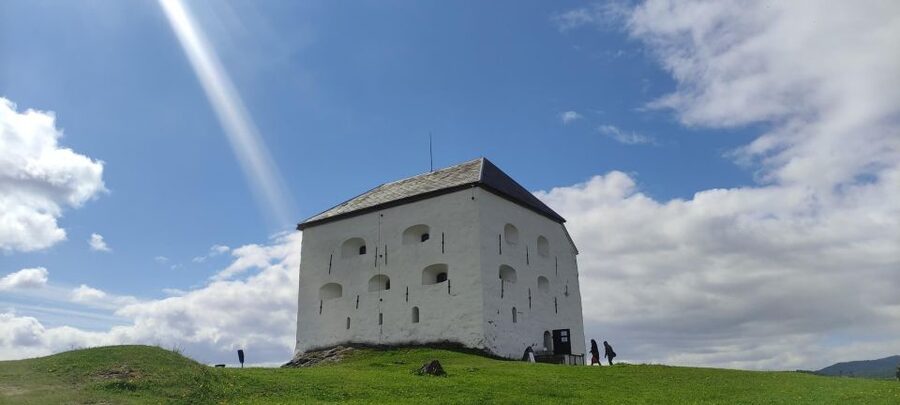
- Kristiansten Fortress: defense built after disaster
- On the way back: students, campuses, and St. Olav’s
- Nidaros Cathedral: outside beauty, plus what entry means
- Bakklandet and Old Town Bridge: the closing frames
- Price and time: whether $68 makes sense for your schedule
- Who should book this tour
- Should you book Trondheim: Audio Guide Panorama Bustour?
- FAQ
- FAQ
- How long is the Trondheim Panorama Bustour?
- How do I use the audio guide on this tour?
- Do I need to pay extra for entering Nidaros Cathedral?
- Where do I meet the bus?
- What stops are included during the tour?
- Are there photostops included?
- What should I bring?
- Is the tour accessible for wheelchair users?
Key things to know before you go
- Voice of Norway audio is the main event: English and German tracks, played through your phone with your own headphones.
- 3 photostops are baked in: you’ll pause for photos at the Sverresli Viewpoint area, Kristiansten Fortress, and outside Nidaros Cathedral.
- You’ll get a real uphill view: the route pushes you from the harbor side into the higher districts for skyline and fjord perspectives.
- Kristiansten is defense history you can see: built after the 1681 fire, finished in 1685, and tied to threats from Sweden.
- Cathedral pride, but not entry: you’ll appreciate the outside grandeur, while ticketed access is separate.
- It’s timed to cruise schedules: departure can shift if ship timings change.
A quick Trondheim orientation from the bus window
I like tours like this when you want a fast feel for a place without treating your day like a checklist contest. In two hours, the bus route connects Trondheim’s modern harbor edge, student-heavy city center areas, and the lookout points above town. You start at Pirbadet (a familiar landmark) and end right back where you began, which matters when you’re racing daylight or you’re tied to a ship departure.
The route is designed for “glance and learn.” You’ll pass key districts first (so you recognize them later), then you’ll climb toward views, then you’ll swing back through older neighborhoods. Even if you only stop for photos three times, the audio narration helps you keep track of why each area looks the way it does.
If you’ve only got a couple hours in Trondheim—especially on a cruise day—this kind of pan-orama format usually gives you the best bang for your time.
You can also read our reviews of more tours and experiences in Trondheim.

The Voice of Norway app: your guide, your pace
This tour runs on the free Voice of Norway app. The good news is you can prep it before you arrive, and it gives you structured listening tied to what you’re seeing out the window and at the stops.
Here’s what you should do so it actually works smoothly:
- Bring headphones (not optional).
- Make sure your smartphone is charged.
- Download the app ahead of time and confirm it’s ready before you meet the bus.
- Plan to follow the instructions you’ll receive by email a few weeks before your tour starts.
Because the audio is doing the guiding, your timing is mostly about the bus stops. If your phone battery is low or you’re hunting for Wi-Fi at the wrong moment, you’ll lose the whole point. I’d treat this like an offline experience: charge up, download the app, and keep your phone on.
Language-wise, the audio is included in English and German, so you don’t need to line up with a live guide on your language.
Getting on board at Pirbadet (and the short walk your day needs)

Your meeting point is the Pirbadet parking lot, and the bus windshield will show Trondheim City Tours. The instructions are pretty specific about the access route: after leaving the security area, you turn left through an interior corridor and then find the parking lot in front of Pirbadet’s main entrance.
If you’re coming from the city center or from a Hurtigruten/Havila arrival, follow signs leading to Pirbadet. In a port-day situation, this kind of “follow the sign, not your guess” guidance saves real time.
The tour ends right back at the same spot, so you’re not mentally mapping transfers when you’re tired.
Solsiden, Stiftsgården, and Ravnkloa: city life before the climb
Once you depart Pirbadet, the bus heads through the modern harbor area, then pushes toward the city center. One of the first places you pass is Solsiden, nicknamed the sunny side. It’s known for outdoor restaurants and cafés, and you’ll see the kind of student-and-local rhythm that keeps Trondheim feeling alive even when it’s not peak tourist season.
From there, the route goes by Stiftsgården, the official royal residence. Even if you only catch it from the roadside, it’s a good anchor point: it signals that you’re moving into civic Trondheim, not just scenic suburbia.
Then you pass Ravnkloa, the former fish market. It’s a stop that connects Trondheim to the sea-food and coastal economy that shaped the city. You won’t get a long explanation in person here, but the audio helps you place it.
Next comes the shift from flatter streets to the up-hill feel of the city. The bus drives toward the mountains, and you start to get the sense that Trondheim’s geography is part of the story.
Granåsen and Sverresborg: folk-museum vibes from the roadside
As you go upward, you pass Granåsen skisenter. Even if you’re not planning to ski, it’s a useful clue that Trondheim’s hills aren’t just decoration—they’re used.
Then you pass Sverresborg, the town’s folk museum. The big idea here is that the area preserves older wooden architecture, including a stave church, and keeps the regional building style visible. You’re not required to enter; you’re basically being pointed toward Trondheim’s “how people lived” side.
This matters because when you later see view points and fortress walls, you’ll understand that Trondheim is a city where old and new sit next to steep terrain. The architecture and the geography aren’t separate stories here.
Sverresli Viewpoint: the skyline shot you came for
This is one of the tour’s central moments. The bus takes you to the Sverresli Viewpoint area for a photo stop. This is where you trade “street level” for “city-from-above.”
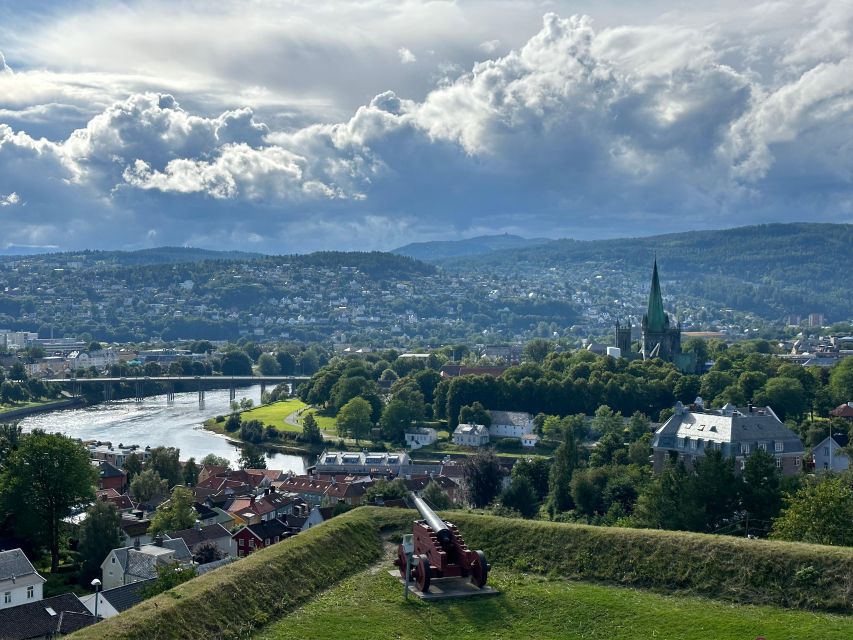
From the viewpoint, you’ll see Trondheim laid out in layers: neighborhoods, the shape of the city, and the fjord presence in the wider setting. The angle is the reward. It’s also a fast way to understand why people build and defend cities the way they do—high ground matters.
If you’re photographing, here’s the practical tip: keep your phone settings ready. Viewpoints can come with wind and changing light, especially along the waterfront. You don’t get a long stop window, so be ready when the bus pulls in.
Kristiansten Fortress: defense built after disaster
After returning toward the city center, the tour stops again for photos at Kristiansten Fortress. Even if you only see it from the outside, you’ll get a clear storyline from the audio.
The key details you’ll hear (and that make the fortress more than just a pretty hill stop):
- It was built after the devastating fire in 1681.
- Architect Johan Caspar Cicignon planned it, and construction finished in 1685.
- It helped defend Trondheim from invading Swedish forces in the early 18th century.
- Because of its vantage point, it was used as a fire watch for the many wooden houses below.
- Cannons remain there for ceremonial use.
I like this stop because it connects three things people often miss when they rush past fortifications: disaster history, everyday safety (fire watch), and strategic defense. Trondheim’s wooden past makes that fire-watch function especially meaningful.
Also note: you’ll likely need to dress for the weather. Fortresses and viewpoints are higher and more exposed, even in mild seasons.
On the way back: students, campuses, and St. Olav’s
Between the viewpoints, the bus passes St. Olav’s Hospital, described as the biggest medical and research center in Norway. You also pass Studentersamfundet, the Student Association of Trondheim, and the Gløshaugen campus and main building of NTNU (Norway’s biggest university).
These pass-by scenes might sound like background noise, but they add a lot of context. Trondheim isn’t just cathedrals and fortresses—it’s a working city with education, research, and healthcare at scale. The architecture you see around these areas will make more sense once you’ve heard why the tour route includes them.
Nidaros Cathedral: outside beauty, plus what entry means
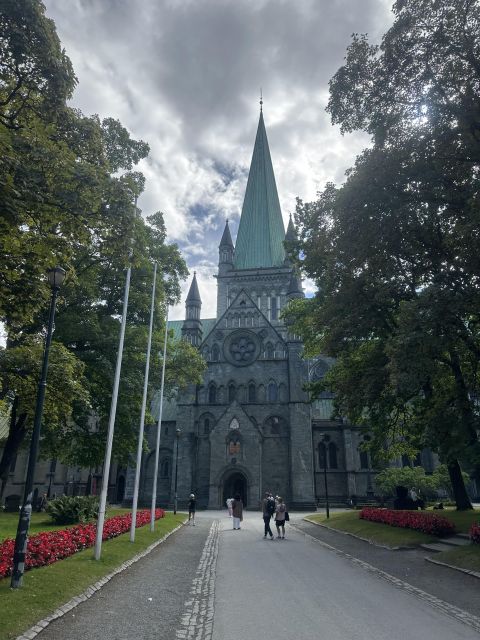
Your final major photo stop is Nidaros Cathedral (Nidarosdomen). The tour positions it as a must-see: built in the 11th century, shaped by Gothic and Romanesque styles, with ongoing renovations across the centuries.
Two practical truths to know:
- Entrance to the cathedral is not included.
- You’re mainly getting a “see it big” moment plus audio context from the bus and/or from the stop.
Still, this outside viewing can be enough if your schedule is tight. Nidarosdomen is widely known for its scale and craftsmanship, and you’ll understand why Trondheim and Norway feel proud of it from the way it dominates the surrounding streets.
If you do want to go inside, you’ll need to handle that separately. Just don’t count on this tour to be your ticket.
Bakklandet and Old Town Bridge: the closing frames
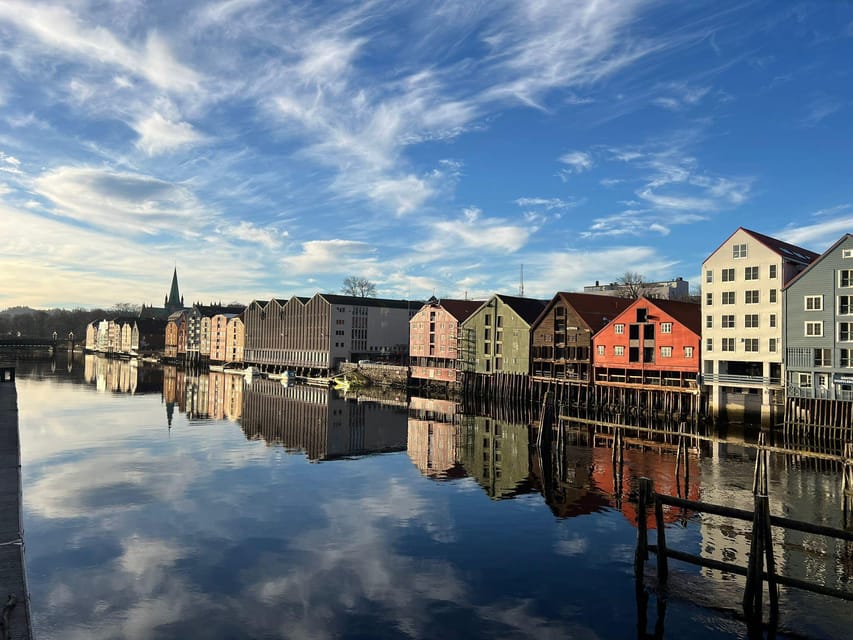
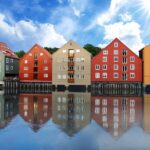
On the return toward Pirbadet, the bus passes Bakklandet, described as Trondheim’s oldest district with colorful wooden houses. This is one of those areas where the street-level look is the point, so the bus pass-by helps you “place” what you saw earlier from above.
You also pass the Old Town Bridge (Gamle Bybro) and old warehouses on Kjøpmannsgata (Merchant Street). These are the small end-of-day anchors that help you remember the geography: bridges, old trading spaces, and a city that grew along trade routes.
By the time you roll back to Pirbadet, you’ll likely feel like you have a map in your head. That’s the real value of this kind of loop.
Price and time: whether $68 makes sense for your schedule
At about $68 per person for a 2-hour guided panorama, this isn’t a bargain-style tour. But value isn’t just the price tag—it’s what you get in limited time.
Here’s how I’d judge it:
- If you’re on a cruise with tight shore hours, the tour’s built-in route efficiency is a big plus.
- You get transportation by bus, an audio guide included, and three photo stops.
- You cover high-demand targets: Sverresli viewpoint, Kristiansten Fortress, and the cathedral area.
The main thing to weigh is that you’re not getting indoor time at the cathedral. If you really want to spend time inside Nidarosdomen, you might prefer a different arrangement or plan extra time before/after this tour. If you just want the essentials in one smooth run, this format is usually a smart use of a short visit.
Who should book this tour
This tour fits best if:
- You want a structured overview without walking between sites for long distances.
- You’re comfortable using your phone and headphones for audio.
- You like photo stops more than long site visits.
- You’re visiting on a cruise day or have limited hours.
It may not be ideal if:
- You need wheelchair access (it’s noted as not suitable for wheelchair users).
- You dislike relying on phone audio or you don’t want to bring headphones and a charged device.
Should you book Trondheim: Audio Guide Panorama Bustour?
If your priority is seeing Trondheim’s big sights quickly—views from above, the fortress story, and the cathedral exterior—this is a strong pick. The audio-driven format keeps you oriented while the bus handles the route changes, and the Sverresli and Kristiansten moments are the kind you’ll remember later.
I’d book it if you’re time-limited, especially with cruise schedule constraints. I’d think twice if you’re chasing cathedral interior time and can’t add separate entry before or after.
FAQ
FAQ
How long is the Trondheim Panorama Bustour?
The tour duration is 2 hours.
How do I use the audio guide on this tour?
You need to download the free Voice of Norway app. Bring your own headphones and a charged smartphone. You’ll receive further information by email after booking, including guidance on app use.
Do I need to pay extra for entering Nidaros Cathedral?
No. Entrance to Nidarosdomen is not included on this tour.
Where do I meet the bus?
Meet at the Pirbadet parking lot. Look for a bus with Trondheim City Tours on the windshield.
What stops are included during the tour?
You’ll pass and/or stop at places like Solsiden, Stiftsgården, Ravnkloa, Sverresborg, Sverresli Viewpoint (photo stop), Kristiansten Fortress (photo stop), Nidaros Cathedral (photo stop), plus Old Town Bridge and Kjøpmannsgata on the way back.
Are there photostops included?
Yes. The tour includes 3 photostops.
What should I bring?
Bring headphones, a charged smartphone, and any child safety seat you may need. You should also have the Voice of Norway app downloaded.
Is the tour accessible for wheelchair users?
No. The tour is marked as not suitable for wheelchair users.