REVIEW · BARCELONA
Witch Hunt on Montjuïc: Self-Guided Puzzle Quest in Barcelona
Book on Viator →Operated by Questo · Bookable on Viator
Follow a trail of clues up Montjuïc. What makes Witch Hunt on Montjuïc fun is that it turns landmark-hopping into a detective game you control, using your smartphone through the Questa app. I like the flexible start-stop pacing and the fact that you’re limited to your own group, so it feels more personal than a big guided march.
My second favorite part is how the route strings together real Barcelona places you’d otherwise browse quickly: from Parc Joan Miró to the Font Màgica de Montjuïc area, then onward to major art stops and the finish at Montjuïc Castle. The one consideration: several key sites on the story path list admission ticket not included, so if you want to go inside those spots, plan for extra tickets on your own.
In This Review
- Key things to know before you play Witch Hunt on Montjuïc
- How the Witch Hunt puzzle quest works on your phone
- Price and value: why $8.42 can work for more than one kind of traveler
- Getting there: meeting point to Montjuïc Castle finish
- Stop-by-stop: what each clue stop feels like (and what to watch for)
- 1) Parc Joan Miró: where the story begins
- 2) Centro Comercial Arenas de Barcelona: a former bull arena twist
- 3) Plaça d’Espanya: a major junction with story momentum
- 4) Torres Venecianes: catching the landmark visuals
- 5) Font Màgica de Montjuïc: the Magic Fountain stop
- 6) Museu Nacional d’Art de Catalunya: when tickets aren’t included
- 7) Palauet Albéniz: architecture fans will like this one
- 8) Joan Miró Foundation: another art stop, another clue
- 9) Jardins de Mossèn Cinto Verdaguer: a breather in the gardens
- 10) Montjuïc Slides (Tobogans de Montjuïc): playfulness on the route
- 11) Montjuïc Castle: the finish line and final story beat
- What I like about the Montjuïc route design
- Who should book Witch Hunt on Montjuïc?
- When admission tickets matter (and when they don’t)
- Practical notes for playing smoothly
- Should you book Witch Hunt on Montjuïc?
- FAQ
- Is Witch Hunt on Montjuïc self-guided?
- How long does the puzzle quest take?
- How much does it cost?
- Do I need entry tickets for the attractions?
- Where does the experience start and end?
- Is there customer support?
Key things to know before you play Witch Hunt on Montjuïc
- Smartphone-driven clues via the Questa app, so you can pause and resume when you want
- 11 walkable stops across Montjuïc, designed for a steady flow without a tour guide
- Limited to your group for a more controlled, calmer experience
- Some attractions don’t include entry tickets, so you may want to decide what’s “view only” vs “go in”
- 24/7 customer support, which is a comfort if your phone or timing goes sideways
How the Witch Hunt puzzle quest works on your phone
This isn’t a sit-and-listen walking tour. It’s a city exploration game where each stop gives you a clue, and solving it moves you to the next location. You’re downloading it to your phone first, then playing when you’re ready. That means you’re not stuck at a fixed pace, and you’re not waiting around for a guide to catch up.
The app setup is also a practical upgrade for Barcelona. You get mobile guidance instead of juggling a paper map while people stream past you in multiple languages. And because you can stop and start as you like, you can match the experience to your day—before a dinner plan, between museum visits, or as your “orientation walk” on Montjuïc.
One more thing I appreciate: it’s built for your group only, not a mixed crowd. Even though it’s self-guided, that group limitation usually reduces the feeling of being rushed or lost in the shuffle.
You can also read our reviews of more tours and experiences in Barcelona.


Price and value: why $8.42 can work for more than one kind of traveler

At $8.42 per person, the value here comes from two sources: low direct cost and low friction. You’re paying for a structured route and a phone-based story layer, not for expensive attraction entries. Many of the stops list admission tickets as free, and for others, the tour notes that entry isn’t needed to complete the tour.
If you’re already planning to spend time around Montjuïc, the game is a clever way to make that time feel purposeful. Instead of doing the same “look, take a photo, move on” routine, you’re looking for answers. That changes how you notice details—street layout, signage, viewpoints, and the visual cues around each landmark.
If you love a casual challenge, you’ll likely feel satisfied even if you don’t finish every clue instantly. The format rewards patience and strategy more than speed.
Getting there: meeting point to Montjuïc Castle finish
You start at Carrer del Consell de Cent, 6769, in the Sants-Montjuïc area (08014). The finish is at Montjuïc Castle on Ctra. de Montjuïc, 66 (08038), with the tour open across a very wide daily window (listed hours run from 12:00 AM to 11:30 PM).
That start-to-finish design matters. You’re not doing a tight loop that dumps you back where you began. You end at the castle area, which can be handy if you want to keep exploring that summit zone afterward or just wrap your day with a final big viewpoint.
Plan your timing with one detail in mind: the stops are described in short segments (about five minutes each), but you can stay longer at each point. So the published duration range—roughly 1 hour 45 minutes to 2 hours 10 minutes—is best thought of as a “play comfortably” window, not a strict sprint.
Stop-by-stop: what each clue stop feels like (and what to watch for)
1) Parc Joan Miró: where the story begins
You kick off in Parc Joan Miró with your first clue. Since the park start is free-entry and only a short segment is planned, it works well as a warm-up. You’ll spend your first moments understanding the rhythm of the game: read clue, solve, move on.
This first stop is also where you’ll figure out whether you like the style of puzzles. If you do, you’ll probably enjoy the rest even more, because the quest keeps momentum with straightforward direction handoffs.






2) Centro Comercial Arenas de Barcelona: a former bull arena twist
Next is Centro Comercial Arenas de Barcelona, described as a former bull arena. This is a smart mid-route choice because it’s a recognizable structure with a clear identity. It can help you anchor the quest in real, grounded Barcelona rather than treating Montjuïc like one long scenic backdrop.
This stop also allows you to stop for as long as you like. That’s useful if you want a breather or just to take in the building’s vibe before you tackle the next clue.
3) Plaça d’Espanya: a major junction with story momentum
Plaça d’Espanya is the next clue location. It’s one of those central squares that makes sense for a walking game: easy to orient yourself, and surrounded by movement. Here, the game keeps nudging you forward, using the city’s layout as part of the experience.
Because the clue is tied to the location, you’ll likely start noticing the “how the city is put together” elements—paths that funnel you, the way plazas open up sightlines, and how quickly your surroundings change as you move.
4) Torres Venecianes: catching the landmark visuals
At Torres Venecianes, you get another clue and another direction step. Towers are great for this kind of game because they’re visual landmarks you can spot from a distance. That reduces the mental load of finding the exact spot.
I like this kind of stop because it feels like a “check-in” point. You solve something, locate the next tower landmark, and keep the story rolling without turning the day into constant map-reading.
5) Font Màgica de Montjuïc: the Magic Fountain stop
You’ll then move to the Magic Fountain at Font Màgica de Montjuïc for the next clue. Even if you’re not timing anything specific, this stop gives your quest a dramatic cue. The fountain area tends to read as a place with theater-like atmosphere, which makes it a fun contrast after more transit-and-landmark-heavy sections.
Admission at this stop is listed as free, so it’s a low-risk pause in the middle of the puzzle route.
6) Museu Nacional d’Art de Catalunya: when tickets aren’t included
Next up is Museu Nacional d’Art de Catalunya. This is where you’ll want to slow down slightly in your planning mindset. The stop lists admission ticket not included. The key point from the tour info is that tickets aren’t needed to complete the tour—so the game won’t hold you hostage on entry fees.
Still, if you’re the type who likes to step inside at major museums, you’ll need to plan separately. The upside is that the museum setting gives the quest a heavier cultural anchor. Even if you only complete the puzzle portion, the location itself feels like a “big chapter” moment.
7) Palauet Albéniz: architecture fans will like this one
At Palauet Albéniz, you’ll get the next clue. This stop also lists admission ticket not included. The payoff here, based on what people highlight about the experience, is the way the building’s layout organizes different eras in its design. It’s the kind of detail you notice when you’re looking for answers, not just snapshots.
If you’re even mildly into architecture or how buildings are arranged, this pause can feel extra satisfying. If you’re more puzzle-focused, you can still keep it moving—you just have the option to appreciate the place more deeply.
8) Joan Miró Foundation: another art stop, another clue
The Joan Miró Foundation is next, again with admission ticket not included. This is an on-theme placement, linking the earlier Parc Joan Miró start to a more serious art institution.
Practical tip from a decision-making angle: use this stop to choose your mode. If you want the museum experience, plan for entry separately. If you want the game to be the main event, treat it as a clue stop and keep playing.
9) Jardins de Mossèn Cinto Verdaguer: a breather in the gardens
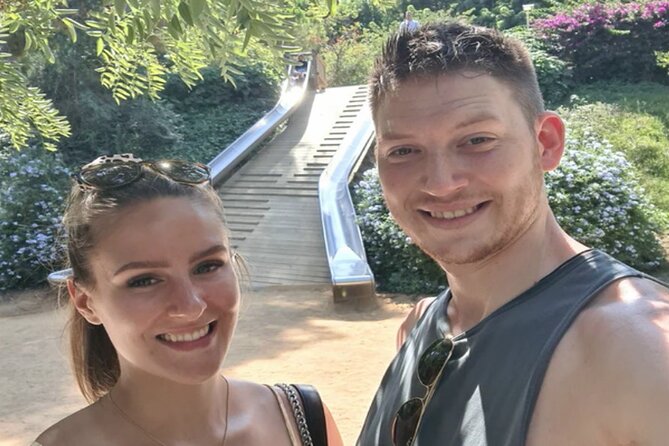
Then you head to Jardins de Mossèn Cinto Verdaguer. This one is free-entry. Gardens are a great reset during a puzzle walk because you get a calmer space, fewer sharp turns in the brain, and a visual change that helps you stay alert for the next clue.
This is also one of the spots where you can take advantage of the “stop for as long as you like” format without worrying that you’re slowing down the entire plan.
10) Montjuïc Slides (Tobogans de Montjuïc): playfulness on the route
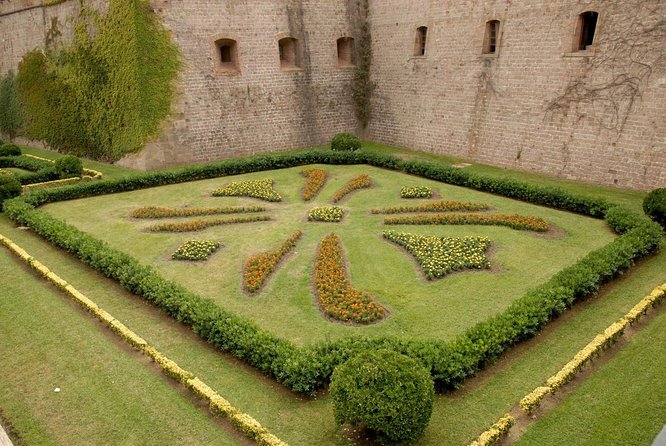
Next is Montjuïc Slides at Tobogans de Montjuïc. Admission is free here as well. This stop adds a playful tone that can break up the art-and-landmark rhythm and remind you that Montjuïc isn’t only about big galleries and grand buildings.
If you like having a couple lighter moments during a structured activity, this is one. It also tends to create natural opportunities to pause, reset your phone focus, and solve the next clue without feeling rushed.
11) Montjuïc Castle: the finish line and final story beat
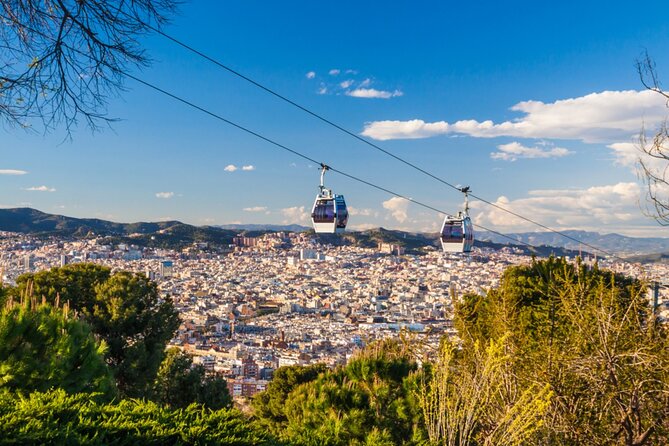
You end at Montjuïc Castle. Admission ticket not included. The tour info frames this as where both the story and city exploration games end, so it’s your final “payoff” point.
If your schedule allows, you can treat the castle finish like a natural wrap to your day on Montjuïc. If it’s late or you’re tired, it still works because the game is designed to finish here rather than asking you to keep hunting for the last puzzle off-route.
What I like about the Montjuïc route design
A good self-guided game needs a route that feels coherent. This one uses a mix of squares, landmark towers, art institutions, gardens, and fun public space. That keeps you from feeling like you’re walking one type of scenery for two hours straight.
It also uses a “clue-per-stop” rhythm. You’re never just wandering. Even when you’re sightseeing, you’re doing it with purpose: solve, move, look again.
And because many stops list free admission tickets, you can keep your budget predictable. You’re paying for the experience structure, not for a pile of entry fees along the way.
Who should book Witch Hunt on Montjuïc?
This is a strong fit if you want:
- A self-guided Barcelona experience in English with a clear structure
- A puzzle challenge that you can control, pause, and restart on your own timing
- A way to see Montjuïc that feels more active than just wandering
It’s also useful if you’re traveling with a group that has mixed interests. The puzzles give one kind of engagement, and the locations give another. People can enjoy the same walk while focusing on different parts of it.
If you hate puzzles or prefer fully guided explanations at each stop, this might feel too “do it yourself.” The tour does not include a guide.
When admission tickets matter (and when they don’t)
Several stops list admission ticket not included, including Museu Nacional d’Art de Catalunya, Palauet Albéniz, Joan Miró Foundation, and Montjuïc Castle. The tour states that tickets aren’t needed to complete the tour.
So your decision comes down to your travel style:
- If your goal is the game, you can plan a play session without locking in extra museum entries.
- If your goal is both game and inside-the-building time, budget for additional tickets at those specific sites.
Practical notes for playing smoothly
Because it’s played on your smartphone, you’ll want to be comfortable using an app while walking. The good news is that the tour includes 24/7 customer support, which helps if something technical happens mid-route.
Also, you can stop and start as you like. That means you can take a longer pause at one location without ruining the whole plan. Just remember that the total experience time is still roughly two hours when you keep the flow moving.
Finally, this is listed as private to your group. If you’re hoping for a calmer pace, fewer people around you is often the difference between a fun puzzle walk and a frustrating one.
Should you book Witch Hunt on Montjuïc?
Yes, I’d book it if you want a low-cost, structured way to explore Montjuïc with a puzzle twist and you’re okay figuring things out via an app. At $8.42 per person, the math works especially well because many stops are free-entry and the game completion doesn’t require extra attraction tickets.
I’d skip or reconsider if you mainly want a guided explanation at each site, or if you dislike puzzle formats. Also, if you already know you want to go inside every ticketed stop, do a quick checklist first so you’re not surprised by which entries aren’t included.
If you’re looking for an active, self-controlled Barcelona afternoon, this is a very reasonable bet.
FAQ
Is Witch Hunt on Montjuïc self-guided?
Yes. It’s a city exploration game you play on your smartphone, and it does not include a tour guide. It’s limited to your group.
How long does the puzzle quest take?
The experience is about 1 hour 45 minutes to 2 hours 10 minutes.
How much does it cost?
It’s priced at $8.42 per person.
Do I need entry tickets for the attractions?
Entry tickets are not included for some stops, but admission is not needed to complete the tour. If you want to enter places where tickets aren’t included, you’d need to arrange that separately.
Where does the experience start and end?
It starts at Carrer del Consell de Cent, 6769 (Sants-Montjuïc, 08014) and ends at Montjuïc Castle, Ctra. de Montjuïc, 66 (Sants-Montjuïc, 08038).
Is there customer support?
Yes. The experience includes 24/7 customer support, and it’s offered in English.