REVIEW · BARCELONA
Gothic Quarter Barcelona Tour with Audioguide
Book on Viator →Operated by TouringBee · Bookable on Viator
Gothic Quarter magic, minus the group churn. This self-guided Barcelona walk uses a mobile audio guide so you can pause when something grabs you, then move on before crowds tighten up. I like that you’re not stuck following a guide’s pace—you’re tracing the quarter’s streets with stories tied directly to the monuments around you.
The only real catch is that it’s tech-based. You’ll want your phone charged, and you must bring headphones since they’re not included; also, entrance tickets for sights aren’t part of the price, so a few stops may cost extra.
In This Review
- Key Things I’d Plan Around Before You Go
- How the Audio Guide Actually Gets You Through Barcelona
- Starting at Plaça de Catalunya: the Smart “Before You Begin” Moment
- Parroquia Santa Anna: a Medieval Pause in the Middle of the City
- Barcelona Cathedral: Gothic and Neo-Gothic, Plus a View Reward
- Two Palaces of Power: Palau Reial Major and the Generalitat Building
- Plaça de Sant Felip Neri and Santa Maria del Pi: emotion in the Details
- La Rambla and Mercat de la Boqueria: city life meets food culture
- Plaça Reial at Night (Even If You Arrive in Daylight)
- Mirador de Colom to the Maritime Museum: history you can see from the water
- Port Vell and Rambla de Mar: the walk finishes with sea air
- Timing and Pacing: 1 hour 30 minutes, but your legs decide the end
- Value Check: is $8.27 worth it?
- Who This Tour Fits (and Who Might Not Love It)
- Should You Book This Gothic Quarter Audio Tour?
- FAQ
- How long is the Gothic Quarter Barcelona Tour with Audioguide?
- What language is the audio guide offered in?
- Is this a guided tour with a person?
- Do I need to bring headphones?
- Does the price include entrance tickets?
- Are there any food or drink costs included?
- Where do I start, and does it end nearby?
- Is the route easy to follow without data service?
- What’s the cancellation policy?
Key Things I’d Plan Around Before You Go
- Self-guided route: You lead yourself, with no human guide to chase you down alleys.
- Audio app with offline map: GPS route guidance plus 21 audio recordings to match the landmarks.
- Built for recognition: illustrations help you spot where you are before you start listening.
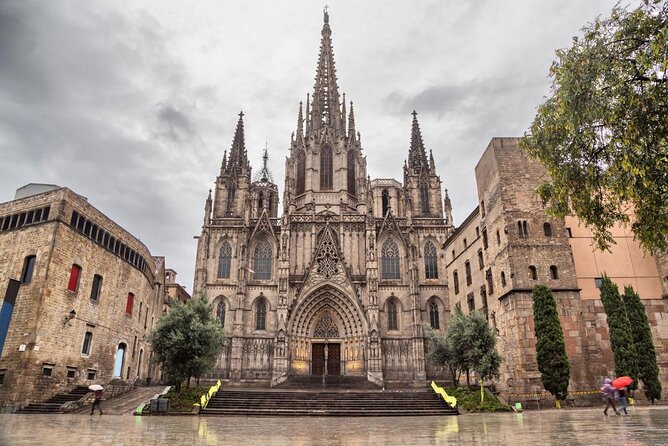
- Major monuments and calmer corners: cathedral and palaces alongside quieter squares like Plaça de Sant Felip Neri.
- Sea-to-city ending: Port Vell and Rambla de Mar add a different mood from the Gothic streets.
- Low-cost format: you’re paying mostly for the narration, not for ticketed access.
How the Audio Guide Actually Gets You Through Barcelona
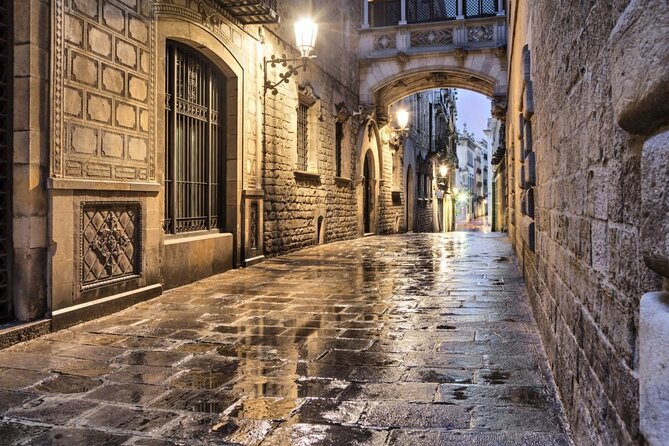
This is a self-guided experience, meaning your phone becomes the tour guide. After you book, you download the mobile app (works on iPhone and Android), activate your purchase, and then follow the route using the map on your screen. The nice part is the offline map plus GPS navigation—so you’re not constantly hunting for signal while you’re weaving through narrow streets.
You’ll also get 21 audio recordings tied to the sights, plus illustrations designed to help you recognize each landmark quickly. It’s a simple setup, but it changes the whole experience. In a crowded guided tour, you hear the story while you’re trying to keep your balance through elbows. Here, you can stand where it makes sense, then press play when you’re ready.
Plan for one practical thing: bring your own headphones. The tour info is clear that headphones aren’t included, and there’s no workaround here. If you rely on loudspeaker audio, you’ll both miss the details and feel awkward in tight spaces.
You can also read our reviews of more tours and experiences in Barcelona.


Starting at Plaça de Catalunya: the Smart “Before You Begin” Moment
The route starts at Plaça de Catalunya, a major connection point between Barcelona’s historic Old Town and the modern Eixample district. Even before you hit the Gothic Quarter proper, this square sets your bearings. You’ll notice fountains and green spaces, plus iconic sculptures, all while the whole area hums with people shopping, dining, and passing through.
I like starting here because you get a quick sense of the city’s rhythm before walking into the older streets. It also helps if you’re arriving by transit—Plaça de Catalunya is easy to reach, and you’re not trying to start somewhere obscure.
If you’re the type who hates “wandering blind,” take a few minutes right at the start to let the audio app show you the route line. Then you’ll feel confident as the streets tighten.
Parroquia Santa Anna: a Medieval Pause in the Middle of the City
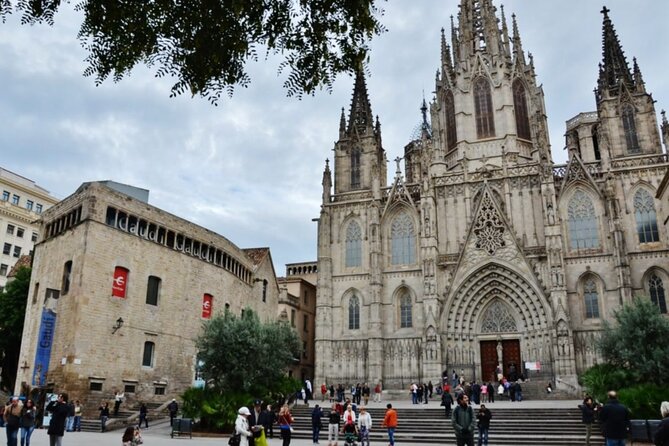
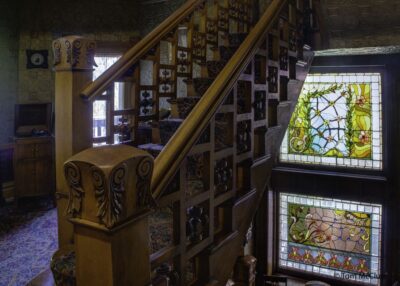
Right away, the route brings you to Parroquia Santa Anna, a church that feels tucked into the quarter rather than staged for tourists. Step inside and you’re met with medieval character—this 12th-century church is known for Gothic architecture, a calm atmosphere, and stained glass windows.
This is the kind of stop that benefits from audio storytelling. From outside, it’s easy to treat a church as another photo stop. With narration, you’re more likely to notice the structure and the mood: the way the space quiets down, the way light hits stained glass, and why the building still matters to local identity.
Time-wise, the plan allows only a short window here, so if you want to linger, do it—but know you may have to shorten later stops. I prefer to spend a little extra during interior moments and then skim exterior views if I’m running tight.
Barcelona Cathedral: Gothic and Neo-Gothic, Plus a View Reward
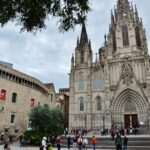
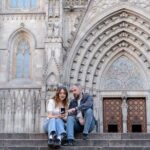
Next comes the Barcelona Cathedral, one of the quarter’s anchor sights. It mixes Gothic and neo-Gothic elements, and you can spot the style shift in the façade and the detailing. Inside, the cathedral has chapels and a cloister that make it feel like a whole world tucked into downtown.
One practical reason this stop is worth your time: the option to get panoramic views from the bell tower. If your schedule is tight, this is where I’d prioritize energy—those views are the kind of payoff that turns a good visit into a memorable one.
Drawback to consider: cathedral-type sites can have limited visiting hours on some days and sometimes require queuing. Your audio tour doesn’t include entrance fees, so check what you’re planning to enter ahead of time. The narration helps, but your wallet still needs to cover any ticketed access.
Two Palaces of Power: Palau Reial Major and the Generalitat Building
From sacred space, the tour pivots to political and royal buildings—always a strong move in Barcelona. First up is Palau Reial Major, associated with the counts of Barcelona and the kings of Aragon. It’s the kind of place where the architecture isn’t just decoration; it’s a record of power.
You’ll see medieval architecture features, courtyards, and the Saló del Tinell, a hall connected to important events. Again, audio helps you interpret what you’re looking at—otherwise palaces can feel like impressive walls with vague meaning.
Then the route heads to Palau de la Generalitat de Catalunya, where Catalonia’s government is based. This historic palace is famous for its Gothic façade and a courtyard where history and politics overlap in the same frame. The Saló de Sant Jordi is highlighted as a symbol of Catalan autonomy.
If you care about architecture, this is one of the best stretches of the route. The buildings aren’t identical cousins; they show different layers of how Barcelona’s leadership shaped space. If you don’t care much about politics, the places still work as architecture stops. They just carry extra weight once the audio starts connecting the dots.




Plaça de Sant Felip Neri and Santa Maria del Pi: emotion in the Details
After the palaces, you get a quieter, more reflective beat at Plaça de Sant Felip Neri. This square is known for visible scars from the Spanish Civil War on the church walls. That’s heavy material, but the spot doesn’t feel like a museum. It feels like history living in everyday stone.
The nearby Romanesque church adds a different architectural rhythm. It’s one of those moments where your audio narration can turn a quick stop into a meaningful one—especially when you realize how much can be preserved in plain sight.
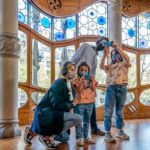
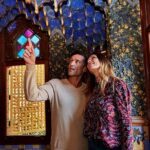
Then the route moves on to Santa Maria del Pi, a Gothic basilica with soaring spires and an intricate rose window. Inside, you’ll find the kind of details that reward slow looking, and you can climb the bell tower for city views.
Here’s a simple strategy: if you plan to do multiple bell-tower climbs, pick just one or two. The views are great, but it’s easy to burn energy back-to-back. If you’re choosing, I’d lean toward whatever tower access matches the day’s mood—high views are most satisfying when the air isn’t too hazy.
La Rambla and Mercat de la Boqueria: city life meets food culture
Now you hit La Rambla, Barcelona’s famous boulevard. This is where the pace changes. You’ll see shops, cafés, and street performers, and the whole street feels like it’s always in motion. Even if you’re not a crowds person, this is a worthwhile walk because it’s a core part of how visitors understand Barcelona.
Then you get to Mercat de la Boqueria, the world-famous food market. This is the perfect contrast after Gothic stone: stalls, seafood, cured meats, fresh produce, and the smell of everything that’s about to be cooked or sold for lunch.
This stop is great for two reasons:
1) you can enjoy it without committing to a sit-down meal, and
2) it’s an easy place to sample Barcelona’s everyday food culture.
Since food and drinks aren’t included, you can set a personal budget here. If you don’t want to eat, just spend time looking and listening. The audio helps you connect what you’re seeing to the local food scene, but you control how much you spend.
Plaça Reial at Night (Even If You Arrive in Daylight)
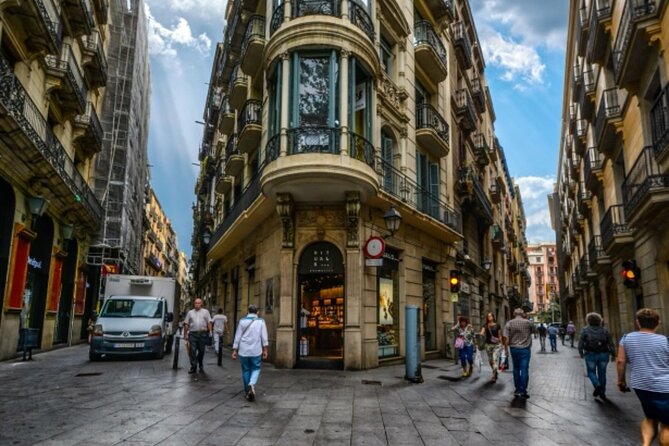
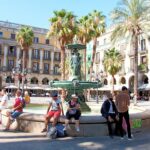
The route includes Plaça Reial, a palm-lined square with a Mediterranean feel. One highlight here is the Gaudí lampposts, which make the square look distinct even when the surrounding streets feel noisy.
This place has an evening reputation, and I get why. Cafés and restaurants ring the square, and it’s the kind of location where people linger. If you pass through in daylight, you might not catch the full night atmosphere—but even then, it’s a pleasant pause before the sea-side portion of the route.
Mirador de Colom to the Maritime Museum: history you can see from the water
The tour then shifts toward Barcelona’s waterfront personality. First, you’ll reach the Mirador de Colom (Columbus Monument). From the top, you can get panoramic views over the city and the Mediterranean, reached by elevator access. There’s also an exhibition room with history, plus the iconic statue.
This is a strong “big picture” moment. Up in the air, you’ll start to connect how the old city relates to the coastline. It’s also just a good break if you’ve been walking in straight lines and tight streets for a while.
Next is the Maritime Museum, set in a medieval shipyard. The focus is Barcelona’s seafaring heritage, with ship replicas, navigational instruments, and maritime art. If you’ve ever wondered why Barcelona’s culture grew the way it did, the museum answers that with objects you can actually look at.
One note: the tour doesn’t include entrance fees. If you want museum time and you’re watching your budget, factor in ticket costs.
Port Vell and Rambla de Mar: the walk finishes with sea air
Finally, you reach Port Vell, the old port area. Here, the vibe shifts again: palm-lined promenades, superyachts, and options for fresh seafood at waterfront restaurants. You can also visit the Barcelona Aquarium and Maremagnum mall, and Barceloneta Beach is nearby.
If you’re tired, Port Vell is where it’s easy to slow down—shops and food nearby make it simple to take a breather without leaving the route area.
Then the walk crosses Rambla de Mar, a wooden footbridge. The path looks playful because it undulates, and it gives you Mediterranean views of the port area. It’s also a good “in-between” moment: not as tight as the Gothic streets, but still part of the city’s everyday life. Depending on what you want next, you can also catch boat tours from here, but that part depends on what’s operating when you’re there.
Timing and Pacing: 1 hour 30 minutes, but your legs decide the end
The duration is listed as about 1 hour 30 minutes, and the route plan assigns short time windows to several main points. That’s helpful because it prevents you from getting lost for hours.
Still, this is self-guided, so your pacing matters. If you want interior time at churches, plus tower views, you’ll likely need to move faster between those. If you only do quick exterior looks and rely on the audio mainly for context, you can comfortably stick closer to the one-and-a-half-hour estimate.
My go-to approach:
- Spend a bit longer at 1–2 “interior moments” (churches/cathedrals).
- Choose only one bell-tower climb if you want to avoid rushing.
- Use the seafood-market and waterfront segments as built-in breaks.
Value Check: is $8.27 worth it?
At $8.27 per person, you’re not paying for museum tickets or food. You’re paying for the narration plus the offline route support. Given that you receive an app, an offline map, and 21 audio recordings, the value is strong if you like learning while you walk.
Here’s where the math shifts:
- If you plan to enter several ticketed sites (towers, cathedral-adjacent areas, museum spaces), your final trip cost will rise.
- If you’re mainly using the audio for exterior context and optional interiors, your spend stays low.
So this tour works best when you treat it as a guided education tool, not as a bundled ticket package. That’s also why it’s a great fit for first-timers who want coherence without locking into a group schedule.
Who This Tour Fits (and Who Might Not Love It)
This experience is a good match for you if:
- you prefer independent walking over group logistics,
- you enjoy architecture and stories connected to what you’re seeing,
- you want a simple way to cover a lot of ground in about 90 minutes.
It may be frustrating if:
- you don’t like using your phone for directions or audio,
- you can’t bring headphones,
- you were hoping for a human guide who can answer questions on the spot.
And one bonus reality check: the max group size is listed as 20 travelers, but since it’s self-guided, the “group size” matters less than your own comfort with a phone-based route.
Should You Book This Gothic Quarter Audio Tour?
Yes, if you want a low-cost, high-context way to experience the Gothic Quarter and then transition into the waterfront without being pinned to someone else’s schedule. The biggest strength is how the audio turns “I’m walking around” into “I understand what I’m seeing,” while the offline map helps you actually follow the route in real time.
Skip it only if you need a human guide, or if you know you’ll hate coordinating app audio, GPS, and your own headphones. If that sounds like you, a traditional guided tour might feel easier.
FAQ
How long is the Gothic Quarter Barcelona Tour with Audioguide?
It’s approximately 1 hour 30 minutes.
What language is the audio guide offered in?
The tour is offered in English. The included access also notes 1 year access in the language of your choice.
Is this a guided tour with a person?
No. It’s self-guided. You download the audio guide app, activate your purchase, and follow the route on the mobile app map.
Do I need to bring headphones?
Yes. Headphones are not included, so you should bring your own.
Does the price include entrance tickets?
No. Entrance fees/tickets are not included.
Are there any food or drink costs included?
No. Food and drinks are not included.
Where do I start, and does it end nearby?
You start at Plaça de Catalunya in Eixample (08002 Barcelona) and the activity ends back at the meeting point.
Is the route easy to follow without data service?
The tour includes an offline map with the route for easy GPS navigation, which helps when connectivity is limited.
What’s the cancellation policy?
Free cancellation is available. You can cancel up to 24 hours in advance for a full refund; within 24 hours, the amount paid is not refunded.
If you want, tell me your travel dates and whether you’re more interested in churches, palace architecture, or the waterfront. I can suggest a simple pacing plan that keeps it within about 90 minutes.