REVIEW · MAUI
Ultimate Self-Driving Audio Tour of Road to Hana, Maui
Book on Viator →Operated by History with Action · Bookable on Viator
One road, a hundred stories. This self-driving Maui route adds offline GPS and auto-playing narration so you don’t have to stare at a phone while you drive. The main trade-off is that the audio sync is GPS-based, so if you start late or drift off the intended route, stories can get out of order.
I like how this turns a stressful “do we miss something?” drive into a calm road trip with built-in stop ideas, history, and photo moments. You’re in control too: start when you want, pause when you need, and finish in about 2–3 hours or spread it across more than one day. One more thing to plan for: some of the most famous stops (like black sand) require reservations/permits or separate entry fees.
In This Review
- Quick hits before you hit the road
- Why an audio guide beats guessing on the Road to Hana
- Price and value: $16.99 for up to 4 in your car
- Offline GPS and hands-free audio: how to make it work smoothly
- Paia to Mile Marker Zero: getting your bearings fast
- Twin Falls and the first real jungle energy
- Arboretums, lookouts, and state parks where Maui feels lived-in
- Ke’anae and the wild-water choices: when you get hands-on
- Pua’a Ka’a, Nahiku, and Kahanu Garden: culture in the middle of the drive
- Wai’anapanapa black sand: the one stop that needs planning
- Hana beaches that feel like different worlds
- Wailua Falls to Kipahulu: the payoff endgame
- Going wrong: syncing audio on the way out and the way back
- Safety and real-world interruptions: closures and tsunami alerts
- Should you book this Road to Hana self-driving audio tour?
- FAQ
- How long does the Road to Hana audio tour take?
- Is this tour self-guided?
- Do I need cell service or Wi‑Fi while driving?
- How do I start the tour on site?
- Does the audio play automatically?
- What do I get for the $16.99 price?
- Are attraction entry tickets included?
- Is Wai’anapanapa Black Sand Beach included?
- Are there extra fees for Garden of Eden?
- What should I do if I’m going back the other way?
Quick hits before you hit the road
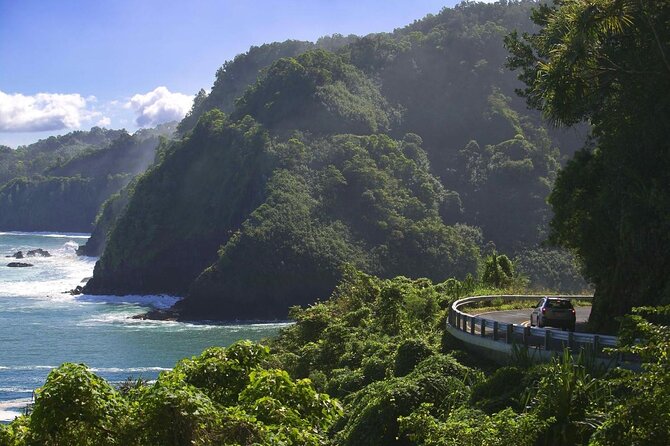
- Offline GPS mapping means you’re not stuck waiting for service on the Road to Hana.
- GPS-triggered audio plays hands-free at key points, so you can focus on driving and scenery.
- Per-group pricing (up to 4 in your car) makes it cheaper than many full-day bus tours.
- Tons of named stops pack in beaches, arboretums, lookouts, and major waterfalls without a schedule fight.
- Cliff-jump spots get a real caution flag, but you’ll decide what’s worth your risk level.
- Garden of Eden and Wai’anapanapa Black Sand are not included, so you’ll plan those separately.
Why an audio guide beats guessing on the Road to Hana
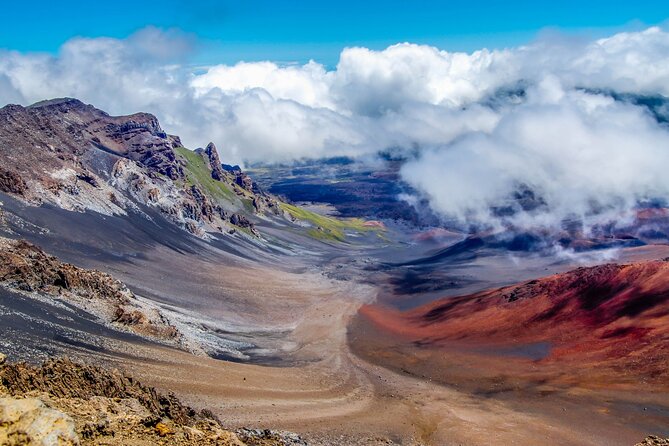
Road to Hana is gorgeous, but it’s also busy, twisty, and easy to second-guess yourself. This tour’s biggest win is that it’s designed around driving: your audio is location-triggered, and the map directions are built for areas where cell service is weak or spotty.
I also like the pacing. The narrator doesn’t talk the whole time. Instead, the stories line up with the places you’ll actually want to stop for—then you get quiet driving again to enjoy the road, pullouts, and ocean views.
The other big point: you can treat this like a real itinerary, or like inspiration. If you see something you want to linger at, you can pause. If a stop isn’t your thing, you can skip it and move on.
You can also read our reviews of more tours and experiences in Maui.

Price and value: $16.99 for up to 4 in your car
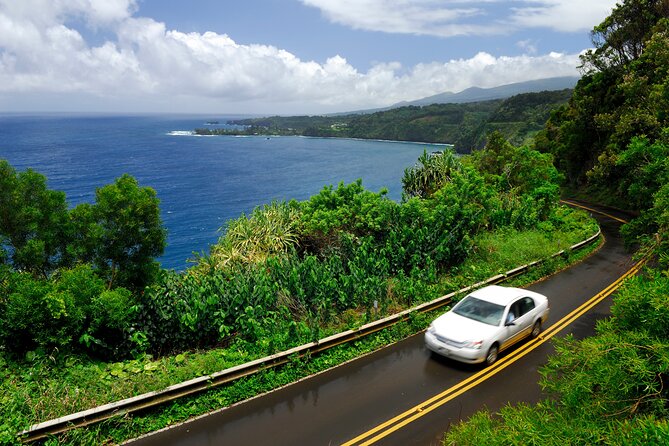
This is $16.99 per group (up to 4 people). That matters because Hana day trips can get pricey fast when you price out guided buses, tours that charge per person, or multiple transport tickets.
Think of this as paying for a smart “driver’s co-pilot,” not for someone to steer you by the nose. It’s especially good value if:
- you’re traveling as a small group and can share one car (which this tour’s pricing is built for)
- you want the freedom to stop for photos, waterfalls, and scenic pullouts without joining a bigger timed crowd
Duration runs about 2–3 hours for the route completion, and it’s roughly 70+ miles. That’s a good window if you want a full chunk of Hana without turning it into a 10-hour marathon.
Offline GPS and hands-free audio: how to make it work smoothly
The tour is built for low-signal reality. It uses offline maps, and the audio plays based on your location—so you’re not relying on Wi‑Fi while you’re deep in Hana territory.
That said, setup is where people can stumble, so do it carefully:
- Download the tour while you’re on strong Wi‑Fi/cellular before you start the drive.
- After booking, you’ll get instructions and a password by email and text.
- On site, open Action’s audio tour guide app and start the tour from the correct starting point and direction.
For audio in your car, you can connect your phone to your stereo with Bluetooth, USB, or AUX. If you’re planning any longer walks at stops, headphones can help there too, since you’ll want the sound without crowding the road with your screen.
One more practical tip: the tour is GPS-triggered, so if you make a wrong turn, the narration may pause or feel out of sync until you’re back on track. In other words, the audio “wants you” to follow the route and speed limits you’re shown.
Paia to Mile Marker Zero: getting your bearings fast

Most Hana drives start feeling chaotic right away—so I like beginning with a town stop first. The route kicks off in Pa’ia, a quirky, artsy slice of Maui where colorful locals and old-school surf energy meet. There’s a Willie Nelson connection here too, which gives the area a fun pop of celebrity-local history.
Pa’ia also works as a reset. It’s a solid place to stretch your legs, grab a snack, and get your car situated before the road turns into a slower, winding show.
Then you move toward Ho’okipa Beach Park, the first big “this is why we’re here” stretch. It’s a state park with space to picnic and pavilions, and it’s known as a surfing spot. Expect open views, photo-friendly coastline, and that windy, ocean-smell feeling that makes you instantly understand why Hana draws people back.
From there, the tour heads to Mile Marker Zero, where you get context on what you’re driving. The narrator explains the road’s roots as a footpath from the 1400s, which helps the drive feel bigger than just a scenic road with waterfalls.
Twin Falls and the first real jungle energy
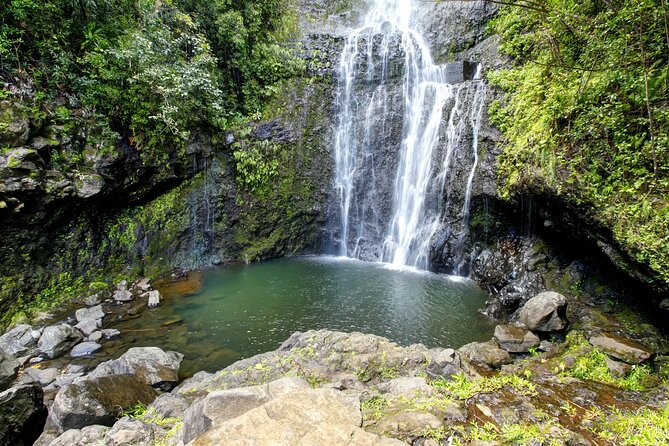
The first waterfall stop you’ll hit is Twin Falls, which is actually two waterfalls. This is a quick-hit stop for views and photos. The best move here is to keep it simple: park, grab your pictures, and don’t spend too long if you want to stay on an easy timing rhythm.
Next comes the more “choose your own adventure” stop: Waikamoi Ridge Trail. The tour frames it as lush jungle scenery with strong payoff. Since this is a trail, plan for walking time beyond what you’d do for a quick overlook. If you’re short on energy, you might treat it as a partial stop. If you want a true hike moment, this is where you’ll feel it.
The tour keeps building that sense of place by layering nature and culture into the same stretch of road. That combo is what makes the audio guide more than a list of stops.





Arboretums, lookouts, and state parks where Maui feels lived-in
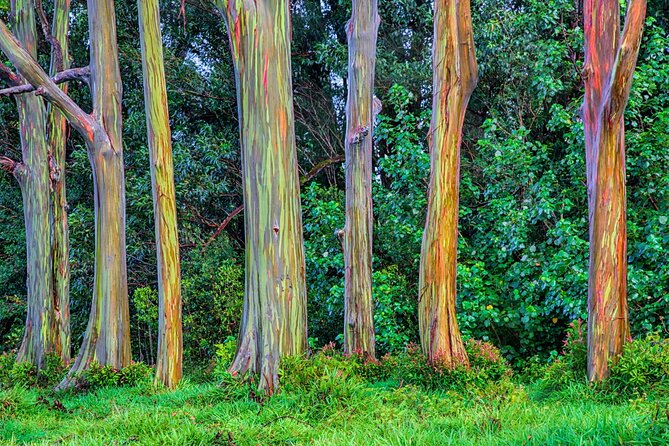
One of my favorite “stop-to-stop” sections is when the route shifts from quick pullouts into places you can slow down. Garden of Eden Arboretum is a good example. It’s home to over 700 plant species, and the tour notes plants donated by former Beatle George Harrison. This is the kind of stop where the audio helps you look beyond scenery and notice the details.
A key consideration: Garden of Eden has admission fees and it’s not included in the tour price. So if you’re the type who loves arboretums, budget for entry. If you’re more of a “photos and back in the car” person, you can keep it outside the gates.
Then you’ll pass Kaumahina State Park, a pretty coastline stretch that’s ideal for a picnic and shots. After that, the tour steers you toward a more secluded-feeling shore: Honomanu Bay, described as a black pebble beach where you can find calmer moments.
Next up is a coastal view stop at Nua’ailua Bay, paired with Nua’ailua Viewpoint. This is where the shoreline gets rougher and more rugged, and the scenery starts looking more dramatic than beachy.
Ke’anae and the wild-water choices: when you get hands-on
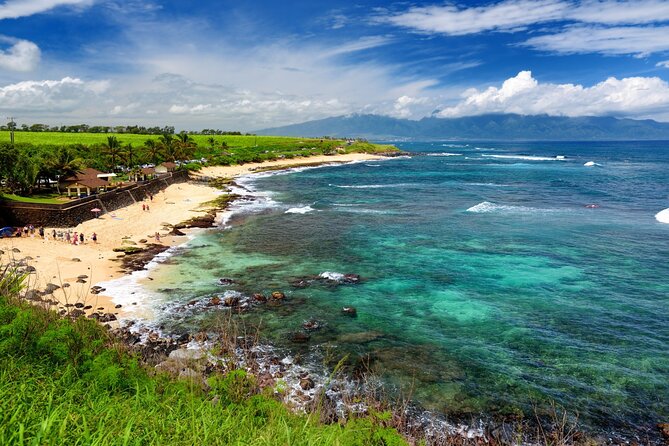
The tour includes Ke’anae Arboretum, a place framed as one of the greenest areas on Maui. It also notes the area’s earlier jagged black-rock peninsula past, which gives you a neat “before and after” story to match the landscape you see now.
Then comes a place that’s equal parts thrill and safety reminder: Ching’s Pond, a popular cliff-jumping spot. The tour flags caution, which is exactly the right tone for a risky water activity. If you’re not experienced with ocean entries and strong currents, skip it and focus on the viewing.
After the adrenaline option, the route shifts back to “lookouts that make you stop and stare.” Wailua Valley Lookout is framed as remote and jungle-heavy. This is the kind of place where the audio gives you the big picture of what you’re seeing, then you can just take it in.
The tour then calls out a cluster of waterfalls—described as three waterfalls that can merge into one during the wet season. If you drive Hana after rain, you might get a stronger water show. If it’s drier, you’ll still get the drama and the photo angles, just less volume.
Pua’a Ka’a, Nahiku, and Kahanu Garden: culture in the middle of the drive
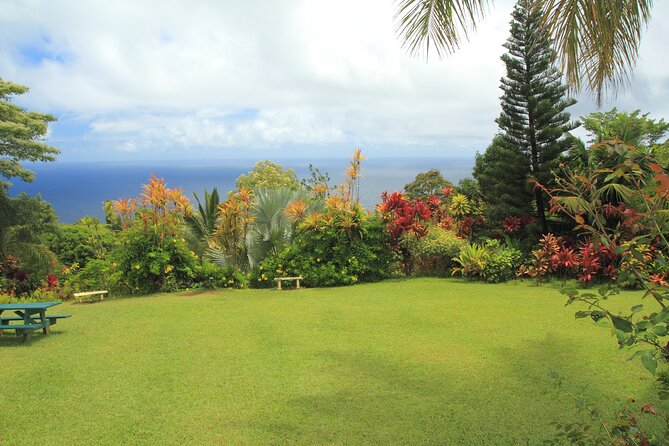
Pua’a Ka’a State Park is a memorable stop because of the wildlife story. The tour points out mongooses and explains how they ended up on the island and what that means for native wildlife today. It’s one of those stops where you’ll either read the signs and listen closely, or you’ll miss the whole point and treat it like a scenic parking lot.
Next is Nahiku Viewpoint, called out as one of the best ocean views on the island. The audio also places it near George Harrison’s former home, which adds another layer for music fans and makes the viewpoint feel anchored in real people’s history.
Then comes Nahiku Marketplace, where the tour focuses on practical things: a place to pick up souvenirs or a snack. This is a good time to rest your legs and grab something before you hit the later beach and waterfall section.
After that, Kahanu Garden blends plants with history, including an ancient Hawaiian temple called a heiau. It’s not only “pretty plants.” The audio helps you connect what you’re seeing to older land use and spiritual sites.
Wai’anapanapa black sand: the one stop that needs planning
Next is Wai’anapanapa State Park, the famous black sand beach. If you’ve never seen a volcanic black-sand coastline, it’s a seriously different visual from the classic white-sand postcard you might expect.
But here’s the big logistics point: reservations are required for this park, and entry fees are not included. So you’ll want to treat this as an advance-planning stop if it’s on your must-do list. If you show up without what you need, you can lose the best part of the day.
Even when you can’t stay long, the audio makes it easier to stop with purpose: you know when you’re there and what to look for as you take photos and scan the shoreline.
Hana beaches that feel like different worlds
After Wai’anapanapa, the tour keeps moving through beach variety in a way that feels smart. Hana Bay is described as lively, with BBQs, kayaks, and clear swimming water. This is where the mood often shifts from wild-coast quiet to “people are actually enjoying the day” energy.
Then you’ll hit Koki Beach, a red sand beach that’s visually eye-catching. Expect it to be a quick-photo kind of stop, unless you’re planning a longer break.
Next is Hamoa Beach, where the tour notes Oprah owns around 200 acres nearby. Even if you don’t care about celebrity land ownership, the point here is that this beach is famous for a reason, and it’s worth the stop if you want classic Hana shoreline views.
Finally, the route includes Waioka Pond, also referred to as Venus Pool. The tour describes it as secluded and picture-perfect, and it also mentions it can be used for cliff-jumping. Again, safety matters. If the idea of ocean jumps doesn’t fit your comfort level, you’ll still enjoy the views without participating.
Wailua Falls to Kipahulu: the payoff endgame
The tour’s later-mile section is where the drive turns from “cool stops” to “this is Maui at full power.” Wailua Falls is described as about 200 feet tall and a must-see. This is the kind of waterfall where you’ll understand why people make time for Hana in the first place.
Then the route pushes toward a broader, high-level perspective at Haleakalā National Park. The tour emphasizes the volcano scale, noting the peak rises about 10,000 feet above sea level. Even if you don’t spend hours at high elevation areas, the viewpoint framing helps the day feel complete.
The big hiking highlight included is the Pipiwai Trail, described as featuring waterfalls, a bamboo forest, and lush jungle scenery. This is probably your “save your energy” moment. If you want one actual walk that feels like a destination, this is it.
You’ll finish at the Kipahulu Visitor Center, where the tour concludes back at the end point for your route completion.
Going wrong: syncing audio on the way out and the way back
Two things can make audio tours feel frustrating if you’re not expecting them.
First: GPS-triggered narration wants you to stick close to the planned route and timing. If you take a detour or even miss the route trigger area, stories can play late, repeat, or feel like they don’t match where you are.
Second: return driving is not always the same story. If you turn around and drive back, you’ll need to switch to the correct return direction version. Otherwise, the audio may repeat content that already happened on your way out.
My advice is simple:
- Start exactly where you’re told to start.
- Don’t freestyle too much if you want perfect story timing.
- If you do turn around, switch to the return version right away so you’re hearing new content, not repeats.
Safety and real-world interruptions: closures and tsunami alerts
Hana isn’t a theme park. Nature and real-world events can affect access.
The tour info includes a closure alert for a portion of Road to Hana between Alelele Bridge and Lelekea Bridge near K’pahulu. If you’re traveling soon, plan your route with that in mind so you don’t waste time on blocked roads.
It also mentions a tsunami warning after a massive Pacific earthquake and points you to tsunami.gov for the latest updates. On a day-trip like Hana, check warnings before you drive so you’re not making choices based on outdated information.
Should you book this Road to Hana self-driving audio tour?
Book it if you want a value-first way to experience Road to Hana with structure but not stress. This is a great match for drivers who like hands-free guidance, appreciate story-based context, and plan to stop at waterfalls, arboretums, and beach highlights without joining a bus schedule.
Skip it (or go in with eyes open) if you need perfect, turn-by-turn navigation. This tour is built for GPS-triggered audio and offline mapping, not live navigation. Also, plan on separate reservations or fees at key spots like Wai’anapanapa and Garden of Eden.
If you’re the kind of traveler who wants the best road-to-Hana stops without guessing, this is an easy yes. Download it before you go, start from the right place, and let the stories cue the moments you’ll remember.
FAQ
How long does the Road to Hana audio tour take?
It takes about 2 to 3 hours to complete, depending on how long you spend at stops and how fast you move.
Is this tour self-guided?
Yes. You use the app to start the tour at the designated starting point, and the audio plays automatically as you reach locations on the route.
Do I need cell service or Wi‑Fi while driving?
You don’t need cell service or Wi‑Fi for the tour after it’s downloaded. You must download the tour while you have strong Wi‑Fi/cellular first.
How do I start the tour on site?
Open Action’s audio tour guide app once you’re onsite. If there are multiple directions or versions, launch the one that matches your planned starting point and direction.
Does the audio play automatically?
Yes. The stories play on their own based on your location, and you can pause when you want breaks.
What do I get for the $16.99 price?
The price is per group (up to 4). It’s a self-guided driving audio tour with offline maps and GPS-triggered audio.
Are attraction entry tickets included?
No. Attraction passes, entry tickets, and the Wai’anapanapa permit or reservations are not included.
Is Wai’anapanapa Black Sand Beach included?
The tour includes the area, but reservations are required for Wai’anapanapa State Park, and that permit isn’t included.
Are there extra fees for Garden of Eden?
Yes. Admission fees for the Garden of Eden are required and not included in the tour price.
What should I do if I’m going back the other way?
If you’re driving back, switch to the tour version made for the return trip so you’re not replaying the same content.