REVIEW · TUCSON
Downtown Tucson: An Audio Tour by an Author and Historian
Book on Viator →Operated by VoiceMap Audio Tours · Bookable on Viator
Downtown Tucson gets a time-travel headset. This self-guided audio tour uses the VoiceMap app so you can wander at your own speed while learning how downtown grew from a Spanish fort outpost into a street lined with grand homes and art stops. You’ll also get offline audio, maps, and geodata, which is handy when cell service gets spotty.
What I like is the flexible pacing. You can linger by façades, pause for photos, or duck into a pastry stop without missing the story. I also like how the route ties together historic architecture and everyday life, not just big-name landmarks. One drawback to consider: you’ll need your own smartphone and headphones, and if you’re the type who hates tech setup, plan a few minutes to get the app running before you start walking.
In This Review
- Key things to know before you walk
- Downtown Tucson Audio Tour: how it works and why it’s worth your time
- Start at 197 N Church Ave: Presidio stories you can walk through
- Adobe row houses and Casa de Cordova: Tucson domestic life in plain sight
- Main Avenue mansions and the Tucson Museum of Art: wealth, design, and culture
- Café a la C’Arte break: a food stop that fits the rhythm
- J. Knox Corbett House: Trost and Holmes show up on Main Avenue
- Centennial Park and the Franklin House: stories continue as the street changes
- El Presidio Bed and Breakfast: reuse and reinvention in the same block
- End at El Charro Café: oldest Mexican restaurant energy, plus chimichanga
- Price and value: $8.99 that works if you’re ready for self-guided
- Timing and walking comfort: how to plan your 60–75 minutes
- Who this tour fits best (and who may want something else)
- Should you book the Downtown Tucson audio tour?
- FAQ
- FAQ
- How long is the Downtown Tucson audio tour?
- Where does the tour start?
- Where does the tour end?
- Is the tour available in English?
- Do I need my own headphones and smartphone?
- Does it work with offline access?
- What app do I use for the tour?
- Is it a group tour?
- Can I bring a service animal?
- Can I cancel and get a refund?
Key things to know before you walk
- Offline-first audio: download in advance for audio, maps, and geodata.
- A smooth century-to-century route: Spanish fort life to 1890s–1900s mansion architecture in one walk.
- Real downtown texture: you pass active places like a café and the area’s best-known long-running restaurant.
- Architecture with names: the stories include architects Henry Trost and David Holmes.
- End with a local classic: the walk finishes at El Charro Café, home of the chimichanga.
- Quick walking window: plan for about 1 to 1 hour 15 minutes.
Downtown Tucson Audio Tour: how it works and why it’s worth your time
This Tucson audio tour is built for walking, not for sitting. You start near the Presidio museum, press play on your phone, and follow the audio as you move from one downtown stop to the next. The big win is control: you don’t have to match a group pace, and you can slow down whenever you see something that grabs your attention—especially with architecture.
The format also makes it easy to taste downtown for real. Your route threads through historic buildings and also through practical stops where you can grab a pastry or plan your meal before or after the walk. At $8.99 per person with lifetime access, it can feel like a low-cost way to get more from one visit—if you’re willing to use a phone and headphones as part of the experience.
Here’s the practical catch: headphones and your phone aren’t included. Also, audio tours live and die by basics like battery life and getting the app ready. If you show up with a dead phone, you’ll be stuck staring at buildings with no story.
You can also read our reviews of more tours and experiences in Tucson.


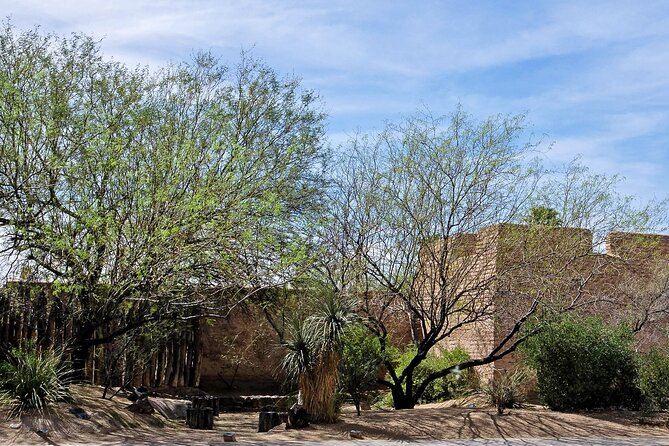
Start at 197 N Church Ave: Presidio stories you can walk through
Your tour begins at 197 N Church Ave, outside the Presidio San Agustín del Tucson Museum. This is an especially good opening because it starts with the earliest layer: the site was once an 11-acre Spanish fort. The audio focuses on what daily life likely looked like for early settlers in the late 1700s.
This matters because it puts downtown Tucson in context. Instead of treating the city as a collection of pretty buildings, you start with a reason for the layout—frontier settlement, defense, and how people lived when this area was still being established. When you start with the fort story, later stops about houses and mansions land with more meaning.
Practical tip: give yourself a minute to get the audio cued up before you step into the street. That way you start listening immediately, not while you’re trying to troubleshoot your phone on the sidewalk.
Adobe row houses and Casa de Cordova: Tucson domestic life in plain sight
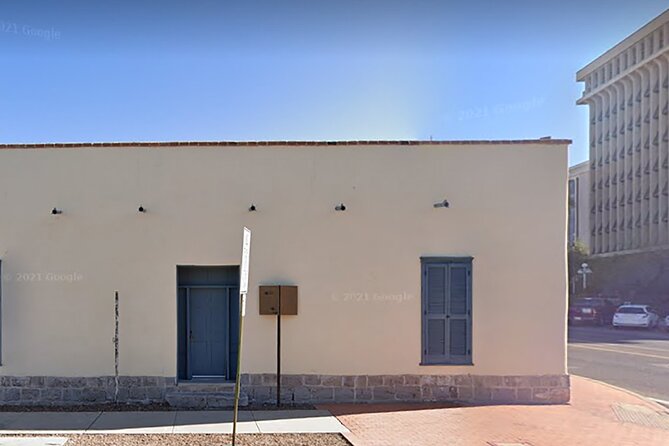
As you walk on, you’ll pass Sonoran row houses built with adobe bricks, including Casa de Cordova. The audio points out that it was restored and then dedicated by First Lady Betty Ford in 1974.
This segment is where downtown starts to feel human. Adobe row houses tell you about materials, climate thinking, and how people organized living space close together. And the Betty Ford dedication detail adds a modern layer: this isn’t just a site frozen in time; it was valued enough to restore decades later.
Possible drawback: if you’re expecting big interior access, this part is more about noticing the exterior and listening to the story as you pass. Bring patience for street-level learning.
Main Avenue mansions and the Tucson Museum of Art: wealth, design, and culture
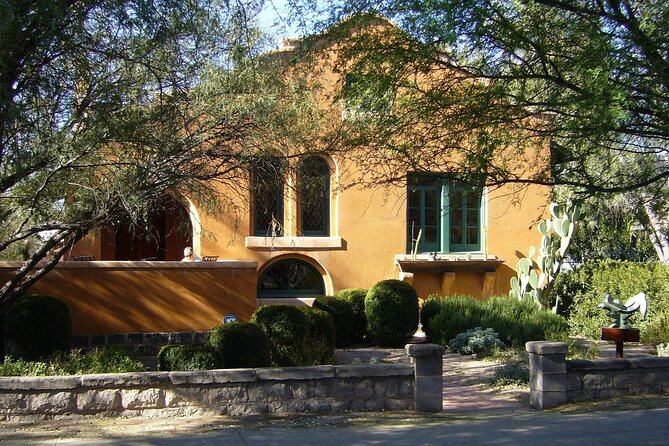
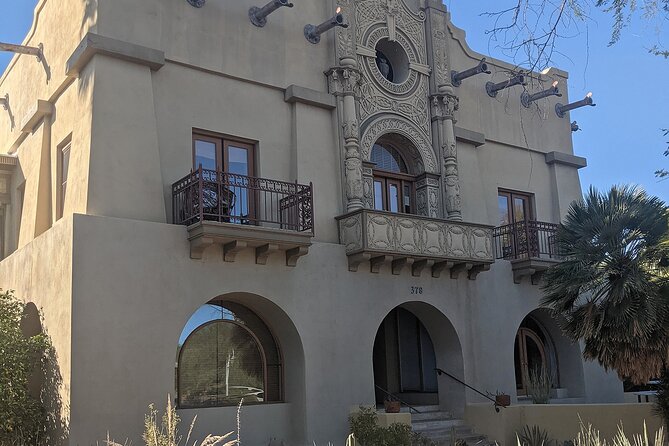
Next, the tour moves into what historians describe as mansions on main street, including the Tucson Museum of Art area. This is a key shift. You’re moving from settlement-era life toward the later period when downtown became a showcase—architecture used to signal status, taste, and permanence.
Even if you’re not a hardcore architecture nerd, this stop works because you’ll hear the idea behind the buildings. Tucson didn’t grow randomly; downtown development reflects changing wealth, changing industries, and changing cultural goals.
Tip for your walk: look up as you pass. Many of the most interesting details in mansion-era buildings are above eye level—rooflines, window shapes, and decorative elements.
Café a la C’Arte break: a food stop that fits the rhythm
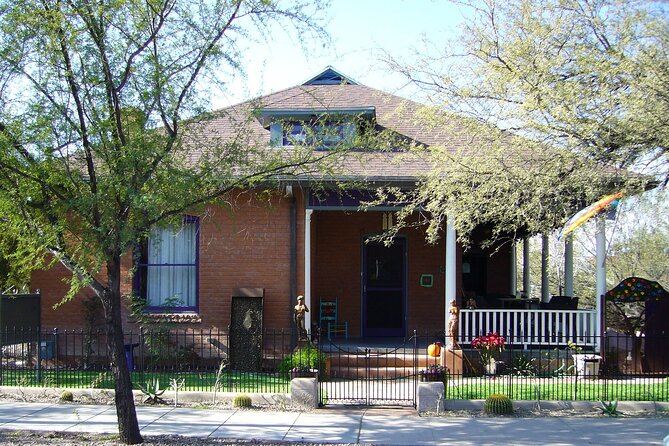
You’ll pass Café a la C’Arte, where you can find pastries. This is one of those practical “good timing” moments. The audio tour keeps moving, but you can step aside for a snack without derailing the whole experience.
Since food and drink aren’t included, treat this as optional. If you like having something in hand while walking downtown, this is a convenient place to do it. If you’d rather save your appetite, you can simply use the café as a landmark and keep your energy for the final restaurant.

J. Knox Corbett House: Trost and Holmes show up on Main Avenue
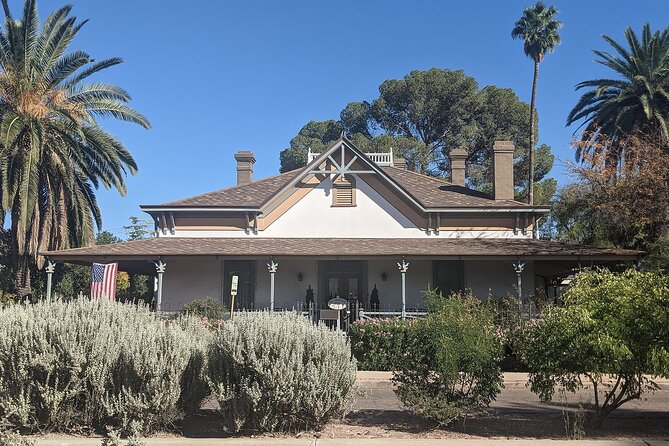
The audio then guides you past the J. Knox Corbett House, tying it to the look of many sophisticated 1890s and early 1900s mansions along Main Avenue. The story credits two innovative architects: Henry Trost and David Holmes.
This is a big praise-worthy part of the tour because it gives you names you can connect with what you’re seeing. Instead of a vague, generic “old building,” you get a more specific sense of who shaped the city’s architectural character. That makes your photos better too: you’re documenting a style with meaning, not just a façade.
What to watch for: don’t try to memorize everything while walking. Let the audio explain the why, then pause briefly afterward to look at a single façade element—something like the shape of a doorway, a window arrangement, or the overall massing.
Centennial Park and the Franklin House: stories continue as the street changes
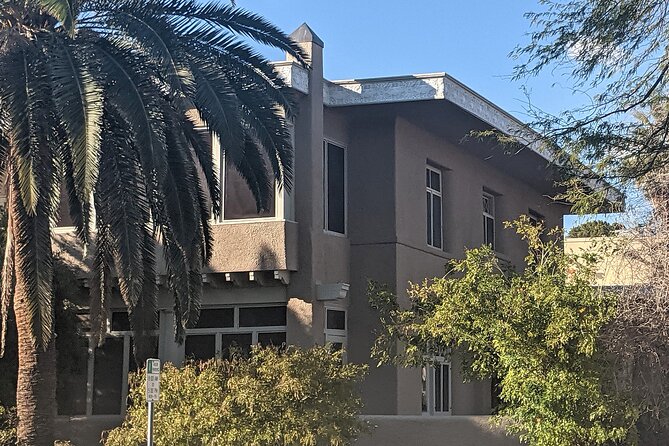
You’ll also pass Christopher Franklin Carroll Centennial Park, with audio that you’ll hear while you walk. Parks in downtown routes are more than breaks; they give you space to absorb how the city planned for public areas alongside private wealth.
Then you’ll pass by the Franklin House, where the audio focuses on the original owners. That’s a smart way to keep the tour from becoming purely architectural. Ownership stories help explain why buildings look the way they do, and how downtown became a stage for social status.
A quick practical note: if you’re sensitive about walking distance, this is where your pace matters. The tour is short, but there are multiple listening points. Keep your expectations realistic: you’ll likely want to take a few quick pauses, not nonstop marching.
El Presidio Bed and Breakfast: reuse and reinvention in the same block
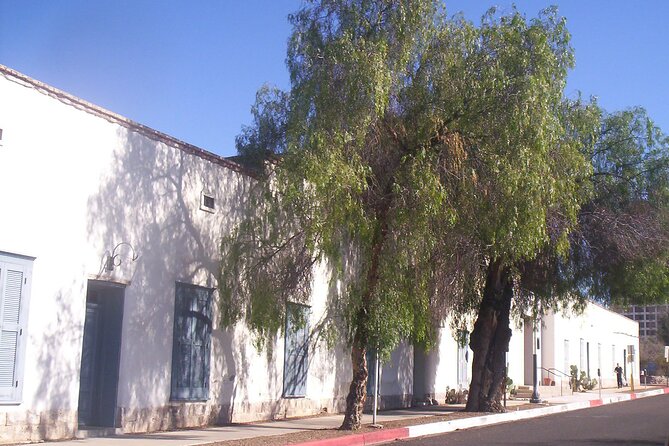
As you continue, you’ll pass El Presidio Bed and Breakfast, and the audio explains what the building was like under different owners. This is another reason I’d recommend the tour to first-time visitors: it shows continuity and change. Downtown isn’t just “old”; it’s repeatedly repurposed.
That makes the story feel current. A building can be historic and still function in modern life. You’ll finish the route with a better sense of why downtown Tucson can feel both nostalgic and alive at the same time.
End at El Charro Café: oldest Mexican restaurant energy, plus chimichanga
The tour ends in front of El Charro Café Downtown, at 311 N Court Ave. The audio calls it the oldest Mexican restaurant in Tucson, and notes it’s home of the chimichanga.
This is a great ending because it ties the city’s identity together. You started with Spanish fort settlement history, worked through adobe homes and architecture, then you close at a long-running downtown institution where food is a living tradition. The restaurant is open Monday through Sunday, 12:00 AM to 11:59 PM, so you’re not boxed in by the tour finishing at a specific hour.
If you want a seamless wrap-up: plan to arrive hungry. The walk itself doesn’t include food, but ending at a famous place like this makes it easy to turn your listening time into a full downtown outing.
Price and value: $8.99 that works if you’re ready for self-guided
At $8.99 per person, this tour sits in the “low friction” price range for a guided-style experience without needing a person to lead you. The value improves because you get lifetime access and offline materials—audio, maps, and geodata. If you’re the type who likes to revisit places later (or take a second short walk while the story is fresh), that lifetime access can be a real plus.
Where you might feel less value is if you’re not planning to use your phone for the tour. Since smartphones and headphones aren’t included, you’re buying into an audio experience, not a prepackaged walk where everything is handled.
My practical verdict: it’s good value if you’re comfortable with a self-guided audio format and you’ll actually stop to listen rather than treat it like background noise.
Timing and walking comfort: how to plan your 60–75 minutes
You’re looking at about 1 hour to 1 hour 15 minutes. That’s a realistic window for downtown, but the tour isn’t just a straight line. It’s a sequence of listening points, and you’ll probably want a few moments to look up at details or step aside when traffic feels close.
A smart move is to wear shoes you’d wear for an easy city stroll. Also, download the audio and maps before you go. Offline access is provided, but you still need your phone battery to last through the walk. For peace of mind, start with a phone charge level you’d trust for at least an hour of screen use plus headphones.
Who this tour fits best (and who may want something else)
This experience fits best if you:
- Like history and architecture and you enjoy learning as you walk.
- Prefer self-paced sightseeing rather than following a group.
- Want a short downtown plan you can repeat later thanks to lifetime access.
You may want to skip or pair it with another approach if you:
- Don’t want to rely on a phone and headphones.
- Prefer long museum time rather than street-level stories.
- Want a purely guided human-led format where questions can be answered on the spot.
Should you book the Downtown Tucson audio tour?
If you’re visiting Tucson and you want a simple way to understand downtown—from Spanish fort origins to Main Avenue mansion style—this is a solid pick. The price is reasonable, the route is compact, and the audio format is built for your pace.
The only thing that could sour the experience is tech readiness. Make sure your VoiceMap setup is working before you begin, bring headphones, and don’t start with a nearly dead phone battery. Do those basics and you’ll come away with a much clearer picture of how Tucson’s downtown identity formed.
FAQ
FAQ
How long is the Downtown Tucson audio tour?
It runs about 1 hour to 1 hour 15 minutes, depending on your pace and how long you stop at each point.
Where does the tour start?
The tour starts outside the Presidio San Agustín del Tucson Museum at 197 N Church Ave, Tucson, AZ 85701.
Where does the tour end?
It ends in front of El Charro Café Downtown at 311 N Court Ave, Tucson, AZ 85701.
Is the tour available in English?
Yes. The audio tour is offered in English.
Do I need my own headphones and smartphone?
Yes. Smartphone and headphones are not included, so you’ll need your own.
Does it work with offline access?
Yes. You get offline access to audio, maps, and geodata.
What app do I use for the tour?
The tour uses the VoiceMap app for Android and iOS.
Is it a group tour?
It’s a private experience/activity. Only your group participates.
Can I bring a service animal?
Yes. Service animals are allowed.
Can I cancel and get a refund?
Yes. You can cancel for a full refund if you cancel at least 24 hours before the experience start time. If you cancel within 24 hours, the amount you paid won’t be refunded.