REVIEW · MAUI
Self-Guided Audio Driving Tour in Road To Hana
Book on Viator →Operated by GuideAlong (GyPSy Guide) · Bookable on Viator
Your car becomes the tour guide. This self-guided Road to Hana audio drive uses GPS location-based autoplay so the narration lines up with what you’re seeing, plus you get local stories and practical tips as the road twists east toward Hana.
I love the way it helps you notice stuff you’d otherwise zip past, especially when cell service drops and the day gets busy. One more win: the commentary can feel like you’ve got a familiar voice riding with you, with listeners often comparing the narrator to Uncle George.
My second favorite part is the control. You can start and stop where you want, skip stops if your legs need a break, and still stay oriented with in-app trip planning. Even better, the tour is built to work offline once downloaded, so you’re not fighting spotty reception.
The main consideration is that some of the biggest stops come with extra requirements. Wai’anapanapa State Park needs reservations, and places like Haleakalā National Park require a pass—so budget a little for those items, since they’re not included.
In This Review
- Key points that make this Road to Hana audio tour work
- GPS-triggered audio that keeps your day on track
- Price and value: why $19.99 per group can be smart
- Offline listening: your phone setup checklist
- A Road to Hana day plan: 8 hours vs 16 hours
- Stop-by-stop guide: what each audio cue sets up
- Stop 1: Hana Highway (Road to Hana)
- Stop 2: Ke‘anae Arboretum
- Stop 3: Hana Lava Tube
- Stop 4: Ho‘okipa (wind, turtles, and watching surfers)
- Stop 5: Ke‘anae Point
- Stop 6: Twin Falls Maui
- Stop 7: Upper Waikani Falls (the 3 Bears Falls)
- Stop 8: Koki Beach (views and Pele stories)
- Stop 9: Hamoa Beach
- Stop 10: Wai‘anapanapa State Park (black sand and reservations)
- Stop 11: Pipiwai Trail (Haleakalā National Park hike and waterfalls)
- Managing the driving reality: curves, time, and “don’t do everything”
- Should you book this self-guided Road to Hana audio tour?
- FAQ
- How much does the Road to Hana self-guided audio driving tour cost?
- How long is the Road to Hana audio tour?
- Is the tour available in English?
- Do I need an internet connection during the drive?
- Can I start and end the tour along the route?
- Are park entrance tickets included?
- Do I need reservations for Wai‘anapanapa State Park?
- Do I need an NPS pass for Pipiwai Trail?
- How do I access the audio tour after booking?
- What happens if I cancel close to the start time?
Key points that make this Road to Hana audio tour work
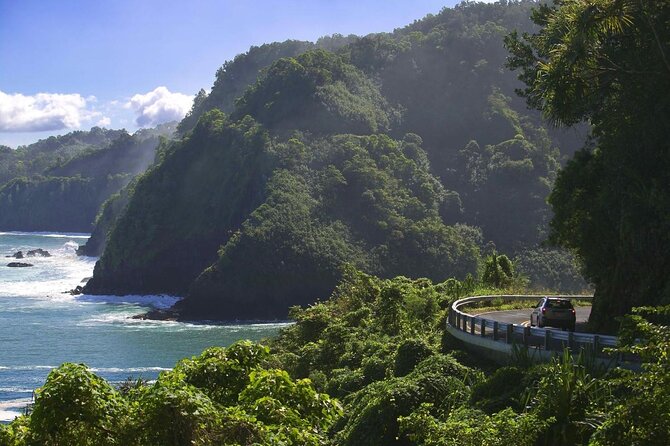
- GPS-triggered audio: commentary plays as your phone’s dot passes points of interest, even when there’s little or no cell service.
- Budget pricing per group: one purchase covers everyone in your vehicle (up to 8), which can beat the cost of bus tours fast.
- Offline-ready: pre-download the tour and keep listening all day without needing internet.
- Flexible itinerary: suggested stops, plus the option to create your own route or skip anything that doesn’t fit your mood.
- Cultural stories + practical driving cues: not just sights, but why the places matter and what to expect when you get out.
- Trail and beach reality checks: muddy trail warnings, no-lifeguard reminders, and swimming caution at windy beaches.
GPS-triggered audio that keeps your day on track

Road to Hana can feel like a full-time job: drive, park, hike, cool off, repeat—while the island keeps changing scenery every few minutes. This tour is designed for that rhythm. Your phone uses GPS to trigger the audio automatically as you pass along the route, so you’re not stuck staring at your screen or constantly pressing play.
What I like about this approach is that it reduces decision fatigue. Instead of trying to remember ten blog tips and half a dozen must-stops, you get guided prompts tied to real locations. It also helps you if you want to do this at a slower pace, because you can pause the day as needed and resume without losing your place.
Another big benefit: the tour is location-based, so you have flexibility on where and when you start and end along the route. That’s handy if you’re coming from Kula area (the stated meeting point) or if you need to adjust your schedule for traffic, weather, or energy.
You can also read our reviews of more tours and experiences in Maui.



Price and value: why $19.99 per group can be smart
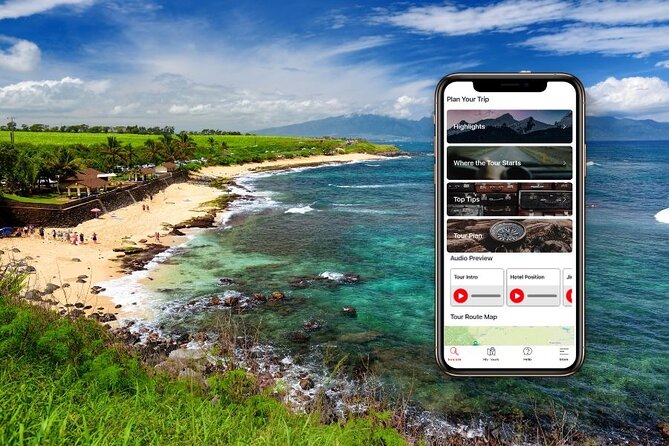
At $19.99 per group (up to 8), this audio tour is a budget-friendly way to experience the Road to Hana without paying per person the way many organized tours do. The real value shows up if you’re traveling with family or friends in one car. One purchase, your whole group listening together as you drive.
The tour also “earns its keep” because the Road to Hana day is long. If you use the audio for orientation, planning, and timing, you’re essentially paying for fewer missed turns, fewer wrong turns at trailheads, and better stop choices. And since the purchase has no expiry and includes free updates, you’re not stuck buying again on your next Maui visit.
Just remember the fine print reality: the audio tour is the guide, not the entrance ticket. Admissions and reservations for certain parks are not included, so you should treat this as value for guidance and planning—not as a bundle that covers every cost on the road.
Offline listening: your phone setup checklist
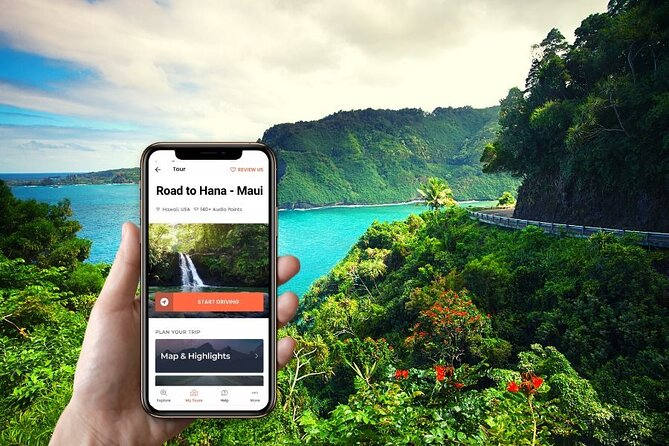
This experience is built for a day when service can be inconsistent. The tour works offline after you download it, which is exactly what you want on Hana Road. Before you go, download the tour under My Tours in the GuideAlong app and make sure it’s ready to play without relying on data.
Bring a charger. A simple USB or car charger makes a noticeable difference, because your phone is doing GPS work and playing audio at the same time. I’d also keep your brightness reasonable so you’re not draining the battery while checking parking or reading signage.
One more practical note: the tour uses your phone’s GPS chip. If you’ve ever watched your navigation dot lag behind on winding roads, give your GPS a moment to lock in before you start trusting it for cues.
A Road to Hana day plan: 8 hours vs 16 hours
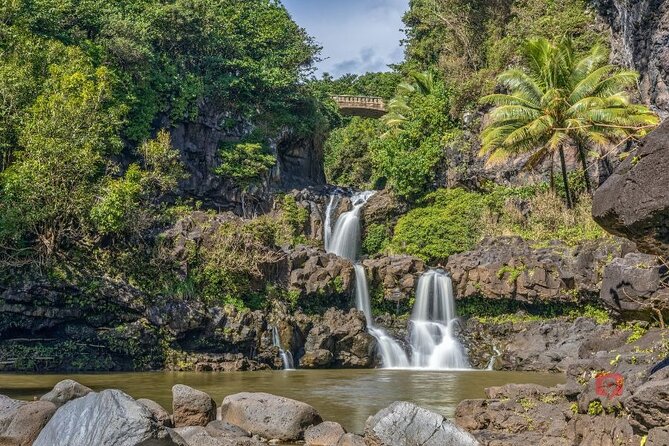
The tour estimate ranges from about 8 to 16 hours, and the difference comes down to two things: how many stops you choose and whether you commit to a longer hike like Pipiwai Trail.
If you want the shorter day, pick fewer get-out stops and focus on the beach-and-water breaks: places like Ho‘okipa, Hamoa Beach, and Wai’anapanapa State Park. If you want the fuller Hana experience, plan on more time for waterfalls and trails and expect that you’ll move slower overall.
A practical rule: start early. Many Road to Hana days get harder as the light fades, and driving the later hours on a twisty road isn’t fun. If you’re aiming for Pipiwai Trail, give yourself enough daytime to hike and still make the drive back at a comfortable pace.
Stop-by-stop guide: what each audio cue sets up





Stop 1: Hana Highway (Road to Hana)
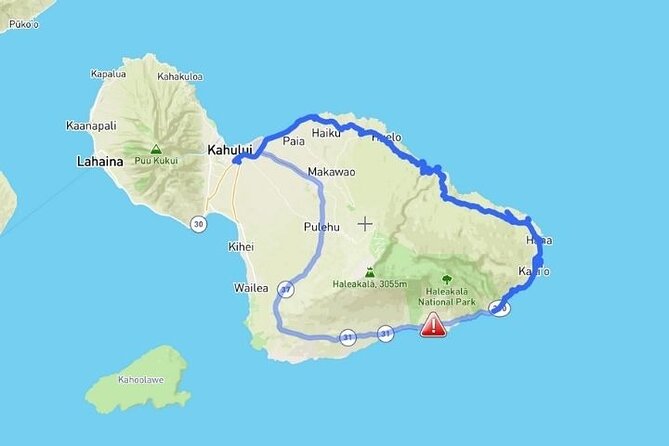
This is your “launch moment.” The narration starts by syncing with where you are on Hana Road, which means you can build your own itinerary on the fly. If you prefer structure, you can follow suggested half-day, full-day, or multi-day plans using the trip planners. If you’re the spontaneous type, you can create your own route along the tour areas.
What I like here is that the audio doesn’t treat every stop like a mandatory checklist. You’ll hear about upcoming highlights, then you decide whether the timing and your energy match.
Drawback to plan around: the Road to Hana is a real drive day, not a quick photo loop. Even with audio guidance, you’ll want a car day mindset—parking, walking, rain changes, and muddy ground all take time.
Stop 2: Ke‘anae Arboretum
Ke‘anae Arboretum is a quick win. It’s an easy stop with no cost, and you can be in and out in under about 30 minutes if you move efficiently. You’ll see tropical plants and familiar flavors of the island like ginger and papaya, plus golden-stemmed bamboo and hibiscus.
The standout is the chance to get up close to the Rainbow Eucalyptus with its bright, colorful bark. If you like photos, this stop gives you a lot of visual payoff without a big time commitment.
Then keep walking if you’ve got extra energy. The trail follows the Piinaau Stream and leads to terraced areas associated with ancient Hawaiian taro cultivation. It’s short enough to fit almost any schedule, and it adds meaning beyond “pretty plants.”
Stop 3: Hana Lava Tube
Hana Lava Tube is one of those Road to Hana stops that sounds simple but adds real adventure. It’s described as Maui’s most accessible lava tube, and you can go inside and explore as far as you feel comfortable.
If you’re claustrophobic, the good news is you don’t have to push all the way in. If you’re comfortable in caves, it’s a fun break from open-air sightseeing and gives you a totally different side of Maui’s volcanic story.
Consideration: this is still a cave environment. Wear shoes you’re comfortable walking on, and go at your own pace. The audio is a guide to what to look for, not a substitute for paying attention to the ground in low light.
Stop 4: Ho‘okipa (wind, turtles, and watching surfers)
Ho‘okipa is gorgeous, and it’s also not really a swimming beach. The area has constant winds and currents, so it’s better for chilling, spotting wildlife, and watching world-class windsurfers.
On the far right of the beach, you’ll often see turtles sleeping on the sand, and the tour notes that turtles can sleep in the water too. Keep your distance—don’t touch.
Facility-wise, this stop is practical: there are washrooms, showers, and some picnic areas. That makes it a good “pause button” when you need a bathroom break and want to settle in for 20–30 minutes.
Stop 5: Ke‘anae Point
Ke‘anae Point sits on a flat peninsula shaped by volcanic lava from Haleakalā. That lava created an ocean-side “oasis” that’s ideal for taro farming, and the area also includes a picturesque church built from coral and lava rock.
This is a stop for views and wandering. Watch the waves crash against the rocky outcrops, and you might spot coconuts along the shoreline. It’s short, scenic, and useful as a break between bigger attractions.
If you’re sensitive to sun or wind, plan for that too. This area is exposed, and the road day can get hot even when the rainforest feel is coming and going.
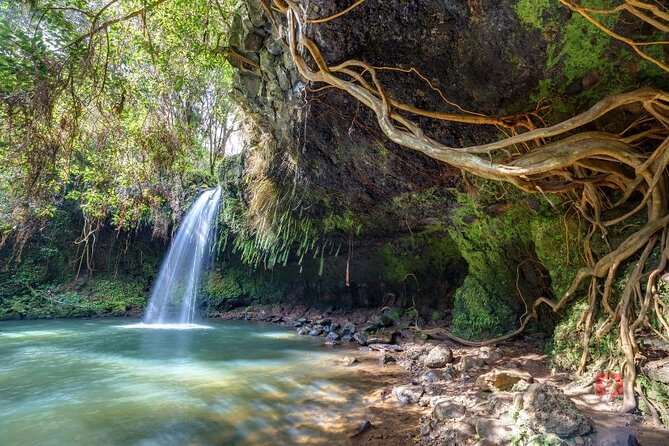
Stop 6: Twin Falls Maui
Twin Falls is often the first spot where you’ll want to get out of the car and stretch your legs. The short hike is described as about 1.5 miles, and there’s a trail choice based on how far you want to go.
It’s also frequently muddy, so wear shoes you trust. Bamboo forest shows up along the way, which makes the hike feel like you’re walking through living green walls rather than a typical roadside stroll.
The tour also points out a farmstand as a good place for breakfast and a tropical fruit smoothie. That’s a smart strategy for a long day: fueling here can save you from eating whatever is closest later.
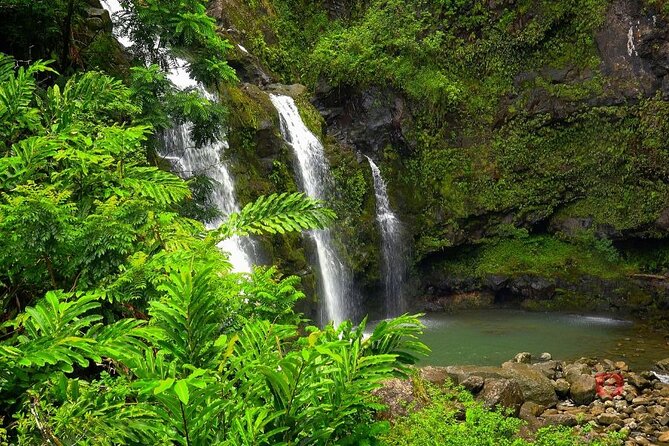
Stop 7: Upper Waikani Falls (the 3 Bears Falls)
Upper Waikani Falls is popular because it changes with rainfall. When it’s been raining heavily, the water can pour as one thick stream, compared to the story of one big bear. When water flow is lighter, it breaks into three separate falls—one large, one medium, and one small, matching the idea of the three bears.
That interpretation is exactly what audio guidance is good for. It sets your expectations so you don’t show up hoping for one waterfall look and feel disappointed if the day’s water level is different.
Typical duration is short (about 20 minutes), which makes it a good fit if you’re trying to balance hikes with beaches and that end-of-day national park moment.
Stop 8: Koki Beach (views and Pele stories)
Koki Beach is paired with the turnoff to Hamoa Beach, and it’s timed well for a quick stop to reset. You’ll get a view toward an ex-cindercone that created Alau Island, which sits about a quarter mile offshore.
This spot is also tied to Hawaiian legends about Pele (goddess of volcanoes) and Maui. That makes it more than a photo pause; it’s a place where the island’s stories and geography line up.
Time here is usually brief (around 20 minutes), but it’s a nice way to break the drive rhythm before you move on to the more time-intensive beach stop.
Stop 9: Hamoa Beach
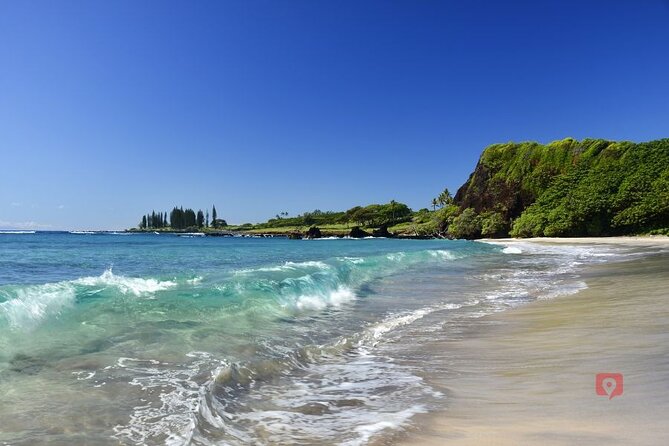
Hamoa Beach is a small crescent of sand that works well for a leg stretch and a cool-off. It’s described as family-friendly when conditions are calm, but the key reminder is that there are no lifeguards.
There are public bathrooms and showers, so it’s comfortable for a longer hang than you might expect from a beach stop. Since the road day can be tiring, this is a good place to take your shoes off and just reset your body for the next drive segment.
Practical caution: keep a close eye on younger visitors. Without lifeguards, it’s all about your own supervision.
Stop 10: Wai‘anapanapa State Park (black sand and reservations)
Wai’anapanapa State Park is the headline stop for many Road to Hana days. You’re there for Maui’s most famous black sand beach, plus the volcanic coastline features like a sea arch and a blowhole.
The tour notes that reservations are required for entry. That matters for planning because if you show up without the right booking, your day can fall apart fast.
Plan to spend about two hours here. That’s enough time to walk the beach area, look for the sea arch and blowhole, and still take in the legend-heavy feeling of the place. This is also one of those stops where the audio helps you know what you’re looking at, even if the scenery is crowded.
Stop 11: Pipiwai Trail (Haleakalā National Park hike and waterfalls)
Pipiwai Trail is the one hike most people remember. It’s located at Oheo Gulch/Kipahulu area inside Haleakalā National Park, so you’ll need to show your NPS pass for entry or purchase one on arrival.
The full hike is described as a 4-mile loop with about 650 feet of elevation gain. It’s called moderate, but heat can make it feel harder. The route includes bamboo forest sections that are quiet and peaceful, plus Makihiku Falls as a mid-hike reward.
If you keep going, the highlight is Waimoku Falls, the furthermost point on the route. The tour also suggests an important timing strategy: if you want plenty of time, aim to reach the trail by about 2pm, since it often takes 2+ hours depending on fitness and conditions.
Practical caution: this is a hike day inside a national park. Bring the right footwear and pace yourself. The audio can help you manage the rhythm, but your legs still need to cooperate.
Managing the driving reality: curves, time, and “don’t do everything”
Road to Hana is a long day on a road with lots of turns and stop-and-go moments. Even with GPS cues, you’re dealing with real driving conditions, parking, and changing weather.
Here’s how to use the flexibility well:
- If you’re doing Pipiwai Trail, don’t overpack the morning with every short waterfall and beach. Build a realistic order.
- If you’re mostly beach-focused, save time by skipping the longer hike and using the audio for the quicker stops.
- Don’t force a stop just because it’s on your mental list. The audio itinerary is designed so you can skip—and still enjoy the day.
A small mindset shift helps: think of this as a guided route with optional chapters, not a strict schedule. That’s where the audio tour shines for independent travelers.
Should you book this self-guided Road to Hana audio tour?
Book it if you want a budget-friendly way to get local stories, accurate location-based prompts, and offline audio on a day when service can be unreliable. It’s especially strong if you’re traveling in a group in one car, since one purchase covers up to 8 people.
Skip it or be cautious if you’re planning a day with no flexibility at all. Because some major stops require reservations or passes you must arrange separately, you’ll want to prep those pieces ahead of time. Also, if you hate the idea of managing a self-driven road day, a bus or private guide might feel easier.
My take: this is one of the smarter ways to do the Road to Hana on your own terms. You get the structure of a guide, with the control of driving your own schedule.
FAQ
How much does the Road to Hana self-guided audio driving tour cost?
It’s listed at $19.99 per group (up to 8 people).
How long is the Road to Hana audio tour?
Plan for about 8 to 16 hours, depending on how many stops you include.
Is the tour available in English?
Yes, it’s offered in English.
Do I need an internet connection during the drive?
No. After you download the tour in the app, it works offline, and you do not need cell service to hear the audio.
Can I start and end the tour along the route?
Yes. The audio plays based on your GPS location, so you can start and end anywhere along the tour route.
Are park entrance tickets included?
No. Admission tickets are not included for the stops that require paid entry.
Do I need reservations for Wai‘anapanapa State Park?
Yes. Wai’anapanapa State Park requires reservations for entry.
Do I need an NPS pass for Pipiwai Trail?
Yes. Pipiwai Trail is inside Haleakalā National Park, so you’ll need to show your NPS pass for entry or purchase one on arrival.
How do I access the audio tour after booking?
After booking, you’ll receive an email and text with instructions to download and redeem your voucher code in the GuideAlong app using your Apple or Google account.
What happens if I cancel close to the start time?
You can cancel for a full refund up to 24 hours before the experience start time. If you cancel within 24 hours, the amount paid is not refunded.