REVIEW · TOKYO
Tokyo: Sumo Keiko Training Tour with Audio Guide & Photo
Book on GetYourGuide →Operated by NexSpark Co., Ltd. · Bookable on GetYourGuide
Up close sumo practice changes your view. I love the real training session atmosphere and how close you get to wrestlers doing their work, not just posing for photos. I also like having the multilingual audio guide and pamphlet so you can follow what you’re seeing. One thing to consider: the rules are strict, so plan around no sunglasses and no flash photos, plus a quiet viewing style.
This is the kind of Tokyo activity that feels old-school. You start at Nakamura-beya Sumo Stable—just about 2 minutes from JR Ryogoku Station—and you can even line up the Sumo Museum and the Tokyo waterfront afterward since everything’s close on foot. The single drawback is simple: late arrivals shorten your viewing time, so you’ll want to get there early and settle in.
In This Review
- Key things that make this Tokyo sumo tour worth it
- Nakamura-beya in Ryogoku: where the practice happens
- What the keiko viewing feels like: quiet, close, and rule-based
- Audio guide and pamphlet: how you’ll actually understand what you’re seeing
- Photo with sumo wrestlers: your souvenir with real constraints
- Comfort that matters in Tokyo: A/C, Wi‑Fi, charging, and seating reality
- Timing: the 40–90 minute window and why you should arrive early
- Getting there fast: meeting point tips near JR Ryogoku Station
- After the session: Ryogoku Kokugikan (Sumo Museum) and the Tokyo waterfront
- Price and value: why $85 can make sense here
- Who this tour fits best (and who should think twice)
- Should you book this Nakamura-beya sumo training tour?
- FAQ
- Where is the meeting point for the tour?
- How long is the tour?
- What languages are included?
- Do I need my own earphones for the audio guide?
- Can I take photos during the training?
- Are sunglasses or bare feet allowed?
- Is there an age limit?
Key things that make this Tokyo sumo tour worth it
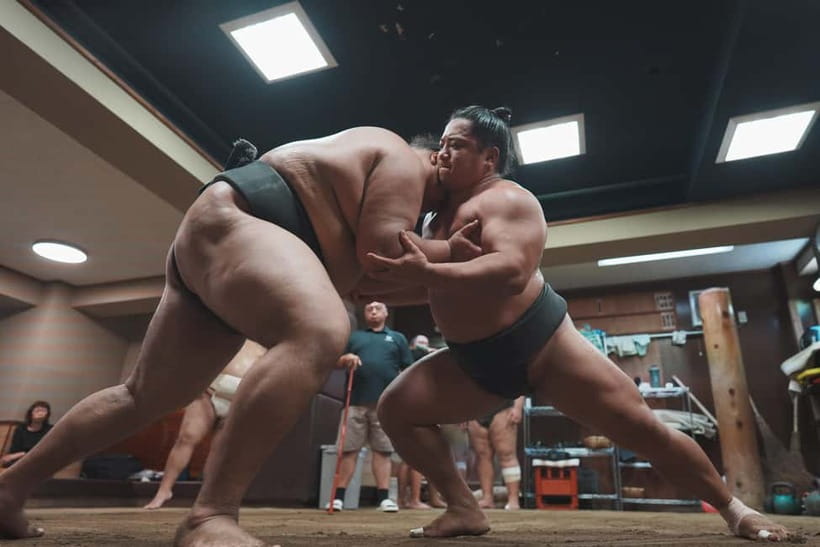
- Nakamura-beya location in Ryogoku: the stable is by Ryogoku Kokugikan National Sumo Arena, so you’re right in the sumo zone.
- Live training access, up close: you’re watching professional practice, not a staged show.
- Audio guide in multiple languages: you get explanations covering sumo history, ranks, and training techniques.
- Photo with sumo wrestlers: you leave with a real souvenir of your visit.
- Comfort features that actually help: air-conditioning, free Wi‑Fi, and charging stations in the viewing area.
- Clear etiquette rules: you’ll know how to behave so the experience stays respectful and calm.
Nakamura-beya in Ryogoku: where the practice happens
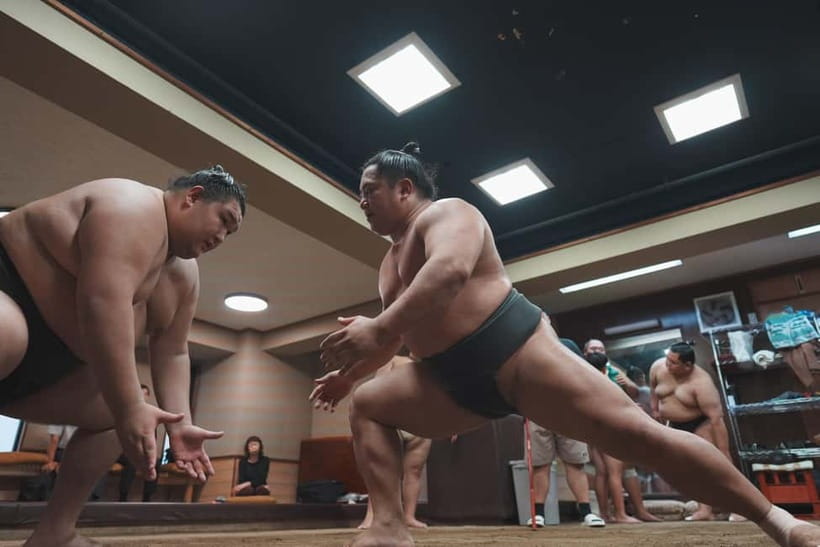
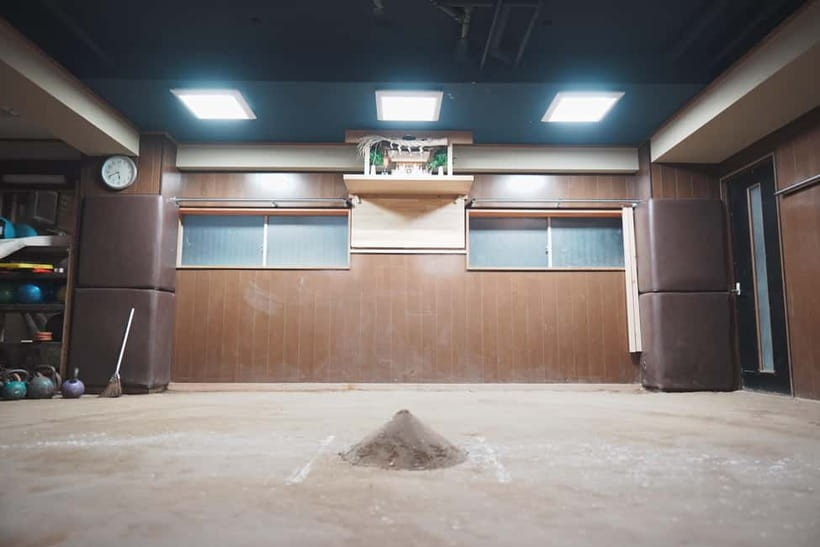
Ryogoku is where Tokyo keeps its sumo heartbeat. This tour places you at Nakamura-beya Sumo Stable, which is extremely convenient: it’s about 2 minutes from JR Ryogoku Station and right by the Ryogoku Kokugikan National Sumo Arena. That means you can keep your day simple. No long taxi rides, no cross-town juggling, and less “where do we go next” stress.
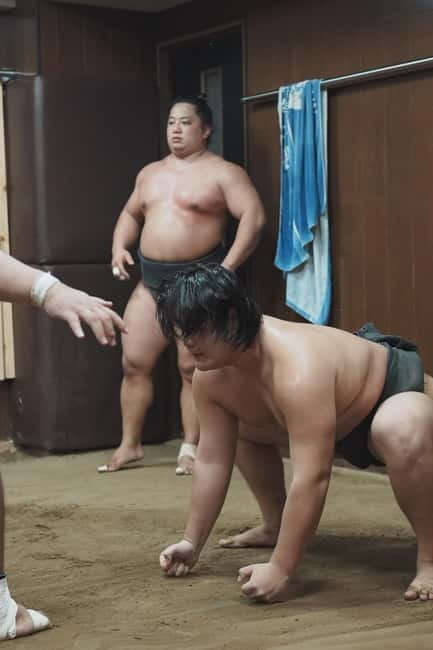
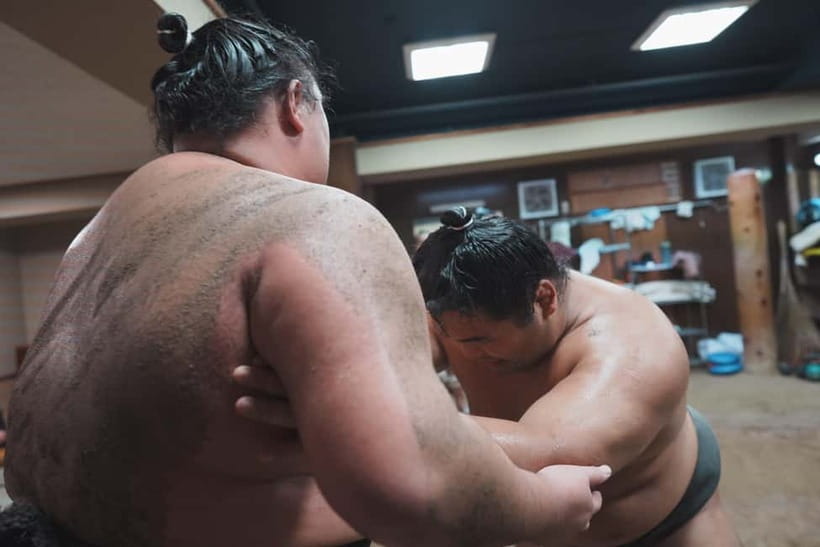
You’re not just going to a museum display. You’re stepping into a working stable environment where pro wrestlers practice. Even if you already know sumo basics, seeing practice up close tends to sharpen your eye. You notice how much effort goes into routines, how everything is paced, and how focused the space feels.
The venue is also set up for visitors. It’s air-conditioned, with free Wi‑Fi and charging stations, which is a big deal on a warm day in Tokyo (and handy if you’re using your phone for the audio guide). You’ll also get a training session pamphlet that supports what you’re hearing.
You can also read our reviews of more tours and experiences in Tokyo.

What the keiko viewing feels like: quiet, close, and rule-based
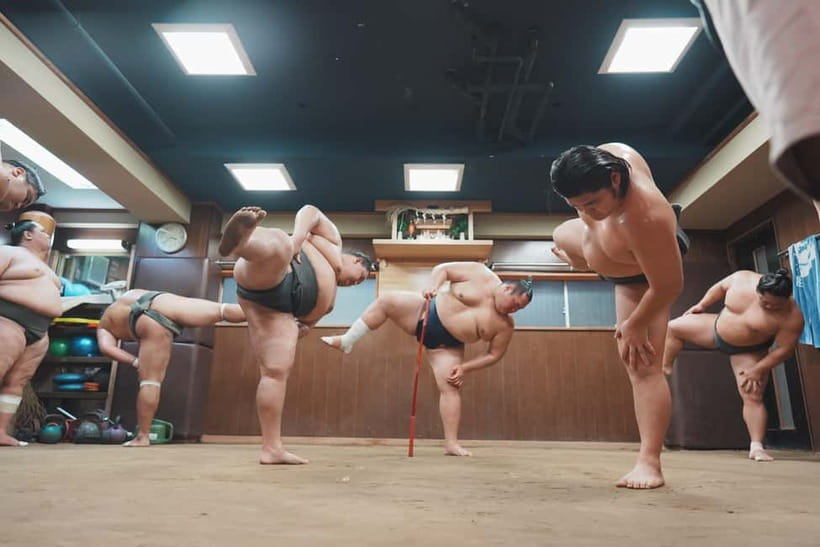
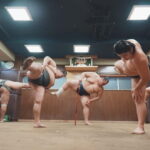
The main event is the live training session. You watch professional wrestlers practicing in a real setting, and it feels special because it’s not performed for your camera. There’s a clear vibe: respect the practice, stay quiet, and let the action happen around you.
That matters because the etiquette is part of the experience. You’ll be asked to refrain from speaking during practice and watch quietly. If you’ve visited other cultural shows where people talk through everything, you’ll appreciate this more. It’s calmer, and you can actually pay attention to what’s going on.
Photography is allowed, but with limits. You can take photos, just no flash photography. You’re also not allowed to wear sunglasses, and you can’t have bare feet. Those details may sound small, but they shape the atmosphere. The event stays visually respectful, and it also helps the staff manage the space safely.
If you’re thinking, Will I feel too restricted?—consider this: the rules protect what you came for. A quiet, no-flash practice view is one of the reasons the whole experience feels rare and authentic.
Audio guide and pamphlet: how you’ll actually understand what you’re seeing
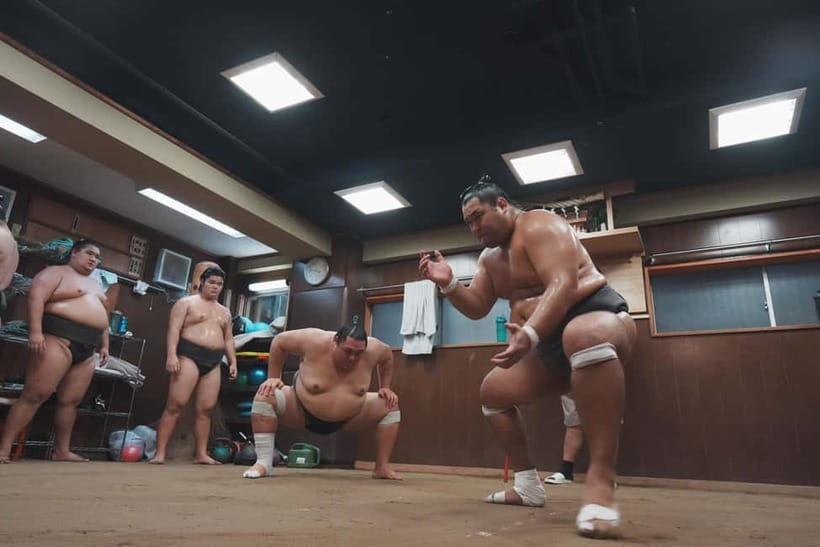
Here’s the practical advantage: you’re not relying on memory or a sketchy guidebook. You get an audio guide in multiple languages plus a sumo keiko explanation pamphlet. The audio guide covers sumo history, ranks, and training techniques, so you can follow the bigger picture as the session runs.
The key tip is about listening setup. You should bring your own earphones to use with your phone. If you forget, the tour can lend you a pair, so you’re not stuck. Still, having your own earphones makes it smoother—you won’t waste time waiting or adjusting.
Also, keep your expectations realistic. The tour has a fixed viewing time, so the best strategy is to use the audio guide as your running commentary. Don’t try to read every word on the pamphlet during action. Instead, glance at it when it calms down, then let the audio do the explaining while you watch.
This is especially valuable if you don’t want sumo to be just a spectacle. The audio support helps you connect what you’re seeing to the sport’s structure—history, ranks, and training methods—so you come away feeling like you learned something, not just saw something.
Photo with sumo wrestlers: your souvenir with real constraints
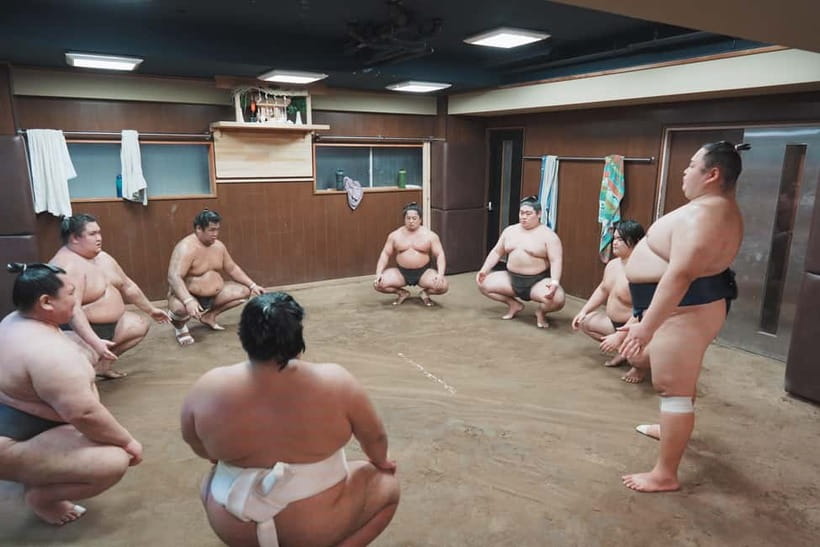
One of the most memorable parts is the included photo with sumo wrestlers. That’s not a generic group shot from far away. It’s part of the experience, and it’s the kind of memento that actually matches what you felt during the training.
But photography has rules during the practice itself:
- No flash photography
- No sunglasses
- You’ll likely be asked to follow staff instructions about where to stand
The best way to make the photo moment painless is to keep your phone charged and ready. The venue has charging stations, which helps. Still, don’t gamble with battery life, especially if you also want to take regular photos after the photo portion.
If you’re someone who likes documenting experiences, you’ll probably feel relieved here: photography is allowed. You just need to play it the respectful way—no flash, follow staff directions, and keep the focus on the wrestlers, not the camera.
Comfort that matters in Tokyo: A/C, Wi‑Fi, charging, and seating reality
Tokyo summers and shoulder seasons can be tough, and this tour builds in comfort. The viewing area is air-conditioned, plus there’s free Wi‑Fi and charging stations. That means you’re not trapped in a hot room waiting out the session, and you’re not forced to ration phone use.
Seating is worth noting because it affects how you enjoy the full 1.5-hour viewing period. There are bench chairs available, but only a limited number. Priority goes to visitors with disabilities. If you don’t fall into that category, you’ll sit on cushions for about 1.5 hours. In other words: plan for sitting on cushions for a while, especially if you have back or knee issues.
If you want the most comfortable setup available to you, arrive early. Not because your arrival changes the content, but because it gives you the best chance to settle in smoothly before the session starts.
Timing: the 40–90 minute window and why you should arrive early
The tour duration is listed as 40 to 90 minutes, depending on the session start time. Inside that window, the training viewing itself runs about 1.5 hours. The important practical point: you can’t be late.
Late arrivals shorten viewing time, and there are no extensions. That’s a real deal in a schedule like this. So if you’re trying to fit it around other plans—Sumo Museum, lunch, or a walk along the waterfront—build in buffer time and don’t rush your way there.
Also, use restrooms before joining. Once you’re in, you should be prepared to stay with the group and follow staff cues.
This is one of those activities where “close to the station” helps, but it doesn’t remove the need for punctuality. Be on time and you’ll enjoy more of the session, with less stress.
Getting there fast: meeting point tips near JR Ryogoku Station
Your starting point is Nakamura-beya Sumo Stable. It’s close to transit: about 2 minutes from JR Ryogoku Station, plus it’s next to Ryogoku Kokugikan National Sumo Arena. That’s a big advantage because you can plan a walk-based day in this area.
If you prefer planning ahead, there’s an included directions video link, which can help you spot the stable area quickly. Use it the day of—Tokyo signage is good, but it’s still easier when you already know what street-level landmarks to look for.
Don’t expect pick-up or drop-off. You’ll need to make your own way to the stable and back out again. The upside is you can stay flexible with your day because you’re not tied to a vehicle schedule.
After the session: Ryogoku Kokugikan (Sumo Museum) and the Tokyo waterfront
The tour doesn’t leave you stuck in one room. Once the practice ends, you can head out to two nearby options on foot:
- Ryogoku Kokugikan (Sumo Museum)
- The Tokyo waterfront area
This is why the location is so smart. You’re not only getting access to a practice session; you’re also getting a built-in plan for the rest of your afternoon or morning. Ryogoku is a compact pocket, and walking keeps it easy.
A good strategy is to pace yourself. If you’re photographing and listening carefully during the session, your energy will be more limited afterward. So consider a museum visit next, then a lighter stroll toward the waterfront when you’re ready.
Price and value: why $85 can make sense here
At $85 per person, this isn’t a “cheap and cheerful” activity. The value comes from what’s bundled:
You get:
- Entry to a real live training session
- A photo with sumo wrestlers
- A sumo keiko explanation pamphlet
- A live guide who speaks English, Japanese, and Korean
- An audio guide in multiple languages covering history, ranks, and training techniques
- Air-conditioning, plus free Wi‑Fi and charging
- A very convenient Ryogoku meeting point near JR
When you add that up, the price feels more reasonable than it first appears. A standalone museum ticket gives you information, but it doesn’t give you the working stable experience and the photo.
If you’re a sumo fan, the included photo and audio support can tip it into “worth every yen.” If you’re new to sumo, the explanations matter because they help your viewing time turn into understanding, not just staring.
Who this tour fits best (and who should think twice)
This tour is a strong match if you want:
- A close-up look at how professional sumo practice works
- Explanations during the session, not just after
- A comfortable setting with A/C, Wi‑Fi, and charging
- A guided experience with audio in your preferred language option
It’s also a great fit for people who already know sumo basics. Watching practice up close tends to add a new layer of respect because you see the routine details and the intensity of training.
On the other hand, it’s not ideal for very small kids. The minimum age is 6 years old, and it’s specifically not suitable for children under 6. The environment is also rule-heavy—quiet viewing, no flash, and no sunglasses—so children who can’t manage attention might find it harder.
If you hate sitting on cushions for around 1.5 hours, plan carefully. Bench chairs are limited and prioritized for visitors with disabilities, so most guests will be on cushions.
Finally, if you’re the type who wants a loud, interactive show, you may feel out of place. The experience is respectful and quiet by design.
Should you book this Nakamura-beya sumo training tour?
I’d book it if your goal is authentic access: professional training, an included photo, and guided context so you don’t just watch—you understand. The Ryogoku location makes it easy to connect the session with other things nearby like the Sumo Museum and a waterfront walk.
Skip it or at least think hard if you’re worried about rules (no sunglasses, no flash), sitting comfort, or being on time. This tour rewards punctuality and quiet focus.
If you can handle those basics, this is one of the better ways to experience sumo in Tokyo without turning it into a tourist-only performance.
FAQ
Where is the meeting point for the tour?
The tour meets at Nakamura-beya Sumo Stable, which is about 2 minutes from JR Ryogoku Station and next to Ryogoku Kokugikan National Sumo Arena.
How long is the tour?
The duration is listed as 40 to 90 minutes, depending on the available starting time. The visit portion is about 1.5 hours.
What languages are included?
You get an audio guide with multiple language options (including Chinese, English, French, German, Hindi, Italian, Japanese, Korean, Polish, Spanish, and Portuguese). There is also a live guide speaking English, Japanese, and Korean.
Do I need my own earphones for the audio guide?
You should bring your own earphones to use with your phone. If you don’t have them, the tour can lend you a pair.
Can I take photos during the training?
Photography is available, but no flash photography is allowed.
Are sunglasses or bare feet allowed?
No. Sunglasses and bare feet are not allowed during the experience.
Is there an age limit?
Yes. The minimum age is 6 years old, and it isn’t suitable for children under 6.