REVIEW · TOKYO
Tokyo: Open Top Panoramic Sightseeing Bus with Audio Guide
Book on GetYourGuide →Operated by VIP Japan Tour · Bookable on GetYourGuide
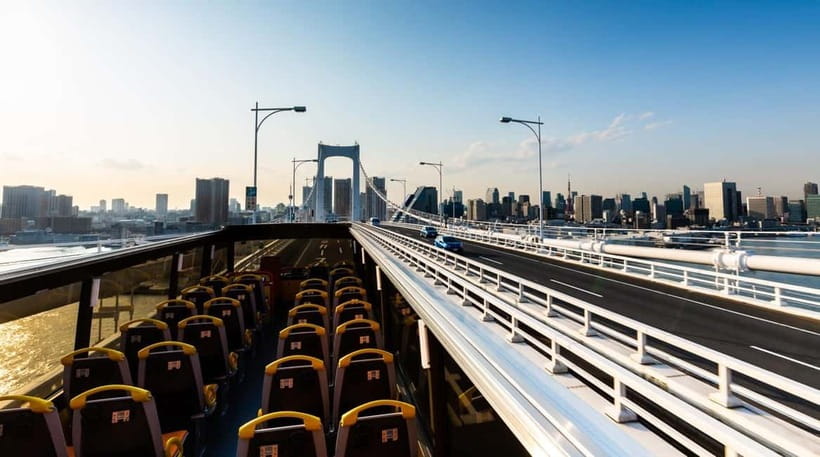
Tokyo looks different when the sky is part of it. This 70-minute open-top panoramic bus ride is a fast, low-stress way to cover major sights while you hear what you’re seeing through a GPS-enabled audio guide.
What I like most is the GPS audio guide that stays tied to the bus’s location, plus the option of two distinct loops: the Bay Course and the City Course, both built around Tokyo’s biggest photo stops. One thing to keep in mind: this is an open-top experience, so comfort depends a lot on weather, and rain can mean the roof is closed.
In This Review
- Key Points at a Glance
- Why This Open-Top Bus Works for a First Tokyo Shot
- The GPS Audio Guide Setup: What You’ll Actually Hear
- Headphones: worth planning for
- Audio volume reality check
- Bay Course (70 Minutes): Tokyo Tower, Rainbow Bridge, and Odaiba Views
- What makes the Bay Course a smart value
- The main drawback to plan around
- City Course (70 Minutes): Imperial-Era Areas to Roppongi and Ginza
- When the City Course makes the most sense
- Tokyo Station Red Brick as a Starting Anchor
- Comfort, Rules, and the Small Stuff That Matters
- Knee space and weather
- Meeting at Tokyo VIP Lounge: How to Avoid the First-Minute Stress
- Value for $11: What You’re Buying in 70 Minutes
- Who Should Book This Bus Tour (and Who Should Skip It)
- Should You Book This Tokyo Open-Top Bus Tour?
Key Points at a Glance
- Two 70-minute route choices (Bay or City) built for different Tokyo vibes, from waterfront views to skyline streets
- GPS-enabled audio in multiple languages with location-based guidance so you’re not guessing what you’re passing
- Big-name landmarks on both routes, including Tokyo Tower, Rainbow Bridge, Ginza, and more
- Headphones are optional (100 Yen), and the audio setup uses a 3.5mm mini-plug jack
- No live guide onboard, so the audio is the main storyteller
- Weather matters because the open-top experience may be closed in rain
Why This Open-Top Bus Works for a First Tokyo Shot
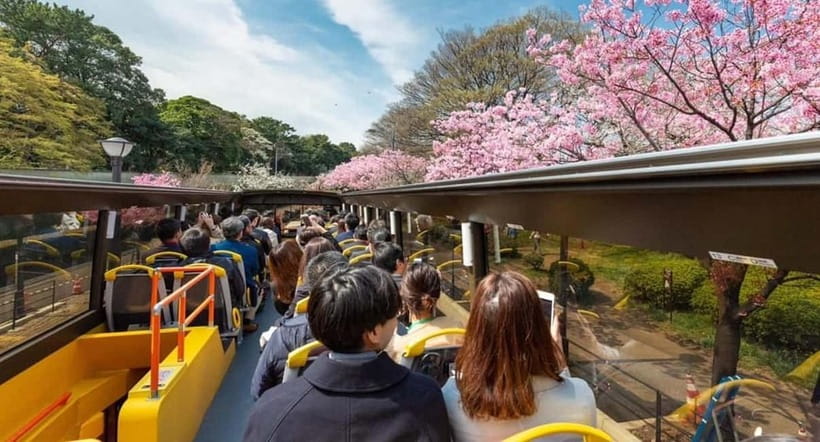
If Tokyo is your first stop on a Japan trip, you need two things: speed and clarity. This tour is built for that. You’re not expected to plan a route, read station maps, or figure out which neighborhoods connect best. You ride a loop, look around from above street level, and let the audio do the explaining.
The open-top part matters more than people think. Tokyo’s “small details” are everywhere, but from the ground they can blur together fast. From the bus, you get a stitched-together view: where Tokyo Tower sits in relation to Ginza, how Rainbow Bridge fits into the bay area, and how far-reaching the city skyline really is.
The other win is the audio approach. It’s GPS-driven and designed to stay aligned with where the bus is, which means less “wait, what is that?” and more “oh, that’s why it’s famous.”
You can also read our reviews of more tours and experiences in Tokyo.
The GPS Audio Guide Setup: What You’ll Actually Hear
This tour uses a GPS-enabled audio guide system with support for Japanese, English, Chinese, French, Korean, Vietnamese, and Thai. Instead of a one-size-fits-all track that plays at fixed time intervals, the system is designed to connect the audio to the bus’s location as the route moves.
That has two real benefits for you:
- You’re less likely to miss the story because you blinked or looked the wrong way for a second.
- If road conditions change and the bus timing shifts, the audio is meant to stay on topic.
Headphones: worth planning for
Headphones are not included, but you can buy them onsite for 100 Yen. The headphone jack supports 3.5mm mini plugs. If you already pack your own wired headphones, you’ll be ready. If you don’t, it’s an easy add—but remember that headphones are the difference between hearing clearly and fighting ambient bus noise.
Audio volume reality check
A couple of reviews pointed out that the audio experience can be affected by background music between segments, and that a live Japanese announcement (over loudspeaker) can sometimes compete with the audio guide. Translation: treat the audio as helpful, not surgical. If you’re sensitive to sound layering, bring your own headphones and keep expectations realistic on a moving bus.
Bay Course (70 Minutes): Tokyo Tower, Rainbow Bridge, and Odaiba Views
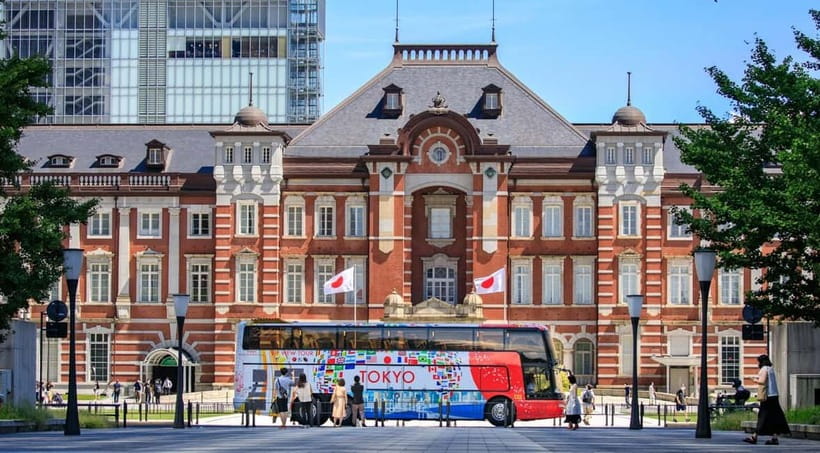
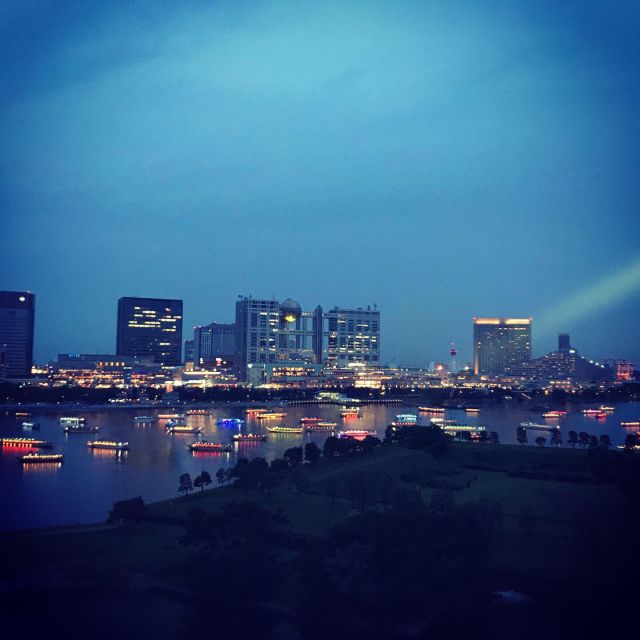
If you want that classic Tokyo “waterfront meets neon” feeling, the Bay Course is the one. This loop mixes central Tokyo landmarks with bay-side icons, so you get both the traditional and the futuristic in one pass.
Here’s the arc you’ll ride through, in the order it runs:
- Tokyo Station Red Brick Building → Marunouchi: You start with a big, recognizable Tokyo landmark area. It’s a strong reset moment before the views start stacking up.
- Zojoji Temple → Tokyo Tower: This pairing works because you can visually feel Tokyo’s contrast. A historic temple presence is close to one of the city’s most iconic towers.
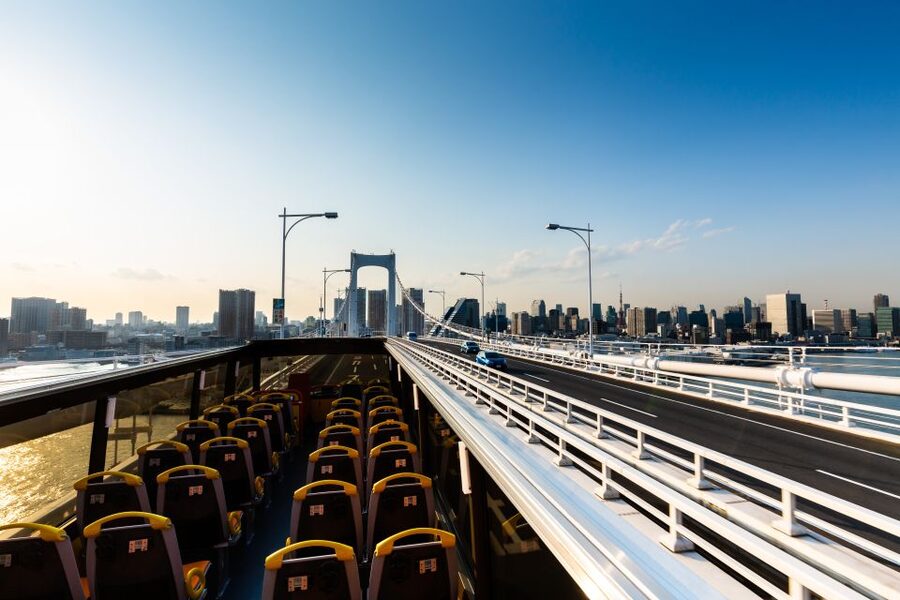
- Shibaura Rainbow Bridge (1st Level): This is one of those Tokyo “wow” moments because you’re getting a broad look at how the city connects across the bay.
- Fuji TV Building → Statue of Liberty: You get a mix of modern pop-culture architecture and the famous Liberty-style structure that signals the Odaiba area vibe ahead.
- Odaiba Seaside Park → Rainbow Bridge (2nd Level): Odaiba is often about the big bay views and wide angles. Riding past both levels of Rainbow Bridge gives you that sense of scale.
- Shiodome → Ginza: Ending in Ginza keeps things practical. It’s one of the easiest areas to continue your day on foot or by transit.
What makes the Bay Course a smart value
This route gives you a lot of “Tokyo set pieces” without requiring multiple transfers. In about 70 minutes, you’re seeing the kind of places that usually take half a day to reach and cross-check.
The main drawback to plan around
Because it’s an open-top bus, your best photos will depend on weather and roof status. If rain hits and the roof is closed, you’ll still get the landmarks, but your “sky open” effect (and sometimes photo angles) will be reduced. Dress for comfort, not just looks.
City Course (70 Minutes): Imperial-Era Areas to Roppongi and Ginza
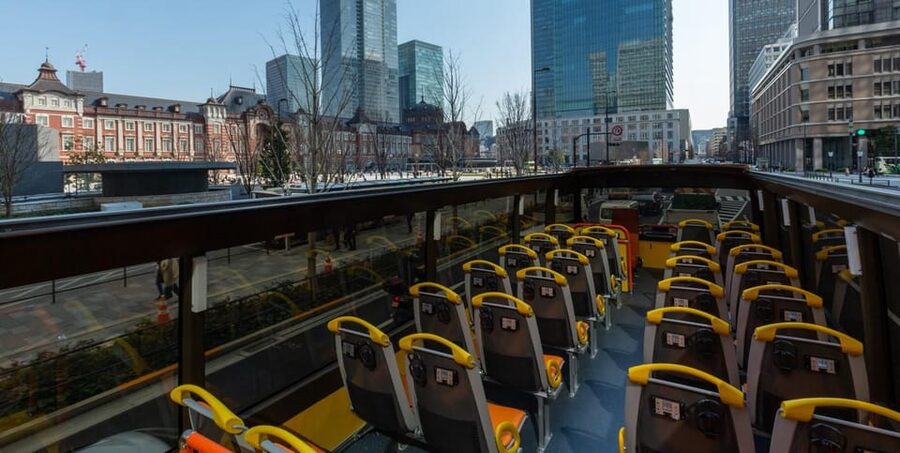
The City Course leans more “city grid, landmarks, and skyline.” It’s a good pick if you’d rather see Tokyo’s formal and modern business districts together.
Your ride typically follows:
- Tokyo Station Red Brick Building → Marunouchi: Same strong start area, so you get oriented fast.
- Chidorigafuchi → Akasaka State Guest House: You pass by areas tied to Tokyo’s more formal identity. Chidorigafuchi is often associated with seasonal scenery, and the Guest House area signals government-level prominence.
- Meiji Jingu Gaien → Tokyo Midtown: This is where you feel the shift from traditional space to modern Tokyo facilities.
- Roppongi → Tokyo Tower: Roppongi adds an energetic, international-city feel. Then you circle back to Tokyo Tower for one of the route’s anchor sights.
- Hibiya → Ginza: Ending in Ginza is convenient because it’s walkable for food and shopping, and easy to connect onward.
When the City Course makes the most sense
If you’re trying to understand how Tokyo neighborhoods connect—rather than just chasing the most famous skyline postcards—this route is efficient. It also tends to feel slightly more grounded if you’re not in a “bay views at all costs” mood.
Tokyo Station Red Brick as a Starting Anchor
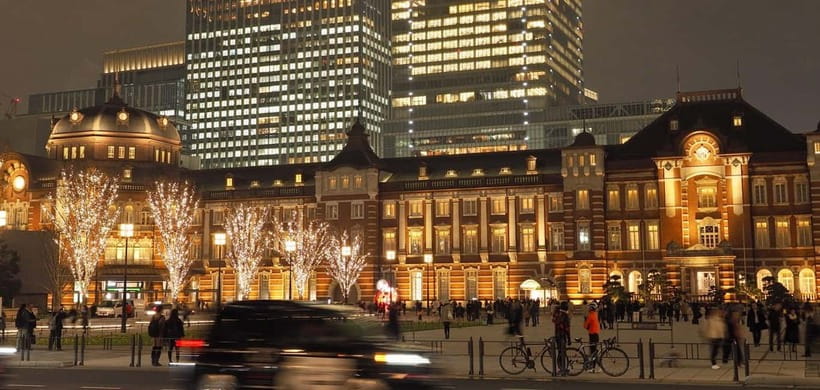
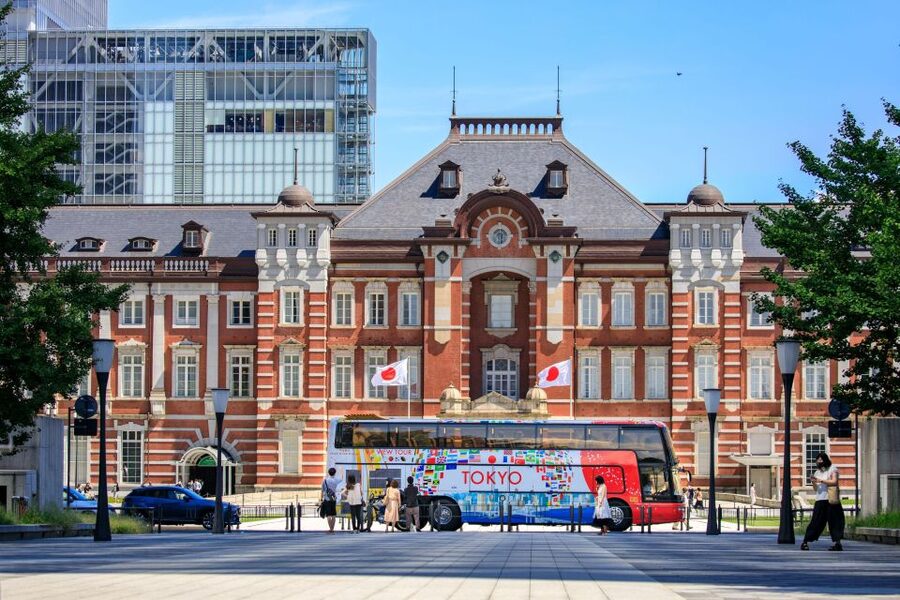
Starting near Tokyo Station Red Brick Building is a big deal for practical sightseeing. Tokyo Station is a transit hub that makes it easy to continue your day after the tour, whether you head toward shopping (Ginza), nightlife (Roppongi), or waterfront sights (Odaiba).
Even if you don’t want to ride your entire trip on trains, Tokyo Station is where your “mental map” gets built. After 70 minutes on the bus, you’ll usually have a better sense of where everything sits—especially around Tokyo Tower and Ginza.
Comfort, Rules, and the Small Stuff That Matters
This tour is relaxing in tone, but it still has real rules. For example:
- No smoking on board
- No selfie sticks
- No food in the vehicle
- No umbrellas
Those rules may sound minor, but they affect what you bring. If you’re traveling with snacks, you’ll want to eat before boarding or plan breaks elsewhere. If rain is likely, skip the umbrella plan and consider a compact rain jacket instead.
Knee space and weather
One review flagged limited knee space and noted that conditions can swing from too cold to too hot depending on weather. That’s common on tour buses. Pack light layers so you can adjust fast, and choose clothing that works whether the roof is open or closed.
Meeting at Tokyo VIP Lounge: How to Avoid the First-Minute Stress
You meet at Tokyo VIP Lounge, on the 2nd and 3rd floors of the building that has a FamilyMart on the ground floor. It’s about a 5-minute walk from Tokyo Station’s Yaesu North Exit.
A couple of practical timing points matter here:
- Check in 20–40 minutes before departure so boarding stays smooth.
- The meeting facility is a paid space, but open-top bus customers can use it for free starting 40 minutes before departure.
Because it’s a shared space with other users, don’t plan to treat it like a lounge you can settle into for a long stretch. If you arrive too early, you might find seating or waiting rules are limited.
If you speak minimal Japanese, don’t panic. The tour notes a Japanese-speaking staff member available for assistance. Still, it’s smart to have your tour name and departure time visible on your phone before you go.
Value for $11: What You’re Buying in 70 Minutes
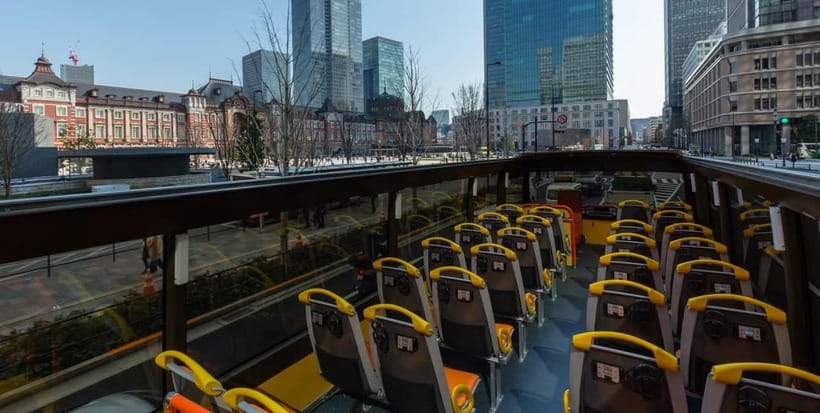
At around $11 per person for a 70-minute open-top panoramic ride, the value is about coverage, not comfort luxury. This is not trying to be a deep academic lecture. It’s designed to help you get the big picture fast.
You’re paying for:
- A route that strings together famous landmarks efficiently
- A GPS audio system in multiple languages
- The open-top sightseeing experience when conditions allow
- A structured tour format that doesn’t require you to plan between stops
If you only have one day (or even half a day) and you want the “greatest hits” view of Tokyo, this tour is a strong way to use time without burning hours on transfers.
Who Should Book This Bus Tour (and Who Should Skip It)
You’ll likely love this tour if:
- You’re in Tokyo for a short time and want orientation fast
- You enjoy seeing landmarks from a moving viewpoint
- You want audio guidance without needing a live guide
- You’d rather get a big sampling than spend your day committing to one neighborhood
You might skip it if:
- You’re very sensitive to audio competition (loudspeaker vs headphone audio)
- You hate weather-variable comfort and you’re traveling during periods with frequent rain
- You’re expecting a guided walking tour at each stop (this experience is built around the ride and the view)
Should You Book This Tokyo Open-Top Bus Tour?
Yes, I’d book it if your priority is getting oriented and seeing iconic sights with minimal planning. The GPS audio idea is especially helpful when you want context without stopping every few minutes.
I’d book the Bay Course if you want the strongest “Tokyo scale” feeling—Tokyo Tower plus Rainbow Bridge and Odaiba-style bay views. Choose the City Course if your day is more about neighborhoods, skyline connections, and a straightforward finish in Ginza.
Just go in with one mindset: this is a ride, not a museum. If the weather cooperates, you’ll walk away with a clear Tokyo map in your head and great angles for photos. If rain rolls in, you’ll still get the landmarks, but the open-top effect may be limited.