REVIEW · TOKYO
Tokyo Self-Guided Audio Tour
Book on Viator →Operated by Uvamai Niche Tourism · Bookable on Viator
Tokyo, minus the rush. This self-guided audio tour strings together 22 key Tokyo stops so you can linger where you want and skip what you don’t. I especially like the idea that it’s built for your pace, with a start/stop flow you control.
What also works well is the “don’t get stuck” design: you’re not required to stay online while you explore, and you get a map with clickable points for each stop. The main thing to consider is that this isn’t a hands-on guide. If your phone struggles with the audio links or you press play at the wrong moment, you can feel a step behind instead of smoothly guided.
In This Review
- Key things that make this Tokyo audio tour tick
- How the SoundCloud playlist and map actually guide you
- Price and value: why $9 can work (or fail) for Tokyo
- Imperials, rail history, and war memory: Stops 1–5
- Stop 1: Tokyo Central Railway Station
- Stop 2: East Gardens of the Imperial Palace (Edo Castle ruin)
- Stop 3: Chidorigafuchi
- Stop 4: Yasukuni-jinja Shrine
- Stop 5: Shinjuku Gyoen National Garden
- Shinjuku to Roppongi: architecture, views, and art Stops 6–10
- Stop 6: Tokyo Metropolitan Government Buildings
- Stop 7: Meiji Jingu Shrine
- Stop 8: Shibuya Crossing
- Stop 9: National Art Center, Tokyo
- Stop 10: Mori Art Museum
- Temples to Odaiba: Tokyo Tower, seaside views, and old-meets-new Stops 11–15
- Stop 11: Zojoji Temple
- Stop 12: Hama Rikyu Gardens
- Stop 13: Tokyo Tower
- Stop 14: Rainbow Bridge
- Stop 15: Odaiba District
- Skytree, Senso-ji, and the museum trio: Stops 16–22
- Stop 16: Tokyo Skytree
- Stop 17: Senso-ji Temple
- Stop 18: Asakusa
- Stop 19: Tokyo National Museum
- Stop 20: National Museum of Nature and Science
- Stop 21: National Museum of Western Art
- Stop 22: Ueno Park
- Practical note about pacing
- What can go wrong (and how to prevent it)
- Who should book this Tokyo audio route
- Should you book this Tokyo Self-Guided Audio Tour?
- FAQ
- How much does the Tokyo self-guided audio tour cost?
- How long is the audio tour?
- What’s included in the tour?
- Do I need to stay online to use the audio?
- Is a mobile ticket included?
- Do I need to arrange transportation?
- Are attraction entry fees included?
- Where does the tour start and end?
- When will I receive the audio and map links?
- Is this tour private?
- Is this tour refundable?
Key things that make this Tokyo audio tour tick
A 22-stop loop across multiple neighborhoods so you’re not bouncing randomly with no plan.
Start and stop whenever you want, which is ideal when Tokyo runs late (or you do).
Audio access links are delivered before your trip date and can be used across your window.
An interactive map connects each stop to the right audio, helping you match the story to where you are.
Some stops are free to enter, others are not included, so you’ll want a realistic budget for admission at the paid ones.
How the SoundCloud playlist and map actually guide you
This is a self-guided audio tour delivered through access links. Before your tour time, you get an email with two things: a SoundCloud link (audio) and a Google My Maps link (interactive map). From there, you can play either the whole tour audio (to plan your day) or click to individual attraction audio as you arrive.
Here’s the practical part: think of it like a playlist plus a GPS-style map of “where to press play.” The tour highlights that you don’t need to be online while you use the audio, which matters in a city where signal can be inconsistent and you might want to stop relying on data. Still, I strongly suggest you open your links ahead of time and do a quick test. If audio doesn’t play smoothly before you’re standing in front of something important, it’ll eat your sightseeing time.
The map matters, too. Each point on the map corresponds to a stop and links directly to that stop’s audio guide. That means the “right story” is tied to the “right location point,” not just a generic narration you listen to whenever.
One more expectation to set: this is private access for your group only, not a large guided group tour. You won’t have a meeting point organizer herding people. You’re running the day, and the audio is the engine.
You can also read our reviews of more tours and experiences in Tokyo.
Price and value: why $9 can work (or fail) for Tokyo
At $9 per person for an audio tour that takes about 4 hours and covers 22 attractions, the price is hard to ignore. In Tokyo terms, you’re paying for guidance and structure, not for tickets, not for transportation, and not for a live human.
That’s where value comes from: you get a planned route that connects major sights—shrines, temples, gardens, museums, and city views—so you’re less likely to waste time guessing “what’s next” between neighborhoods like Ueno, Roppongi, Asakusa, and Odaiba.
But here’s the catch: the tour doesn’t include entry fees for stops that list admission as not included. Also, transportation isn’t included, which means your real cost depends on how you travel between distant areas. Even if the audio is cheap, Tokyo adds up fast if your itinerary zig-zags inefficiently.
So I’d judge this tour like this: it’s a good deal if you use the map points properly and build a route that makes sense. It’s a frustrating deal if you expect a guided experience where the commentary always matches your exact spot with zero effort.
Imperials, rail history, and war memory: Stops 1–5
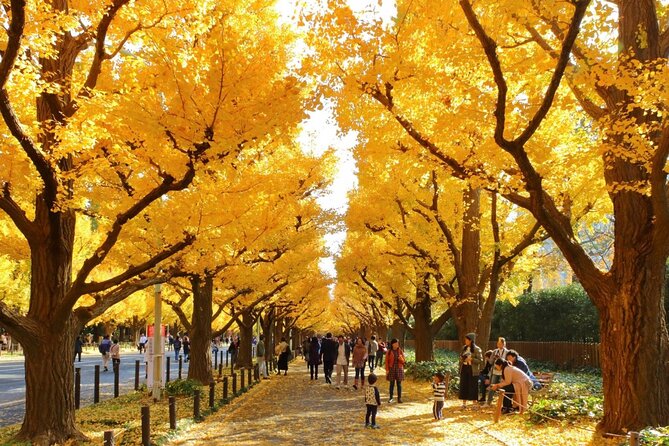
This first stretch is about Tokyo’s “old Tokyo energy”—the places where the city’s story feels layered.
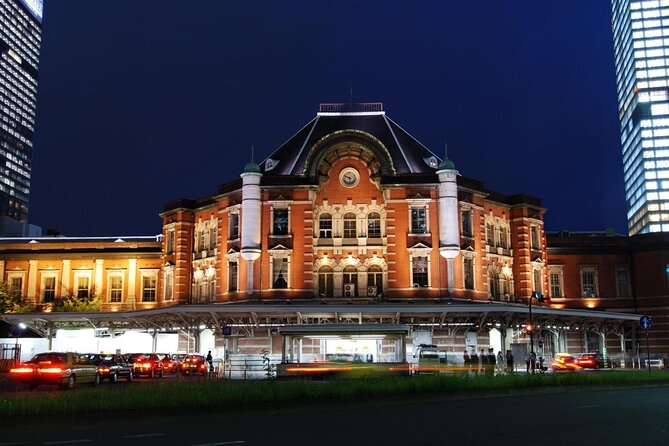
Stop 1: Tokyo Central Railway Station
Start at Tokyo Central Railway Station, a historic hub of Japan’s rail network. The audio focuses on its architectural significance and its role in Japan’s modernization. Even if you’re not taking a train, this is a great kickoff because the building sets the tone: Tokyo as a modern city with deep infrastructure roots.
Stop 2: East Gardens of the Imperial Palace (Edo Castle ruin)
Next, step into the calm of the East Gardens—once tied to Edo Castle. The value here is atmosphere. You’re trading street noise for landscaped grounds tied to imperial history. It’s also a useful palate cleanser between “big landmark” stops.
Stop 3: Chidorigafuchi
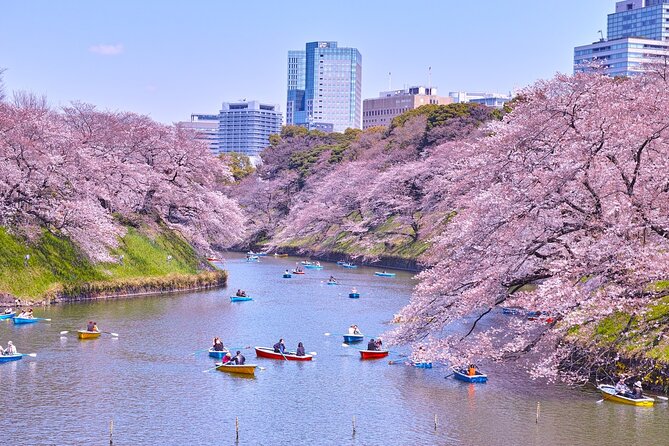
At Chidorigafuchi, the big selling point is the scenic moat area, known for cherry blossoms in spring. The audio adds a feudal angle by explaining its defensive role. If you’re not in cherry blossom season, it can still be pleasant, but you’ll want to manage expectations: the legend is stronger in springtime.
Note: Admission is not included for this stop.
Stop 4: Yasukuni-jinja Shrine
Then comes Yasukuni-jinja Shrine, dedicated to Japan’s war dead—also known for being controversial. The audio’s job is to unpack the complex history and cultural significance. This is the kind of stop where you’ll get more out of it if you’re in a headspace for context, not just photos.
Stop 5: Shinjuku Gyoen National Garden
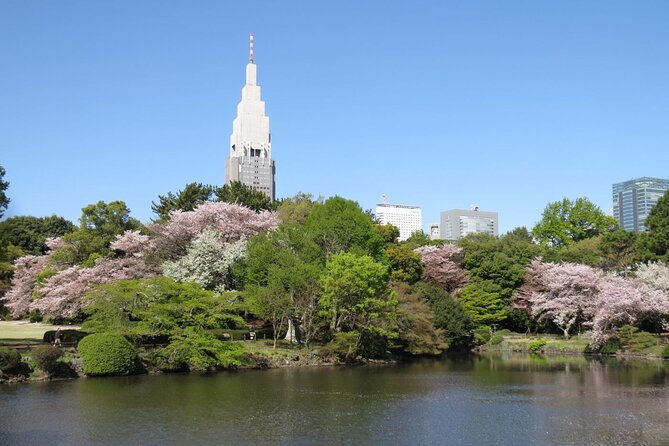
Wrap the first chunk at Shinjuku Gyoen, a garden shaped by Japanese, French, and English styles. The audio explains imperial roots and how it changed after the war. This is a strong “slow down” stop. If you’re the type to enjoy walking without a checklist, you’ll like this.
Note: Admission is not included for Shinjuku Gyoen.
Shinjuku to Roppongi: architecture, views, and art Stops 6–10
Now you move into Tokyo’s big-city rhythm—governance, crowds, and contemporary culture.
Stop 6: Tokyo Metropolitan Government Buildings
Go up at the Tokyo Metropolitan Government Buildings for panoramic views. This stop pairs modern architecture with a simple civic lesson: how Tokyo is governed. The practical value is clear—views without a long trek.
Stop 7: Meiji Jingu Shrine
Then switch gears to Meiji Jingu Shrine, a Shinto shrine in forested grounds dedicated to Emperor Meiji and Empress Shoken. This is one of those Tokyo “time capsule” moments: you step from the metropolis into a quieter world.
Stop 8: Shibuya Crossing
Next is pure electricity: Shibuya Crossing. The audio focuses on how the area evolved from residential roots to a fashion hub. Even if you don’t go deep into shopping, standing at the crossing is a quick lesson in Tokyo’s modern pulse.
Stop 9: National Art Center, Tokyo
At the National Art Center, Tokyo, the audio highlights its design and its idea of an “empty museum” hosting temporary exhibitions. That phrase matters: the building is built to hold changing shows, so what you get is tied to what’s on during your dates.
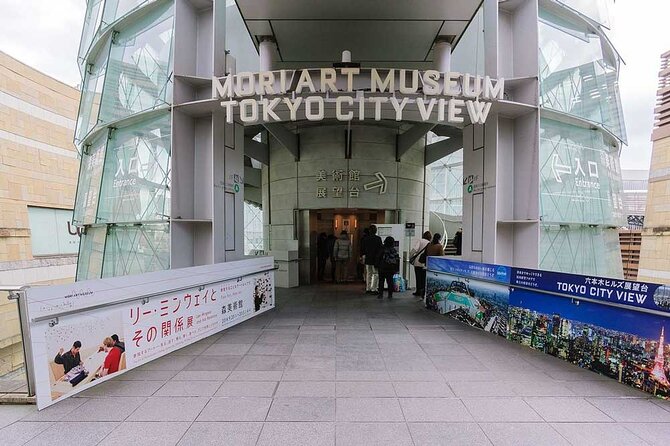
Stop 10: Mori Art Museum
Finish this section with the Mori Art Museum in Roppongi Hills. Expect contemporary art plus city views from a sky-high setting. This pairs well with Tokyo’s vertical vibe. You’ll get the most out of it if you’re happy to mix galleries with photos of the skyline.
Notes: Mori Art Museum is admission not included. The previous two stops (Meiji Jingu and Shibuya Crossing) are listed as free to enter.
Temples to Odaiba: Tokyo Tower, seaside views, and old-meets-new Stops 11–15
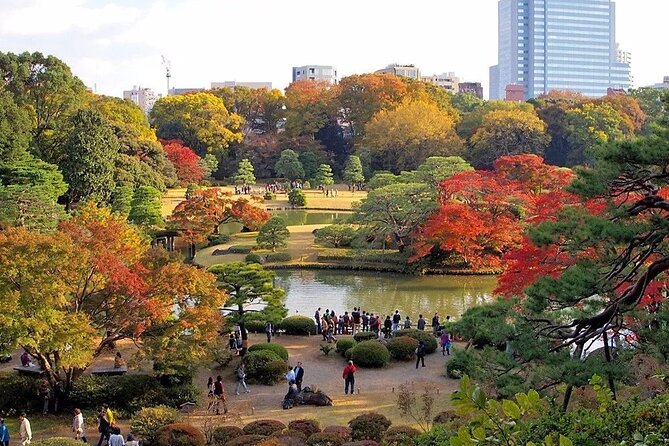
This stretch blends spirituality, historic Tokyo’s edges, and the futuristic coastline.
Stop 11: Zojoji Temple
At Zojoji Temple, you get an ancient Buddhist site with Tokyo Tower nearby, creating a sharp contrast. The audio connects it to the Tokugawa shogunate. If you like visual juxtapositions—old rules, new symbols—this is a great stop.
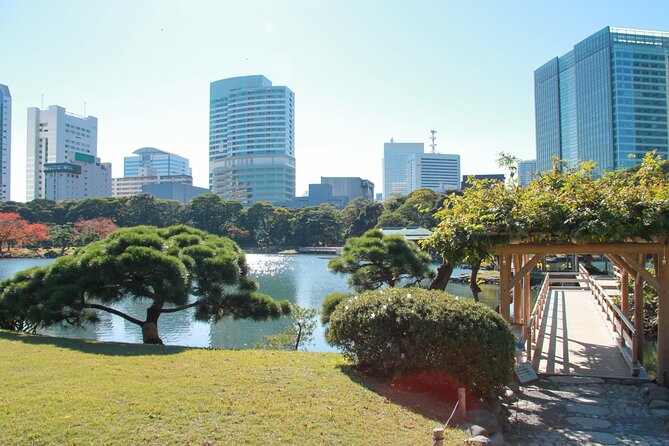
Stop 12: Hama Rikyu Gardens
Next: Hama Rikyu Gardens, once a feudal lord’s residence. The audio emphasizes how the space adapted through centuries of Tokyo’s growth. This works well when you want something peaceful without going too far out of the central grid.
Note: Admission is not included for Hama Rikyu Gardens.
Stop 13: Tokyo Tower
Then go for the landmark: Tokyo Tower, inspired by the Eiffel Tower. The audio explains its construction significance in post-war Japan. Even from outside, you’ll see why it became a symbol.
Note: Tokyo Tower is admission not included.
Stop 14: Rainbow Bridge
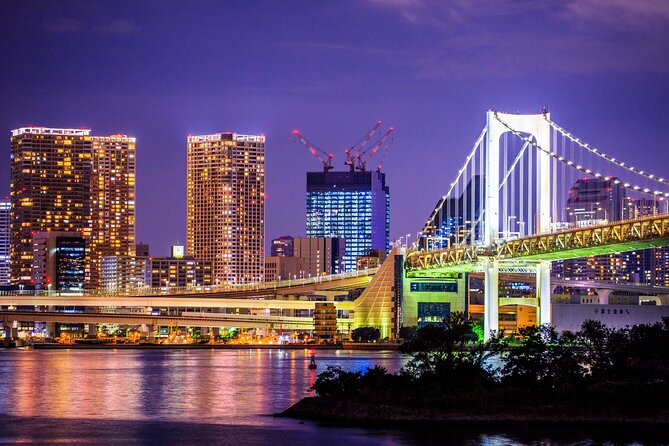
At Rainbow Bridge, the audio focuses on the bridge spanning Tokyo Bay and its nightly illumination. This is a flexible stop. If you time it with night or dusk, it can feel more magical—if not, it’s still a strong city-bay view moment.
Stop 15: Odaiba District
Finally, reach Odaiba, the futuristic entertainment district on artificial islands. The audio gives a behind-the-scenes history—fortress roots to leisure destination. This is a good neighborhood for a low-effort walk while you digest everything you’ve already seen.
Note: Rainbow Bridge is free, but Odaiba is admission not included (meaning you may pay for specific attractions there, not just the district itself).
Skytree, Senso-ji, and the museum trio: Stops 16–22
This final stretch is a classic Tokyo ending: skyline, old temples, and museums for when you want to slow down for real.
Stop 16: Tokyo Skytree
At Tokyo Skytree, the audio focuses on its design inspired by traditional Japanese aesthetics—and of course, the fact that it’s the world’s tallest tower. If your trip has even one “big view” moment, this is a prime candidate.
Note: Admission is not included for Skytree.
Stop 17: Senso-ji Temple
Now to Senso-ji, Tokyo’s oldest temple. The audio covers its founding legend and its importance in Edo-period life. This stop usually feels like Tokyo history in motion. Even if you’re not big on temples, the atmosphere is hard to miss.
Stop 18: Asakusa
Then wander Asakusa, where old Tokyo still lingers. The audio explains the area’s evolution from entertainment district to cultural center. This pairs well with shopping snacks, taking your time, and doing people-watching the good way: slowly.
Stop 19: Tokyo National Museum
If you want a serious culture block, go to Tokyo National Museum, described as Japan’s oldest and largest museum. The audio points you to its vast collection of Japanese art and antiquities. This is a “choose your pace” stop. You can skim highlights or commit to longer reading through exhibits.
Note: Admission is not included.
Stop 20: National Museum of Nature and Science
Switch from art to science at the National Museum of Nature and Science, covering natural world themes and technology. This is a strong choice if you’re traveling with kids, teens, or anyone who likes hands-on learning.
Note: Admission is not included.
Stop 21: National Museum of Western Art
Next is National Museum of Western Art, located in a building designed by Le Corbusier and listed as UNESCO World Heritage (as stated in the audio description you’re given). Even if Western art isn’t your main thing, the architecture angle is worth attention.
Note: Admission is not included.
Stop 22: Ueno Park
End at Ueno Park, Tokyo’s most popular public park. The audio covers its history, museums, and significance during cherry blossom season. Ueno is a smart finale because it’s flexible. If you want to squeeze in one more museum, it’s built for that kind of decision-making.
Practical note about pacing
The tour lists each stop at about 10 minutes. In real life, that’s more like a minimum. Shrines and gardens often reward extra time. Museums can easily take hours if you get interested. The good news: this route is designed so you can spend more time where you care and keep moving when you don’t.
What can go wrong (and how to prevent it)
I’ll be blunt here because cheap tours can be cheap for a reason.
The biggest risk is this: it’s a do-it-yourself system. If your audio and location don’t feel aligned, you’ll lose time. The solution is simple:
- Use the map point to start the right stop audio only when you’re actually at the place.
- Give yourself a little buffer at the first 2-3 stops so you can confirm the audio plays correctly.
- Bring a charged phone and headphones. You don’t want to hunt around in a major station trying to troubleshoot audio.
Also, entry fees can surprise people. Several stops are listed as free, but others are explicitly not included. Skytree, Tokyo Tower, Meiji-adjacent? (Some are free, some aren’t), and the major museum cluster near the end are often the ones where you’ll pay to enter something.
Finally, support can matter if links don’t work. Some access issues are the kind that can’t be fixed on the spot, so if you hit problems, contact the provider early using the info provided to you before your starting time.
Who should book this Tokyo audio route
This is a good fit if:
- You want a structure-heavy plan but still want control over pacing.
- You like mixing iconic landmarks with cultural stops and you’re comfortable moving between neighborhoods.
- You’re traveling as a pair or small group and prefer spending money on experiences, not on a live guide.
You might want to skip it (or adjust expectations) if:
- You hate app-like navigation and want a human guide with zero tech friction.
- You expect every narration moment to match your exact movements like clockwork.
- You want transportation included or you’re planning to rely on the tour to handle logistics. It won’t.
Should you book this Tokyo Self-Guided Audio Tour?
If you’re the type of traveler who enjoys building your own day in Tokyo, I think the $9 price is a strong value for the amount of ground it covers—rail hub history, imperial gardens, Shinto and Buddhist stops, art venues, bay views, and the museum stretch around Ueno.
But if you want a guided-feeling experience with near-perfect location matching and hands-on problem-solving, you should be cautious. This is an audio-and-map product. It’s cheap enough that you can still make it work—if you test your links, start each audio at the correct map point, and don’t overschedule your paid admissions.
Book it if you’ll use it like a tool. Skip it if you want someone to run the day for you.
FAQ
How much does the Tokyo self-guided audio tour cost?
It costs $9.00 per person.
How long is the audio tour?
It’s listed as about 4 hours.
What’s included in the tour?
You get private access links to the audio guide playlist covering 22 attractions, plus a private access map itinerary with clickable points for each stop. Links are valid up to 6 days.
Do I need to stay online to use the audio?
No. The tour is described as usable without needing to be online.
Is a mobile ticket included?
Yes, it’s listed as a mobile ticket.
Do I need to arrange transportation?
Transportation is not included. You’ll handle getting between stops on your own.
Are attraction entry fees included?
Entry fees are not included, even though several stops are listed as free to enter.
Where does the tour start and end?
It starts and ends in Tokyo. Because it’s self-guided, you can choose your starting and ending points.
When will I receive the audio and map links?
You receive an email with the two access links before your selected starting time/date.
Is this tour private?
Yes. It’s private, so only your group participates.
Is this tour refundable?
No. It’s non-refundable and cannot be changed once booked.