REVIEW · ISTANBUL
Skip-the-Line Hagia Sophia Digital Tickets w/Audio Guide
Book on GetYourGuide →Operated by City-Pass.Tr · Bookable on GetYourGuide
One hour in Hagia Sophia feels surprisingly packed. This skip-the-line entry plus an audio guide on your phone helps you plan a calm, self-paced visit through one of Istanbul’s most important landmarks. You’ll get the big architectural hits—dome, mosaics, and calligraphy—while your guide explains what you’re looking at as you walk.
I especially like two things: the way foreigners can use a newly opened tourist entrance near Topkapi Palace, and the fact that the audio guide covers the Hagia Sophia through both the Byzantine and Ottoman periods. That combination makes it easier to connect the building’s details to the history behind them, without needing to rush with a group.
One possible drawback: you still may face lines at security, and if something goes wrong with QR-code entry or redemption, it can cut into your 1-hour time window.
In This Review
- Key things you’ll notice right away
- Hagia Sophia in 1 hour: what this ticket really gives you
- Getting in near Topkapi: skip-the-line, but plan for security
- How the English audio guide works on your smartphone
- Inside Hagia Sophia: dome, mosaics, calligraphy, and craftsmanship
- What to do before you go: small choices that prevent big stress
- Price and value: is $41 worth it?
- Logistics you should plan for (especially with phones and QR codes)
- Accessibility and pacing: know your limits upfront
- Who should book this Hagia Sophia self-guided ticket
- Should you book this skip-the-line Hagia Sophia ticket?
- FAQ
- How long is the Hagia Sophia experience?
- Is there an audio guide included?
- Where do I meet the group?
- Can foreigners enter from a special entrance?
- Does the skip-the-line ticket mean no lines at security?
- What are the rules inside Hagia Sophia?
- Is this activity suitable for wheelchair users or mobility impairments?
- What should I bring with me?
- Is cancellation free?
Key things you’ll notice right away

- Skip-the-line ticket, not skip-the-security: you may still queue at checkpoints.
- English audio guide on your phone: history and building details follow your pace.
- Built around the most famous interior sights: dome, mosaics, and historic calligraphy.
- Foreigners enter via a tourist entrance near Topkapi Palace: you reach upper galleries via a gentle ramp.
- Moderate walking and limited accessibility: not suitable for wheelchair users or mobility impairments.
- Rules inside are strict: no flash photography, and no food or drinks.
Hagia Sophia in 1 hour: what this ticket really gives you
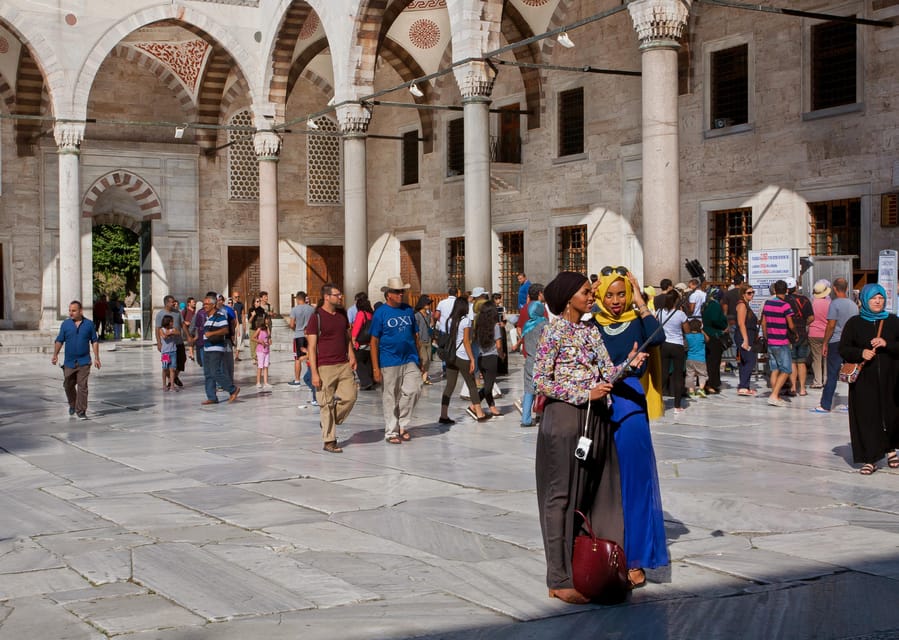
This is a simple format: you show up, enter, and explore Hagia Sophia at your own pace with a smartphone audio guide. The experience is timed at 1 hour, so you’ll want to treat it like a focused “greatest hits” visit rather than a slow, hours-long sit-and-stare session.
Inside, you’re meant to catch the defining features that people travel for: the famous dome overhead, the mosaics that cover key surfaces, and the historic calligraphy that adds those unmistakable visual layers. The audio guide is designed to help you understand why those elements matter, so you’re not just looking at beautiful ornamentation—you’re connecting it to the Byzantine and Ottoman story of how the building changed over centuries.
If you’re visiting in a tight schedule, this timing can be a benefit. You get structure without being marched around. But if you’re the type who wants to linger in every corner, you may feel a little pressed. With Hagia Sophia, the building can pull you into a “just one more spot” loop.
You can also read our reviews of more tours and experiences in Istanbul.



Getting in near Topkapi: skip-the-line, but plan for security
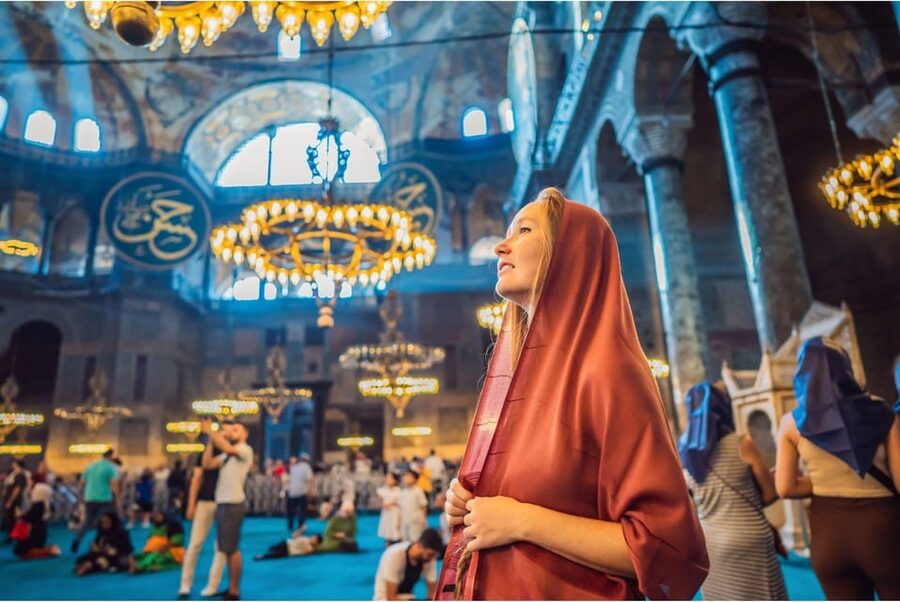
The meeting point is straightforward: go to Hagia Sophia (Ayasofya) and enter on your own. For foreign visitors, there’s a newly opened tourist entrance near Topkapi Palace. From there, you’ll have direct access to the upper floor galleries via a gentle ramp.
Now the part that matters for your expectations: the ticket is described as skip-the-line, but it does not give priority access overall. In peak season, you can still hit lines at security checkpoints. That means the time you save is mostly about the ticket-entry process, not the inspection process.
Practical tip: arrive a bit earlier than you think you need, even if you bought a skip-the-line option. Security slowdowns can happen, and Hagia Sophia is one of those sites where peak hours are real. If your phone entry or redemption takes longer than expected, you’ll feel it more when your visit is limited to an hour.
Also keep in mind you’re not going with hotel pickup. You’re responsible for getting yourself there on time, so build in buffer time for walking through the surrounding area.
How the English audio guide works on your smartphone
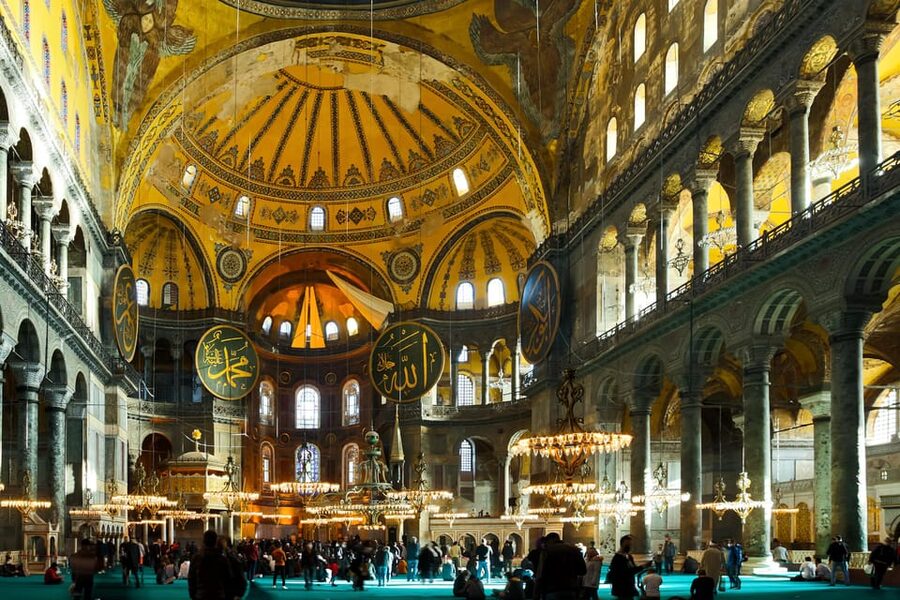
The audio guide is available in English and is meant to narrate what you’re seeing as you move through the building. It specifically covers the history of Hagia Sophia and explains the Byzantine and Ottoman empire context behind the art and architecture.
For most visitors, this is the sweet spot: you don’t need to track a group or shout questions across a room. You can pause when something stops you. If you want a quick understanding of the dome’s significance, or why certain mosaics and calligraphy appear where they do, the audio is built for that.
A smart way to use it:
- Wear headphones and keep your phone brightness moderate so it doesn’t kill your battery.
- Follow the audio guide’s flow first, then circle back to your favorite areas if time allows.
- If the visit feels crowded, listen for cues about where to look next so you’re not spending your hour scanning.
One caution from real-world entry experience: at times, people have had trouble with QR-code entry. If that happens, it’s not a “your phone can’t do it” issue so much as a “you may need to wait while the ticket is resolved” issue. If you’re tightly scheduled, have a backup plan for timing.
Inside Hagia Sophia: dome, mosaics, calligraphy, and craftsmanship
Once you’re in, the building does its job quickly: the scale of the interior space hits you fast, and then the details hold you. The dome is the headline for many people. Even if you’ve seen photos, being underneath changes how you feel about the space—height, curvature, and light all work together.
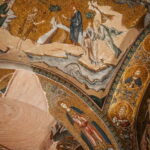
The mosaics are another major focus of the visit. You’ll see how the surfaces are organized and how images and patterns create visual structure. The audio guide helps you connect those mosaics to the building’s layered identity across different eras.
Then there’s historic calligraphy. It isn’t just decorative. It plays a role in how the interior communicates religious and cultural meaning. When you have the audio guiding you, you’ll spend less time guessing what you’re looking at and more time noticing the craft.
You’ll also appreciate that the visit is described as exploring softly illuminated corridors and iconic chambers. That matters because Hagia Sophia doesn’t feel like a modern museum aisle. It feels like you’re walking through an active space of history, even when you’re surrounded by visitors.
One more reality check: some parts you may expect to see can be limited depending on current access. The audio guide mentions multiple levels, but you might find certain areas temporarily closed. If you can’t access everything the audio implies, don’t treat it as a failure—adjust your route and focus on the main sights that are open.
What to do before you go: small choices that prevent big stress
You’ll have the best experience if you show up ready for comfort and rules.
Bring:
- Comfortable shoes (there’s a moderate amount of walking)
- Camera (assuming you’re keeping within the photo rules)
- Water (hydration matters in Istanbul, especially if you’re arriving early and queueing)
Know the rules:
- Flash photography is not allowed.
- Food and drinks are not allowed inside the Hagia Sophia.
This matters because it affects how you plan your “photo moment.” If you’re used to using flash at indoor monuments, you’ll need a different strategy—think steady hands, good phone camera settings, and patience with low light.
Also consider the outside area. One practical issue is that Hagia Sophia often has construction-related scaffolding around it, which can affect what you see when you arrive. You can still enjoy the building itself fully once you’re inside, but it can change your expectations for exterior photo vibes.



Price and value: is $41 worth it?
At $41 per person for skip-the-line entry plus an English audio guide, the value depends on how you like to tour.
You’re paying for:
- Less friction entering (ticket process is faster than standard lines)
- A smartphone audio guide that gives context without needing a live guide
- A convenient, self-paced format that fits into a short time window
You’re not paying for:
- Hotel pickup or drop-off
- A hosted group tour
- Extra services beyond the ticket and audio
So who gets the best value? People who:
- Want to control their own pace
- Don’t need a full guided tour with a person
- Have just about 1 hour and want the major sights explained
Who might feel the price is less fair? If you know you’ll be slowed by entry problems, or if you were hoping skip-the-line would also mean no security line at all. The ticket does not promise priority access through security, and that can shrink the practical benefit during busy hours.
Bottom line: it’s a solid buy when your timing is good and your phone entry works smoothly. If you’re arriving during a peak crush, build extra time so the 1-hour window stays relaxing.
Logistics you should plan for (especially with phones and QR codes)

This is not a “show up and figure nothing out” experience. It’s mostly self-guided, which means your phone matters.
A few practical notes:
- The ticket and audio guide are connected to the entry process, and QR-code issues can happen. When that happens, you may wait while the entry is corrected.
- You may lose time if your entry redemption problem happens right at the start of your visit, since the visit is limited to 1 hour.
- Customer support is described as responsive, but even good support can’t magically create more minutes inside the building.
So treat your phone like part of your ticket. Make sure it’s charged. Have headphones ready. If you’re the kind of traveler who hates tech during travel, plan to stay flexible and focus on the building even if the audio takes a few minutes to get going.
Accessibility and pacing: know your limits upfront
This ticket isn’t suitable for wheelchair users or people with mobility impairments. Even though there’s a gentle ramp to access upper galleries for foreign visitors, the overall visit still involves walking and navigation inside a historical structure.
If mobility is a factor, you’ll want to look for a different format with accessibility support built in. Here, the “self-paced” part still assumes you can move comfortably through the interior.
Also note the pacing: with a 1-hour window, the experience is designed to be efficient. If you’re someone who needs lots of breaks, consider whether this time limit will feel relaxing or stressful.
Who should book this Hagia Sophia self-guided ticket
This works best for:
- First-time visitors who want the dome, mosaics, and calligraphy with explanations
- Travelers who prefer quiet learning at their own speed
- People who can handle security lines and moderate walking
It may not be the best choice if:
- You need wheelchair access or you know you can’t handle the walking inside
- You want a full guided tour experience with ongoing human interaction
- You only have one tight appointment window and can’t absorb delays at security or redemption
If you’re traveling with kids, consider that the audio guide may or may not hold attention for a full hour. It can still be useful, but you might need to adapt your pace.
Should you book this skip-the-line Hagia Sophia ticket?
If you want a straightforward way to visit Hagia Sophia with clear context and minimal hassle, I’d say yes—especially if you’re visiting during a busier time and want to reduce the ticket line part of the experience.
But don’t assume skip-the-line means you’ll avoid queues entirely. Plan for security. Arrive with comfortable shoes. Keep your phone charged so the audio guide and entry process don’t turn into a stressful scramble.
For most people, $41 buys convenience and understanding, not a private tour. If that matches how you travel, this is a very reasonable way to experience the UNESCO site and make sense of the Byzantine and Ottoman layers as you walk through.
FAQ
How long is the Hagia Sophia experience?
The experience duration is listed as 1 hour.
Is there an audio guide included?
Yes. The ticket includes an audio guide on your smartphone, and it’s available in English.
Where do I meet the group?
There is no group meeting point. You go to Hagia Sophia (Ayasofya) and enter on your own.
Can foreigners enter from a special entrance?
Foreigners can enter through a newly opened tourist entrance near Topkapi Palace, with direct access to the upper floor galleries via a gentle ramp.
Does the skip-the-line ticket mean no lines at security?
No. Your ticket skips the ticket line, but you should still expect lines at security checkpoints during peak seasons. Priority access is not included.
What are the rules inside Hagia Sophia?
Flash photography is not allowed, and food and drinks are not allowed inside.
Is this activity suitable for wheelchair users or mobility impairments?
No. It is not suitable for people with mobility impairments or wheelchair users.
What should I bring with me?
Bring comfortable shoes, a camera, and water.
Is cancellation free?
Yes. You can cancel up to 24 hours in advance for a full refund.