REVIEW · POZNAN
The Birthplace of Poland: A Self-Guided Audio Tour of Poznań
Book on Viator →Operated by VoiceMap Audio Tours · Bookable on Viator
Poznań’s history walks right beside you. This self-guided Cathedral Island audio route uses GPS-triggered narration so you learn what you’re looking at as you go. Two things I really like: you can set your own pace and you get offline access to audio, maps, and geodata so the walk stays smooth even if signal is spotty.
One heads-up: this tour doesn’t include a phone or headphones, so you’ll need to bring your own gear. Also, museums on the route aren’t covered by the tour price, so you may want to plan a couple of paid stops separately if you’re curious.
In This Review
- Key things to know before you go
- Where Cathedral Island tells the story of Poland
- Starting at Ostrów Tumski: map in your pocket, story in your ears
- Past Mieszko’s traces: Church of Our Lady in Summo and the old cathedral
- Archbishop’s Palace and Jordan Bridge: destruction, rebuilding, and connection
- Śródka District and the Srodka mural: independence shows up in street corners
- Brama Poznania and Genius Loci: what to do if you want museums
- Cathedral Island’s end point: Archdiocese Museum and the 1500s–1700s role
- Price and timing: why $8.99 can make sense in Poznań
- Using VoiceMap well: headphones, offline plans, and avoiding start glitches
- Who should book this self-guided audio tour
- Should you book it?
- FAQ
- What is the tour price?
- How long does the audio tour take?
- Is the tour offered in English?
- Is this a guided tour with a person?
- Do I need internet access during the tour?
- Do I need to bring a smartphone and headphones?
- Are museum tickets included for Brama Poznania or Genius Loci?
- Where does the tour start?
- Where does the tour end?
- What if I need to cancel?
Key things to know before you go
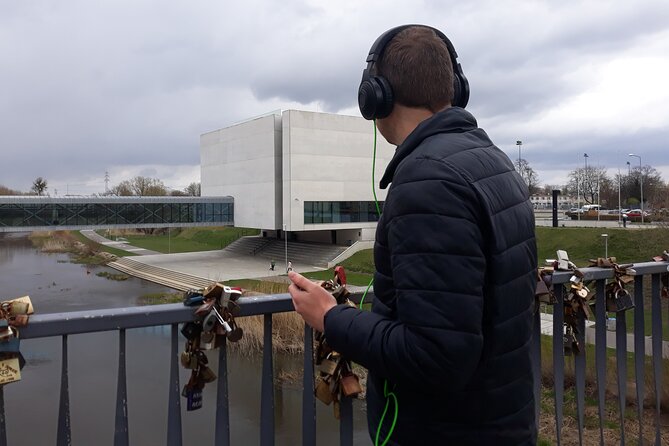
- GPS-triggered narration means you don’t have to guess where to listen next
- Offline audio + maps make this easier on the street than data-only tours
- Cathedral Island focus gives you a tight “why it mattered” story in under two hours
- Major landmarks in order helps you connect buildings with events (not just random photos)
- Museum signage, plus optional entrances: you’ll know what you’re looking at even if you skip entry
- Mostly flat walking along the river area suits most people who can do a short city stroll
Where Cathedral Island tells the story of Poland
Poznań’s Cathedral Island area is one of those places where the city’s big national moments actually show up in the streets. You’re walking through a compact zone tied to early power, church authority, and later rebuilding. The audio guide is built around that idea: you won’t just pass pretty architecture. You’ll hear what changed, what was destroyed, and what came back stronger.
What makes this kind of self-guided walk work well is the pacing. At 45 minutes to about 1 hour 15 minutes, you’re not stuck for half a day. And because the tour is designed as a walking route, you’re constantly orienting yourself—river views, cathedral silhouettes, bridges, and gates—so the history stays anchored.
Starting at Ostrów Tumski: map in your pocket, story in your ears
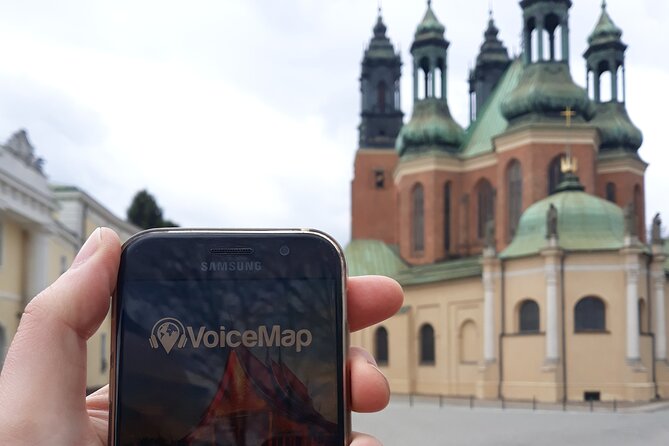
You begin at the Makieta Ostrowa Tumskiego (Ostrów Tumski 9). This start point is smart because it gives you a mental model of the island before you start moving. When the audio begins by talking about the island and how VoiceMap works, it helps you get the method quickly.
Here’s the practical part: VoiceMap uses your phone’s location, so your job is simple—keep walking in the intended area. If you stop to read a plaque or take a photo, you can pause naturally and then continue when you’re ready.
If you’re the type who likes to double-check details later, you’ll also appreciate that you have lifetime access to the tour. That means you can replay it after your first pass when things click better.
Past Mieszko’s traces: Church of Our Lady in Summo and the old cathedral
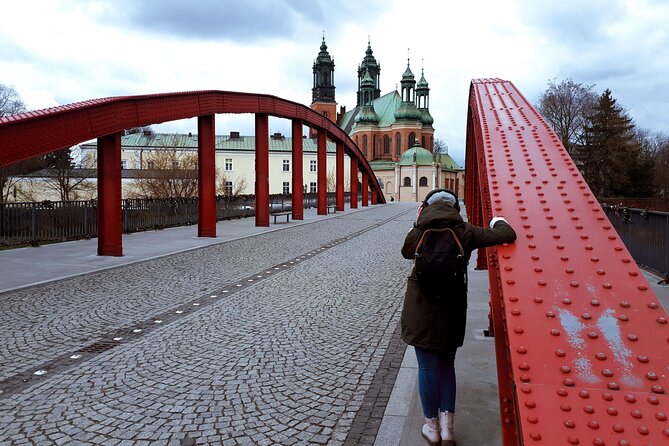
The route passes the Church of Our Lady in Summo. The key detail here is that beneath the church is a large relic associated with Mieszko’s palace and palace chapel. That’s a wow moment because it turns a normal-looking church stop into a physical clue about early rule.
Then you continue to Poznan Cathedral, described here as the oldest Polish cathedral. Even if you don’t consider yourself a “cathedral person,” this is still a strong stop because it anchors the walk in deep time. The narration as you pass gives you the what-and-why as you’re moving, which is the easiest way to avoid history turning into a blur.
One minor consideration: churches and river-adjacent areas can be visually busy. You’ll get the most out of the experience if you listen continuously for each segment instead of skipping around.
Archbishop’s Palace and Jordan Bridge: destruction, rebuilding, and connection
Next up is the Archbishop’s Palace. The audio focuses on the building and its many iterations while you walk past it. That word choice matters: you’re not just seeing a single façade from one era—you’re being guided through how authority structures shift over time.
Then the walk crosses Jordan Bridge, where you hear how it was built, destroyed, and rebuilt to finally reconnect Cathedral Island and the Śródka District. Bridges are handy in history lessons because they’re literal connections between places. In this case, it’s also a story about how the city’s pieces were physically tied together again after disruption.
I like this segment for one reason: the route doesn’t treat the past like museum dust. It treats it like infrastructure—things that can break, be repaired, and change how people move.
Śródka District and the Srodka mural: independence shows up in street corners
You move into the Śródka District, which at one stage was independent from the rest of Poland. That’s an important concept to hear while you’re walking, because it prevents the area from feeling like just a background to the cathedral. You’re learning that the island and the surrounding borough had its own story lines.
As you go, you pass the Srodka mural, noted as one of the first wall paintings of this type in Poland. This is the kind of detail that makes an audio walk feel more alive than a list of landmarks. It connects the “old world” architecture to later ways people decided to mark identity on walls.
Then you pass Saint Margaret Church. The audio has you listening as you walk past, so you’re learning in motion, not standing still for long stretches.
Brama Poznania and Genius Loci: what to do if you want museums
Near the route you’ll see Brama Poznania: Porta Posnania Heritage Center, a state-of-the-art museum created in 2014 to show issues connected with the Cathedral Island and Śródka District areas. The tour doesn’t require you to enter, but it primes you for what the museum is aiming to explain.
The route also passes the Cathedral Lock, a 19th-century element of the Prussian fortification system. This is a history angle many visitors miss. Instead of focusing only on churches and palaces, you get a hint of military planning and control—how a city defended itself and managed the water-and-fortress logic behind the scenes.
Finally, you pass Genius Loci, a modern museum that shows relics of the one thousand-year-old borough’s walls plus 3D immersive films. You won’t get tickets included here, so if you’re tempted to step inside, budget separately. But even without entry, the audio framing helps the museums make sense at a glance.
Cathedral Island’s end point: Archdiocese Museum and the 1500s–1700s role
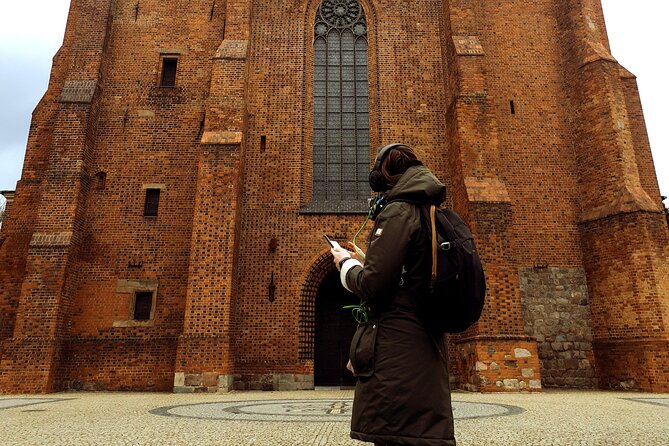
The tour finishes in front of the Archdiocese Museum in Poznań (Jana Lubrańskiego 1), with the note that it’s in front of the Lubrański Academy. The audio highlights a key role this place played not only in the city but across Poland from the 1500s until the 1700s.
That time window is a good wrap-up for the whole route. Earlier stops tie you to the origins of power and church presence. The palace and bridges show how authority and connection evolved. The museums and walls point to how later generations interpreted and displayed the past.
So when you reach the end, you’re not just arriving at a random building. You’re landing at the “main institutional thread” of the story.
Price and timing: why $8.99 can make sense in Poznań
At $8.99 per person, this is priced like a smart add-on rather than a major attraction you must commit to all day. With 45 minutes to 1 hour 15 minutes of walking, it fits into a casual itinerary without swallowing your morning.
Here’s the value logic: you’re paying for narration that turns several stops into one connected lesson. You’re also getting lifetime access to replay it later. That makes it useful beyond one afternoon—especially if you return to the cathedral area or want to place buildings in context before dinner.
One caution on cost planning: tickets or entrance fees for any museums along the route are not included, and food/drinks and transportation aren’t included either. So think of this as a guided interpretation of the area, not a pass into every doorway you see.
Also note: it’s listed as non-refundable and cannot be changed. If your schedule is uncertain, decide carefully before booking.
Using VoiceMap well: headphones, offline plans, and avoiding start glitches
This tour runs through the VoiceMap app on Android and iOS, and it includes offline access to audio, maps, and geodata. That’s exactly what you want in older city zones where phone service can be uneven.
Bring your own:
- smartphone
- headphones
The app does the heavy lifting by playing the right guidance based on your GPS location. People who like structure still get it, because the narration follows your movement. People who like freedom also get it, because you can pause and continue at your own speed.
A practical tip: if you ever face a download or start problem, it’s worth contacting VoiceMap support quickly. One review mentioned a glitch at the start that was fixed on a second download and support responded very fast.
And yes—Poznań streets can have construction noise. If you hear roadworks while you’re listening, that’s normal city life. Just turn the volume up slightly and keep rolling. The narrator’s pace still works.
Who should book this self-guided audio tour
I’d steer you toward this audio tour if you want:
- a low-cost way to understand the Cathedral Island area
- a walk that works on your schedule
- a guided narrative without booking a live guide
- offline reliability for city wandering
It’s also a good fit for history-minded visitors who get impatient with long museum lines. You’ll see major sights—cathedral, churches, bridges, gates, and fortification pieces—then decide later if you want to pay for deeper museum time.
If you’re expecting a fully guided experience with a person meeting you and answering questions on the spot, this isn’t that. It’s still smart and well organized, but it’s self-led.
Should you book it?
I’d book it if you like learning by walking and you want a tight “big picture” route through some of Poznań’s most important landmarks. The best part is how the narration ties buildings to events—Mieszko’s palace relic under a church, the oldest cathedral, the Jordan Bridge reconnection story, Śródka’s independence, and the museum themes that follow.
Skip it or think twice if you hate using a phone while traveling or if you need a tour that includes museum entry tickets. Also, because it’s non-refundable and you provide your own headphones, you’ll want to be ready on tech.
If you’re visiting Poznań for a short trip, this is one of the easiest ways to get more meaning from a half-day window.
FAQ
What is the tour price?
The tour costs $8.99 per person.
How long does the audio tour take?
Plan on about 45 minutes to 1 hour 15 minutes.
Is the tour offered in English?
Yes, the audio tour is available in English.
Is this a guided tour with a person?
No. It’s a self-guided audio tour using the VoiceMap app.
Do I need internet access during the tour?
You get offline access to the audio, maps, and geodata, so internet isn’t required for the tour content.
Do I need to bring a smartphone and headphones?
Yes. A smartphone and headphones are not included.
Are museum tickets included for Brama Poznania or Genius Loci?
No. Tickets or entrance fees to museums or other attractions en route are not included.
Where does the tour start?
It starts at Makieta Ostrowa Tumskiego, Ostrów Tumski 9, 61-109 Poznań, Poland.
Where does the tour end?
It ends in front of the Archdiocese Museum in Poznań (Jana Lubrańskiego 1, 61-003 Poznań, Poland), noted as in front of the Lubrański Academy.
What if I need to cancel?
This experience is non-refundable and cannot be changed for any reason.