REVIEW · ZURICH
Self-Guided Audio Tour to the Dark Side of Zurich
Book on Viator →Operated by myFive · Bookable on Viator
Zurich has a darker walking route. I like how easy the route is to follow thanks to photo directions, and I love the professional deep-voiced English narration that connects each stop to Zurich’s persecution stories. One catch: you’re responsible for your own phone, internet, and headset, and the subject matter is genuinely heavy.
This is a self-guided way to see parts of central Zurich you’d likely speed past on a standard sightseeing loop. It runs about 1 to 2 hours, and it’s priced at $13.22 per person, which is a fair deal for a focused, walkable route. It’s also set up as a private activity for your group, so you can move at your own pace instead of syncing to a live guide’s timing.
In This Review
- Key highlights you will feel fast
- The big idea: a walking story about fear, power, and punishment
- Price and time: what $13.22 buys you in real walking
- How it actually works: phone, link, headphones, and staying sane
- Stop-by-stop walkthrough: from Paradeplatz to Herkulesbrunnen
- Stop 1: Paradeplatz
- Stop 2: Börsenstrasse
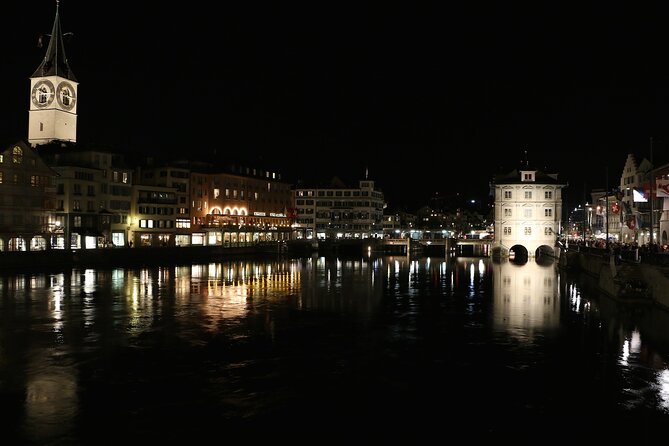
- Stop 3: Limmat
- Stop 4: Fraumunster Church (optional interior, CHF 5)
- Stop 5: Hans Waldmann Statue
- Stop 6: Wasserkirche
- Pass by: Grossmunster
- Stop 7: Kirchgasse
- Stop 8: Untere Zäune
- Stop 9: Neumarkt
- Stop 10: Obere Zäune
- Stop 11: Zürich’s Town Hall
- Stop 12: Täufergedenkplatte
- Stop 13: Rennweg
- Stop 14: Herkulesbrunnen
- What I think works best (and what to watch for)
- Who should book this Zurich audio tour
- Booking check: a quick value test
- Should you book Self-Guided Audio Tour to the Dark Side of Zurich?
- FAQ
- How long is the self-guided audio tour?
- What does the tour cost?
- Where do I start and where does it end?
- What language is the audio in?
- What do I need on my end to use the audio?
- Is Fraumunster Church included?
- Can I get a refund if I cancel?
Key highlights you will feel fast
- Clear photo directions that help you stay on track without babysitting
- Deep-voiced English audio that keeps the story moving through real city corners
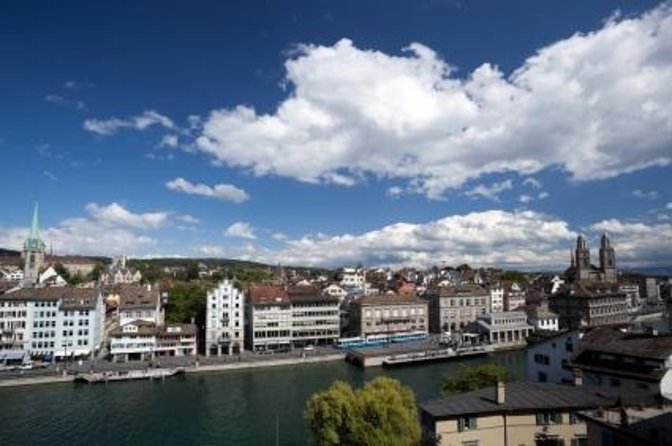
- A tight loop of major “witch hunt” and execution-related landmarks in central Zurich
- A story-based route tied to specific figures like Elsbeth and Hans Waldmann
- One paid entry option at Fraumunster Church (CHF 5), which you’ll likely want to take
- Simple logistics with a mobile ticket and a link you use on your phone
The big idea: a walking story about fear, power, and punishment
This tour is built like a timeline you can walk through. Instead of learning witch-hunt history in a classroom, you hear it land on the exact streets, squares, and landmark facades where it once mattered. That makes the whole thing more real, and also more uncomfortable in the way real history can be.
You also get a useful kind of city reading. Zurich is famous for order and polish, but the audio nudges you to notice how power worked back then: who had authority, where public punishment happened, and how the justice system turned human life into something you could schedule, display, and end. It’s not random spooky tourism. It’s a specific chain of places and roles.
You can also read our reviews of more tours and experiences in Zurich.

Price and time: what $13.22 buys you in real walking
At $13.22 per person, you’re paying for a ready-to-play audio experience, not for a staff member standing next to you. The upside is freedom. The downside is you bring your own phone setup.
Plan on 1 to 2 hours total. Since each stop is about 5 minutes of narration, the tour is designed to be listen-and-walk. That makes it a good fit for:
- a morning or early afternoon when you want something structured but not rigid
- a first-time Zurich visit when you want context beyond postcard views
- anyone who likes city walks with a clear beginning and end
If you want a broad “top sights of Zurich” sampler, this isn’t that. This is a narrow theme with strong focus.
How it actually works: phone, link, headphones, and staying sane
You’ll get a mobile ticket and use a link provided after booking. You’ll need your own mobile phone with internet and headset. There’s no live guide, so the audio guide experience depends on your tech working smoothly.
Two practical tips that matter:
- Start with the link already loaded. If your connection is slow, the page can take longer to open, and you’ll waste minutes standing in the street instead of walking.
- Use earbuds or headphones you’re comfortable with. The narration is the whole point here, and you’ll want clear audio while crossing busy areas.
Location-wise, the start and end are both in central Zurich, near public transport. You’re not trekking out to the suburbs or hunting for a weird out-of-the-way building.
Stop-by-stop walkthrough: from Paradeplatz to Herkulesbrunnen
Think of this route as an urban spine from the city center toward the places tied to where people were taken out of town. You’ll pass major landmarks, plus smaller street turns that feel made for walking and listening.
Stop 1: Paradeplatz
You begin at Paradeplatz, a classic Zurich meeting spot that suddenly feels darker once the audio frames it around witches and executioners. The narration focuses on an executioner’s residence and the job itself—how the role worked and what training looked like. It’s a strong start because it reframes the city from pretty to political.
Stop 2: Börsenstrasse
On Börsenstrasse, the story shifts to where executioners once lived in medieval times. The audio points you toward the grim “how” of punishment: which methods were used, how often events happened, and what the executioner’s pay might have looked like. This is where the tour starts showing how punishment was not just rare tragedy—it was system.
Stop 3: Limmat
Then you move to the Limmat River. The audio turns toward the tortured witches of Zurich and tells the story of Elsbeth, who endured 15 days of torment. Hearing a specific name attached to a specific place changes the impact. It stops being a vague topic and becomes a real timeline.
Stop 4: Fraumunster Church (optional interior, CHF 5)
You’ll reach Fraumunster Church, a beautiful sight even before the story adds context. The audio calls out the Marc Chagall stained-glass windows showing the crucifixion of Jesus Christ.
Important: entry isn’t included. If you choose to go inside, plan on CHF 5 per person. I think it’s worth it here. The church is one of the few places on the route where you can step inside and let the artwork meet the story you just heard on the street.
Stop 5: Hans Waldmann Statue
At the Hans Waldmann Statue, the audio ties history to a real figure: Hans Waldmann, executed in 1489. You’ll hear what made his life unusual and what led to his downfall. This stop is valuable because it shows how the witch-hunt machinery connected to broader politics and influence, not just superstition.
Stop 6: Wasserkirche
Next is Wasserkirche (Water Church). The audio links the church to the legend of Felix and Regula, who were beheaded for their Christian beliefs. Even if you’re not there for religious history, this moment widens the lens: the same city that later practiced witch-hunt terror also lived through other belief-driven persecutions.
Pass by: Grossmunster
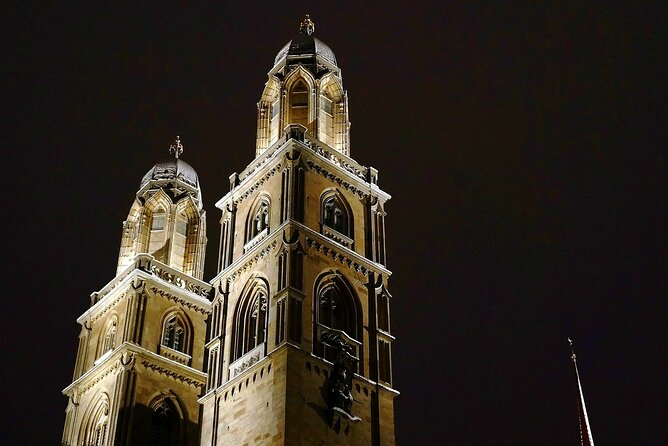
You’ll pass by Grossmunster, which the audio frames as a symbol of the Swiss-German Reformation and a pillar of Zurich’s heritage. You don’t stop long here, but it’s a useful reminder that Zurich’s “belief and authority” story didn’t start with witches and didn’t end there.
Stop 7: Kirchgasse
In Kirchgasse, you’ll get a chilling look at guidance about recognizing witches and the logic tied to torture. The point of this stop is not shock for shock’s sake. It explains how people were encouraged to interpret behavior as proof, and how suffering got justified as procedure.
Stop 8: Untere Zäune
At Untere Zäune, the audio tells a story about a wealthy woman executed for witchcraft. Hearing the “wealth” detail matters because it disrupts the idea that this kind of accusation only targeted powerless people. In this story, money and status don’t act like protection.
Stop 9: Neumarkt
At Neumarkt, you’ll learn about the former place of the pillory. It’s one of those civic details that makes the era feel street-level—punishment wasn’t only hidden away. It happened where people could see it, judge it, and talk about it.
Stop 10: Obere Zäune
On Obere Zäune, you hear about the house of the judge during the peak of the witch hunt, plus a revenge-style story tied to that era. This stop helps you understand why the audio spends so much time on roles. The system ran on individual power, not just faceless institutions.
Stop 11: Zürich’s Town Hall
At Zürich’s Town Hall, the narration zooms out into medieval prosecution. You’ll also be shown the square where death sentences were announced. This is a key stop because it’s where the tour stops being about rumors and becomes about government process—decisions made in public, with outcomes made final.
Stop 12: Täufergedenkplatte
The Täufergedenkplatte memorial plate marks executions by drowning. This is one of the most direct “this happened here” moments on the route. If you care about moral clarity, this is the stop where the tour presses hardest.
Stop 13: Rennweg
At Rennweg, the audio tells a grim practical role: a baker who provided the last sip to those headed for execution. It’s a small detail, but it’s the kind of detail that stays with you because it shows how normal work and daily life could plug into an atrocity.
Stop 14: Herkulesbrunnen
You end at Herkulesbrunnen. The audio explains that this is where the condemned exited the city and connects the route to the locations of burnings and hangings. The ending works because you get closure in place-based terms. The city isn’t just a background—it’s part of how the past moved people through it.
What I think works best (and what to watch for)
This experience earns strong praise for a few clear reasons:
- The route is straightforward. The photo directions and clear sequence make it easy to follow while walking.
- The narration quality is a real asset. The professional speaker’s deep voice is built for walking listening, not for museum sitting.
- You get perspective, not just facts. You’ll leave seeing central Zurich with a sharper sense of justice, fear, and civic power.
But you should also go in with your eyes open:
- The topic is dark and human-rights heavy. If that hits you hard, you might find the stories stressful rather than interesting.
- The tour is theme-focused, and there aren’t many “enter-this-building” moments. Outside of Fraumunster Church, most stops are about what you see around you.
- If your phone connection struggles, loading issues can slow the start. You can avoid that by trying the link before you begin walking.
Who should book this Zurich audio tour
Book it if you:
- love walking tours with a clear start and finish
- want a themed Zurich experience tied to real locations, not only general sightseeing
- enjoy stories where you connect place names to human roles and events
Skip it (or at least think carefully) if you:
- prefer upbeat city history or light entertainment
- get easily upset by accounts of torture, execution, and public punishment
It’s also a great match for a solo traveler, a couple, or a small group who wants privacy and flexibility. Since it’s private for your group, you won’t be stuck with a pace that isn’t yours.
Booking check: a quick value test
This is worth it when you want:
- a structured walk that takes you through central Zurich’s major themes
- English audio that’s easy to follow at street level
- the chance to pause at famous spots like Fraumunster and then keep going to the less obvious corners
Given the high rating (4.7 on 14 ratings) and strong recommendation rate (93%), the odds are good that the format fits most people. Just don’t treat it like a ghost tour. It’s about how justice systems and communities operated when fear became policy.
Should you book Self-Guided Audio Tour to the Dark Side of Zurich?

Yes, if you want a walk that teaches you how Zurich worked under pressure—by linking landmarks to named stories, civic roles, and public punishment. The audio quality and clear route guidance make it feel doable and organized, even though the content is dark.
No, if you’re sensitive to human-rights topics, or if you don’t want to rely on your phone and internet to make the experience work. In that case, you might prefer a classic Zurich highlights tour where the theme stays lighter.
If you do book it, do one simple thing: download your comfort first—charge your phone, bring headphones, and start with a good signal—then let the city’s darker past take its place in your Zurich memories.
FAQ
How long is the self-guided audio tour?
It takes about 1 to 2 hours.
What does the tour cost?
The price is $13.22 per person.
Where do I start and where does it end?
You start at Paradeplatz, 8001 Zürich, Switzerland and end at Herkulesbrunnen Bahnhofstrasse, 8001 Zürich, Switzerland.
What language is the audio in?
The tour is offered in English.
What do I need on my end to use the audio?
You need your own mobile phone with internet and headphones. The tour is self-guided with a link provided after booking.
Is Fraumunster Church included?
Fraumunster Church entry is not included. If you want to visit inside, the entrance fee is CHF 5 per person.
Can I get a refund if I cancel?
You can cancel for a full refund if you cancel at least 24 hours in advance. If you cancel less than 24 hours before the start time, you won’t get a refund.