REVIEW · ZURICH
Self-Guided Audio City Tour in Zurich
Book on Viator →Operated by myFive · Bookable on Viator
Zurich tells its story through sound. This self-guided audio city tour turns a simple walk into a guided-feeling route from Bahnhofplatz toward Old Town landmarks, with English narration and photo-based directions. I love the clear turn-by-turn help that keeps you moving without stopping to study your phone map.
The second thing I like: the stop mix. You hit big-name sights like Grossmünster and the Opera House, plus smaller-but-meaningful corners such as the Roman baths on Thermengasse and the hilltop views from Lindenhof, all without paying entrance fees at most stops.
One drawback to plan for: it depends on your phone. You’ll need internet and a headset, and if your connection is shaky the audio can restart back at the beginning. Also, you’ll be walking enough that a low battery can feel like a plot twist.
In This Review
- Key highlights you’ll feel right away
- Starting at Bahnhofplatz and ending by Max Bill’s pavilion
- How the self-guided audio tour works on your phone
- Old Town context: from Alfred Escher to Johann Heinrich Pestalozzi
- Urania Observatory: a quick astronomy moment in the middle of a city day
- Lindenhof Hill: views, fountains, and a little historical mood
- St. Peter’s Church and Thermengasse: clocks and Roman leftovers
- Rathaus and Old Town power corridors: where politics meets daily life
- Cabaret Voltaire and the Lenin Apartment: ideas that shook Europe
- Grossmünster, Wasserkirche, and Zwingli: Reformation landmarks along the river
- Fraumünster inside or outside: one optional fee
- Opera House, sculptures, and the city’s modern symbols
- Price and value: what $13.29 buys you in real walking time
- Practical tips: avoid the audio restart problem and staying on track
- Who should book this Zurich audio tour?
- Should you book this self-guided Zurich audio tour?
- FAQ
- Is this tour live-guided or self-guided?
- What language is the audio available in?
- What do I need to use the audio tour?
- How long does the Zurich audio tour take?
- Where does the tour start and end?
- Are there entrance fees at the stops?
- Can I cancel for free?
Key highlights you’ll feel right away
- Photo directions that make it easy to keep your place between stops
- High-quality English narration recorded by a professional speaker
- Free entry at most stops, with Fraumünster inside only if you choose it
- A smart Old Town arc, from river views to churches to Dada and Reformation history
- Flexible pacing, because you’re not tied to a group schedule
Starting at Bahnhofplatz and ending by Max Bill’s pavilion

You begin at Bahnhofplatz-Alfred Escher-Denkmal in Zürich (8001). That’s a good place to start because it’s central, easy to find, and you can arrive by tram or train without fighting the city for your bearings.
The tour ends at the Pavillon-Skulptur von Max Bill, 1983 (#KiöR) on Bahnhofstrasse (near Bahnhofstrasse 47). Ending near one of Zürich’s best-known shopping streets gives you a natural payoff: you finish with a modern landmark and then can wander, snack, or just keep going on foot.
This is also set up as a private tour/activity, so it’s only your group. For a self-guided experience, that matters less than it does on a bus tour, but it still helps you feel like you’re not being shoved along.
You can also read our reviews of more tours and experiences in Zurich.


How the self-guided audio tour works on your phone
This isn’t a live guide. After booking, you use the link provided after purchase to access the audio tour. You’ll listen in English, and you’ll follow directions with photos so you’re not guessing which street you’re on.
Plan to bring your own phone, internet connection, and headset. The experience is mobile-ticket based, but the real work happens on your device: the audio runs through your phone and you’ll need it to stay connected.
A big practical bonus: the audio content includes a written transcript, so if you want to read instead of listen (or if you’re in and out of hearing range), you can switch modes. One more sanity check: make sure your phone battery is healthy before you start, because this route can take longer than the headline time.
Old Town context: from Alfred Escher to Johann Heinrich Pestalozzi
The first stop is the Alfred Escher Statue, a monument to a Swiss political figure closely tied to the Swiss economy and railway system. It’s a strong opening because Zurich isn’t just pretty streets and clocks. It’s also the story of how the country built its modern financial and industrial backbone.
Next you’ll reach Pestalozzianlage, tied to Johann Heinrich Pestalozzi, known for shaping education and ideas about how societies learn. Even though you’re just at a monument for a few minutes, the audio frames him as more than a name on a plaque.
These early stops are short on purpose. They help you understand what you’re seeing before you reach the older religious buildings and river-side streets.
Urania Observatory: a quick astronomy moment in the middle of a city day
From there, the route includes the Urania Observatory. The point isn’t to linger for a long museum visit if you’re short on time, but to give you a sense that Zürich keeps looking upward—scientifically and culturally—while still working through centuries of urban change.
If you like “micro-stops,” this is one of them. You get a themed break without turning the tour into a marathon.
Lindenhof Hill: views, fountains, and a little historical mood
At Lindenhof Hill, you get the best excuse to slow down and look around. This historic hilltop gives panoramic views over the city and the Limmat River, and the audio uses that viewpoint to connect you to stories you might otherwise miss.
You’ll also hear about the Hedwig Fountain, see architectural details tied to the Masonic Lodge, and come across the Tombstone of Lucius Aelius. That last detail matters because it anchors the whole Old Town walk to real traces of older life.
One practical note: if you’re the type who reads every caption on your phone, Lindenhof is where your time can quietly expand. It’s worth it.
St. Peter’s Church and Thermengasse: clocks and Roman leftovers
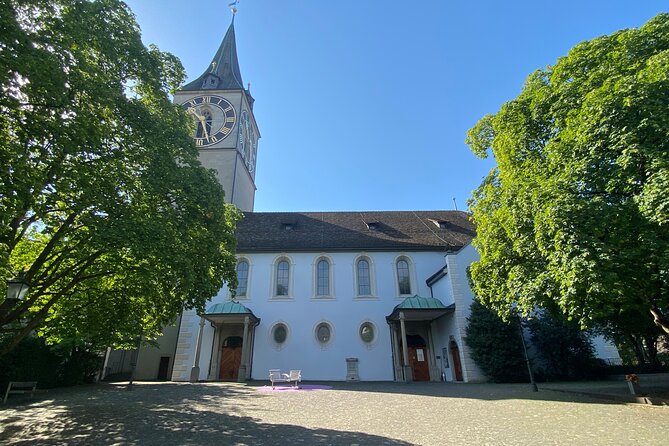
From the hill, the tour heads to St. Peter’s Church, described as Zürich’s oldest parish church. The standout feature is its clock face—one of the largest in Europe—and the audio helps you understand why that’s such a big deal in a city built on order, schedules, and commerce.
Then you move to Thermengasse, where the route spotlights Zürich’s ancient Roman baths. This is a different kind of “sight.” You’re not looking at a whole building preserved end-to-end. You’re looking at traces—archaeological remnants that connect modern Zurich to a Roman past.
If you enjoy historical layering, these two stops work especially well back-to-back. You go from medieval religious timekeeping to Roman everyday life.
Rathaus and Old Town power corridors: where politics meets daily life
Next comes Town Hall (Rathaus), a political landmark that gives the tour another layer. This is one of those stops where the audio isn’t just describing architecture—it’s explaining why a town builds places for decision-making in the most central spots.
A short walk later, you reach Augustinerkirche, a quieter church stop. It’s described as simple and welcoming, which makes it a good reset if you’ve been cramming churches into your brain all morning.
Then you’ll encounter Weinplatz and the Millers’ and Bakers’ Guild Building. This is where the route shifts from politics to livelihoods. The point is to show that Zürich’s identity isn’t only built by rulers; it’s also shaped by guilds, workers, and local systems.
Cabaret Voltaire and the Lenin Apartment: ideas that shook Europe
When the tour gets to Cabaret Voltaire, you step into the birthplace of the Dada movement. This stop is short, but the audio connects Dada to the larger story of artists and writers pushing back against normal rules.
Then you move to the Lenin Apartment Zurich, where Vladimir Lenin stayed during political exile. This is one of the route’s most dramatic turns in subject matter: from avant-garde art to revolutionary politics, in a few blocks of walking.
If you like your city stories to include big ideas—how movements form, how people argue with the world—these two stops will likely feel like the emotional center of the route.
Grossmünster, Wasserkirche, and Zwingli: Reformation landmarks along the river
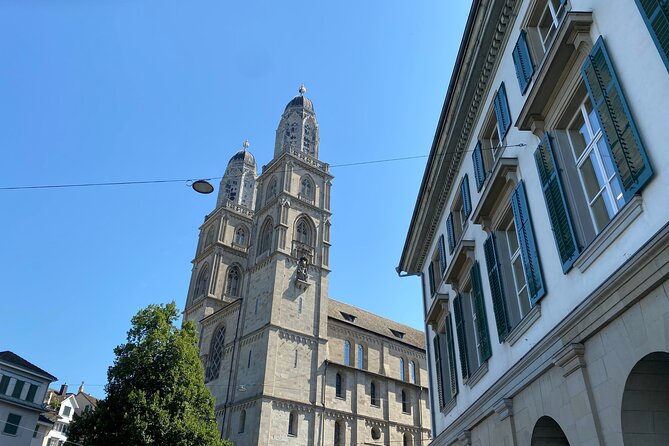
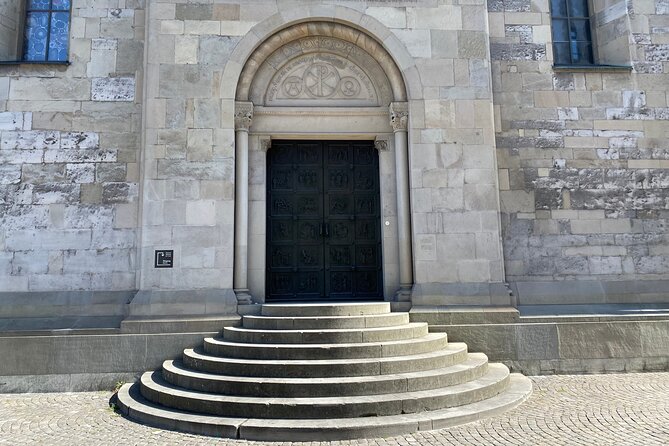
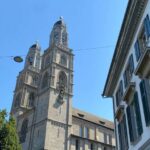
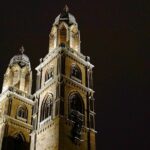
No Zurich Old Town route feels complete without Grossmünster. The audio focuses on the church’s role in the Swiss Reformation and the twin towers that define the skyline here. Then it adds the visual payoff: the stained glass crafted by Augusto Giacometti, which turns sunlight into color in a way you can’t fully appreciate from the street.
Nearby is Wasserkirche, also known for its stained glass windows. The audio frames it as a serene stop along the Limmat River, which makes it a good breather between heavier history themes.
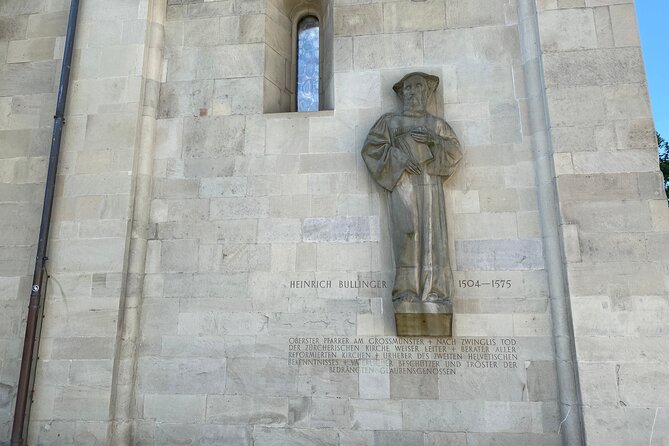
You’ll also find the Ulrich Zwingli Monument, another Reformation-related moment. It’s a reminder that Zürich’s religious changes were not abstract. Real people argued, wrote, and shaped institutions—and monuments grew from those decisions.
Fraumünster inside or outside: one optional fee
The route includes Fraumünster Church, famous for stained glass designed by Marc Chagall. You’ll get context right at the stop, and the audio helps you understand how the windows turn the interior into a story told in color.
Here’s the decision point: Fraumünster admission is not included. The inside visit costs CHF 5 per person, if you want to go in. You can still enjoy the outside views and the framing, but if stained glass is your thing, it’s usually the part that makes people glad they paid extra time.
If your phone battery is running low, this is also the stop where you might choose to go in and not rush, so you get the best payoff for your effort.
Opera House, sculptures, and the city’s modern symbols
After churches and ideas, the tour brings you into Zürich’s more modern cultural identity.
At the Opernhaus Zurich, the facade is noted for busts of eminent composers and writers. It’s a quick visual stop, but the audio makes it feel like you’re walking in a city that funds the arts seriously, not as decoration.
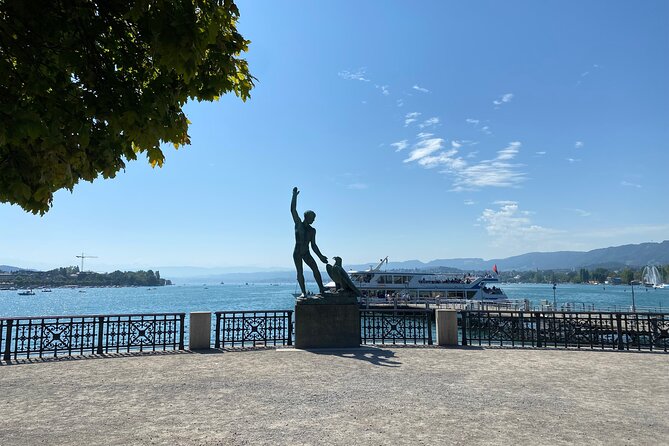
The route also includes Ganymed, a sculpture tied to mythological storytelling. And then there’s the Hans Waldmann Statue, honoring a figure with an unusual life. The audio adds the darker note: his rise as burgomaster, followed by a tragic end.
Finally, you end with the Pavillon-Skulptur von Max Bill, 1983 (#KiöR). The description centers on the sculpture’s message of transparency, equality, and freedom. Finishing on that kind of statement makes the whole walk feel connected: Zürich moves from old institutions to modern meanings without losing its personality.
Price and value: what $13.29 buys you in real walking time
At $13.29 per person, this tour can be excellent value if you’re the self-guided type. The route is listed around 2 to 3 hours, but in real life that depends on how you use it.
Most stops are admission ticket free, which means you’re mostly paying for the audio narration and direction system, not entry fees. The one notable extra cost is Fraumünster inside at CHF 5 if you choose to go in.
I also like that the audio can be accessed for a long stretch of time (one account described having access for up to a year). That matters because if you run late on day one, you can come back to finish without paying again.
With a reported average rating of 4.1 out of 5, it’s clearly not perfect for everyone, but the price-to-hours ratio is strong—especially if you’re traveling solo, with a friend, or as a couple who wants control over pace.
Practical tips: avoid the audio restart problem and staying on track
This is where the experience either feels smooth or a bit annoying. The most common friction point is audio playback behavior when your internet connection is unstable. If your phone keeps dropping signal, the audio may restart from the beginning, which can waste time and patience.
So do these simple things before you start:
- Use headphones that stay seated, and keep your phone screen accessible.
- Check battery levels at the start, since this is a walking route and your phone is doing the job of both map and guide.
- Follow the photo directions rather than speed-running intersections. If street signs are hard to read, the photos do more for you than you’d expect.
If you’re worried about getting turned around, I’d also keep a normal offline map ready. Not because the tour is bad, but because Zürich streets can confuse you when you’re multitasking.
Who should book this Zurich audio tour?
This works best for:
- First-time visitors who want to get oriented fast through Old Town plus major cultural stops.
- People who like city history told through specific places: statues, churches, riverside views, and buildings tied to art and ideas.
- Travelers who want to move at their own pace and spend longer where they care, then move on quickly elsewhere.
It may feel less ideal if:
- You strongly prefer a live guide to answer questions on the spot.
- You want heavier coverage of 20th-century Zürich topics. This route spends its time earlier on churches, reformers, art movements, and civic landmarks.
Should you book this self-guided Zurich audio tour?
I’d book it if your goal is simple: get a solid Old Town foundation and learn what you’re looking at while you walk. For $13.29, you’re buying a route that connects major sights—Grossmünster, Cabaret Voltaire, Lenin Apartment, Opera House, and more—into one coherent story.
Skip it only if you know you’ll struggle with phone-based navigation and you don’t want your experience to depend on internet and battery. If that’s you, consider a guided option where someone else handles the tech and pacing.
If you do book it, come with comfortable shoes, a charged phone, and a plan to pause for views at Lindenhof. That’s where the walking turns into seeing Zurich the way it wants to be understood.
FAQ
Is this tour live-guided or self-guided?
It’s self-guided. You use the link provided after booking to access the audio guide and explore on your own pace.
What language is the audio available in?
The tour audio is offered in English.
What do I need to use the audio tour?
You need your own mobile phone with internet and a headset.
How long does the Zurich audio tour take?
It’s listed at about 2 to 3 hours.
Where does the tour start and end?
It starts at Bahnhofplatz-Alfred Escher-Denkmal and ends at the Pavillon-Skulptur von Max Bill, 1983 (#KiöR) near Bahnhofstrasse 47.
Are there entrance fees at the stops?
Most stops are marked as free. Fraumünster Church inside is not included and costs CHF 5 if you want to enter.
Can I cancel for free?
Yes. You can cancel for a full refund up to 24 hours in advance of the experience’s start time.