REVIEW · BIRMINGHAM
Birmingham Private Self-Guided Walking Tour
Book on Viator →Operated by Pandemic Tours · Bookable on Viator
One walk through Birmingham and you start seeing the city as a work in progress. This private, self-guided audio tour maps an easy 2 to 3 hour loop from Wharfside to Gay Village, with Helen talking you through canals, squares, churches, and modern venues. I like that most stops are free to access, so you can spend your money on food and a coffee instead of entry tickets.
What I like most is the mix of eras. You get the canal-era details at Gas Street Basin and Brindley Place, then you move right into places shaped by Birmingham’s modern event culture around Arena and the ICC. My only real caution: the experience depends on using the app smoothly on the day, so I recommend doing a quick test before you go so you do not lose time if your link setup is glitchy.
In This Review
- Key Highlights You’ll Notice Fast
- A Self-Guided Audio Walk With Helen as Your Listener
- How the tour feels in real time
- Price and What You Get for $12.26
- Getting Started at 197 Wharfside St to Birmingham Mailbox
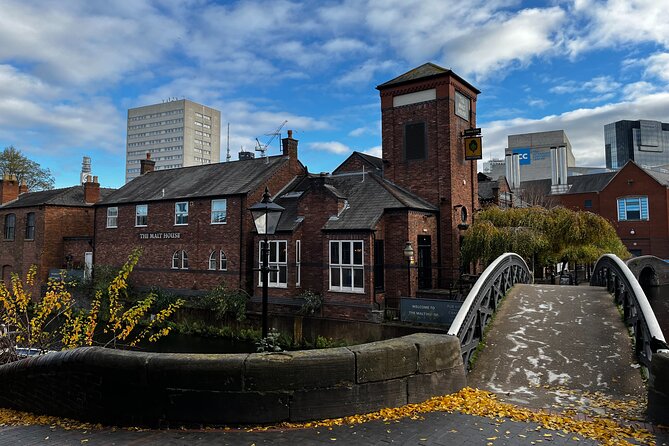
- Canals and Brindley Place: Gas Street Basin to the Canal Builder
- National Sea Life Center note
- Roundhouse Birmingham, Arena, and the ICC: When the City Shifts Gears
- Centenary Square, Birmingham Library, and the Names Behind the Squares
- Stopping strategy that works
- St Philip’s Cathedral Garden: Anglican Roots in a City Center Pause
- Bullring & Grand Central and St Martin in the Bull Ring
- St Martin’s Church Centre (the oldest parish stop)
- Chinatown and the Gay Village: Two Different Neighborhood Endings
- What to Expect From the Walk Itself
- App Tips That Keep You From Losing Time
- Who This Tour Suits Best
- Should You Book This Birmingham Private Self-Guided Walking Tour?
- FAQ
- How long is the Birmingham Private Self-Guided Walking Tour?
- Where does the tour start and end?
- What is the price per person?
- What language is the tour audio in?
- Who is the audio guide?
- How long do I have access to the self-guided tour?
- Is there an in-person guide?
- Are admissions included for everything you pass?
- What if I miss a stop or want to replay it later?
- Is this tour available every day?
Key Highlights You’ll Notice Fast
- Helen’s human audio guide keeps the walk flowing without feeling like a recorded gadget.
- Free stop-by-stop access means you can focus on sights and street-level details.
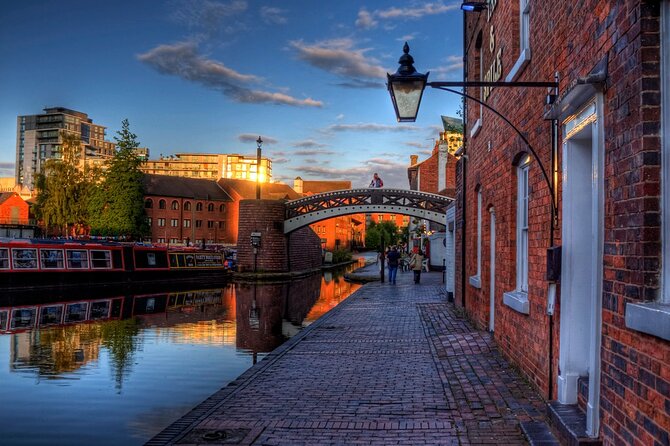
- A canal-heavy route uses real Birmingham facts, like 35 miles of waterways and the goods-transport story.
- Historic squares in a tight loop cover names like Congreve, Chamberlain, and Victoria in about an hour.
- Modern Birmingham checkpoints show up at Brindley Place, Arena, and the ICC, not just older buildings.
- End in the Gay Village so you can finish with food and people-watching.
A Self-Guided Audio Walk With Helen as Your Listener
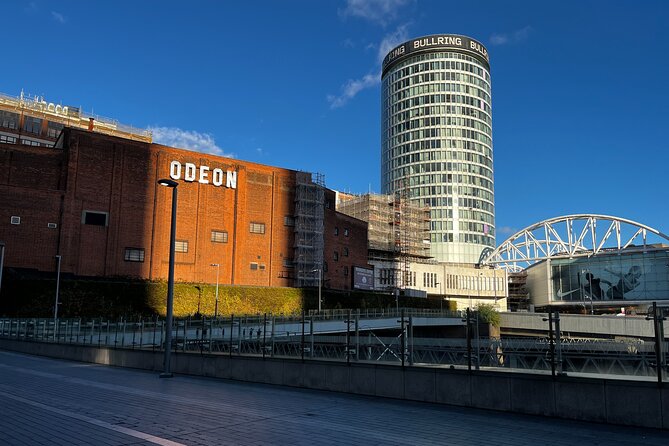
This is built for people who like guidance without babysitting. You follow a GPS route, hit each stop, and play the audio when it fits your pace. Helen is the guide, and the audio is not computer-generated voice. That small detail matters more than it sounds. A human cadence helps you listen through the story while you’re walking, especially when streets are busy and you want the narration to stay clear.
Because it is self-guided and private, you are not syncing steps with strangers. If you want to linger at the canal basin steps, you can. If you want to move quickly between squares, you can do that too.
You can also read our reviews of more tours and experiences in Birmingham.

How the tour feels in real time
The walk is designed as a loop-style city center tour. Most stops are short photo stops with explanations, not long museum sessions. That is ideal if you only have an afternoon, or if Birmingham is one stop on a longer trip and you want your bearings fast.
And yes, Birmingham’s canals show up early. The route leans into the city’s industrial identity, but it does it in a way that stays on foot and stays practical.
Price and What You Get for $12.26
At $12.26 per person, this is one of those deals where you are mostly paying for your time-saving guide. You also get 3 weeks of unlimited access in the app, so you are not locked into one single afternoon. If you miss a stop, you can come back later and still use the material.
You receive the map, directions, and GPS route for each tour, plus audio with videos, pictures, and recommendations. That bundle is what makes a low-cost walking tour work: the support system is part of the product, not an afterthought.
The tour is in English, which keeps things straightforward. If you want a light-touch way to learn the story behind place names and buildings, this is priced like a casual add-on and delivered like a real guide.
Getting Started at 197 Wharfside St to Birmingham Mailbox
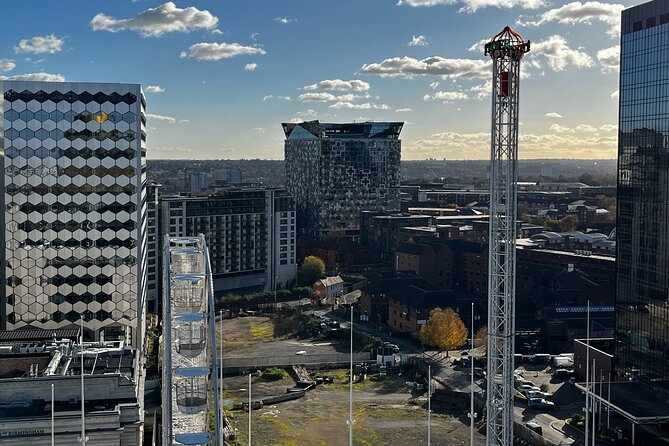
Your walk begins at 197 Wharfside St, Birmingham B1 1QH, and it ends in Gay Village. The starting point is in the city center zone where you can also get there by public transport, and that helps if you are mixing this with other plans.
The first featured stop is the Birmingham Mailbox. Expect the tour to frame it as more than a single building. You’ll hear how it connects to Birmingham’s industrial past and its current identity. This is a good way to start because it sets up a theme for everything that follows: Birmingham keeps rebuilding itself, and it often does it in plain sight.
Practical tip: before you set out, open the tour in the app and make sure the audio and GPS screens load properly. One tricky app setup can cost you an hour, and you do not want to burn your walking window fixing a login on the move.
Canals and Brindley Place: Gas Street Basin to the Canal Builder
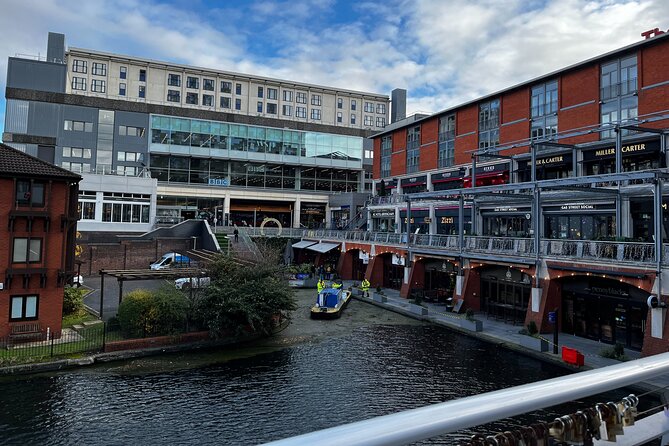
Stop 1 is Gas Street Basin and it gets extra time in the plan. The tour plays up a fun Birmingham claim: Birmingham has 35 miles of waterways, and it has more miles of canal than Venice. Even if you treat that line as city hype, it is still a reminder that canals are not a background detail here. They are part of how Birmingham moved coal and iron.
You’ll hear the canals were dug to transport goods and raw materials. That practical detail helps you look at the waterway and not just think, Nice view. You start noticing how the built environment supports the story of industry.
Stop 2 is Brindley Place, named after the canal-system engineer James Brindley. The tour shares his dates and origin: born in 1716 in Buxton, Derbyshire, and influential in Britain’s 18th century canal transport. This is one of the route’s nicest moments because you get to connect place names directly to the people who shaped the city’s movement network.
National Sea Life Center note
Along Brindley Place, you’ll also run into the National SEA LIFE Centre. The tour mentions it as an architectural highlight, but entrance is not included. You can still appreciate the building from outside, and if you want the aquarium, you’ll need to arrange your own ticket.
If you are traveling with kids, this is worth watching on the route so you can decide whether to make it a separate stop.
Roundhouse Birmingham, Arena, and the ICC: When the City Shifts Gears
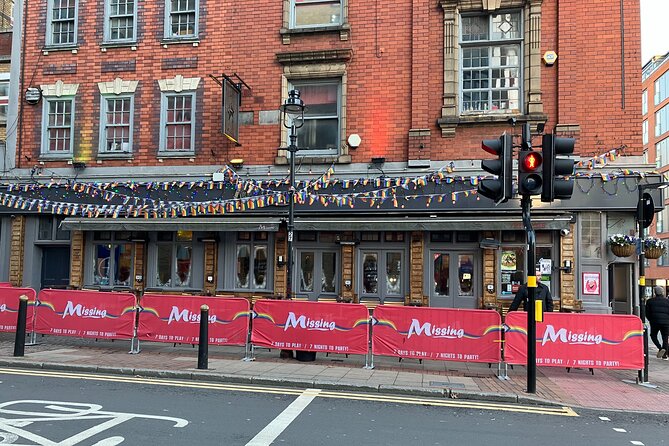
The next sequence leans slightly off the classic postcard path. Roundhouse Birmingham is designed by W.H. Ward and constructed in 1874. The tour calls it distinctive and a little less known than you’d expect. It is a useful shift in pace too. You go from waterways to a building shaped by industrial-age thinking.
Then you move into modern show-and-event Birmingham with Arena Birmingham and the International Convention Centre (ICC). These are not quiet monuments; they’re working venues. They help you understand that Birmingham is not only built from factories and canals. It also organizes big gatherings now, and those venues are part of the city’s current identity.
This section is also a good reminder for planning: if you arrive when events are happening, the streets can feel more crowded. The tour is still doable, but give yourself a little extra patience between stops.
Centenary Square, Birmingham Library, and the Names Behind the Squares
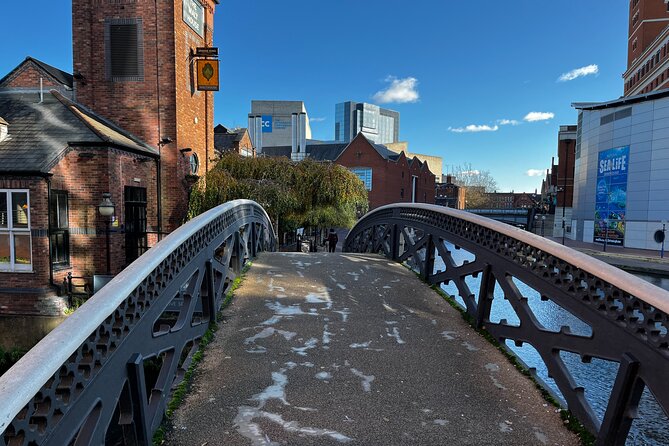
Now the route becomes very readable. You hit a chain of city squares, and each one has a name story you can keep in your head.
Centenary Square starts the square lineup. The tour ties it back to late 19th century urban planning and gives its original name: Congreve Square. That pays off later because the tour explains the namesake, Sir William Congreve, a British Army officer, politician, and innovator. That is the kind of detail that makes a square feel more than a wide open space for photos.
You then walk to the Library of Birmingham. The tour notes its roots in the predecessor library, established in 1861. Even if you do not go inside, that date gives context for why this building is such a statement of civic ambition. It also helps you connect Birmingham’s industrial strength to knowledge and public institutions.
Next comes Chamberlain Square, named for Joseph Chamberlain. The tour also shares its earlier name, Corporation Street Square, linking it to late 19th century origins. Then Victoria Square follows, renamed in 1901 for Queen Victoria’s Diamond Jubilee, after being called Council House Square.
Stopping strategy that works
With all these squares, you can easily overstay and turn a 2 to 3 hour walk into a 4 hour stroll. I suggest doing one short break per square, not a long sit-down. Quick pauses keep the momentum so the tour stays easy.
St Philip’s Cathedral Garden: Anglican Roots in a City Center Pause
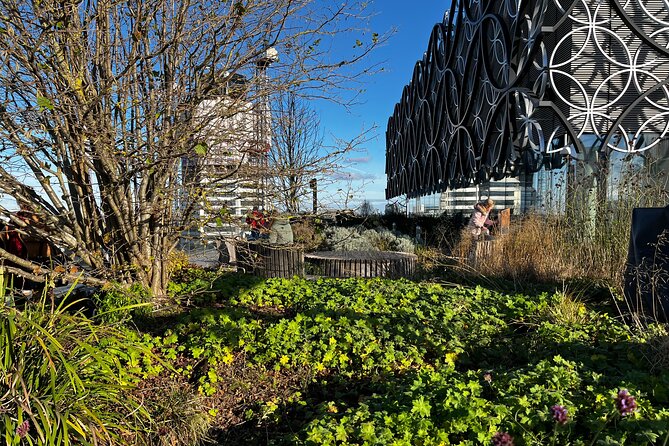
Stop after the squares is St Philip’s Cathedral Garden. The tour points out that Birmingham Cathedral is the third smallest cathedral in the UK, and it traces back to the early 18th century. It is Anglican, and that religious detail adds another layer to the Birmingham story beyond industry and trade.
This stop feels like a breath. You are in the city center, but the garden moment helps you slow down. It is a strong place to listen to the audio fully, since it is less about traffic and more about atmosphere and architecture.
If you are short on time, you can still get value here with a quick walk around the garden edges and a few photos.
Bullring & Grand Central and St Martin in the Bull Ring
The tour reaches one of Birmingham’s busiest hubs with Bullring & Grand Central Birmingham. The important context here is proximity. Grand Central sits adjacent to Birmingham New Street Station, described as a Victorian railway hub. Then the tour adds a practical detail: Grand Central’s Atrium has over 60 shops and restaurants, with options from high-end fashion to local produce.
This is where the tour becomes very useful if you want to plan your meal. After walking, you can decide on the spot. You have choices right next to you, and you do not need to backtrack.
You’ll also see the Bull Statue, used by the tour as a symbol of strength, resilience, and Birmingham’s industrious spirit. Even if you usually skip statues, this one works as a quick landmark because it visually anchors the theme.
St Martin’s Church Centre (the oldest parish stop)
From there, you head to St Martin’s Church Centre, officially St Martin in the Bull Ring. The tour notes it is Birmingham’s oldest parish church, with roots over 800 years. That kind of age number turns your walking lens a bit. You start looking at the street as a long-running corridor, not just modern shops and entrances.
This is a great stop for a slow look at brickwork and shapes, especially if you want the contrast between medieval parish life and the Victorian-to-now transport story nearby.
Chinatown and the Gay Village: Two Different Neighborhood Endings
The route finishes with two city quarters.
First is Birmingham Chinatown. The tour frames it as a culturally rich Chinese quarter with traditions, flavours, and history in the heart of the city. Even without diving into museum-level details, the key value is that it gives you permission to treat the area like a place to explore, not just pass through.
Then you end in Gay Village, described as an inclusive district and a living chronicle of the LGBTQ+ community’s resilience and triumphs. This finish is smart. You are done with the walking guide, and you land in an area designed for people to socialize, eat, and wander.
If you like evening plans, this end point is useful because it sets you up for spontaneity.
What to Expect From the Walk Itself
This experience is listed for 2 to 3 hours and it’s built around short stops and audio cues. You’ll likely spend time at the canals, the squares, and the cathedral garden, and less time at modern venues unless you choose extra time for photos.
You should also expect a city-center walk with moderate physical demands. The tour suggests moderate physical fitness, which usually means you can handle sidewalks and some walking without it being a hiking-style effort.
One more reality check: the tour is free at the stop level, but some attractions you may notice are not automatically included. The SEA LIFE Centre is the clear example here. So if you want to add it, plan that as optional.
App Tips That Keep You From Losing Time
Here’s the one place you can protect your trip: the app experience. The tour is designed to be inside the app, with Helen guiding you through audio. Still, based on real-world app friction people have reported with link access and error messages, I strongly recommend doing a “dry run” the day before or earlier the same day.
- Open the app and confirm the tour plays
- Follow any before-you-go instructions in your email confirmation
- Save the start address (197 Wharfside St) in your phone notes
- If you struggle, switch to Wi-Fi or step inside before trying again
Do that, and you remove most of the risk.
Who This Tour Suits Best
This is a good fit if you want:
- A guided walk without scheduling a guide
- A city-center route that hits canals, churches, and squares
- A way to learn place names with context while you walk
- A finish in an area where you can keep exploring on foot
It may not be the best fit if you dislike app-based experiences or if you want a highly structured, hands-held route with a person waiting for you at each stop.
Because it is a private experience, it works especially well for couples, small groups, and anyone who wants flexibility. If you’re traveling solo, you still get the guided feel, just on your own timeline.
Should You Book This Birmingham Private Self-Guided Walking Tour?
If you like walking tours that teach you something without eating your whole day, I think this is a strong booking. The $12.26 price is reasonable because you’re paying for a real audio guide (Helen), GPS routing, and 3 weeks of access so you can adapt if your schedule changes.
I would book it if you can commit to a quick app check before you set out. If you are the type who hates troubleshooting tech on travel days, do that setup in advance. With that one precaution, you’ll get a satisfying mix of Birmingham’s canal identity, civic squares, and landmark streets, ending in a fun neighborhood where you can keep the momentum going.
FAQ
How long is the Birmingham Private Self-Guided Walking Tour?
It runs about 2 to 3 hours.
Where does the tour start and end?
It starts at 197 Wharfside St, Birmingham B1 1QH, UK and ends in Gay Village, Birmingham.
What is the price per person?
The price is $12.26 per person.
What language is the tour audio in?
The tour is offered in English.
Who is the audio guide?
The audio guide is Helen.
How long do I have access to the self-guided tour?
You get 3 weeks of unlimited access in the app.
Is there an in-person guide?
No, this is self-guided. There is no in-person guide included.
Are admissions included for everything you pass?
Most stops are free to access, but the National SEA LIFE Centre entrance is not included.
What if I miss a stop or want to replay it later?
You have 3 weeks unlimited access, so you can go back to review or adjust your route.
Is this tour available every day?
Yes. It lists opening hours from 12:00 AM to 11:30 PM (for the dates shown).