REVIEW · ROME
Rome: Scavenger Hunt Self-Guided Tour
Book on GetYourGuide →Operated by Stadtspiel Schnitzeljagd GmbH · Bookable on GetYourGuide
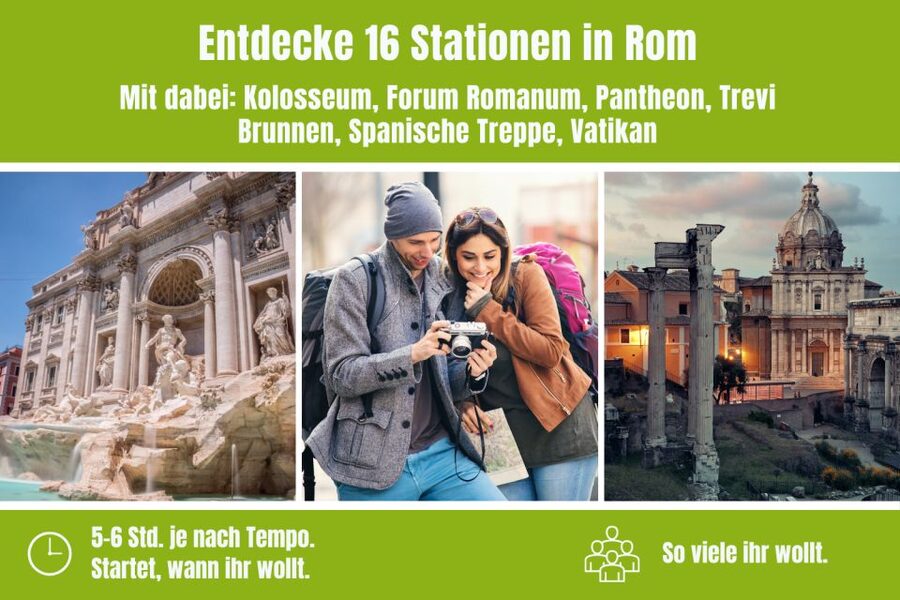
Riddles lead you through Rome’s big icons. This self-guided scavenger hunt turns major sights into a puzzle trail you can pace your way across Historic Rome, from the Colosseum and Forum to Trevi Fountain, the Spanish Steps, and St. Peter’s Square.
I love the flexibility built into the game: you can pause it anytime for photos, breaks, or just to catch your breath. I also like how the route strings together landmark after landmark on foot, so you’re always moving forward with a reason to look up, read signs, and connect streets to stories.
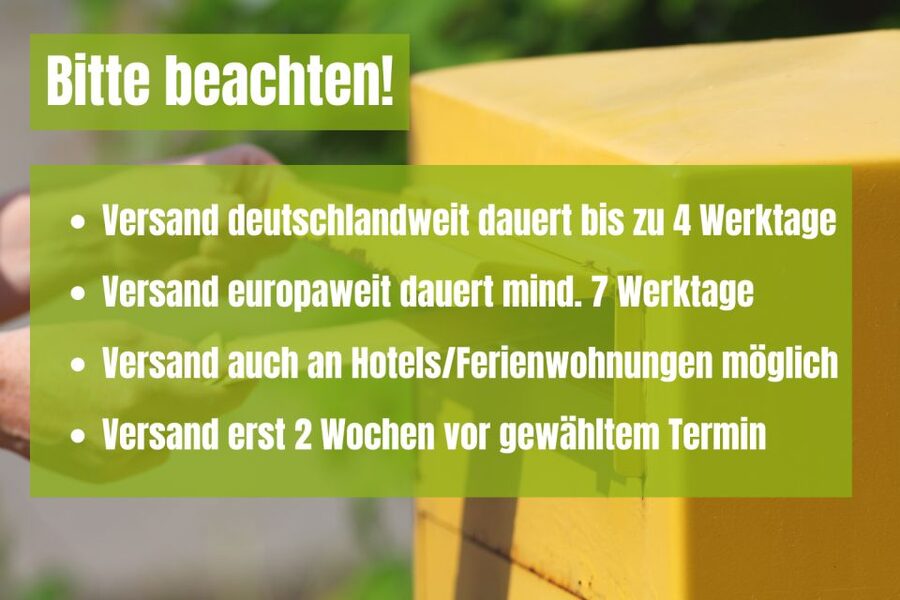
One key consideration: you only get started after the scavenger hunt box arrives by mail (shipping within Germany can take up to 4 working days), and there’s no guide waiting at the meeting point.
In This Review
- Key things to know before you start
- How the Rome scavenger hunt actually works
- Price and value: $53 per group up to 10
- Starting at the Colosseum: your first clues, your first wow
- Forum Romanum to Pantheon and the Hadrianeum
- Piazza Venezia and Piazza Colonna: when the city becomes a puzzle board
- Spanish Steps: plan for the crowd, enjoy the pause
- Trevi Fountain: coin tradition, major decorations, and a logical break
- Vatican City and St. Peter’s Square without a guided pack
- Timing, walking distance, and how to pace the hunt
- What’s included, what you’ll pay for, and what to bring
- Best for families, friends, and independent planners
- Tips to make the envelopes work for you
- Should you book the Rome scavenger hunt?
- FAQ
- Where does the scavenger hunt start?
- Do I need to choose a specific start time?
- How long is the route?
- Is the tour guided?
- Does the price include entrance tickets and transport?
- What comes in the box?
- Can I pick up the box in Rome?
Key things to know before you start
- Self-paced game across Italy and Vatican City, about 5 to 6 hours for the route
- 16 envelope puzzle set plus an emergency envelope with solutions
- About 10 km walking, with lots of café stops along the way
- No guide at the start, so you navigate with the box and your own timing
- Big-sight lineup: Colosseum, Forum Romanum, Pantheon, Spanish Steps, Trevi Fountain, Vatican sites
How the Rome scavenger hunt actually works
This isn’t a guided tour where you follow a person and hope you can hear over the crowd. It’s a self-guided scavenger hunt walking tour you run like a game: you open envelopes, follow instructions, and solve riddles at your own pace.
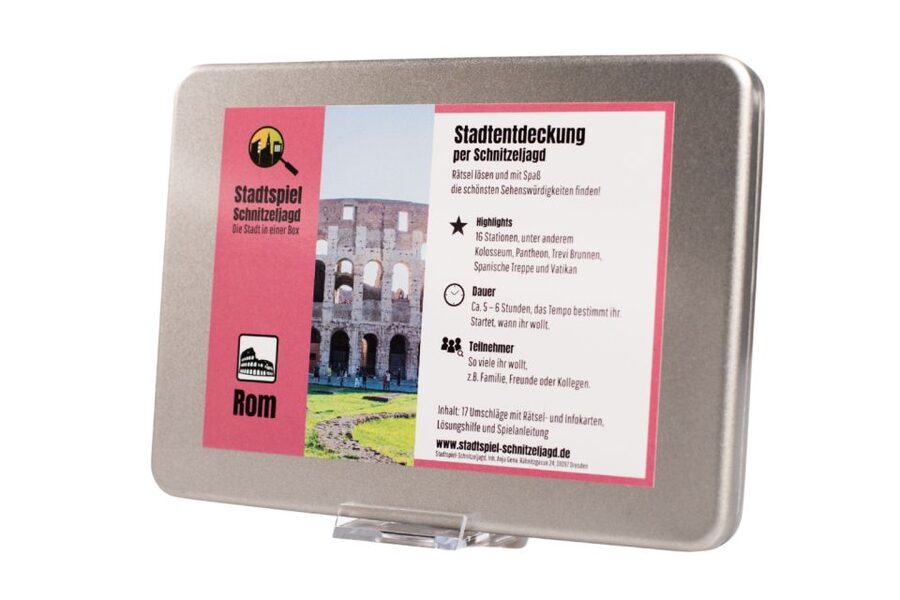
You’ll receive a scavenger hunt box in the mail, with 16 envelopes containing riddles, directions, and facts. There’s also an emergency envelope with all solutions, which is a comfort if a clue feels hard or you just want to keep the day moving.
At the meeting point, there’s no guide. You can start on any date and any time you want. That’s a big deal in Rome, where your best plan is often dictated by lines, weather, energy, and the time you want to linger at Trevi Fountain or the Spanish Steps.
You can also read our reviews of more tours and experiences in Rome.



Price and value: $53 per group up to 10
The price is listed as $53 per group up to 10. That framing changes how you judge value.
If you’re traveling as a bigger crew (up to 10 people), the per-person cost can drop to just a few dollars each, which is hard to beat for a 5.5-hour activity built around major Roman highlights. If you’re only two people, it’s still a reasonable spend for a full walking-game day that replaces a traditional guided outing.
One trade-off to be honest about: because it’s a box-based puzzle, it’s not automatically “worth it” for everyone. If your group has little patience for games, you may feel like it’s pricey for paper envelopes. If you’ve got kids or playful adults, the same format can feel like the whole point.
Starting at the Colosseum: your first clues, your first wow
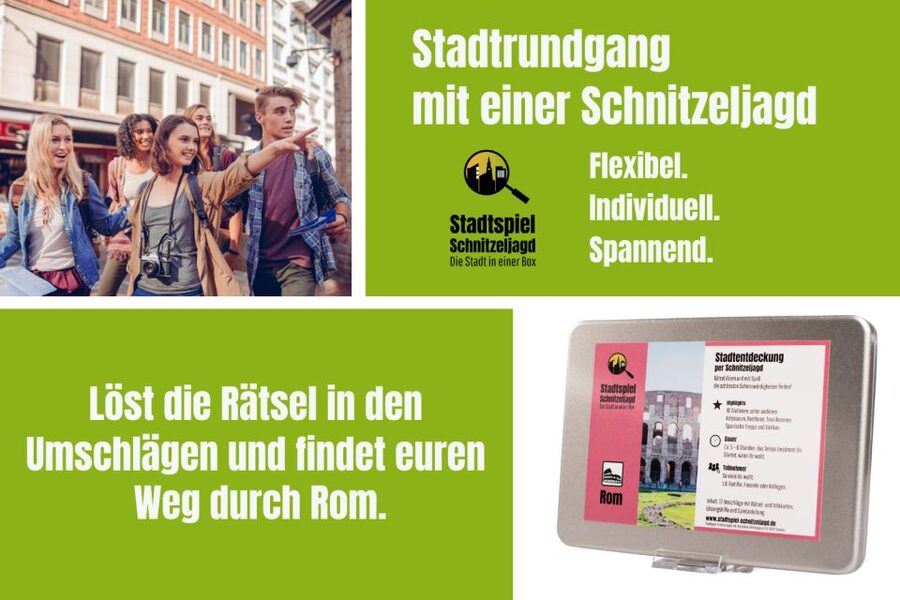
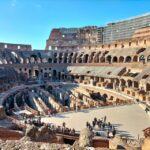
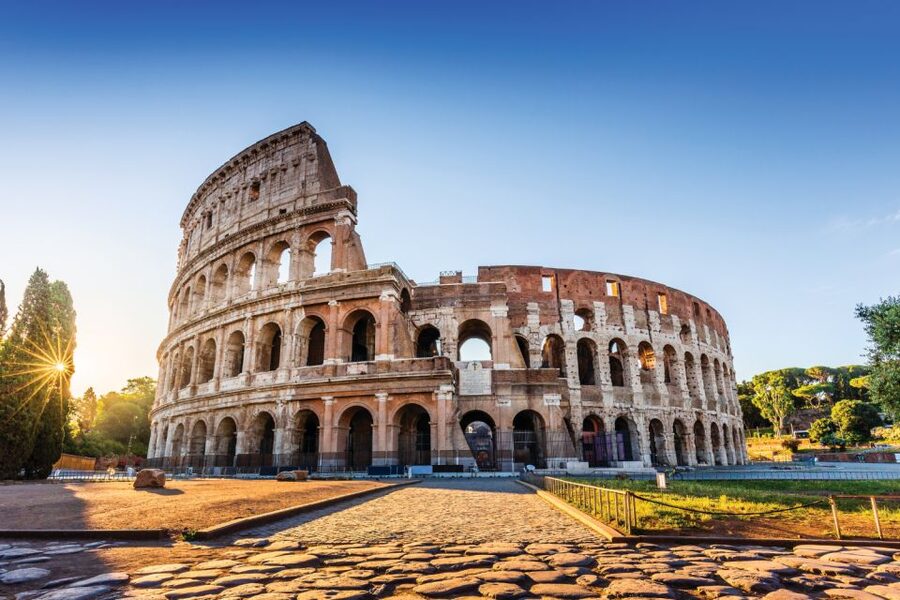
Your scavenger hunt starts at the Colosseum. That’s the best possible opening. You get the city’s most famous outer landmark right away, then you’re immediately rewarded with a next step instead of standing around wondering what to do.
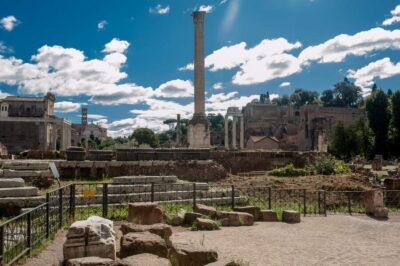
From there, the route takes you into the Forum Romanum. This is where the puzzle format helps: rather than rushing through ruins as background, you have a reason to slow down, notice details, and connect what you’re seeing with the information in the envelopes.
What I like about starting at the Colosseum is the momentum. You’re not spending your first hour “warming up.” You’re getting the wow early, then the game logic keeps you moving through the middle of the route without constantly checking maps.
Forum Romanum to Pantheon and the Hadrianeum
After the opening sights, your hunt keeps working through Historic Rome with a street-level flow. You’ll pass by the Pantheon and the Hadrianeum, which matters because both are different kinds of stops.
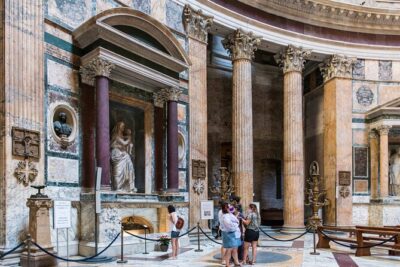
The Pantheon can feel like an instant photo magnet. The trick is to let the game pull you beyond the first quick glance, so you don’t just snap and rush. The envelopes are designed to supply small “look here” nudges and interesting facts, which makes it easier to stay curious even if you’ve seen photos before.
The Hadrianeum (spelled as given in the route description) is a reminder that Rome’s big moments aren’t only about the top two icons. In a normal walking day, it’s easy to skip over lesser-noticed stops. In this format, you’re guided to important points along the way.
Piazza Venezia and Piazza Colonna: when the city becomes a puzzle board
The game routes you through key plazas, including Piazza Venezia and Piazza Colonna. Plazas in Rome can be overwhelming: so much architecture, so many vantage points, and often too many directions at once.
That’s exactly why the hunt format is useful. Each envelope gives you a job, so you’re not trying to plan the whole day in your head. You’re working step-by-step: move to the next place, read the clue, solve the direction.
You’ll also reach Piazza Nova, which gets a fun pop-culture connection. According to the route notes, this place served as a prominent movie backdrop in Iluminati, starring Tom Hanks. Even if you’re not a film person, it adds an extra layer of recognition as you look around. Suddenly you’re not only seeing a real square; you’re seeing a scene that’s lived in someone else’s imagination.





Spanish Steps: plan for the crowd, enjoy the pause

You’ll hit the Spanish Steps and you should expect the usual mix of people and noise that comes with one of Rome’s most photographed locations. In the hunt, you’re not stuck there for long unless you choose to be. The game pacing lets you pause when you want and keep going when the area starts to feel too compressed.
This is also a good place to practice Rome’s best habit: stop for a minute and just watch how locals and visitors flow through the streets. Since the activity is interactive, you can shift from “I’m sightseeing” to “I’m solving” and back again as you move.
Comfort note: the route expects comfortable footwear, and the pacing assumes real walking. The Spanish Steps area can be a “slow down” zone, so keep that in mind when you’re thinking about timing.
Trevi Fountain: coin tradition, major decorations, and a logical break
Next up is the Trevi Fountain, called out for its fascinating decorations. The route also includes the classic local tradition of throwing a coin into the fountain.
Trevi is the kind of stop where the queue and the angles can dominate your time. The scavenger hunt helps because you’re not trying to squeeze everything into one random moment. You get a planned reason to arrive, then you get to decide how long you linger.
This is one of the best places on the route to use the built-in flexibility. Want to step back for a better view? Pause the game. Need a few minutes away from foot traffic? Pause again. You’re running the schedule, not the other way around.
Vatican City and St. Peter’s Square without a guided pack

One of the most interesting claims of this hunt is that it covers both Italy and the Vatican in one day. Practically, that means you’re walking from one “Rome spotlight” to another: from the city’s historic center to Vatican City and St. Peter’s Square.
This matters if you’re trying to compress your sightseeing without turning your day into a sprint. Many visitors either skip the Vatican or they run it on a separate plan. Here, it’s part of the same puzzle trail, which can make the whole day feel like a connected story rather than two unrelated outings.
You should still assume it’s a lot for one day. The hunt is designed for about 5 to 6 hours, and it includes walking roughly 10 kilometers. If you know you’ll tire out easily, you can spread the game out and pause the hunt whenever you need a reset.
Timing, walking distance, and how to pace the hunt

The full route is designed for around 5.5 hours, with an estimated walking distance of about 10 kilometers. That puts it in the “serious walk” category, but not an all-day hike.
Here’s the best way to think about it: the time isn’t only about what you see; it’s about solving. Each envelope takes a minute or two, sometimes more if you and your group argue over the clue. If you want a smoother run, assign one person to read directions and another to solve, especially if you’re traveling with kids.
Also, the game is built with real-life breaks in mind. The route notes mention numerous cafés along the way for a quick espresso and plenty of bistros and restaurants for a longer stop. Since you can interrupt the scavenger hunt and continue at another time, you’re not locked into a rigid tour schedule.
What’s included, what you’ll pay for, and what to bring
The included items are straightforward:
- the scavenger hunt box shipped to you (shipping takes about 4 working days within Germany)
- 16 envelopes with riddles, directions, information, and facts
- an emergency envelope with all solutions
Not included:
- tour-guide (there isn’t one on-site)
- food and beverages
- entrance fees of the sights
- transportation tickets
- arrival and departure to the tour
What to bring:
- comfortable shoes
- the game box
One logistics detail that can surprise people: the box is shipped within Germany only, and pickup in Rome isn’t possible. You’ll want to order with enough lead time to avoid arriving with no box in hand.
Best for families, friends, and independent planners
This hunt is made for people who like control over their time. Since you can start any date and any time, you can fit it into a Rome schedule without fighting a fixed departure.
It can be a hit with families. The envelope setup gives kids something concrete to do: open the next envelope, read the instructions, and hunt for the next location. It also turns walking into a mission, which can reduce the usual “Are we there yet?” energy.
It can also work well with friends who enjoy playful competition and small problem-solving moments. If your group has adults who like the idea of learning facts while moving around, the game format turns sightseeing into an activity.
The honest downside: if your group doesn’t want puzzles, the experience may feel like “just another way to walk between famous places.” And if kids find it too slow or too hard, they might lose interest. It’s not a performance; it’s a self-run challenge.
Tips to make the envelopes work for you
Because there’s no guide, your group will get more out of the day if you treat the envelopes like mini checkpoints.
First, keep the group aligned. If multiple people are trying to read and solve at once, it can slow down. Pick a simple system: one reads, one navigates, one checks the next direction.
Second, use the pause feature when Rome throws you a curveball. The route is long enough that small delays add up. If you want photos, you don’t need to finish the clue in one rush.
Third, treat each famous stop as a chance to connect what you see with what you learn. The envelopes include information and interesting facts for each attraction on the route, and those notes are what help the day feel more than a checklist.
Should you book the Rome scavenger hunt?
If you want a Rome day that’s interactive, self-paced, and built around major icons, this is a strong option. The value can be especially good for groups up to 10, and the box format is a smart way to keep kids (and kid-at-heart adults) engaged while still seeing the Colosseum, Trevi Fountain, and St. Peter’s Square.
Skip it if your group prefers traditional guided explanations, or if you know puzzles will frustrate rather than motivate you. Also plan ahead: the box has to arrive by mail within Germany, and there’s no on-site pickup.
FAQ
Where does the scavenger hunt start?
It starts at the Colosseum meeting point. There is no guide waiting there, and you bring the scavenger hunt box you received by mail.
Do I need to choose a specific start time?
No. You can start on any date and at any time you wish, as long as you have the box in hand.
How long is the route?
The hunt is designed for about 5.5 hours (roughly 5 to 6 hours).
Is the tour guided?
No. It’s self-guided, and there’s no tour-guide included.
Does the price include entrance tickets and transport?
No. Entrance fees and transportation tickets are not included, and you’ll also need to cover food and beverages on your own.
What comes in the box?
You get a scavenger hunt box with 16 envelopes containing riddles, directions, information, and interesting facts, plus an emergency envelope with all solutions.
Can I pick up the box in Rome?
No. The box is shipped and pickup in Rome isn’t possible. Shipping is only within Germany and takes about 4 working days.