REVIEW · POMPEI CAMPANIA
Pompeii: Skip-the-line Entry Ticket with Audio Guide & Map
Book on GetYourGuide →Operated by Tempio Travel Pompei Tickets · Bookable on GetYourGuide
Skip the line, then follow Pompeii at your pace. This Pompeii ticket pairs priority access with an authorized audioguide so you can move through houses, temples, theatres, and streets without being stuck to a group timetable. It’s one of those setups that helps you see a lot, fast, while still keeping your freedom to linger where things feel most interesting.
What I like most is the focus on real-world logistics: you exchange your voucher at the Tempio Travel office at Pompei Scavi – Villa dei Misteri, then head straight to Porta Marina Inferiore for a dedicated entry line. I also like that the audio guide uses a numbered system, plus you get a map and multilingual support, which helps you stay oriented in a place that can feel like a stone maze.
One consideration: the whole experience depends on the audio guide matching what’s open in the archaeological park on the day you go. If certain areas are closed or rerouted, the numbered stops and device cues can feel less smooth than you’d hope.
In This Review
- Key things to know before you go
- Porta Marina Inferiore priority access: the real time-saver
- Where you pick everything up at Pompei Scavi – Villa dei Misteri
- The authorized audioguide: numbers, languages, and what to bring
- Headphones and device use
- The deposit and return rule
- When the audio experience feels less perfect
- Your 3-hour Pompeii self-guided route: how to actually pace it
- Comfortable shoes and water are not optional
- Use the map actively, not decoratively
- If you can upgrade to a live guide, here’s why it helps
- Price and logistics: is $43 for 3 hours good value?
- Small tips that keep your day smooth
- Should you book this Pompeii audio skip-the-line ticket?
- FAQ
- Where do I exchange my voucher for the ticket and audioguide?
- Do I need headphones for the audioguide?
- Is an ID required for the audioguide?
- How long should I plan for the visit?
- What languages are available on the audioguide?
- Is this activity suitable for wheelchair users or hearing-impaired people?
Key things to know before you go

- Dedicated entry at Porta Marina Inferiore helps you bypass the most chaotic queues
- Authorized audioguide device uses numbers tied to what you’re looking at
- Map + multilingual explanations make it easier to navigate on your own
- 3 hours is a good start, not a full Pompeii day if you’re a slow explorer
- Bring a standard jack headphone option since headphones aren’t included
Porta Marina Inferiore priority access: the real time-saver

Pompeii’s biggest enemy is not history. It’s crowds plus confusion. This ticket addresses both by getting you into the site through Porta Marina Inferiore, specifically with a dedicated access line at Piazza Esedra. In plain terms: you spend less time shuffling forward, and more time walking the streets you came to see.
After you collect your ticket and audioguide, you reach the entrance in just a few minutes. That small transfer matters because it keeps your visit rhythm intact. You don’t want to lose momentum right after the “tour start” moment, especially when you’ll likely be covering cobblestones for hours.
Porta Marina Inferiore isn’t just a shortcut. It also helps you start your walk where the day feels easiest to manage. If you’re going in the heat of the day, anything that reduces time standing around is a win.
You can also read our reviews of more tours and experiences in Pompei Campania.


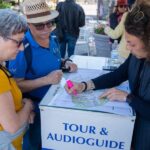
Where you pick everything up at Pompei Scavi – Villa dei Misteri

Plan for a short stop before you ever reach Pompeii’s gates. You’ll exchange your voucher at the Tempio Travel office on the first floor of the EAV Station Pompei Scavi – Villa dei Misteri (Villa dei Misteri 1). This is the Circumvesuviana train station area, and it’s the place that turns your online booking into the physical access you need.
From there, it’s a quick walk to the entrance line at Piazza Esedra. The whole point is to avoid hunting for the right ticket window while you’re already on Pompeii time.
Two practical things to keep in mind here:
- You’ll need a passport or ID card as a deposit for the audioguide device.
- You should be ready to ask on-site if you’re unsure what to do next. The process is straightforward, but it still involves exchanging vouchers and collecting equipment.
If you’re driving, there’s an extra possible perk: if open and available, you may find free parking (not gated) at Osteria Nonna Cherubina in Via Andolfi 46 starting from 01/04. This is optional and depends on conditions, so I wouldn’t build your whole plan around it.
The authorized audioguide: numbers, languages, and what to bring

The audioguide experience is built around the idea that Pompeii is big enough to overwhelm even motivated people. Instead of trying to read signs and guess what you’re looking at, the device uses a numbered system that corresponds to explanations on the site.
You get a multilingual device with French, German, Italian, English, and Spanish options. That matters on a day when you want information instantly, not after you’ve found a sign, fought crowds, or asked a staff member for directions.
Headphones and device use
You can use the audioguide hands-free or with standard jack headphones. Here’s the catch: headphones are not included, and you’ll want a standard universal jack type (not iPhone-style). In real life, that means either bring your own set or be ready to buy something if you forgot.
The deposit and return rule
You’ll leave your ID as a deposit, then get it back when you return the device. Also, you must return it before the office closes, so don’t plan your ending hour as if the park is the only thing with time rules.






When the audio experience feels less perfect
A few people reported that the audio can feel harder to follow if parts of the site are shut or entrances shift. That’s not a reason to skip Pompeii—it’s just a reality of active archaeological sites. If you notice your device pointing you to an area that’s not accessible that day, use the map to re-route and keep moving.
Your 3-hour Pompeii self-guided route: how to actually pace it
This is sold as a 3-hour experience, and that’s a realistic window if you pick a direction and keep your pace steady. Pompeii is huge, though—so three hours usually feels like a “best-of” plan, not a full immersion. In practice, I’d treat the 3 hours as a strong first visit, with a comeback in your future if you want to slow down.
The audioguide is designed to take you through major types of spaces: houses, temples, theatres, and streets. What makes this format valuable is that you don’t have to decide in advance what order to see things in. You can follow the device cues, then pause when something catches your eye.
Here’s how I’d pace it so you don’t burn time:
- Start with the main clusters you want first, then use the map to keep your bearing instead of backtracking.
- Plan for breaks. Pompeii isn’t just walking; it’s walking on cobblestones in sun with limited shade.
- Don’t try to “see everything.” Aim to see the best set of streets and public spaces you can comfortably manage.
Comfortable shoes and water are not optional
From real visit tips: comfortable shoes are a must because cobblestones add up fast. Also bring water, since shade can be limited and the heat can sneak up on you even if you arrive early.
Use the map actively, not decoratively
A lot of people underestimate how quickly Pompeii turns into a maze. The included map is your friend for two reasons: it helps you find what the audio is referring to, and it prevents your day from turning into guesswork. Use it every time you finish a big stop—scan, confirm your next direction, then go.
If you can upgrade to a live guide, here’s why it helps
The core product here is self-guided with an audio device. Still, some visitors get offered an upgrade to a live guided tour once they arrive, often for an extra fee. People describe it as a way to get more context and reduce “where do I go next?” stress.
If you do opt for a live guide, names that have shown up with strong feedback include:
- Eraldo (praised for being informative and funny)
- Lara (praised for a good selection of areas and clear explanations)
- Alfonso / Alissano (praised for engaging delivery)
- Astrid (praised for making it work for mixed groups and being inclusive)
- Julià (praised for managing big groups)
Even if you don’t pick a live guide, this matters for your decision-making: audio is great for freedom, but a human guide can help you move efficiently and connect the details you’re seeing with the bigger story of how Pompeii functioned.
Price and logistics: is $43 for 3 hours good value?
At $43 per person for a 3-hour visit, what you’re really paying for is not just entry. You’re paying for the combination of:
- Skip-the-line / dedicated access from Porta Marina Inferiore
- A full entrance ticket bundled with the audioguide device
- A map and multilingual support at pickup
That can be good value if:
- You have a time limit and want a strong visit without booking a separate guided tour.
- You’re a first-timer who wants context but still likes flexibility.
- You’d rather spend time walking than figuring out logistics.
Where the value can feel thinner is if you’re hoping to “wander the whole city” with deep pacing. Pompeii can easily stretch beyond 3 hours, and some people end up wanting more time—especially if you’re drawn to smaller details and side areas.
There’s also the reality check: some people felt the “skip” promise didn’t remove all queuing, because you still have a voucher exchange step and can still face general visitor flow at entrances. The priority line helps, but it’s not magic.
Small tips that keep your day smooth

These are the kinds of details that make Pompeii feel manageable instead of exhausting:
- Bring your own standard jack headphones if you can. The device can work hands-free, but having headphones usually makes it easier.
- Don’t forget your passport or ID card for the audioguide deposit.
- Go early if you can. One of the best heat-and-crowd strategies is starting in the morning.
- Expect some closures or maintenance impacts. A few visitors noted specific areas like major theatre spaces can be closed, which affects what you’ll be able to follow on the device that day.
- If the audio feels mismatched, switch to map navigation and keep moving. It’s still a strong way to see the essentials.
And yes—getting turned around is common even with a map. That’s not failure. It’s Pompeii doing Pompeii things.
Should you book this Pompeii audio skip-the-line ticket?
Book it if you want:
- Priority entry without the rigid structure of a full group tour
- A numbered, multilingual audioguide that helps you understand houses, temples, theatres, and street life
- A practical plan you can complete in about 3 hours (without wasting time figuring logistics)
I’d think twice if:
- You hate any chance of device mismatch if an area is closed. (This can happen on active sites.)
- You’re looking for a long, slow, everything-on-the-boardwalk kind of day. You might feel rushed in 3 hours.
- You’re counting on a smooth experience without bringing your own headphones. Headphones aren’t included.
If you’re doing Pompeii as a first major stop, this is a solid way to get in, get oriented, and see the place in a way that still feels like yours.
FAQ

Where do I exchange my voucher for the ticket and audioguide?
You exchange your voucher at the Tempio Travel office on the first floor of the EAV Station Pompei Scavi – Villa dei Misteri, at 1 Villa dei Misteri street. After that, you head to the Porta Marina Inferiore entrance in Piazza Esedra.
Do I need headphones for the audioguide?
The audioguide device can be used hands-free or with standard jack headphones (headphones are not included). You should bring headphones and make sure they use a standard jack type (not iPhone ones).
Is an ID required for the audioguide?
Yes. A valid passport or ID card is required as a deposit for the audioguide device, and it is returned when you return the device.
How long should I plan for the visit?
The duration is 3 hours. Check available starting times, then plan to use the audio guide and map at your own pace within that window.
What languages are available on the audioguide?
The audioguide device includes explanations in French, German, Italian, English, and Spanish.
Is this activity suitable for wheelchair users or hearing-impaired people?
No. This package is not suitable for wheelchair users or hearing-impaired people.