REVIEW · BELFAST
Belfast’s Titanic Quarter: A Self-Guided Audio Tour
Book on Viator →Operated by VoiceMap Audio Tours · Bookable on Viator
If you like your sightseeing on your feet, this fits. Belfast’s Titanic Quarter comes alive with a self-guided audio stroll that tracks you around the waterfront landmarks. It’s fast, cheap, and built for your pace, from Belfast Harbour Marina to the Titanic Dock and Pump House area.
I especially like two things: the offline VoiceMap setup (audio, maps, and geodata are available without data) and the simple route that passes major Titanic-era sights without forcing you into ticket lines. The tour also feels flexible, since you can pause, linger, and move as you choose.
The main drawback to plan for is practical: you need your own smartphone and headphones, and the app may take a couple tries to download fully before you start.
In This Review
- Key highlights worth planning around
- Price and what you actually get for $6.99
- Start at Belfast Harbour Marina, then let the app guide your rhythm
- SS Nomadic: the first “what am I looking at?” moment
- Titanic Belfast museum: use the audio to connect what you notice
- Titanic Hotel Belfast: a stop that changes the tone
- The slipways in Belfast: where the quarter’s working vibe shows
- The Iron Throne sculpture: a fun pop of modern culture
- The Great Light, Maritime Mile: a landmark you can treat like a waypoint
- HMS Caroline: closing in on the story’s “ship” thread
- Finish near the Titanic Dock and Pump House: end at the setting, not the exit
- How long is it, and why that timing matters
- App reality check: offline is great, but download before you go
- Walking experience: a straightforward route that rewards slower attention
- Who should book this audio tour
- Should you book the Belfast Titanic Quarter audio tour?
- FAQ
- How long is the self-guided audio tour?
- Where does the tour start and end?
- Is the audio tour available offline?
- What do I need to bring?
- What language is the tour in?
- Do I need tickets for museums or attractions on the route?
- How much does it cost?
- Is the tour private for my group?
- Can I cancel or change the booking?
- Is there an opening-hours window?
Key highlights worth planning around
- Offline VoiceMap audio and maps so you can walk without relying on cell service
- A short 30 to 45 minute route that still covers the core Titanic Quarter sights
- Major landmarks in sequence: SS Nomadic, Titanic Belfast, Titanic Hotel, slipways, and more
- Outdoor walking with a guided thread so you know what you’re looking at as you go
- Lifetime access in English, meaning you can repeat the walk whenever you want
Price and what you actually get for $6.99
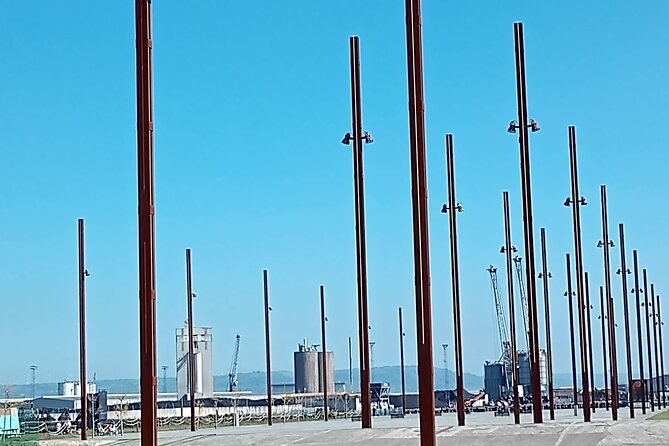
For $6.99 per person, you’re buying a guided experience that’s mostly about interpretation, not entrances. The tour includes lifetime access in English, plus offline access to audio, maps, and geodata inside the VoiceMap app. There are no museum tickets bundled, and you aren’t paying for transport either, so you’re free to add (or skip) extra stops based on your day.
In real terms, this pricing makes sense if you’re doing Belfast Harbor or Titanic Quarter anyway. If you only have a short time window, the 30 to 45 minute format is ideal. And since you keep access for the long term, it’s also good value if you like revisiting places later or if you have multiple days in the area.
Start at Belfast Harbour Marina, then let the app guide your rhythm
The walk begins at Belfast Harbour Marina, Old Channel Rd, Belfast BT3 9DT. You’ll start by getting oriented with the VoiceMap app and hearing how the tour works. Even before you reach the bigger sights, this intro is helpful because it sets the expectation: you’re walking a defined route and listening in sync with what you pass.
The tour is offered in English, and it runs as a private activity for your group only. That matters because it keeps things calm. You’re not squeezed into a big group schedule or trying to hear over other people. You’re simply following the audio thread along a waterfront stretch.
One practical note: because the tour includes offline audio and maps, your best move is to download everything before you step outside. A glitch in the download process can slow you down, and you don’t want to be troubleshooting while you’re standing near the start.
SS Nomadic: the first “what am I looking at?” moment
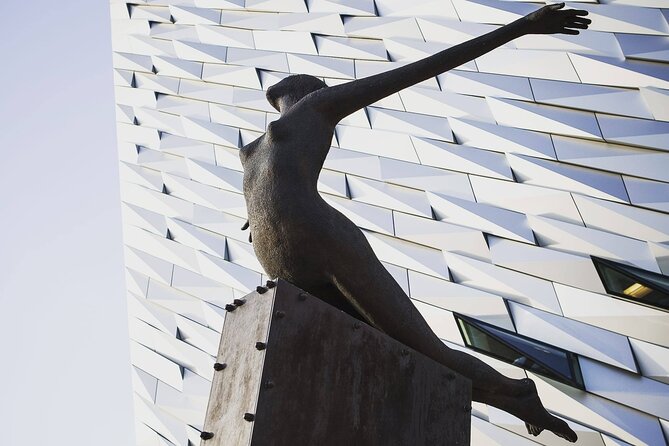
One of the best parts of an audio walk is getting context for the stuff you’d otherwise just glance at. Early on, the route passes SS Nomadic, and the audio explains what you’re seeing as you walk.
Even if you’re not trying to memorize details, this kind of first landmark helps you “tune in” quickly. It gives you a framework for how the waterfront pieces connect, so later stops don’t feel like random points on a map. If you’re the type who likes to understand the big picture while you stroll, this opening works.
Potential drawback here: because you’re listening while moving, you have to stay a little attentive. If you stop for photos at every step, you might lose the thread. The fix is easy—pause audio when you need it, then restart when you’re ready to continue.
Titanic Belfast museum: use the audio to connect what you notice
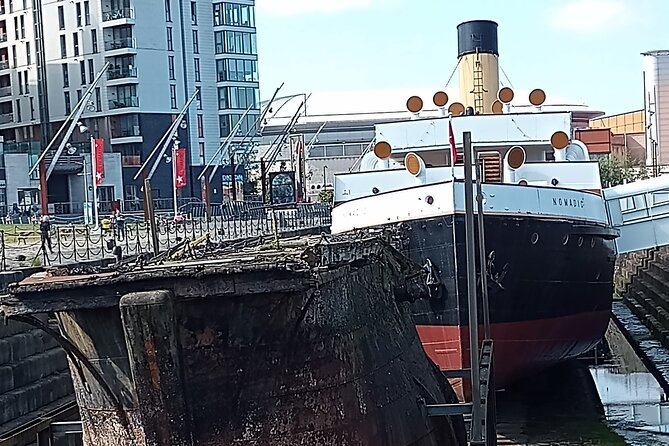
As the route passes Titanic Belfast, you’ll hear commentary while you walk by the museum. This is a smart placement. You’re in the right area to connect visual cues to the meaning of what you’re seeing, without committing to a museum ticket just to get a guided experience.
I also like the idea of doing it in this order: museum first, audio walk second. After time inside, the outside walk can turn into a map you can feel in your mind—like you’re stepping back out to see the setting that shaped what you just learned. If you’re short on time, you can also flip it. The audio may help you decide what parts of the museum are most worth your attention.
Either way, remember the tour doesn’t include entrance fees. So if you want indoor time, plan it separately.
Titanic Hotel Belfast: a stop that changes the tone
Next up is Titanic Hotel Belfast. The audio treats it as part of the same waterfront story rather than just a scenic building you pass on the way.
This is where an audio tour earns its keep. The Titanic Quarter isn’t just about ships in water; it’s also about how the area is reused and reimagined now. By putting the hotel in the sequence, the tour helps you see the waterfront as an evolving place, not only a museum exhibit.
If you’re someone who dislikes “stand and listen” experiences, this part still works because you’re moving. The commentary stays tethered to what’s outside, not to a classroom style lecture.
The slipways in Belfast: where the quarter’s working vibe shows
The route passes the slipways in Belfast, and the audio discusses them while you walk. Even without museum-level immersion, seeing slipways from outside gives you a feel for the industrial side of the story—function, construction, and the waterfront’s working logic.
This is also a nice stretch for slow walking. You can look around as the audio gives you something to pin your attention to: the geometry of the waterfront, the way structures line up, and how the space is built for movement.
One consideration: if you’re hoping for a lot of interior stops, this is not that type of tour. This section is about what’s visible and how it connects. If you want hands-on museum time, you’ll still need to add those separately.
The Iron Throne sculpture: a fun pop of modern culture
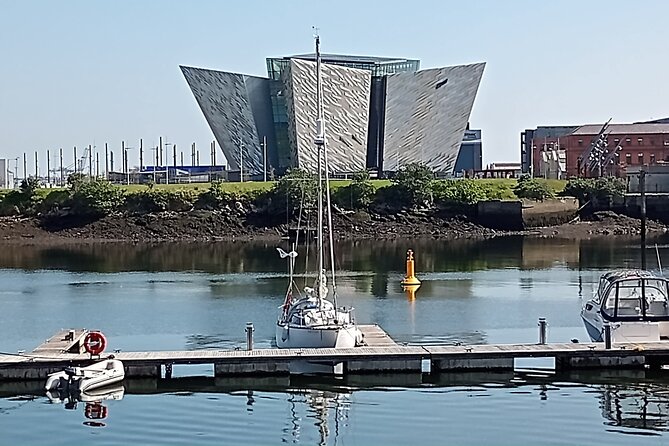
As you continue, you’ll pass The Iron Throne – Glass of Thrones sculpture. This is a change of pace. Instead of staying only in Titanic mode, you get a moment of modern pop culture anchored in the same area.
For me, this kind of stop is useful because it gives the walk variety. It also helps if you’re traveling with someone who may not be as focused on ships. A visual landmark like this breaks the “too much serious stuff” feeling that can happen on theme-heavy days.
The Great Light, Maritime Mile: a landmark you can treat like a waypoint
Next comes The Great Light, Maritime Mile. Since it’s a named feature on a larger maritime-themed stretch, it works well as a psychological waypoint. You’re not just moving from one sight to the next; you’re following a route that has structure.
The audio here helps you keep track of why you’re seeing what you’re seeing. Even if you don’t know the maritime mile concept going in, listening while you approach makes the area’s layout easier to understand.
Practical tip: use this moment to check your bearings. If you’re taking photos or pausing often, this is a good place to make sure your app is still running and your position is correct in the map.
HMS Caroline: closing in on the story’s “ship” thread
The route passes HMS Caroline, with audio that you listen to while walking. Since HMS Caroline is a ship-related landmark, it adds another “anchor” to the waterfront theme: this isn’t only about Titanic in the narrow sense. It’s also about the wider maritime connection of the quarter.
As you get closer to the end, the audio sequence tends to feel like it’s tying loose ends together. That helps you end with a stronger sense of place rather than just finishing because the timer ran out.
If you’re the type who likes to absorb at a steady pace, try not to speed through the later part. You’ll usually get more from the final stretch when you’re already tuned in.
Finish near the Titanic Dock and Pump House: end at the setting, not the exit
The tour ends near Titanitc’s Dock And Pump House, with the walk ending around Titanic Distillery & Pump House NI Science Park, Queens Rd, Queen’s Island. The tour indicates you’ll finish on Thompson Dock near the pump house area.
Ending at a working-feeling waterfront structure is a good choice. It gives the walk a physical landing spot that matches the theme. It’s also convenient for continued exploring, since the finish point is still within the same Titanic Quarter zone.
I like ending walks like this because it’s not just a trip to a single attraction. It’s more like you’re tracing the perimeter of the story. When you finish, the area often feels more coherent.
How long is it, and why that timing matters
The duration is listed as about 30 to 45 minutes. That time window is one of the tour’s biggest selling points. You can fit it between museum time, a meal, or a longer waterfront wander without needing a full afternoon.
You also get a predictable pacing option. If you walk briskly and listen straight through, you’ll likely be done in the shorter range. If you pause for photos or take your time with the audio cues, you can stretch toward 45 minutes.
A small timing reality: your actual experience depends on whether your audio is already downloaded offline. If the app download stumbles, that eats into your listening time.
App reality check: offline is great, but download before you go
The biggest practical learning from the experience is simple: treat the app setup like part of the tour, not an afterthought. You’re provided offline access to audio, maps, and geodata, but that only helps if your phone is ready.
I recommend you do this:
- Download the tour content on Wi-Fi before you start walking
- Give it time to complete rather than walking immediately and hoping it catches up
- Bring your own headphones, then do a quick audio check before you leave the start area
Once the download is done, the listening part tends to work smoothly. The offline approach is exactly what makes this tour feel low-stress when you’re out near the water.
Walking experience: a straightforward route that rewards slower attention
Because this is self-guided, you’re in control of your pace. You can pause, restart, and move at your own speed. That’s particularly valuable along the Titanic Quarter, where some spots invite photos and others reward attention to details.
From a comfort standpoint, it’s not a multi-hour endurance test. It’s a contained walk with clear start and end points, built around a compact concentration of recognizable landmarks. That’s why it works well even if you’re not doing a lot of additional sightseeing that day.
If you want a stronger impact, use a two-step rhythm:
1) See one anchor attraction (like Titanic Belfast)
2) Then do the audio walk afterward to connect what you learned to what you see outside
This order helps the whole quarter click in your head.
Who should book this audio tour
This is a good fit if you:
- Want a guided feel without joining a formal group
- Like short walks with major landmarks in sequence
- Prefer offline audio and maps
- Want something you can repeat later thanks to lifetime access
- Are visiting the Titanic Quarter and want extra context between or around indoor attractions
It’s not the best choice if you:
- Don’t want to use your phone and headphones outdoors
- Prefer fully narrated tours with a person accompanying you at every stop
- Expect lots of museum-type entrances included with the price
Should you book the Belfast Titanic Quarter audio tour?
Yes, if your goal is a fast, budget-friendly way to turn the Titanic Quarter into a story you can follow while you walk. At $6.99, the lifetime access plus offline VoiceMap tools make it hard to beat for value, especially if you’re doing any Titanic-related indoor time during your visit.
Before you go, make one smart preparation move: download the tour content offline ahead of time so you’re not stuck wrestling with the app near the start. If you handle that, you’ll get a smooth, easy route through the area’s most recognizable waterfront landmarks—ending in the right spot near the Dock and Pump House where the theme feels complete.
FAQ
How long is the self-guided audio tour?
It typically takes about 30 to 45 minutes.
Where does the tour start and end?
It starts at Belfast Harbour Marina, Old Channel Rd, Belfast BT3 9DT. It ends near Titanic’s Dock and Pump House on Thompson Dock at the Titanic Distillery & Pump House NI Science Park area, Queens Rd, Queen’s Island, Belfast BT3 9DT.
Is the audio tour available offline?
Yes. Audio, maps, and geodata are available offline.
What do I need to bring?
You’ll need a smartphone and headphones. A smartphone and headphones are not included.
What language is the tour in?
The tour is offered in English.
Do I need tickets for museums or attractions on the route?
No. Tickets or entrance fees to museums or other attractions are not included.
How much does it cost?
The price is $6.99 per person.
Is the tour private for my group?
Yes. Only your group will participate.
Can I cancel or change the booking?
No. It is non-refundable and cannot be changed for any reason.
Is there an opening-hours window?
The tour shows posted hours as Monday through Sunday from 12:00 AM to 11:59 PM, and the listed availability runs from 07/30/2020 to 02/07/2027.