REVIEW · POMPEII ARCHAEOLOGICAL SITE
Pompeii: Entry Ticket with Optional Audio Guide
Book on GetYourGuide →Operated by GetYourGuide Tours & Tickets GmbH · Bookable on GetYourGuide
Pompeii feels close enough to touch. With a reserved ticket and optional official audio guide, you walk ancient streets at your pace—no frantic line-chasing, no fixed tour rhythm. You’ll see how Romans lived, shopped, bathed, worshiped, and watched shows, all across a site preserved by volcanic ash.
I love two things most. First, you get your voucher on your phone and can move toward entry fast. Second, the site setup supports wandering: there’s free luggage storage, lots of room to pause, and you can spend as much or as little time as you like in each zone.
One catch: the audio guide system depends on picking up (and returning) the device at the park’s official desk at Porta Marina Superiore, and signposting can feel confusing when you arrive. Also, like any large ruin site, some buildings may not be open when you go, so the audio track doesn’t always match what you can physically see.
In This Review
- Key highlights you’ll actually notice
- Choosing Pompei Express vs Pompei+ (and what you actually see)
- Getting in fast: vouchers, Porta Marina Superiore, and the audio guide desk
- How to use the official audio guide without getting lost
- Your self-paced route: Forum, baths mosaics, and the amphitheater
- Villa stops on Pompei+: Villa of the Mysteries, Diomedes, and Regina
- Timing tips for a big site: how long you should budget
- Price and value: is $26 worth it compared with buying on-site?
- Who should book this Pompeii ticket with audio guide?
- Should you book this Pompeii ticket with optional audio guide?
- FAQ
- What’s included in the ticket?
- What’s the difference between Pompei Express and Pompei+?
- Does Pompei Express include the suburban villas?
- Where do I pick up the audio guide?
- Do Bluetooth headphones work with the audio guide device?
- Is an ID required for the audio guide?
- What should I bring to enter Pompeii?
- How long is the ticket valid?
- What time is the last entry for Pompei+?
- Is Pompeii accessible for wheelchair users?
Key highlights you’ll actually notice
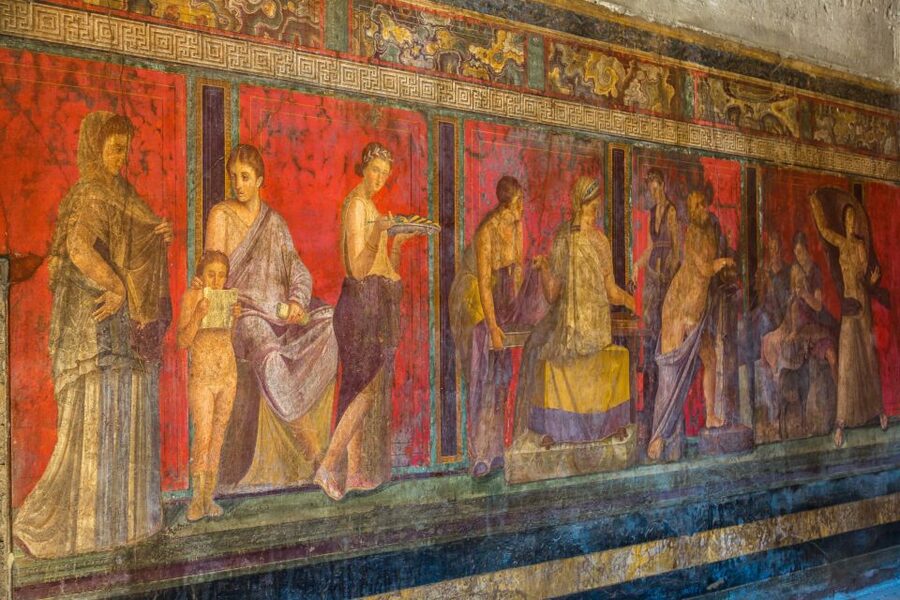
- Pompei Express vs Pompei+: choose ancient city only or add suburban villas (Villa of the Mysteries, Villa of Diomedes, Villa Regina + Antiquarium).
- Audio guide pickup at Porta Marina Superiore: plan your first 20 minutes around getting the device correctly.
- Self-paced navigation: the audio guide helps you orient as you walk from stop to stop.
- Major anchors are worth the hike: amphitheater, public baths with mosaics, temples, and the frescoed Villa of the Mysteries.
- Headphones matter: Bluetooth headphones don’t work with the audio device, so bring wired headphones.
- You’re walking a lot: even with a ticket time slot, Pompeii is big, so wear shoes you trust.
Choosing Pompei Express vs Pompei+ (and what you actually see)
This ticket comes in two flavors, and your choice affects what your day really looks like.
Pompei Express covers the ancient city of Pompeii. That’s the core “walk the streets” experience—forums and shops, temples and theaters, villas, and the big public sites. It’s a great fit when you want the essentials without adding extra transfers or more walking.
Pompei+ includes the ancient city plus suburban villas: the Villa of the Mysteries, Villa of Diomedes, and Villa Regina in Boscoreale with the Antiquarium. If those frescoed villas are your priority, Pompei+ is the smarter pick. Just know timing matters: the last entry for Pompei+ is 3:30 p.m. in winter (Nov 1–Mar 31) and 5:30 p.m. in summer (Apr 1–Oct 31).
If you’re deciding, I’d use this rule: if you only have one day and you’re curious but not obsessed with the outlying villas, go Express. If you want the villas that people talk about most, pick Pompei+ and budget more walking time.
You can also read our reviews of more tours and experiences in Pompeii Archaeological Site.

Getting in fast: vouchers, Porta Marina Superiore, and the audio guide desk

The easiest way to have a smooth start is to treat your first moments at the entrance as a short checklist.
You’ll show your ticket voucher at the site and enter to begin exploring. If you select the audio guide, you collect it inside the Pompeii Archaeological site at the official desk near the ticket office at Porta Marina Superiore. Importantly, audio guides can only be picked up and returned at that official desk area—so don’t assume you can grab it elsewhere.
One practical tip that saves time: there’s an e-ticket/voucher kiosk near the entrance area (described as far left) that helps people avoid the longest ticket lines. If you’re arriving during peak hours, this matters. Even with reservations, confusing lineups can happen, so walking with purpose beats wandering on your phone.
Plan to bring a passport or ID card. A valid ID is required as a deposit to rent the audio guide device.
How to use the official audio guide without getting lost

The audio guide is the main reason this ticket feels more than just an entry pass. You get a digital audio guide available in multiple languages (including English, German, French, Italian, Spanish), and the optional audio guide device is listed with additional language options (English, Italian, Chinese, Japanese, Portuguese, Russian, German, French).
A few things to set expectations right:
- The audio guide also functions like a map-and-orientation aid as you move around.
- It’s not a miracle GPS system. Some people find it helpful for context, but they still need to look up at the buildings and match the area they’re standing in.
- Some explanations you hear may refer to spots that are farther away or not accessible at that moment.
Headphones are non-negotiable. The device doesn’t work with Bluetooth headphones, so bring wired headphones. The unit itself is provided by the site, but you supply the sound.
If you want the best experience, do this: start by listening long enough to understand what you’re looking at—then switch to shorter bursts as you move. That keeps you from standing still too long and helps you keep your day moving.
Your self-paced route: Forum, baths mosaics, and the amphitheater

Pompeii works best when you treat it like neighborhoods, not one long hallway. You’ll bounce between public buildings, homes, and religious sites—each one telling a slightly different story about everyday Roman life.
Here are the anchors I’d aim for as you walk through the ancient city:
The market and daily life scenes
You can practically feel the “where Romans picked up lunch” vibe in the public areas. The streets and commercial spaces make Pompeii more human than you expect—less museum, more lived-in town.
Public baths with mosaics
The baths are a big payoff for anyone who likes visuals. People specifically point out the mosaics, which are detailed and striking even after centuries.
The House of the Faun
This is one of the better-known stops and one review mentions it as a Hellenistic-style highlight. It’s a good place to slow down and pay attention, since the scale and design show wealth and taste.
The amphitheater
When you reach the amphitheater, imagine an afternoon show and crowds filling the seats. The layout makes the “sitting in the audience” idea feel real fast, even if you’re not listening to the audio at that exact moment.
Temples: Venus, Apollo, and Jupiter
Pompeii’s religious spaces help the city feel complete. The temples of Venus, Apollo, and Jupiter are called out as specific points of interest, and they’re great for a photos-and-context break.
The Villa of the Mysteries (main city stop)
Even if you pick Pompei Express, you can still see this part of the city’s famous villa world through the main-route highlights. The frescoed villa is frequently singled out, and it’s easy to see why: the paint feels strangely alive, like the walls are still waiting for someone to look closely.
Petrified bodies at the far end
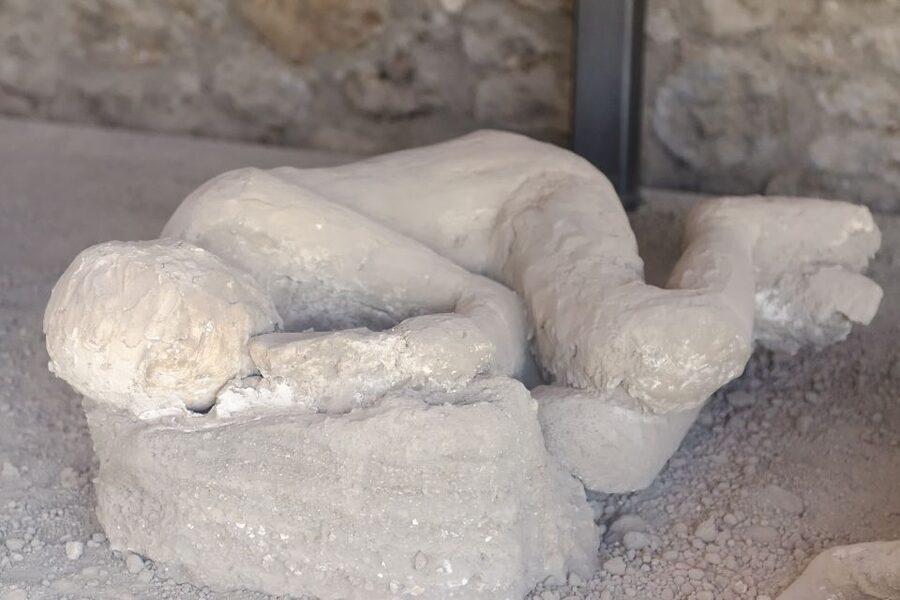
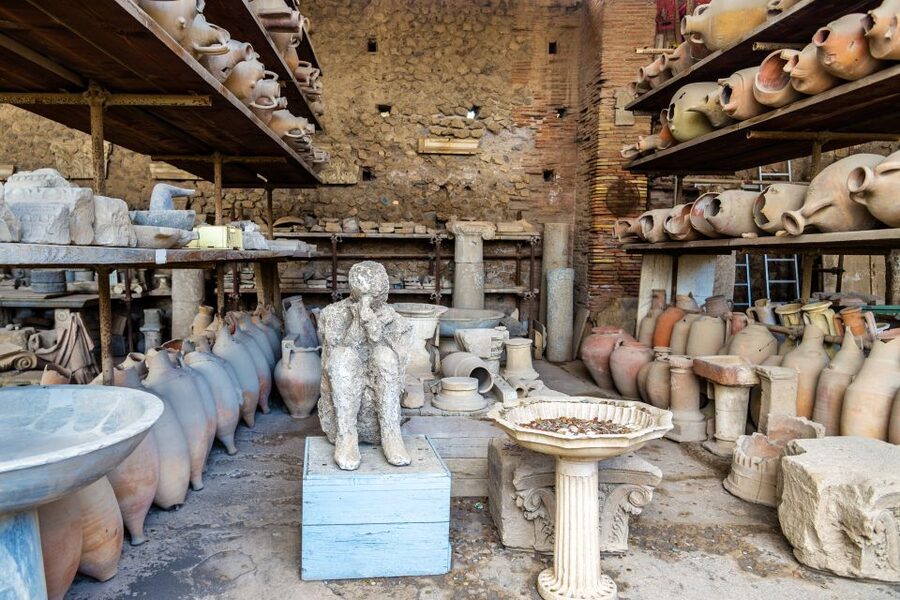
One thing to know: the “petrified bodies” are at the furthest part of the site. If you care about them, don’t leave them for the last minute, especially if your time is tight.
Practical reality check: Pompeii is spread out. You’ll want to use the map that comes with the audio experience, and you should plan for frequent pauses. People also mention there are plenty of toilets—still, use your map and mark where you’ve been so you don’t waste time retracing.
Villa stops on Pompei+: Villa of the Mysteries, Diomedes, and Regina

If you choose Pompei+, the day expands beyond the urban core. The suburban villas are where Pompeii stops feeling like a city you toured and starts feeling like a place people lived in with privacy, decoration, and routine.
Villa of the Mysteries
This one is the headline for many visitors. Reviews highlight the frescoes as a key reason they upgraded. It’s not just pretty walls—the villa setting helps you understand how art functioned inside a wealthy home.
Villa of Diomedes
You’ll add another distinctive house and its layout, giving you more contrast with the homes inside the ancient city. It’s a good choice if you like seeing variety in how villas were designed and used.
Villa Regina + Antiquarium
The Antiquarium matters because it supports the villa experience with additional context. Seeing the villa itself and then grounding it with museum-style interpretation can make the whole stop click.
One scheduling warning: because Pompei+ has specific last entry times, you can’t “wander until you run out of energy.” Build your day so these villa areas stay realistic.
Timing tips for a big site: how long you should budget

Pompeii is huge, and the experience gets better when you respect that truth.
Some people manage a shorter visit and still get a lot done. For example, one visitor went in late enough to have about two hours before closing and found that time worked well for seeing major highlights with kids. But that’s the exception, not the baseline.
If you want a calmer day—time to stop, take photos, listen in sections, and catch the mosaics and fresco details—plan closer to a full day. People note it can take the whole day to explore properly.
My practical advice:
- Arrive early if you can. Cooler air and lighter crowds make a big difference when you’re walking all day.
- Wear comfortable shoes. The terrain and distances add up fast.
- Bring water and small breaks into your plan.
- Use the audio guide like a guide, not like a script. Short listening moments help you keep moving.
Also, if you want the “whole Pompeii feeling,” remember that the audio guide pickup at Porta Marina Superiore takes time. Treat it like part of your visit, not a minor step.
Price and value: is $26 worth it compared with buying on-site?

At about $26 per person, this ticket sits in the sweet spot for value—especially if you add the audio guide.
Why it feels worth it:
- You’re paying for reserved entry, not just the right to queue.
- The audio guide adds structure to a sprawling site where it’s easy to miss the best stops.
- You get free luggage storage, which makes the whole day easier.
There’s also a subtle trade-off. One review noted you could purchase at the entrance for a few dollars less, but queues can be long for people who didn’t book online. If you hate lineups, the small savings on paper won’t feel like much when you’re standing.
Extra costs to keep in mind:
- Headphones aren’t included, and you’ll need wired ones because Bluetooth won’t work with the device.
- For Pompei+ the value is clearly higher if the suburban villas are on your “must see” list.
And yes, there are free admission situations for EU citizens under 18, plus disabled visitors and their relatives (per the provided info). If that applies to your group, your value calculation changes fast.
Who should book this Pompeii ticket with audio guide?
This experience works best if you fit one of these situations:
- You want structure without a group tour. The audio guide gives you context while you keep control of your pace.
- You like “see it, then make sense of it.” Audio explanations turn the ruins into lived places.
- You’re visiting with family and you don’t want to commit to a guide’s timing for every stop.
- You’re short on time but still want more than a quick glance. The guide helps you choose where to focus.
You might want a different approach if:
- You need highly exact, inside-the-room directions. One review says the audio could be better at explaining where to stand inside houses, and not all buildings are open at all times.
- You’re easily frustrated by setup steps. If your arrival is rushed, the audio guide desk and matching the device to where you’re walking can take a bit of concentration.
Should you book this Pompeii ticket with optional audio guide?

Yes—if you want the best day balance: reserved entry plus an audio explanation that helps you navigate a site this large.
Book Pompei Express if you’re prioritizing the ancient city core and want a realistic one-day plan. Choose Pompei+ if the Villa of the Mysteries and the suburban villas are real priorities and you can handle the extra walking and earlier last entry window.
Before you go, do two things that make a huge difference: bring wired headphones, and plan to spend your first stretch of time at Porta Marina Superiore so your audio device pickup goes smoothly. If you do that, Pompeii turns into the kind of day that sticks—ancient streets, Roman routines, and those preserved moments in ash that still feel strangely near.
FAQ
What’s included in the ticket?
You get a reserved entry ticket for Pompeii (either Pompei Express or Pompei+). If you select the audio guide option, you’ll receive an official audio guide plus you can access a digital audio guide in multiple languages.
What’s the difference between Pompei Express and Pompei+?
Pompei Express includes only the ancient city of Pompeii. Pompei+ includes the ancient city plus suburban villas: Villa of the Mysteries, Villa of Diomedes, and Villa Regina in Boscoreale with the Antiquarium.
Does Pompei Express include the suburban villas?
No. Pompei Express does not include the suburban villas (including Villa of the Mysteries).
Where do I pick up the audio guide?
You collect the audio guide inside the Pompeii Archaeological site at the official audio guide desk near the ticket office at Porta Marina Superiore. Audio guides can only be picked up and returned at that official desk.
Do Bluetooth headphones work with the audio guide device?
No. Bluetooth headphones don’t work with the audio guide device, so you should bring wired headphones.
Is an ID required for the audio guide?
Yes. A valid ID is required as a deposit to rent the audio guide device.
What should I bring to enter Pompeii?
Bring a passport or ID card.
How long is the ticket valid?
It’s valid for 1 day. Starting times depend on availability, so check what times are offered when you book.
What time is the last entry for Pompei+?
The last entry time for Pompei+ is 3:30 p.m. in winter (Nov 1 to Mar 31) and 5:30 p.m. in summer (Apr 1 to Oct 31).
Is Pompeii accessible for wheelchair users?
Yes. The activity is wheelchair accessible.