REVIEW · BARCELONA
Palau de la Musica Catalana Admission Ticket with Audioguide
Book on Viator →Operated by Palau de la Musica Catalana · Bookable on Viator
Barcelona hides a music palace in plain sight. This admission ticket gets you into the UNESCO World Heritage Palau de la Música Catalana for a self-guided visit with an English audioguide on your phone, timed to your entry slot. In about 50 minutes, you can follow the building’s big ideas at your own pace, with audio that includes explanations plus visuals and sound.
Two things I really like about this experience are the sheer visual density of the hall and the way the audio is built to help you “read” what you’re seeing. The main space feels like a miracle of sculpture and symbolism—figures, floral motifs, even palm- and fruit-like details—so the guide is useful rather than optional. A second win is the chance to catch live moments like a rehearsal or instrument playing while you’re there, which makes the architecture feel even more alive.
One possible drawback: the audioguide depends on your phone and on having headphones. The ticket includes access to the audio, but it doesn’t include earbuds, and a few people report trouble if the app glitches or the audio is hard to hear in a noisy lobby or hall.
In This Review
- Key things to know before you go
- Palau de la Música Catalana in 50 minutes: what you actually see
- Audioguide setup: the part that can make or break your visit
- Stop 1: the Palace of Catalan Music, from stairs to stage
- When rehearsal lighting and organ music show up
- Price and value: $28.96 for architecture plus an audio story
- Practical tips for a smoother visit (especially with your phone)
- Who should book this audioguide ticket, and who might want a different format
- Should you book this Palau de la Música Catalana audioguide ticket?
- FAQ
- How long is the Palau de la Música Catalana admission with audioguide?
- What language is the audioguide available in?
- Do I need headphones for the audioguide?
- Where does the experience start?
- Is the ticket mobile?
- Can I cancel for free?
Key things to know before you go
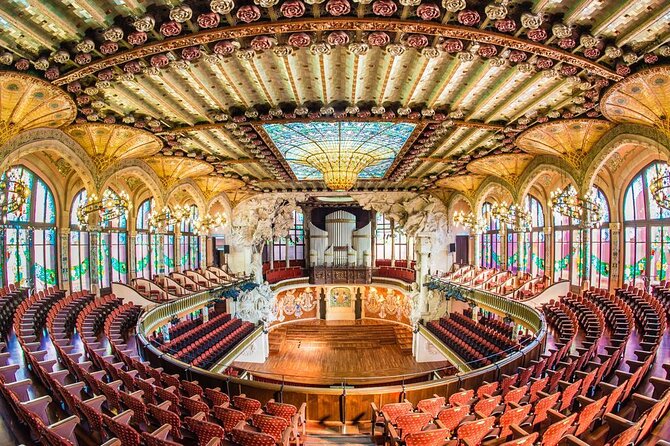
- Mobile audioguide (English): audio with explanations, images, music, and video segments on your phone
- Headphones aren’t included: bring your own so you can hear clearly and sync with the audio stops
- A tight, satisfying route: you’re basically shown the signature stair-to-hall-to-stage story in about an hour
- Expect photo-friendly moments: the stands and balcony areas are made for lingering and snapping pictures
- Sometimes music happens on-site: a rehearsal or organ playing can make your timing feel extra rewarding
- Group size capped at 55: entry is managed, but it still feels like a visit rather than a long museum crawl
Palau de la Música Catalana in 50 minutes: what you actually see
Palau de la Música Catalana isn’t a big, spread-out museum. It’s a single architectural star you’re meant to experience in the right order: you move from entrance stairs up into the main hall, then toward the stage area where music legends have made history. The audioguide is designed around that flow, so you’re not wandering aimlessly trying to figure out what matters most.
What makes the visit feel special is how much the building communicates without words. The hall is packed with artistic details that are hard to process on the first glance—sculptures, decorative forms, and symbolic elements that feel both whimsical and intentional. The guide helps you connect those details to what Palau stands for: Catalan music identity, modernisme design, and a concert space that was built to amplify culture, not hide it.
In practical terms, plan to spend most of your time inside the main hall and at the upper viewing points. The audio tour is roughly 50 minutes, but your actual pace depends on how long you pause for photos and how much you want to sit and listen. If you like to move fast and still get the key photos, this timing works well. If you like a slow sit-down and long looking, you may want a slightly longer buffer around your entry time.
You can also read our reviews of more tours and experiences in Barcelona.



Audioguide setup: the part that can make or break your visit
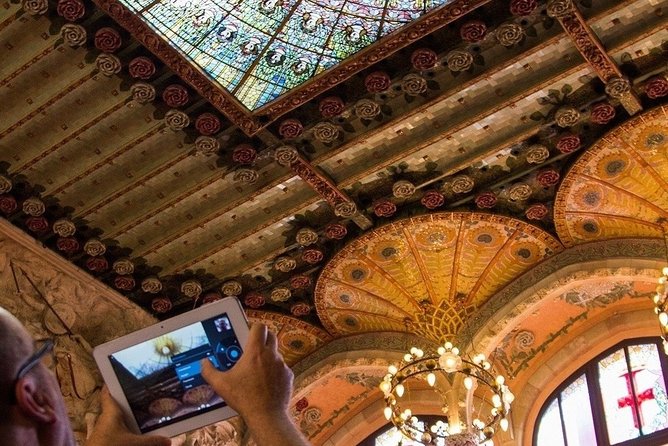
This is a self-guided experience, so the technology matters. Your ticket is mobile, and you’ll show it on your phone to get scanned near your scheduled visit. After that, you head in and use the audioguide on your own device.
Here’s the tip that shows up again and again in people’s comments: bring headphones. The audio guide includes music segments and at least one 360-degree picture stop with music playing in the background. If your phone is at your ear, it’s tough to look at what the audio is pointing to. A small inconvenience—earbuds in your pocket—can turn the visit from frustrating to satisfying.
You’ll also want to have the audioguide access code ready. One important detail: the download uses a four-digit code found in your booking. If you walk in without it (or you’re still trying to find it while you’re standing in line), you lose time—and in this kind of attraction, time can feel tight.
If you rely heavily on Wi‑Fi, don’t. The safest move is to get the audio downloaded before you arrive, and test your sound level while you’re still in the lobby area. If your phone audio is quiet, the hall becomes a struggle, because you’ll be balancing architecture viewing with clear audio playback.
Stop 1: the Palace of Catalan Music, from stairs to stage
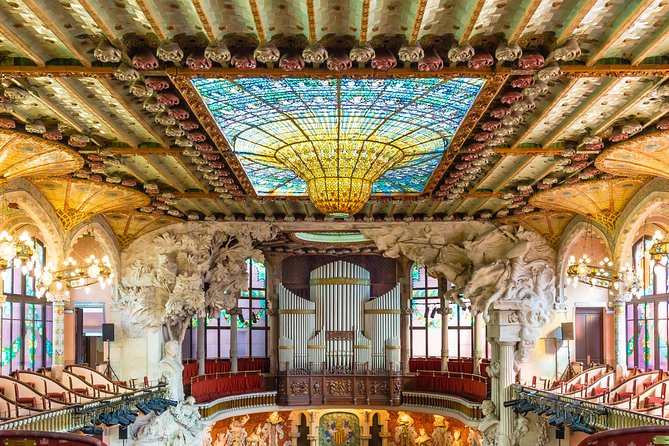
This visit is all about one main storyline: climb the route, reach the main hall, then go up toward the stage.
First, you start with the stairs and entry into the concert palace. The audioguide’s job here is to give context quickly, so you don’t just see a beautiful space—you understand why it’s arranged the way it is. Then the tour leads you into the hall with the design focus on the Sala Millet area. That’s where the “modernist encyclopedia” idea comes to life: decorative elements feel like organized information, not random decoration.
As you move through the audio stops, you’ll be guided to look at the burst of light, the shape and color in the stands, and the way the room frames the idea of performance. One of the best benefits of a self-guided format is that you can linger exactly where your eye goes. If you pause to study a sculpted detail, you can go back and replay that section without waiting for a group schedule.
Toward the later part of the route, you’ll head up to the same stage area where important musical moments have taken place. The point isn’t just “see the stage.” It’s to understand how the hall’s architecture supports music, including unamplified sound. If a rehearsal or practice is happening, that final movement up to the stage can feel like the building clicks into place.
A practical note: at least one visit report described a blocked lower level. That doesn’t mean it will happen every time, but it does mean you should expect that your route may be limited by access rules on the day of your entry.
When rehearsal lighting and organ music show up
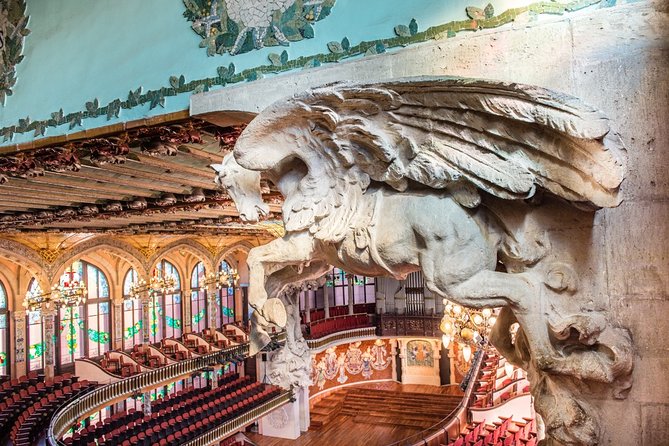
A Palau visit can be architectural. It can also be musical. People have described practice sessions happening during their visit, and some had organ music playing while they were in the hall. Even when there’s no full concert, those moments make a difference because they test the room as a real instrument.
If you catch a pianist or organ playing, you’ll likely notice something that’s hard to get from photos: how the hall carries sound. Multiple comments highlight the organ and the acoustic feel of the space, which is the whole reason this building matters. A self-guided tour is great for architecture, but it becomes even better when the venue is actively doing what it was built to do.
So what’s the advice here? Don’t treat your entry time like a random slot. If you can, pick a time when you expect the venue might be active—practice hours are often earlier than you’d think. You can’t guarantee music, but you can increase the odds by choosing a slot that isn’t at the very end of the day.
And if you do get a performance moment, don’t rush past it for the next audioguide stop. Let it reset your attention. In a place like this, that’s when the details start to feel meaningful.
Price and value: $28.96 for architecture plus an audio story
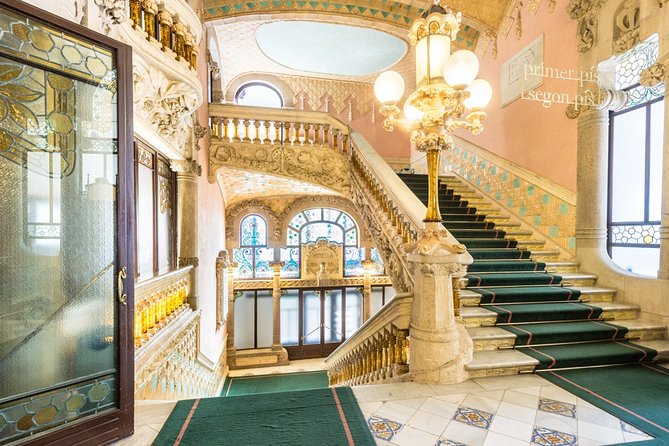
At $28.96 per person, you’re paying for two things: entry to a World Heritage concert building and a structured audioguide experience on your phone. Since the visit duration is about 50 minutes, the value depends on how much you enjoy interpretation while you look.
If you’re a “just show me the highlights” kind of visitor, you may feel slightly underwhelmed by the time limit—especially because this is not a long museum walk. Some people also say they wished for a human explanation that could answer questions and go deeper. If that describes you, consider whether you’d rather add a live guided option elsewhere in your day.
That said, the audioguide format is a strength for many visitors. You’re not stuck listening to someone talk over a group’s noise level. You can slow down at the hall’s most symbolic details, then move on when you feel satisfied. And because the guide includes music, video, images, and even a 360-degree stop, it covers the “how do I notice this?” problem that classic architecture visits create.
The biggest value booster is simple: bring the right gear. Headphones protect your time. A working phone protects your mood. When those two things are in place, the price starts to feel fair for a one-stop, high-impact UNESCO site.






Practical tips for a smoother visit (especially with your phone)

Here’s how to make this experience feel effortless instead of tech-stress.
Before you arrive
- Bring headphones that work with your phone.
- Make sure the audioguide access code (the four digits from your booking) is easy to find.
- If possible, test audio volume once your phone is connected to your headphones.
At the entrance
- Expect a quick scan of your mobile ticket.
- Don’t wait until the last minute to get your phone ready. A few people reported confusion at entry points, and you want to spend time inside, not fixing access while standing around.
Inside the building
- If the audio references images, you’ll want your screen visible at times. That’s the reason headphones matter—so you can keep audio playing while your eyes do the work.
- Give yourself permission to pause. The hall is photo-friendly, and the best pictures can depend on whether you’re sharing a balcony or stand area at the same moment as a group.
Where to recharge
The Palau has an on-site cafe. One visitor described grabbing a croissant and noted that the cafe can be entered from the street without tickets (and there are restrooms available). That’s a helpful safety valve if you’re pairing this with sightseeing all morning or all afternoon.
Also, gift shops are part of the stop. If you want a postcard or small souvenir, this is usually where you’ll find it.
Who should book this audioguide ticket, and who might want a different format

This ticket is a great fit if you:
- Want a focused visit that stays around an hour
- Enjoy architecture and want help understanding what you’re looking at
- Prefer a self-paced rhythm over following a group schedule
- Like sound-and-story experiences, because the audio guide includes music and multimedia stops
It may be a weaker match if you:
- Hate phone-based activities or your phone often struggles with apps
- Want deep, conversational explanations and Q&A
- Are sensitive to audio difficulty in busy spaces and don’t plan to bring headphones
- Really need access to every possible viewing level, since some areas may be blocked on certain days
One more practical fit check: this site is near public transportation, and service animals are allowed. That makes it easier to work into a walking day in Ciutat Vella.
Should you book this Palau de la Música Catalana audioguide ticket?
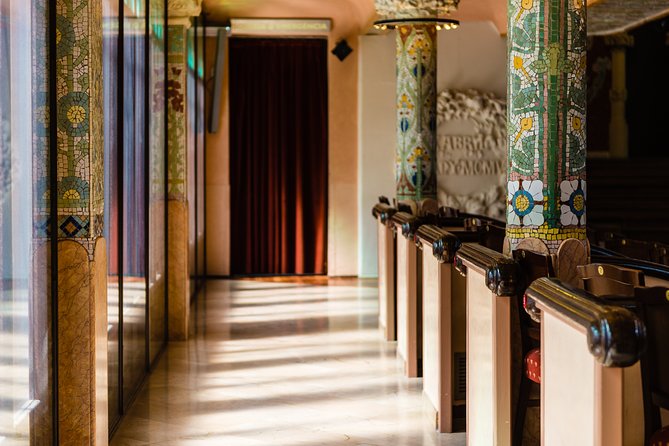
Yes, I’d book it if you want one high-impact UNESCO stop that blends design, symbolism, and music in a visit that won’t eat your whole day. The price makes sense when you treat the audioguide as the key part of the experience—especially because it’s English and includes multimedia stops, including a 360-degree concert-related moment.
I’d think twice if you’re allergic to tech hassles. The audioguide is the product. Without headphones, or if your app has trouble, the experience can feel too short or too confusing for what you paid.
My final advice is simple: bring headphones, download what you need ahead of time, and give yourself time to look up at the hall’s details rather than just scanning it. Do that, and Palau de la Música Catalana stops being just a pretty interior and turns into a place you actually understand.
FAQ
How long is the Palau de la Música Catalana admission with audioguide?
The visit is about 50 minutes.
What language is the audioguide available in?
The audioguide is offered in English.
Do I need headphones for the audioguide?
Yes. Headphones are not included, so you’ll need to bring your own.
Where does the experience start?
It starts at Palau de la Música Catalana, C/ Palau de la Música, 4-6, Ciutat Vella, 08003 Barcelona, Spain.
Is the ticket mobile?
Yes. The ticket is mobile, and you’ll use it on your phone.
Can I cancel for free?
Free cancellation is available up to 24 hours in advance for a full refund. If you cancel within 24 hours, there’s no refund.