REVIEW · ATHENS
From Athens: Small-Group Delphi, Museum & Arachova Day Trip
Book on Viator →Operated by Ammon Express · Bookable on Viator
Delphi is one of Greece’s most haunting stops. This day trip takes you from central Athens to Delphi with a knowledgeable archaeologist trip attendant, then adds the mountain village of Arachova for a slower, scenic break. You’ll ride in a modern air-conditioned bus with Wi‑Fi, and you won’t be stuck on a rigid script at the site since you get audio support for exploring at your own pace.
Two things I really like: the tour is built for people who don’t want to wrestle with self-drive logistics, and the small-group setup keeps it comfortable while still giving you expert context on the way. The other big plus is that you get both sides of Delphi—the ruins and the museum—so it feels complete instead of rushed.
One drawback to plan for: entrance fees for Delphi’s archaeological site and museum are not included, and some specific areas at Delphi can be affected by closures or what’s accessible that day.
In This Review
- Key things that make this tour worth your time
- Athens to Delphi by bus: faster than you think, less stressful too
- Delphi Ancient Town: ruins plus practical freedom
- A helpful pattern for exploring
- Delphi Archaeological Museum: where the site’s story gets clearer
- Arachova: what you get when Delphi ends
- Audio guide app + Wi‑Fi: how to make the tech actually help
- Group size and comfort: small-group, not cramped
- Money math: the $35 ride plus your Delphi ticket budget
- Who this tour suits best (and who might not love it)
- Should you book this Delphi and Arachova day trip?
- FAQ
- Are the entrance tickets to Delphi included?
- Do I need to buy tickets when I arrive at Delphi?
- Is the tour guided inside the archaeological museum?
- Is there Wi‑Fi on the bus?
- Do I need headphones for the audio guide?
- What’s the group size like?
- How long do you spend at Delphi and at the museum?
- How much time do you have in Arachova?
- What’s the route and end point in Athens?
- Are there any ticket discounts for seniors or young people?
Key things that make this tour worth your time
- Expert archaeologist trip attendant who shares context during the drive and helps you get oriented fast
- Wi‑Fi on board plus free time on site with an audio guide app (bring headphones)
- Balanced Delphi combo: enough time at the ruins plus a focused museum visit
- Arachova foothills stop to trade ruins for mountain-town walking and food choices
- Small-group feel with a maximum of 49 people for the day
Athens to Delphi by bus: faster than you think, less stressful too
Starting at Platia Karaiskaki, you avoid the two big pain points of a self-drive day: parking and the “What did I just do?” scramble once you arrive. You meet the group near the central square, and then you’re headed north with a friendly trip attendant who is also an archaeologist. That matters because Delphi isn’t just pretty ruins. It’s a layered site where names and legends can blur fast if you show up cold.
The ride is long enough that you’ll want it to feel comfortable, and this one does. It’s an air-conditioned bus, and you get free Wi‑Fi, so you can stay sane with messages, maps, or just scrolling while the countryside passes by. In at least one case, the on-board Wi‑Fi stayed stable the whole time, which is a small detail, but it really helps on a 10-hour outing.
Also, the schedule is designed around real walking time. Delphi’s paths are uneven and you’ll be doing stairs and ramps, plus the museum visit afterward. They also tell you to arrive at the departure point about 10 minutes early, so you can skip that last-minute rush that turns a calm day into a frantic one.
You can also read our reviews of more tours and experiences in Athens.



Delphi Ancient Town: ruins plus practical freedom

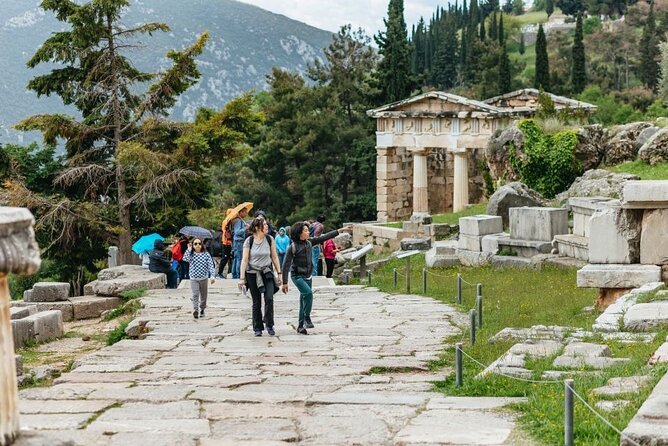
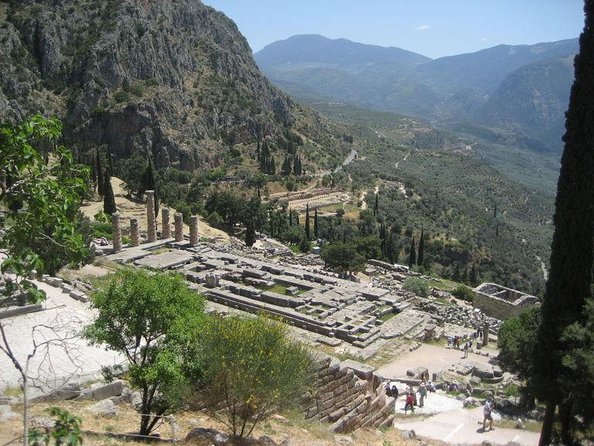
You spend the bulk of the day at Delphi’s archaeological site (about 2 hours 50 minutes), which is the right amount of time for most people. You get there feeling oriented, then you’re free to move at your pace. That combination is one of the best parts of the experience: you get the “why” from the attendant, but you’re not stuck shuffling behind someone every minute.
Delphi is built into the hills, and you’re walking around key areas like the Temple of Apollo, the theater, the ancient stadium, and standout treasures such as the Treasure of the Athenians. If you’re the type who likes looking for connections, this place rewards it. The site is often described as the navel of the earth, and that idea shows up in how people historically talked about Delphi as the spiritual center of the ancient Greek world.
One detail that can make your visit feel more real is the mention of the sacred Castalia spring. The itinerary frames it as a stop where you can drink water. Still, other things at Delphi can be affected by access rules on the ground. If you don’t find that spot easily during your walk, don’t panic. Use the time you have for the main ruins and the best photo angles from the stadium area and theater slopes.
About the walking challenge: the stadium climb can be steep. If you’re up for it, it’s also one of the most rewarding routes for views. Just take it slow, don’t step off marked paths, and watch your footing near edges. The site is clearly marked, and guards sometimes call out people who get too close to restricted areas.
A helpful pattern for exploring
Here’s the approach that works well with this format. First, do the core ruins early while you’re fresh. Then spend the middle chunk wandering and photographing. Finally, end with the areas near the theater/stadium for a more relaxed finish before you head to the museum.
That way you don’t feel like you’re racing the clock and you don’t end up with “I saw it, but I didn’t really look” syndrome.
Delphi Archaeological Museum: where the site’s story gets clearer
After the ruins, you move to the Delphi Archaeological Museum for about 1 hour. This is not optional if you want the full picture. The museum holds objects from the Archaic through Roman era, including pieces that help you understand what you were seeing outside.
The list of notable artifacts is what makes the museum time feel worthwhile: you’ll see things like the Iniohos, the Sphinx of the Naxians, and the statue of Antinoos. You also get the kind of details that ruin visitors often miss—craftwork, condition, and context that’s hard to grasp when you’re staring at stones in open air.
There’s one practical note to plan your expectations. The museum ticket isn’t included in the tour price, and entry must be purchased separately on arrival. A few people also reported that the museum explanation component felt less guided than they expected, with the archaeologist focusing more on the overall story than on a step-by-step museum walkthrough. So, go into the museum expecting a supportive visit, plus an audio guide option, but not a full guided commentary inside every gallery.
If you want to learn quickly, spend a little extra time near the items that connect to the theme of Delphi: Apollo, prophecy, and the way people interpreted meaning through art and ritual.
Arachova: what you get when Delphi ends
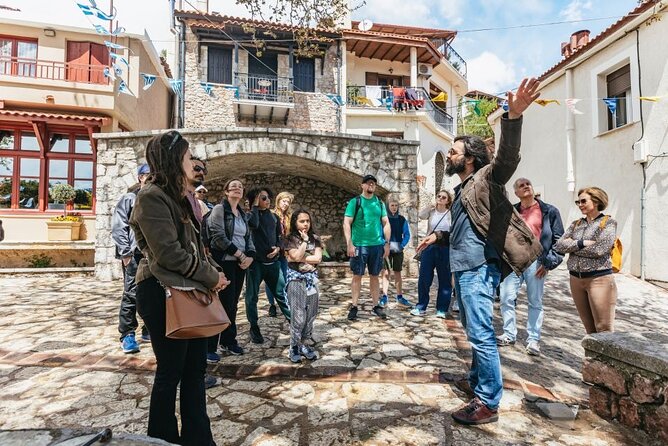
Once Delphi wraps, the day shifts gears to Arachova, a village on the foothills of Mount Parnassus. You’ll have about 2 hours there, and that time is enough to wander, stop for a drink or meal, and enjoy a quieter atmosphere than the big-city feeling you left behind.
Arachova isn’t just a random bonus stop. It changes the mood of the day. Delphi is dramatic and ancient. Arachova is local, with a steady stream of visitors who come to eat and walk a bit. Many people find it a nice break from crowds, and it can feel like a more relaxed chapter in the same story.
Some people do want a bit more time in Delphi and less in Arachova. That’s a fair preference if you’re seriously into ruins. But if you’re balancing culture with comfort—especially on a full-day schedule—two hours in Arachova keeps you from feeling drained before the return trip.





Audio guide app + Wi‑Fi: how to make the tech actually help

This tour includes an audio guide app that’s activated on the day of the tour with help from the trip attendant. The key practical thing: you need to bring headphones to listen. The audio app is part of how they support you during time on your own.
I like this format because it avoids the all-day lecture vibe. You can stop where you want, rewind if something isn’t clicking, and spend more time on the parts you’re curious about. When guides are assigned to a bus-and-site setup, the audio guide becomes your personal pacing tool.
Then there’s the Wi‑Fi on board. It’s free, and it can help you do two smart things: look up the next spot while you’re traveling, and confirm where the group is heading without draining your battery. On a day where you’re outside most of the time, having a little connectivity for planning can make the day feel smoother.
Group size and comfort: small-group, not cramped
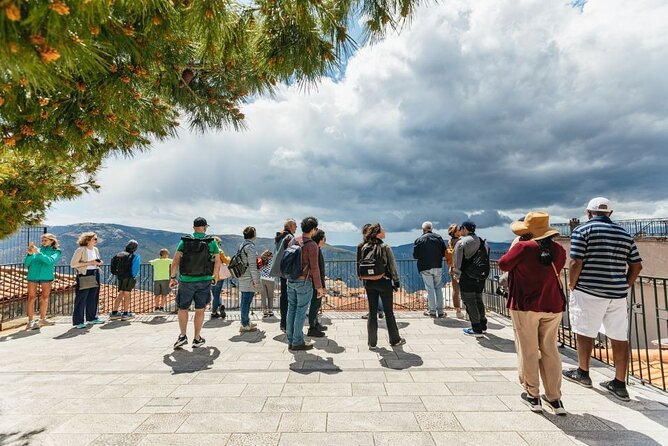
This is a small-group tour with a maximum of 49 travelers. That’s large enough to keep logistics working, but small enough that you still feel like someone is watching out for you. People also repeatedly call out the calm organization and punctuality.
Still, comfort can vary with the vehicle type and seating layout. At least one person flagged that the bus seats were not very comfortable for long stretches and that blacked-out windows reduced the view. If you’re tall or you know you’ll sit for hours, it’s worth arriving ready to adjust—water helps, and a comfortable posture matters.
The good news is that most people emphasize the ride staying on schedule and feeling safe and well-managed. The attendant isn’t just there for rules; they answer questions and help keep you moving in a way that reduces stress.
Money math: the $35 ride plus your Delphi ticket budget

The listed price is $35.62 per person, and that’s for transportation plus the archaeologist trip attendant and included visits (ruins and museum visits, plus Arachova time). But Delphi’s big-ticket items—entrance fees—are not included.
Plan on paying about €20 per person for the Delphi archaeological site and museum. You’ll also want to budget for snacks or meals since meals and personal expenses are not included.
Here’s what makes this value work: you’re paying for a long-distance day trip with a guided expert host and a structured plan that saves you from self-drive friction. Even if you pay extra at the entrance, you still avoid the cost and hassle of hiring a car, buying separate tickets without guidance, and dealing with parking and timing on your own.
Because a few people mentioned surprise when they reached the museum or when details didn’t match their expectation, it’s smart to keep it simple: treat the tour price as transport and expert context, then treat Delphi tickets as your on-arrival add-on.
Who this tour suits best (and who might not love it)

This is a strong fit if you:
- want a day trip from Athens to Delphi without driving yourself
- like learning context but also want independence to explore
- prefer a mix of ruins + museum, not just one or the other
- want a comfortable group day with Wi‑Fi and audio support
It may be less ideal if you:
- expect a fully guided, inside-every-room museum walkthrough
- need guaranteed access to every single Delphi feature (some areas can be closed or limited)
- are extremely sensitive to bus seat comfort for long rides
Should you book this Delphi and Arachova day trip?
If you want Delphi without the stress, this is a solid choice. The best version of this tour is when you use the archaeologist’s context to understand what you’re seeing, then you let the audio guide help you explore at your own pace. The addition of Arachova gives you a real break at the end of a heavy day of walking.
Book it if you’re aiming for a first-time Delphi visit and you like structure with some freedom. Skip it if your priority is an ultra-deep guided museum experience or you’re expecting every minor site feature to be accessible.
FAQ
Are the entrance tickets to Delphi included?
No. Delphi’s archaeological site and museum entrance fee is not included, and the listed add-on is €20 per person.
Do I need to buy tickets when I arrive at Delphi?
Yes. Since entrance fees aren’t included, you’ll need to purchase entry for the site and museum during your visit.
Is the tour guided inside the archaeological museum?
You get an immersive museum visit as part of the tour, but the experience is not described as a fully guided, room-by-room commentary inside the museum.
Is there Wi‑Fi on the bus?
Yes. There is free Wi‑Fi on board to help you stay connected during the trip.
Do I need headphones for the audio guide?
Yes. The audio guide app is activated with help from the trip attendant, but you need to bring headphones to listen.
What’s the group size like?
It’s a small-group tour with a maximum of 49 travelers.
How long do you spend at Delphi and at the museum?
You have about 2 hours 50 minutes at Delphi’s archaeological site, plus about 1 hour at the Delphi Archaeological Museum.
How much time do you have in Arachova?
You get about 2 hours in Arachova.
What’s the route and end point in Athens?
The tour departs from Platia Karaiskaki and returns back to the meeting area. The operator also notes a return at the Smart-Eco-Pickup of AMMON EXPRESS at the Halandri metro station, so it’s smart to confirm the exact pickup point in your booking details.
Are there any ticket discounts for seniors or young people?
Yes, free admission applies to EU citizens up to age 25 (with valid ID/passport) and non‑EU citizens up to 18. Reduced admission applies to EU citizens age 65+ only between October 1 and May 31, and during June–October only the full ticket price applies for seniors 65+.
—
If you tell me your travel dates and how you feel about walking (easy, moderate, or tough), I’ll suggest the best way to pace Delphi on this exact schedule.