REVIEW · LISBON
From Lisbon: Alcobaça & Óbidos Self-Guided Tour
Book on GetYourGuide →Operated by Gray Line Portugal · Bookable on GetYourGuide
Two medieval towns, one self-guided route. You’ll travel from Lisbon to Alcobaça’s UNESCO monastery and then on to Óbidos’ walled old town, using an interactive audio guide so you can go at your own pace. It’s an easy way to sample two very different Portuguese vibes in just one 6-hour stretch.
I especially like the focus on big sights without forcing you to sit through a long guided lecture. The monastery story around royal burials, plus the chance to wander Óbidos’ churches and streets, makes it feel like you’re getting more than the clock allows.
One drawback to keep in mind: timing matters. The tour is short, and you may arrive in Óbidos when some churches are already closed, so plan to enjoy the walls, views, and the tiled storefront stops even if interiors are limited.
In This Review
- Key highlights you’ll actually use
- Price and Logistics: what $50 buys you
- Alcobaça: getting the UNESCO timing right
- Where the royal drama shows up
- Your one-hour Alcobaça plan: move smart, not fast
- What I love about this stop
- Transfer time: why it matters more than you think
- Óbidos: the walled town where the audio guide earns its keep
- Plan for what might be closed
- The must-see stops inside Óbidos (and what to watch for)
- Town Gate / Our Lady of Sorrow
- St. Peter’s Church
- The Pousada of Óbidos inside the old Paço do Alcaide
- St. James Church
- St. Mary’s Church of Óbidos
- Alcobaça sweets and the real value of free time
- How to get the most out of a short day
- Who this tour is best for
- FAQ
- FAQ
- How much does the Alcobaça and Óbidos self-guided tour cost?
- How long is the tour?
- Where does the tour start and end?
- Do I get hotel pickup or drop-off?
- What’s included with the tour?
- What languages are available for the audio guide?
- How much time do I have in each town?
- What should I bring for the day?
- Is the tour pet-friendly?
- Can I cancel for a full refund?
- Should you book this tour?
Key highlights you’ll actually use
- UNESCO Monastery of Alcobaça: start with the royal tombs tied to Pedro and Inês de Castro
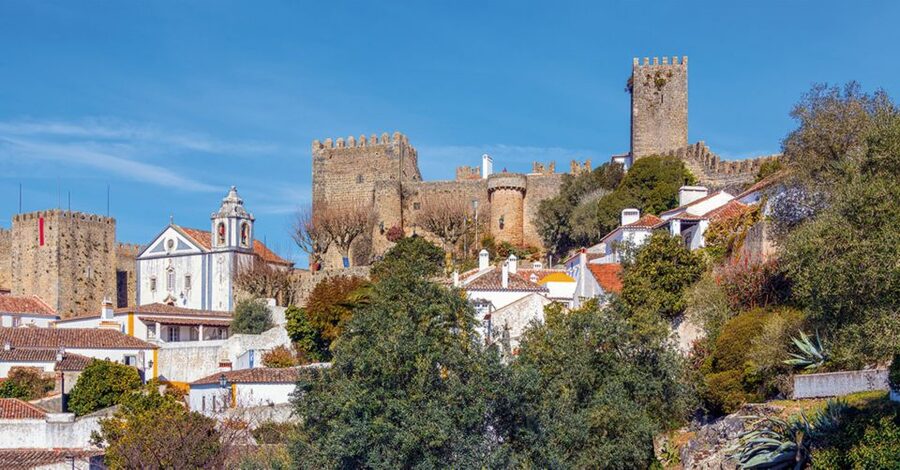
- Óbidos’ medieval streets: roam the flowered houses and church area on your schedule
- Audio guide in multiple languages: English plus several others, with point-by-point info as you walk
- Fast, efficient day flow: guided transfers between stops, then real free time to explore
- Alcobaça sweet break: free time built in for tasting the famous local treats
Price and Logistics: what $50 buys you
At about $50 per person for roughly 6 hours (check availability for exact starting times), this is a value play for people who want independence but still need transportation lined up. You’re not paying for a full live guide. You’re paying to move between two towns and get an audio guide and map that keep you oriented.
The itinerary is simple: you start at Terminal Marques Pombal Square (the bottom of Park Eduard VII), ride to Alcobaça, spend about an hour there, transfer to Óbidos for about two hours of self-guided wandering, then return to the starting point. This structure works when you want “see the essentials and move on” instead of “stay all day.”
Two practical notes. First, there’s no hotel pickup or drop-off, so you’ll want to be comfortable reaching the meeting point. Second, the tour depends on bus/coach schedules, so if you’re picky about church interior time, you’ll want to build your plan around outside sights and streets as Plan A.
You can also read our reviews of more tours and experiences in Lisbon.



Alcobaça: getting the UNESCO timing right
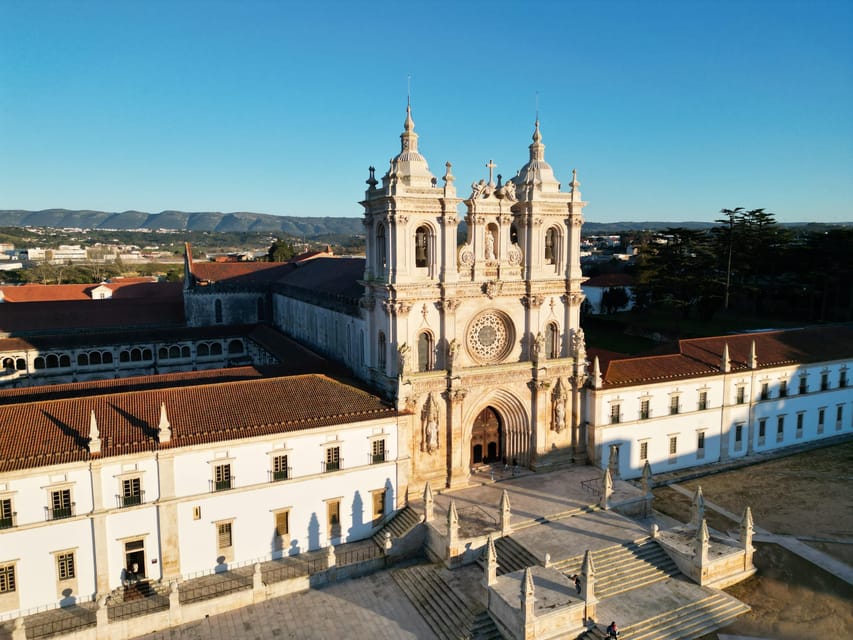
Alcobaça is the kind of place where you can feel the centuries moving under your feet. The main reason people come is the Monastery of Alcobaça, also called the Royal Monastery of Santa Maria de Alcobaça, which became a UNESCO World Heritage site in 1989.
Here’s the story the audio guide will help you connect: construction started in 1178 by order of King D. Afonso Henriques, and the monks moved in by 1223. It’s one of the largest and best-preserved complexes of the Cistercian Order, so even if you’re not a monastery nerd, the scale and design make sense quickly.
How the day feels in practice: you’ll get a bus ride from Lisbon, then time on arrival that’s geared for an overview plus wandering. You’ll have about 1 hour free time in Alcobaça. That hour is short, but it’s long enough to see the big architectural pieces and pick up the royal-burial context without running yourself ragged.
Where the royal drama shows up
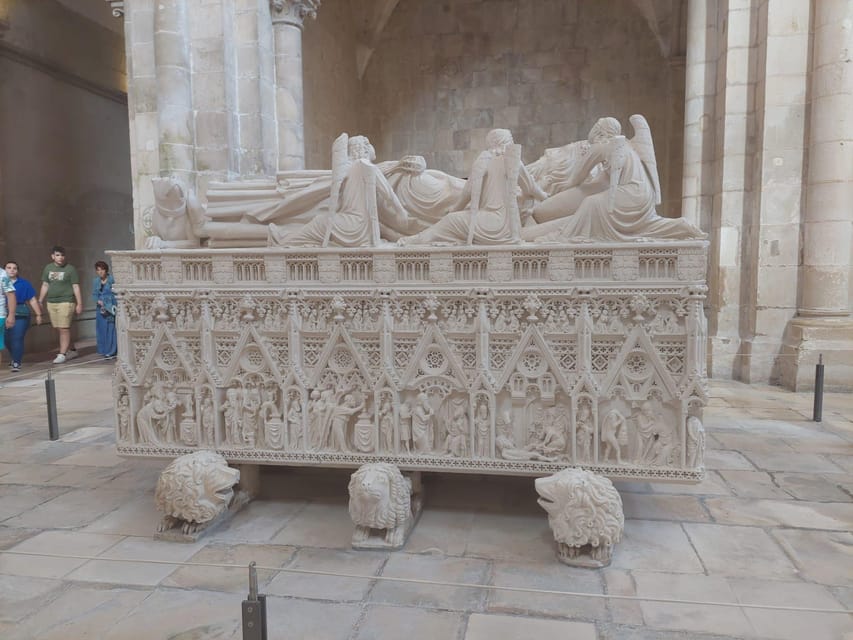
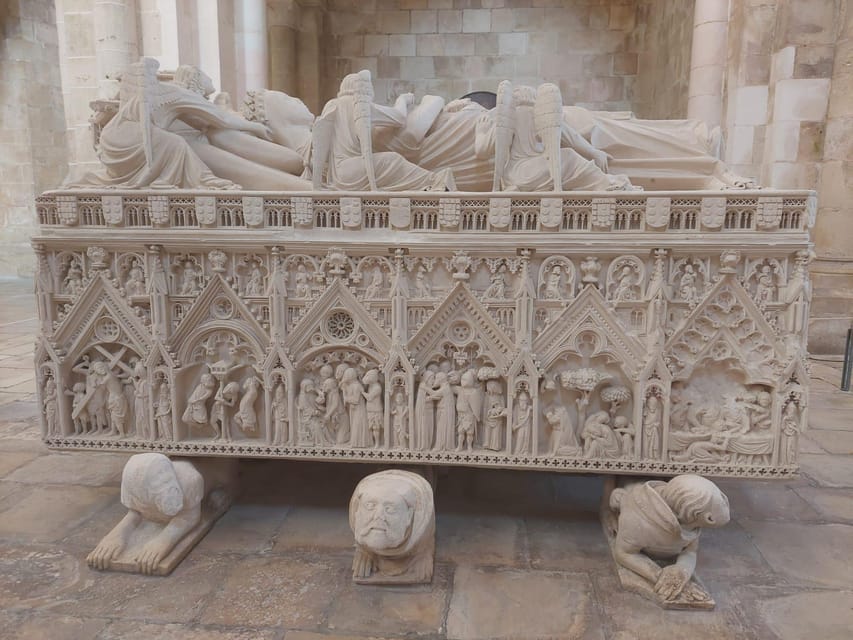
This monastery tour isn’t just about architecture. It’s tied to the burial story of King D. Pedro and Inês de Castro. The church of the monastery was chosen as the burial site for Pedro, and Inês de Castro’s tombs are part of what you can visit during your time there.
If you like human stories layered onto stone buildings, this is one of the best “quick wins” on the route. You’ll come away knowing who the real Romeo and Juliet are in this Portuguese version of the tale, and you’ll understand why the monastery mattered beyond religion.
Your one-hour Alcobaça plan: move smart, not fast
With only an hour, you want to avoid the classic mistake: spending 45 minutes walking in circles because you didn’t decide what “enough” means. Before you enter, take a minute to get your bearings. Then focus on the core elements your ticket includes in spirit: the church complex and the burial story.
You also get free time for food, and this is where Alcobaça shines. The tour specifically sets aside time for tasting the local sweets often described as the famous heaven treats of Alcobaça. You don’t need a food tour mentality here. Just grab something, sit if you can, and keep the rest of your energy for Óbidos’ walking.
If you’re sensitive to heat, this is a good time to use the practical items on the packing list: sunglasses and a sun hat can save your afternoon. Comfortable shoes matter too, since you’ll be walking again in Óbidos right after.
What I love about this stop
I like that Alcobaça is treated as a real destination, not just a bus transfer. The monastery’s UNESCO status isn’t a marketing label here; it’s the whole point of the town.
And I like the way the story of Pedro and Inês de Castro gives you a reason to pay attention. When you know why something is important, you don’t just “see” it—you understand it in minutes.





Transfer time: why it matters more than you think
Between Alcobaça and Óbidos, you’ll have a transfer (about 45 minutes by the itinerary timing). This is the part of the day you can’t control, which means you control the things around it.
Use this time for small reset moves. If you need water or a quick snack, do it before you arrive in Óbidos, because your time there is meant for walking and browsing. Also, charge your phone if you’re using maps offline. You’ll have an audio guide and map, but phones still help when you want a quick street check.
Since the tour is self-guided after arrival, arriving on time matters for church interiors. The day can feel rushed if you insist on seeing every single church door as “open.” That’s why I recommend shifting your expectations to match the format: focus on what you can access reliably.
Óbidos: the walled town where the audio guide earns its keep
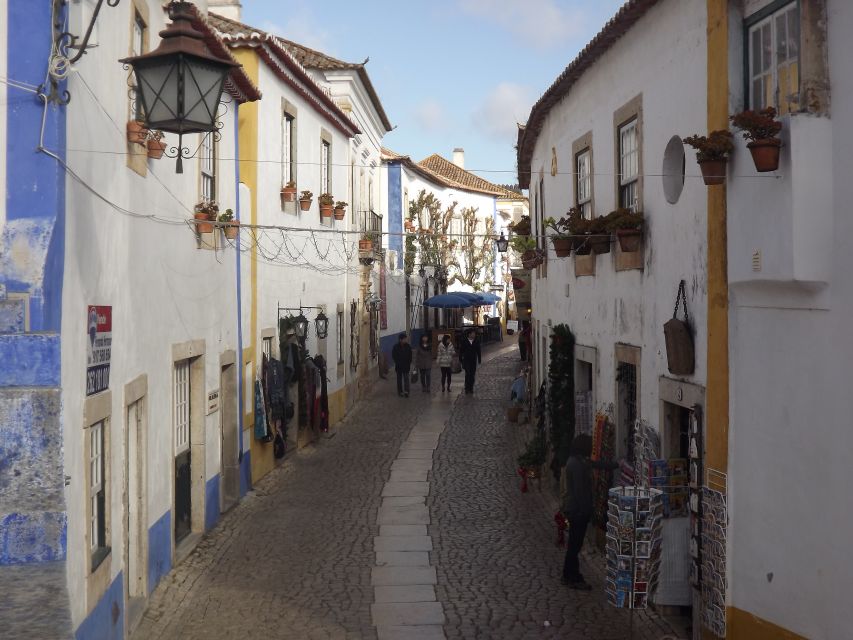
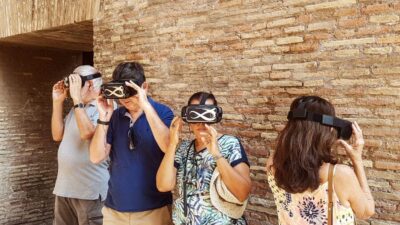
Óbidos is where the tour starts to feel like you’ve stepped into a storybook you can actually walk through. You’ll have about 2 hours for a self-guided visit, plus the audio guide that gives information at each point of interest.
The big idea here is autonomy. You’re not trapped in a bus loop. You can linger at tiled facades, pause for photos, and choose whether your priorities are churches, walls, or simply wandering the flower-adorned streets.
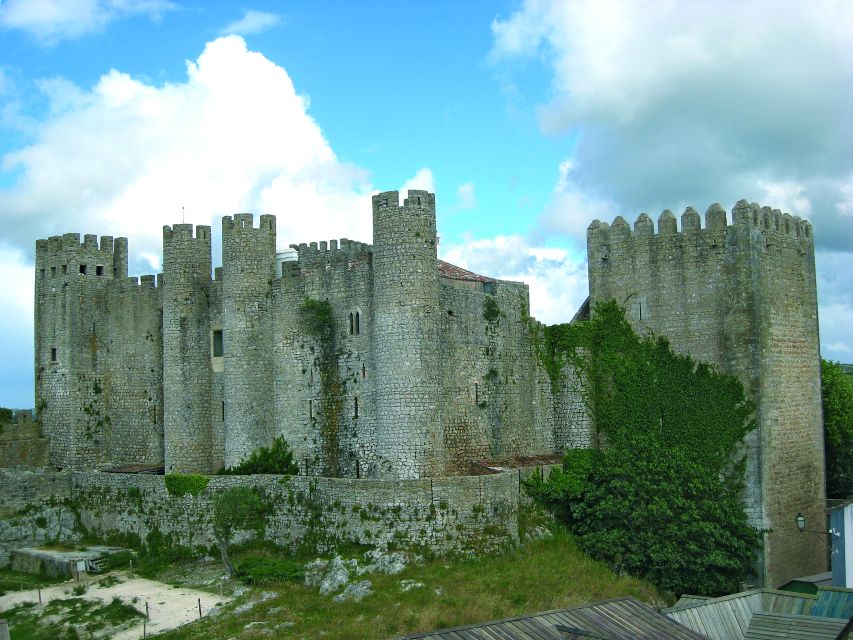
There’s also a deep timeline baked into Óbidos. The town is thought to have been founded by the Celts around 308 BC. Later, studies suggest it was part of the ancient Roman city of Eburobrittium. After Romans came waves of different occupants, including barbarians and then the Moors. King Afonso Henriques conquered Óbidos from the Moors, and that conquest shapes the Portuguese identity of the place.
Then you get the 18th-century twist that adds color to your walk: Óbidos remained a noble summer holiday location, and King John V stayed in Óbidos for eight years on doctors’ advice, including bathing in Caldas da Rainha to treat arthritis and obesity. It’s the kind of detail that makes the town feel personal.
Plan for what might be closed
One important consideration: some church interiors may be closed depending on when you arrive. If that happens, you’ll still have plenty to enjoy—walls, streets, exterior tile scenes, and the general medieval atmosphere.
So don’t build your whole day around one interior stop. Build it around the whole old-town loop and use churches as bonuses if they’re open.
The must-see stops inside Óbidos (and what to watch for)

Your audio guide will help, but you can also use this as a checklist for what to look for while you roam.
Town Gate / Our Lady of Sorrow
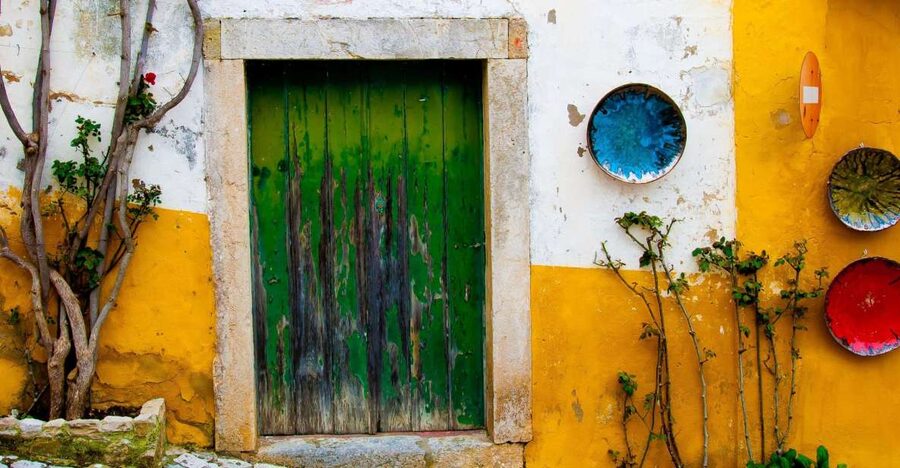
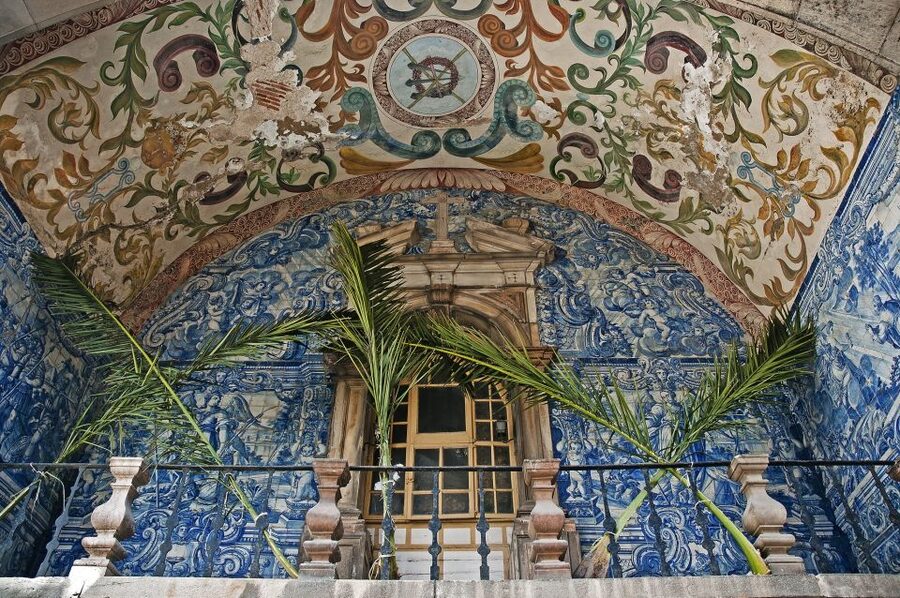
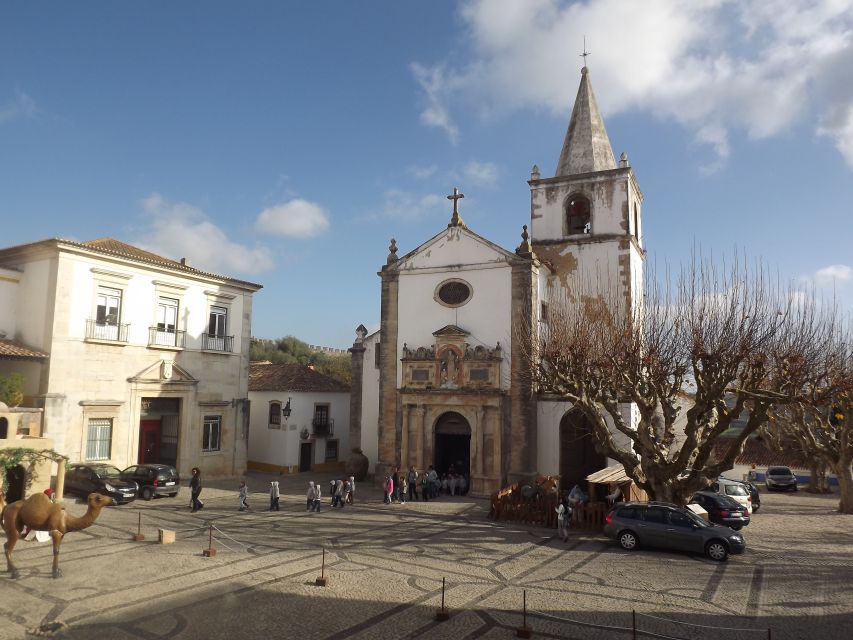
At the Town Gate, you’ll see the inscription tied to Our Lady and an idea of conception without original sin. The text dates back to the time of John IV in the 17th century. You’ll also see 18th-century tiles here showing scenes connected to the Passion of Christ.
If you like Portuguese tilework, this is a good place to start. It sets the tone of what Óbidos does best: beautiful surfaces with layered meaning.
St. Peter’s Church
St. Peter’s Church has a medieval foundation and retains its original portal. It was renovated in the second half of the 16th century, and the church has a single nave with a baroque wooden altarpiece connected to the period of King John V.
This stop is worth your attention even if you’re tired. You don’t need to be a church scholar. Look at the portal first, then decide if you have energy for interior details.
The Pousada of Óbidos inside the old Paço do Alcaide
The Pousada of Óbidos is a huge “wait, that’s a hotel?” moment. It was the first in Portugal built using an historical building, and it sits inside what used to be the Paço do Alcaide.
Watch for the Manueline windows and the doorway with an ornate lintel designed like intertwined tree trunks. This is exactly the kind of detail you’d miss if you rushed straight through.
St. James Church
St. James Church is tied to royal attendance during stays in Óbidos. It was founded by King Sancho, so even if you can’t linger long, it gives you another historical anchor point.
St. Mary’s Church of Óbidos
This is the layered-history favorite. St. Mary’s Church sits on the same place as an old Visigoth temple. That temple later became a mosque, and after the Christian conquest by Afonso I, it became a Catholic church.
Inside, you can admire a splendid collection of tiles and the tomb of D. João de Noronha, mayor of Óbidos in the 16th century. The tomb is described as a masterpiece by sculptor Nicolau Chanterene.
If interiors are open when you arrive, this stop is one of your best bets. If they’re closed, take what you can from the outside and the surrounding tile scenes.
Alcobaça sweets and the real value of free time
The inclusion that matters most for most people is not the monastery facts—it’s the built-in breathing space. You get free time in Alcobaça for tasting the local sweets, and you get free time in Óbidos for independent strolling.
At this price and time window, that freedom is what makes the trip feel fair. You aren’t forced to rush through a checklist with someone hovering over your shoulder. You can choose your pace based on your own energy level.
For example, if you hit Alcobaça and feel you want more time on the stone and tomb details, you can do that. If you’re more in a “walk, photos, tiles” mood, you can save your energy for Óbidos, where the town streets do a lot of the heavy lifting for you.
How to get the most out of a short day
This is a fast itinerary by design. So your biggest job as the traveler is setting expectations and moving with purpose.
- Use the audio guide while you walk, not while you’re already late. It works best when you connect it to the place in front of you.
- Decide early what you’ll skip. In Óbidos, outside views and street wandering can still feel like a full visit even if one church interior is closed.
- Wear your comfort shoes. You’ll be walking again after your bus rides, and you’ll feel it in your feet by hour two.
- Bring the sun basics listed for this tour: sunglasses and a sun hat. Lisbon-area days can be bright fast.
Who this tour is best for
This DIY format is especially good for you if:
- You want transportation from Lisbon plus independence once you arrive.
- You like short, high-impact cultural stops with an audio guide instead of a live guide schedule.
- You want both towns in one day but don’t want to plan your own bus/train connections.
It may not fit you if:
- You need lots of time per site and hate the feeling of a ticking clock.
- You want maximum church interior time. Some interiors may not align with your arrival window.
- You expect hotel pickup. You’ll start at Terminal Marques Pombal Square at the bottom of Park Eduard VII.
FAQ
FAQ
How much does the Alcobaça and Óbidos self-guided tour cost?
The tour price is listed as $50 per person.
How long is the tour?
The duration is about 6 hours, though it’s described as approximate. Starting times depend on availability.
Where does the tour start and end?
The tour starts at Terminal Marques Pombal Square at the bottom of Park Eduard VII and ends back at the same meeting point.
Do I get hotel pickup or drop-off?
No. Hotel pickup or drop-off is not included.
What’s included with the tour?
You get an interactive audio guide and a map of the destination.
What languages are available for the audio guide?
The audio guide is available in Spanish, Chinese, English, French, German, Italian, Portuguese.
How much time do I have in each town?
You have about 1 hour in Alcobaça and about 2 hours in Óbidos for a self-guided visit.
What should I bring for the day?
Bring comfortable shoes, sunglasses, a sun hat, and a camera.
Is the tour pet-friendly?
No, pets are not allowed.
Can I cancel for a full refund?
Yes. You can cancel up to 24 hours in advance for a full refund.
Should you book this tour?
If you want an efficient, DIY day that hits the big monuments of Alcobaça and the charming walled streets of Óbidos, I think it’s a solid pick. You get transportation, a useful audio guide in your language, and built-in free time for both sightseeing and local sweets.
Book it if you can be flexible about church interior timing and you’re okay with a short schedule. If you need a slower pace or hotel pickup, plan a different style of day trip.