REVIEW · ROME
Rome: Colosseum, Forum, Palatine Hill Entry, and Audio Guide
Book on GetYourGuide →Operated by Nicom Tours · Bookable on GetYourGuide
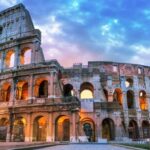
Walking into the Colosseum feels like stepping backward.
This audio-guided route bundles Colosseum entry with the Roman Forum and Palatine Hill for a tight, satisfying ancient-Rome hit. You get to move at your pace while the commentary connects the monuments to the people and power behind them.
I especially like the freedom of a downloadable digital audio guide (so you’re not stuck with a group pace), and I like that the ticket covers the big three zones: the Colosseum, the Forum, and Palatine Hill. It’s one of those rare setups that saves you time without turning your visit into a rushed checklist.
The main drawback is simple: crowds. Even in off-season, security checks and packed pathways can make finding the right spot (and, if chosen, the arena floor) feel a bit stressful.
In This Review
- Key highlights worth planning for
- A practical way to see three of Rome’s biggest ancient sites
- Where to meet: Via delle Terme di Tito 93, not the Colosseo station exit
- Getting in fast: POP Guide app + your exact name on the reservation
- Bring what actually matters at the gate
- Ticket timing: your entrance time slot is not flexible
- Entering the Colosseum: what you gain with arena access
- What arena floor access changes
- A heads-up on crowds and wayfinding
- Roman Forum: where politics, religion, and conquest crowd into one walk
- Why the audio guide works well in this spot
- Palatine Hill: imperial homes and that “how did they live here” feeling
- The view you’ll care about
- What to watch for as you walk
- The audio guide: great tool, but you need the right setup
- Plan for the real-world phone issues
- One improvement you might hope for
- Price and value: what $43 buys you here
- Who this tour suits best (and who should reconsider)
- My booking call: should you book this Colosseum audio entry?
- FAQ
- How much does this Rome Colosseum, Forum, and Palatine Hill entry with audio cost?
- How long is the experience?
- Where do I meet for the tour?
- What’s included in the ticket?
- What languages is the audio guide available in?
- Do I need to bring headphones?
- How do I access the audio guide at check-in?
- Do I need a passport or ID?
- Is there a chance of waiting at the Colosseum?
- Is this suitable for wheelchair users or people with mobility impairments?
Key highlights worth planning for
- Skip-the-ticket-line entry to the Colosseum to cut the worst waiting
- Download POP Guide before you arrive so check-in is fast with a QR code
- Arena floor access option (only if you selected it) for a more immersive view
- Forum + Palatine Hill flow that connects politics and origins of Rome
- Phone audio guide, not headsets: you bring your own headphones
- Bring exact IDs for everyone, including children and infants, or entry can be blocked
A practical way to see three of Rome’s biggest ancient sites
If you’re short on time but you want the real core of ancient Rome, this kind of bundle works. In about 2.5 hours, you can hit the Colosseum, then walk into the Roman Forum, and finish on Palatine Hill for those high, imperial-residence-style views over the Circus Maximus area.
What makes this experience especially workable is the format. You’re not locked into a scripted walking tour every minute. You get a digital audio guide and you explore with commentary as you go. That means you can linger when the details catch your eye, then speed up when you want to cover ground.
Just know the vibe on-site: it’s one of the world’s most famous places, so expect people. Even when you do everything “right,” the Colosseum area can still feel like Rome’s version of a theme park line mixed with history.
You can also read our reviews of more tours and experiences in Rome.
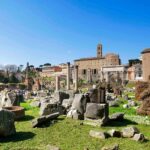


Where to meet: Via delle Terme di Tito 93, not the Colosseo station exit
The meeting point is Via delle Terme di Tito 93. If you arrive by Metro at Colosseo, go to the terrace above the station. Then walk on Via Nicola Salvi for about 100 meters and turn left.
This matters more than you’d think. One of the most common causes of stress here is simply not finding the office in time, especially if road access changes during big city events. Give yourself extra buffer time and treat the meeting point like a real appointment.
Getting in fast: POP Guide app + your exact name on the reservation
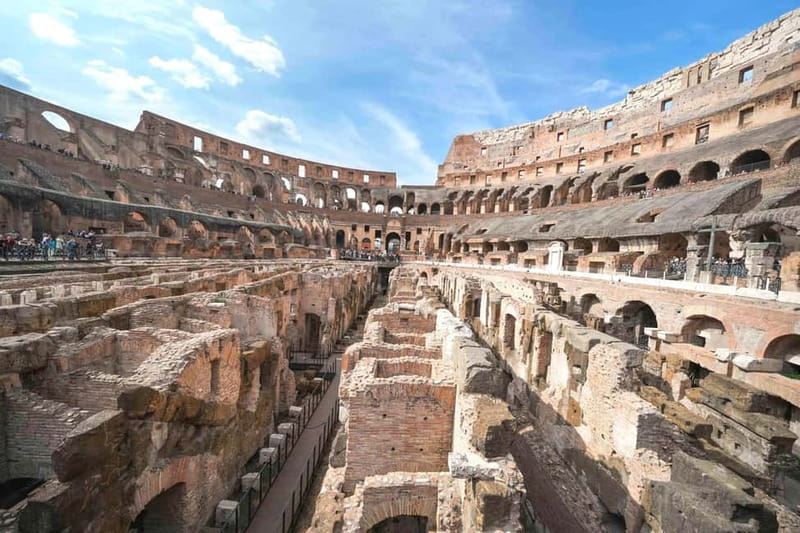
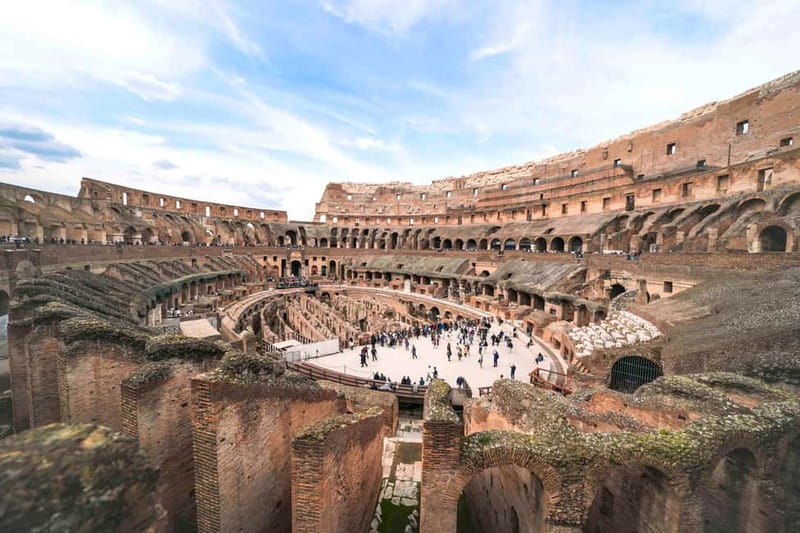
This is the part you can’t wing. Before you arrive, download the POP Guide app. At check-in, you receive a QR code that unlocks the audio commentary in the app.
Also be careful with your booking name. Put your full names exactly as they appear on your passport or ID. If the names don’t match, you may not be able to access the Colosseum.
Bring what actually matters at the gate
You’ll want:
- Your passport or ID card (and IDs for children and infants too)
- Your own headphones (headsets are not included)
- A charged smartphone
- Internet access, since you’ll be using the app
At the entrance, they can check valid ID for all participants, including children and infants. So if you’re traveling with family, make sure IDs are ready and easy to reach.
Ticket timing: your entrance time slot is not flexible
Your ticket is valid for your designated entrance time only. If you arrive late, you can lose your slot. And yes, there can still be a queue at the Colosseum due to security checks even with skip-line entry. Skip-line helps, but it doesn’t erase Rome’s security theater.




Entering the Colosseum: what you gain with arena access
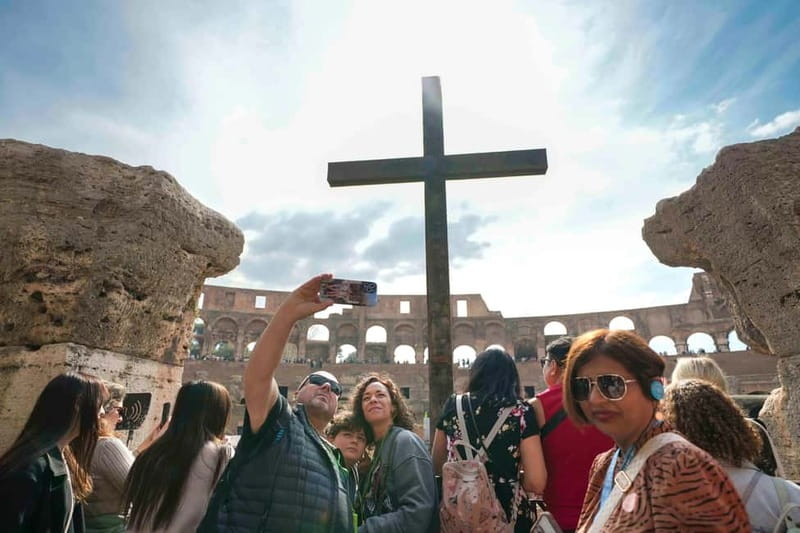
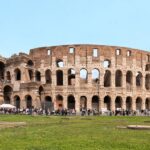
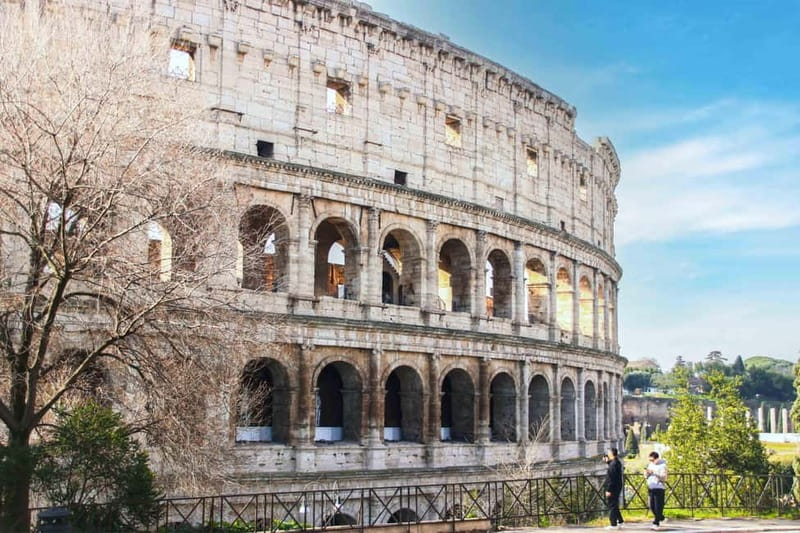
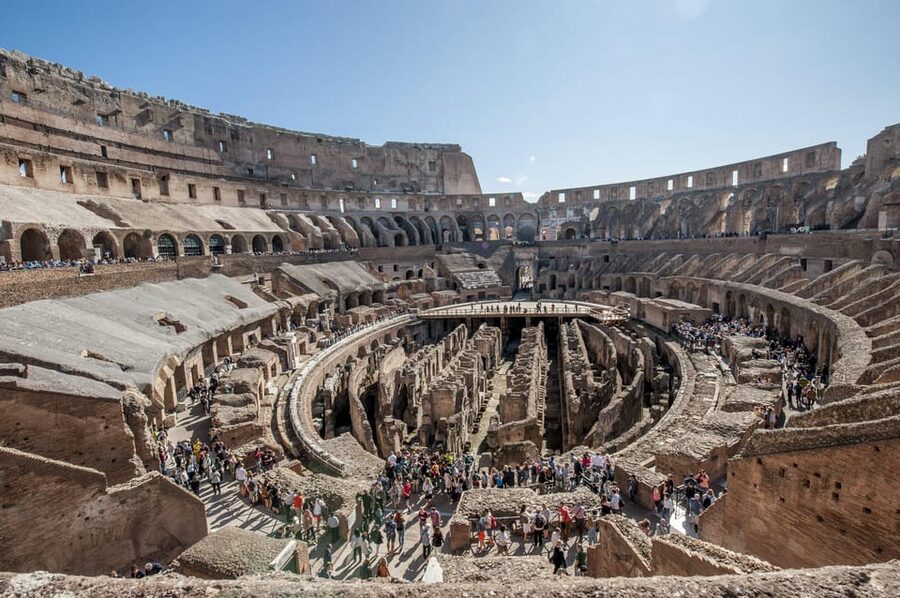
The Colosseum entry is included, and you can add arena floor access if that option was selected in your booking. Whether you have arena access or not, walking into the structure gives you that immediate sense of scale: Roman engineering built for crowds, noise, and spectacle.
What arena floor access changes
If you chose the arena option, you’re getting a different perspective. Seeing the stadium from the ground-level bowl changes how you understand the space. The seating tiers feel less like scenery and more like part of the machine that made events possible.
If you didn’t select arena access, you’ll still have plenty of moments to appreciate the architecture and the layout. But the arena is the part that most people remember most vividly later because it collapses the distance between you and what the building was designed to stage.
A heads-up on crowds and wayfinding
Even with good instructions, the Colosseum is busy. Paths can be confusing, and it’s easy to miss where specific areas connect. If you want the arena floor, plan to be patient at the transitions and don’t assume signage will guide you instantly.
Roman Forum: where politics, religion, and conquest crowd into one walk
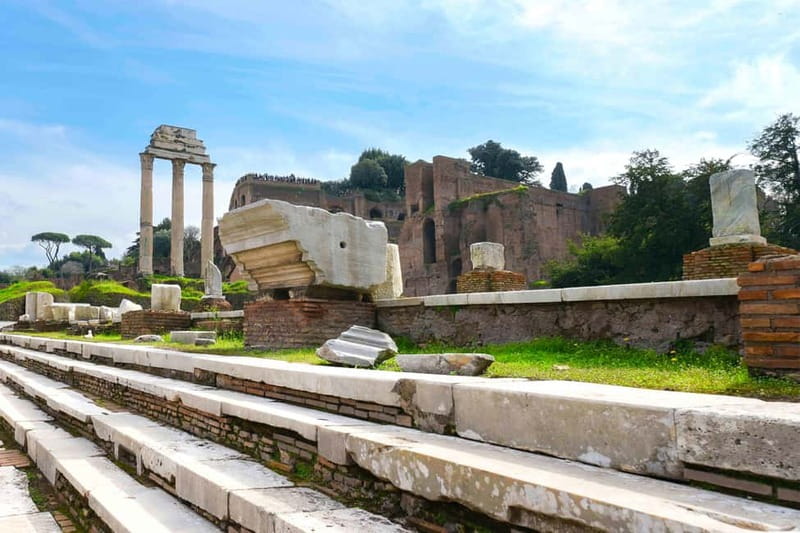
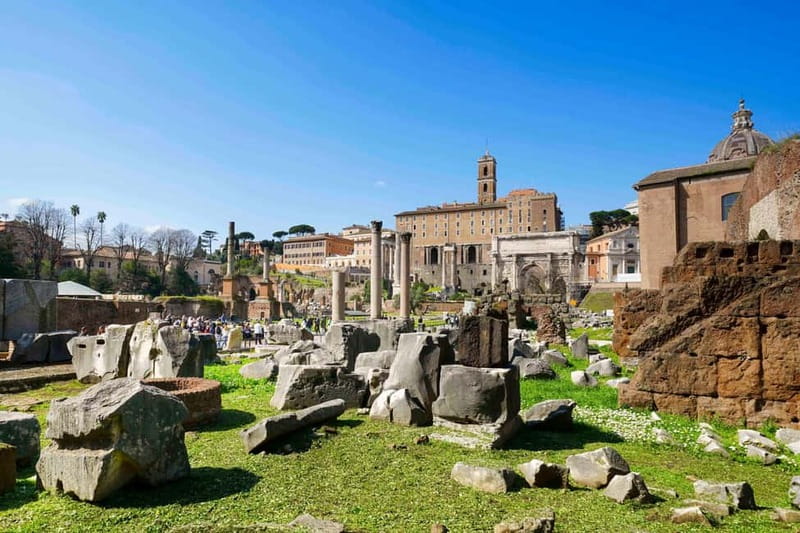
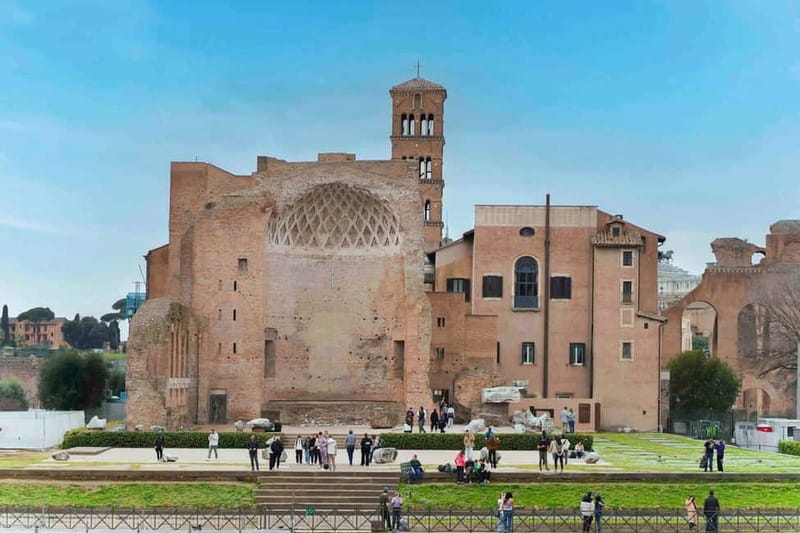
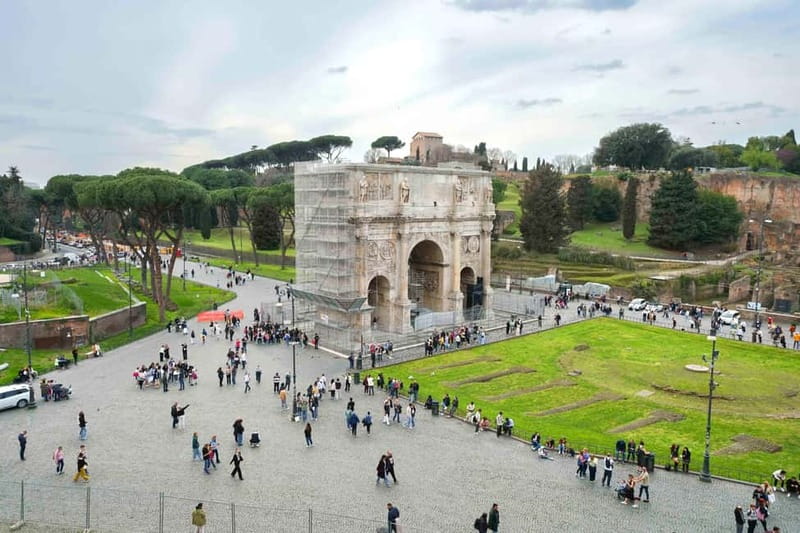
After the Colosseum, the route takes you into the Roman Forum, the dense heart of public life. Here’s the useful thing about pairing the Forum with the Colosseum: you can see how entertainment and power sat next to each other. The Colosseum represents spectacle. The Forum represents governance, religion, and the everyday public face of Rome.
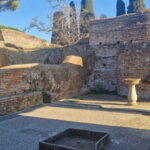
You’ll be looking at remnants of spaces where political drama and big events played out. The Forum can feel like stone fragments until the commentary helps you connect what you’re seeing to how Rome functioned—leaders making moves, crowds gathering, and city life operating in a highly public way.
Why the audio guide works well in this spot
The Forum is full of ruins where one wall fragment can look like every other wall fragment to the untrained eye. The audio guide helps you attach names and purposes to the shapes you’re seeing. It’s also a good match for audio because your attention naturally shifts: you stop, turn, take in a view, then listen to the next segment while you walk.
If you’re the type who likes to know what you’re looking at, this part is where the guide pays off.
Palatine Hill: imperial homes and that “how did they live here” feeling
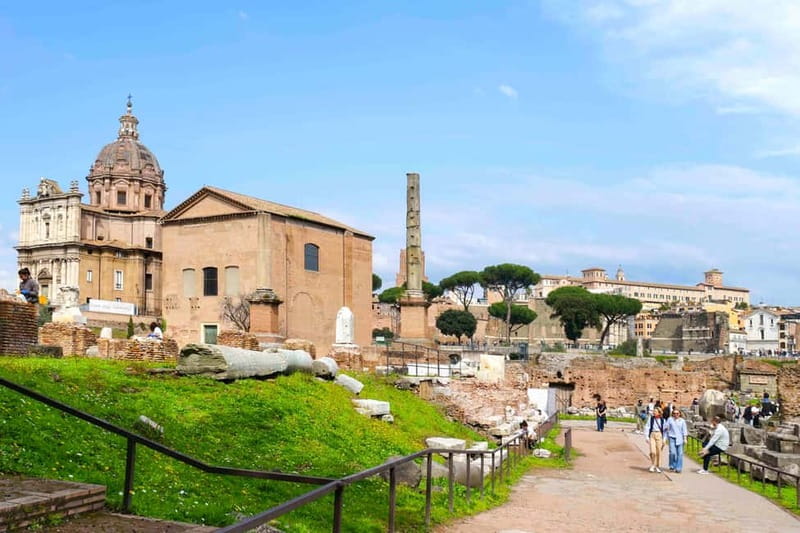
Palatine Hill is where Rome turns from public power to elite origins and residence. It’s associated with Rome’s legendary beginnings, and the hill is known for the grandeur of imperial residences and luxurious homes.
The ruins can be emotional in a quiet way. You’re standing in a place people claimed as the birthplace of Rome, then looking out over the city from a higher vantage point. That combination—myth + real power + views—makes Palatine a strong finish.
The view you’ll care about
You’ll get panoramic views toward the Circus Maximus area. That matters because it gives context for where everything sat. The hill isn’t just a set of stone remains; it’s a strategic high point that controlled sightlines and symbolized status.
What to watch for as you walk
Palatine Hill can include uneven surfaces and lots of stairs or stepping areas. This experience is not suitable for mobility impairments and is not appropriate for wheelchair users, so plan accordingly if you have any mobility concerns.
The audio guide: great tool, but you need the right setup
This experience includes a digital audio guide via a downloadable mobile app, with commentary in English, French, German, Italian, and Spanish. You’ll get access through the QR code you receive at check-in.
Plan for the real-world phone issues
A phone audio tour is only as good as your setup. Here are the practical things to get right:
- Download the app before you arrive (POP Guide is required)
- Make sure your phone is charged
- Use headphones you actually like, not the ones you forgot at home
- Have at least basic internet access available
In a busy Colosseum environment, downloads can feel slow. Some people also found the app less intuitive than they wanted. So if you’re the kind of person who gets irritated by fiddly screens, arrive early enough to test the QR code flow calmly.
One improvement you might hope for
One frustration that came up: audio can feel like it plays at a fixed pace. There’s no mention of speed controls, and that’s a small thing that can matter when you want to skim some sections and linger on others.
Price and value: what $43 buys you here
At $43 per person for entry to the Colosseum, Roman Forum, and Palatine Hill plus a downloadable audio guide, you’re paying for a bundle that saves you time and reduces decision fatigue. You’re also getting skip-the-ticket-line entry for the Colosseum, which is genuinely valuable when security lines are long.
But it’s smart to think like a skeptic for a moment. Some visitors felt the audio add-on wasn’t worth a higher price compared with buying tickets elsewhere without an audio option. That doesn’t mean this package is bad—it means the value depends on your style:
- If you like going at your own pace and want commentary without paying for a live guide, the audio-included bundle makes sense.
- If you’d rather save money and plan to use a different audio app or a free/self-guided method, you’ll want to compare totals carefully.
For most people, the time saved and the included audio access are what justify the price more than anything else.
Who this tour suits best (and who should reconsider)
This setup is ideal if:
- You want the biggest ancient hits in a short time
- You’re comfortable reading a little signage and following a route
- You enjoy audio commentary and can handle phone navigation
- You want flexibility to pause and look without waiting for a group
It’s less ideal if:
- You need step-free access or wheelchair-friendly routes (this one isn’t suitable)
- You hate dealing with apps and QR codes under pressure
- You’d rather pay for a live guide to avoid any self-guided confusion
My booking call: should you book this Colosseum audio entry?
I’d book this if you’re aiming for maximum ancient-Rome impact in a tight window and you’re okay handling a phone-based audio guide. The included access to Colosseum + Forum + Palatine Hill, plus skip-line entry, is a strong value package for $43, especially if you plan to actually use the audio commentary.
I’d think twice if you:
- Don’t want to rely on a working phone and internet for audio access
- Are traveling with mobility needs (this is not suitable)
- Know you’ll be annoyed by crowds and wayfinding on-site
If you do book, prep early: download POP Guide ahead of time, bring your own headphones, and keep your IDs ready. That’s what turns a potentially chaotic morning into a smooth, satisfying walk through the heart of ancient Rome.
FAQ
How much does this Rome Colosseum, Forum, and Palatine Hill entry with audio cost?
It costs $43 per person.
How long is the experience?
The duration is 2.5 hours.
Where do I meet for the tour?
Meet at Via delle Terme di Tito 93.
What’s included in the ticket?
Included are Colosseum entry, Roman Forum entry, Palatine Hill entry, and a digital audio guide (downloadable mobile app). Arena floor access is included only if that option was selected.
What languages is the audio guide available in?
The audio guide is available in English, French, German, Italian, and Spanish.
Do I need to bring headphones?
Yes. Headsets are not included, so bring your own headphones.
How do I access the audio guide at check-in?
Download the POP Guide app before arriving. At check-in, you’ll receive a QR code that grants access to the audio guide commentary in the app.
Do I need a passport or ID?
Yes. Bring a passport or ID card for all participants, including children and infants.
Is there a chance of waiting at the Colosseum?
There can still be a queue due to security checks, even though this experience offers skip-the-ticket line.
Is this suitable for wheelchair users or people with mobility impairments?
No. It’s listed as not suitable for people with mobility impairments and wheelchair users.