REVIEW · PISA
Love in Pisa: Self-Guided Romantic Puzzle Adventure
Book on Viator →Operated by Questo · Bookable on Viator
Pisa turns into a game with your phone. This Love in Pisa adventure turns the usual sights into a clue-by-clue storyline, moving you from the station area all the way to the Leaning Tower. You’ll be playing in English, with a mobile ticket you can use when you want.
I especially like two things. First, you can play at your pace—start when you like, pause when you need, then continue with the next clue. Second, the puzzles push you to actually look at each place (not just walk past), with short explanations that help you connect the dots across Pisa’s squares and churches.
One thing to consider: this is mostly an outside-walk. Entry into attractions isn’t included, and even at the end you’ll finish at the Leaning Tower without an included ticket—so plan separate tickets if you want to go in or climb.
In This Review
- Key things to know before you go
- Why this Pisa puzzle walk works better than a normal stroll
- Price and value: $7.14 for a phone-led Pisa storyline
- Where it starts and ends (and why that’s helpful)
- How the 10-stop route feels on the ground
- Stop 1: Piazza Vittorio Emanuele II — the first clue launchpad
- Stop 2: Chiesa di Santa Maria del Carmine — church exterior + clue work
- Stop 3: Parroquia de San Martino — keep the story moving
- Stop 4: Piazza XX Settembre — a breather between puzzle points
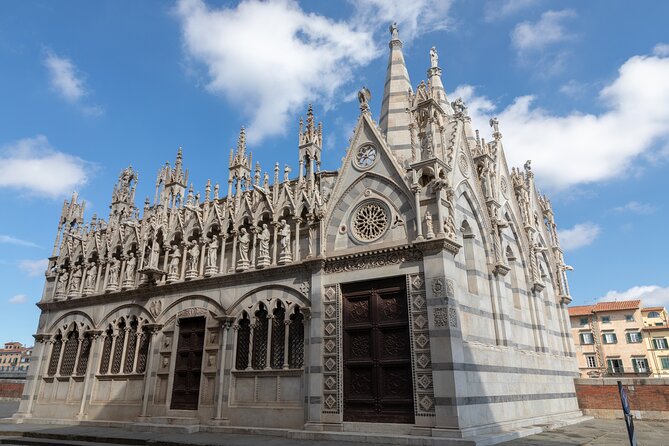
- Stop 5: Chiesa di Santa Maria della Spina — a “stop-and-look” moment
- Stop 6: Museo Nazionale di Palazzo Reale — see the building, not the galleries
- Stop 7: Piazza Dante Alighieri — another classic civic stop
- Stop 8: Piazza delle Vettovaglie — smaller square energy
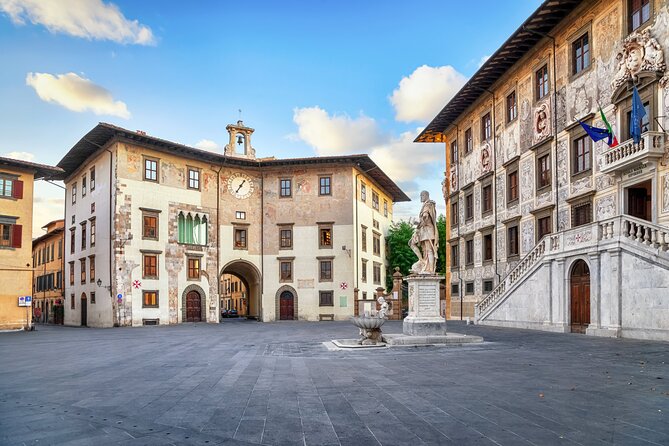
- Stop 9: Piazza dei Cavalieri — approach toward the iconic core
- Stop 10: Leaning Tower of Pisa — end of the story, not the day
- When to play: daytime beauty or evening romance
- What I think about the “outside only” approach
- Logistics you can plan around fast
- Should you book Love in Pisa?
- FAQ
- How long does Love in Pisa take?
- Do I need a tour guide?
- What language is the experience offered in?
- Where do I start and where do I finish?
- Are admission tickets included for the attractions?
- What’s included with the booking?
- Is it private or shared with other people?
- Can I cancel for a full refund?
Key things to know before you go
- Self-guided, smartphone-first: Download and start whenever it suits your day.
- Limited to your group: Private setup means less waiting and a more personal rhythm.
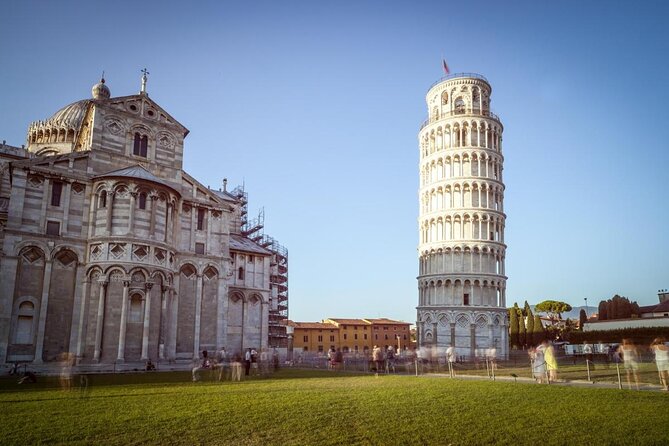
- Walk-up route from square to square: You’ll hit a string of Pisa landmarks in about 35 minutes to 1 hour 5 minutes.
- Outside sightseeing focus: Most stops don’t require entry tickets, so you spend time viewing instead of lining up.
- Questo app + 24/7 support: If the phone experience hiccups, help is available around the clock.
Why this Pisa puzzle walk works better than a normal stroll

This kind of activity is perfect for Pisa because the city is made for wandering. You don’t just chase one famous photo. Instead, you move through a chain of Piazzas and churches, solving little challenges that guide your attention.
I like that the pacing is human. Each stop is set for about 5 minutes, but you can slow down and linger as long as you want. That matters in Pisa, where you’ll naturally stop for photos, quick snacks, or a moment to study a façade before the next clue.
The other big plus is that you’re not stuck with a fixed group schedule. Limited to your group, it feels more like a shared mission than a formal tour. And since it’s self-guided, you’re in charge of when to speed up and when to take a breather.
You can also read our reviews of more tours and experiences in Pisa.



Price and value: $7.14 for a phone-led Pisa storyline
At $7.14 per person, you’re buying time and structure more than you’re buying tickets or a professional guide. That’s a smart deal in Pisa because a lot of your experience can be outside—so you’re not paying for entry at every stop.
Here’s what you’re really getting for the money:
- A built-in route that helps you connect the dots across multiple parts of Pisa.
- Interactive prompts that turn sightseeing into a task (in a good way).
- A simple start and finish with clear meeting points near transit.
The only real “cost” is that this is not designed for deep, inside-the-museum detail. Two places in the route note that admission isn’t included, so don’t expect to walk in and explore galleries just because you’re nearby. Still, for an hour of guided-by-phone fun, it’s excellent value.
Where it starts and ends (and why that’s helpful)

You begin at Piazza della Stazione (56125 Pisa PI). It’s a practical starting point if you’re already near the rail area or using public transportation. The finish is at Piazza del Duomo (56126 Pisa PI), with the final stop at the Leaning Tower of Pisa.
The timing window is also very flexible. The activity lists opening hours from 12:00 AM to 11:30 PM, Monday through Sunday. That’s unusual in a good way: it means you can play in daylight or aim for evening light without feeling trapped by museum schedules.
How the 10-stop route feels on the ground
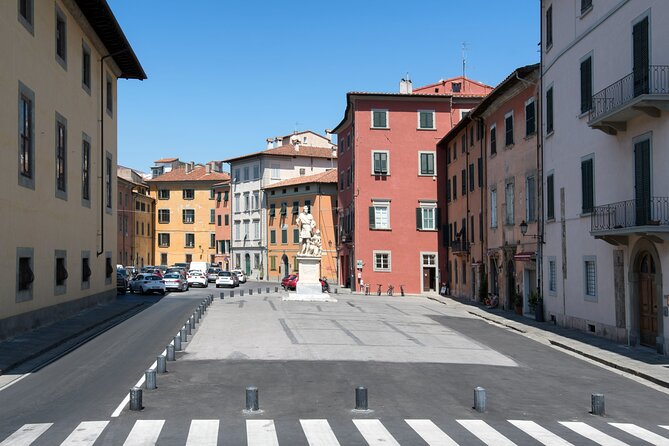
This is a walking route through central Pisa, built around squares and churches. You’ll get your clue at each place, and the clue gives directions to the next stop. The experience is designed so you stop, solve, look, and move on—then repeat.
You can treat it like a steady loop rather than a sprint. The pauses are built in. Even though each scheduled segment is around 5 minutes, the app lets you linger at the stop as long as you want before continuing.
Below is what you can expect at each key location, and what to watch for so the puzzles feel rewarding instead of random.
Stop 1: Piazza Vittorio Emanuele II — the first clue launchpad
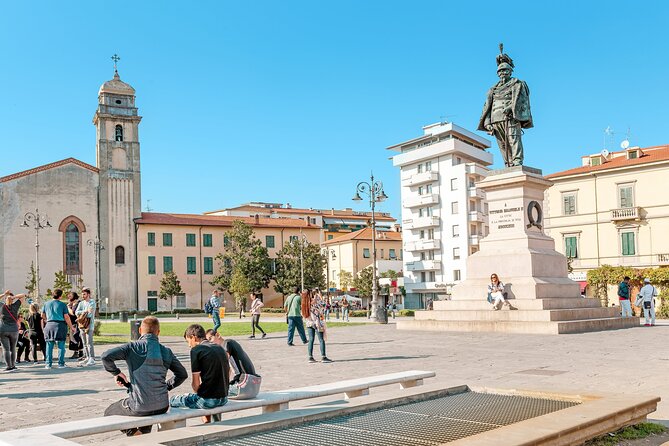
You start at Piazza Vittorio Emanuele II, where you receive the first clue. Starting in a public square like this is a smart choice: it’s easy to orient yourself, and there’s usually enough open space to pause your phone without blocking anyone.
This is where the app sets the tone. Expect the activity to guide your attention toward details you might otherwise miss. After that, you’ll move on to the first church stop.
Potential drawback: If you’re the type who hates figuring out your bearings before you’ve had your first espresso, you might want a quick break or scan the area before you fully commit to the puzzle.






Stop 2: Chiesa di Santa Maria del Carmine — church exterior + clue work
At Chiesa di Santa Maria del Carmine, you’ll get a new clue and then continue at your own pace. Since this is outside-focused, you’ll spend your time reading visual cues from the church’s exterior—then using the clue to progress.
Why it’s worth it: Churches in Italian cities are like open-air history pages. Even without entering, you can learn a lot by slowing down to look.
Stop 3: Parroquia de San Martino — keep the story moving
You’ll hit Parroquia de San Martino next, again using the clue to decide what to look for. The app’s structure works well here because the route keeps changing environments—square, church, square—so your attention stays fresh.
Practical tip: Wear shoes you can walk in comfortably for the whole route. The stops are short, but you’re still moving across central Pisa.
Stop 4: Piazza XX Settembre — a breather between puzzle points
Piazza XX Settembre functions like a pause zone in the route. You’ll get the clue, then use the open plaza area to read, think, and reset.
Plazas are good for puzzles because you can stand somewhere, take in the geometry of the space, and then scan what the clue asks for without having to squeeze between tight corners.
Stop 5: Chiesa di Santa Maria della Spina — a “stop-and-look” moment
At Chiesa di Santa Maria della Spina, you’ll do another clue-based look at the church exterior. This stop tends to be the kind you slow down for—because once you start searching with purpose, you notice patterns: textures, shapes, and how the building sits in its small urban context.
What to be ready for: If you’re rushed, puzzles can feel like homework. If you’re relaxed, it’s fun. This is one of those “pace is everything” stops.
Stop 6: Museo Nazionale di Palazzo Reale — see the building, not the galleries
The Museo Nazionale di Palazzo Reale is listed with admission not included. So plan to enjoy it from the outside and treat it as part of the route’s story rather than a museum visit you can tick off in the same time block.
Why it still works: Big palazzo façades give you strong visual anchors. Even from outside, they help the route feel cohesive and connected.
Stop 7: Piazza Dante Alighieri — another classic civic stop
Piazza Dante Alighieri is next, and you’ll get another clue when you arrive. Dante-named plazas often give you that “Pisa at street level” feeling: local streets around a central open space, a mix of everyday foot traffic and quiet corners to stand and think.
This stop is a good place to catch your breath before the last leg closer to the Duomo area.
Stop 8: Piazza delle Vettovaglie — smaller square energy
Piazza delle Vettovaglie adds a different vibe. The route keeps stepping through Pisa’s different “rooms,” and smaller squares often make puzzle walks more satisfying because you can focus without feeling like you’re searching across a huge area.
Drawback to watch: In any narrow-feeling area, it’s easier to get distracted by people and movement. Give yourself a minute to step aside, then do the clue-reading calmly.
Stop 9: Piazza dei Cavalieri — approach toward the iconic core
Piazza dei Cavalieri is where you start shifting mentally toward the finish. The app will give your clue, and you’ll solve it, then set up for the final destination.
Even if you’re already excited about the Leaning Tower, try not to rush. This is still part of the story chain, and slowing down at this point keeps the experience fun instead of just “almost there.”
Stop 10: Leaning Tower of Pisa — end of the story, not the day
You finish at the Leaning Tower of Pisa, and the story plus city exploration game end here. Admission is listed as not included at the final stop, so you can plan to see the Tower from the piazza area and then decide separately if you want an entry or climb ticket.
Why this ending feels satisfying: After solving clues across Pisa’s squares and churches, the Tower is no longer just a stand-alone landmark. It feels like the payoff.
When to play: daytime beauty or evening romance
One of the most practical tips from past experience is to do the more informational parts in the evening, when lighting makes everything feel more romantic. Pisa is famous for golden-hour mood, and this route’s “look and learn” pacing benefits from that.
If you want the best of both worlds:
- Play earlier if you prefer easier light for reading phone prompts.
- Finish later if you want the Tower area to glow.
Either way, the listed hours (open all day) make timing flexible.
What I think about the “outside only” approach
Not having a guide is a double-edged sword. The good side is freedom. You don’t have to keep up with anyone. You can linger at a church façade as long as you like, or speed up when you’re feeling it.
The tradeoff is depth. Since you’re not entering paid attractions (with the route noting some admissions not included), you won’t get inside-the-room details unless you add separate visits.
That’s fine for this kind of activity. The puzzle structure is your “guide,” and the stops are set up so you can still learn enough to feel like your walk mattered.
Logistics you can plan around fast
This is offered in English and is listed as most travelers can participate. Service animals are allowed, and it’s near public transportation—so it’s easy to fit into a day that includes transit.
Also, it’s private for your group. That means if you’re traveling as a couple, a pair of friends, or a small group, you’re not doing the activity while strangers constantly pass in and out.
One practical thing: bring a charged phone and be ready to use your smartphone as your key. Since it’s a mobile ticket and the game runs on the phone, a low battery can turn a fun puzzle walk into a stressful one.
Should you book Love in Pisa?
Book it if:
- You like self-guided activities where you choose the pace.
- You want more than the Leaning Tower photo and want a route through multiple Pisa squares and churches.
- You enjoy learning by solving clues, not by listening to a lecture.
Skip it if:
- You want to enter major attractions as part of the same cost and time window.
- You prefer a traditional guide who answers questions on the spot.
- You dislike phone-based experiences or you know you’ll have trouble with your device during a walk.
If you’re staying in Pisa for a short time, this is one of the cleanest ways to add structure to your sightseeing without stacking up ticket costs. At $7.14, the value is strong for a walk that feels more like a story game than a checklist.
FAQ
How long does Love in Pisa take?
The adventure is estimated at about 35 minutes to 1 hour 5 minutes.
Do I need a tour guide?
No. It’s a self-guided, phone-based city exploration game, and a tour guide is not included.
What language is the experience offered in?
It’s offered in English.
Where do I start and where do I finish?
You start at Piazza della Stazione, 56125 Pisa PI, Italy, and finish at Piazza del Duomo, 56126 Pisa PI, at the Leaning Tower of Pisa.
Are admission tickets included for the attractions?
Entry tickets are not included. The route stops are listed as outside, and admission is noted as not included for Museo Nazionale di Palazzo Reale and the Leaning Tower of Pisa.
What’s included with the booking?
You get the city exploration game on your phone (Questo app) and access to 24/7 customer support.
Is it private or shared with other people?
It’s private for your group only.
Can I cancel for a full refund?
Yes. You can cancel for free up to 24 hours in advance for a full refund. If you cancel less than 24 hours before the start time, it isn’t refunded.