REVIEW · ISTANBUL
Istanbul: Basilica Cistern Skip-the-Line Entry & Audio Guide
Book on GetYourGuide →Operated by Istanbul Tourist Pass® · Bookable on GetYourGuide
Cisterns beat crowds in Istanbul. This skip-the-line visit gets you into the Basilica Cistern faster, then uses story and setting to make the space feel more like a time machine than a museum. You’ll connect the myth of the Medusa heads, the engineering of the water system, and even a famous movie reference.
I especially like two things: the chance to see the cistern early and before the biggest crush, and the way strong guides turn stone-and-stories into something you can actually picture. Names you might hear include Oguzhan (Augustus) and Emre Eriskon, plus other guides such as Oguz, Ozy, and Adam (Edem), and the vibe is consistently practical and easy to follow.
One consideration: even with skip-the-line tickets, you still face mandatory security checks, and there can be an entrance wait (usually less than the full ticket line, but still real).
In This Review
- Key things to look for before you go
- Basilica Cistern: Why this underground space feels different
- Skip-the-Line entry: what it gets you (and what it doesn’t)
- From aqueducts to the Great Palace: the water system story you’ll actually remember
- Entering the cistern: sights, lighting, and what to expect underground
- Medusa heads: myth, symbolism, and the reason guides matter
- The James Bond From Russia with Love moment
- Hagia Irene and Bosphorus/Golden Horn views: why the tour frames the cistern
- Colorful lights, odd installations, and renovation reality checks
- Guides make the difference: Oguzhan, Emre, and others you might meet
- Audio guide + eSIM: small extras that help on a travel day
- Timing and pace: how long you’ll spend and how to use it
- Who this is best for (and who might skip)
- Price and value: is $54 worth it?
- Should you book the Basilica Cistern skip-the-line tour?
- FAQ
- FAQ
- What is the duration of the Basilica Cistern tour?
- Is this ticket truly skip-the-line?
- What is included with the ticket?
- Do I need to bring an ID?
- Where do I meet the guide?
- Is hotel pickup included?
- Do I need to download tickets in advance?
- What language is the audio guide in?
- Can I cancel if my plans change?
- How much does it cost?
Key things to look for before you go
- Skip-the-line entry helps you get into the cistern area sooner than walk-up crowds
- Medusa heads storytelling ties Greek myth to what you actually see
- Justinian-era water system details explain how this place worked, not just what it looks like
- James Bond From Russia with Love reference can make the visit feel extra fun
- Colorful lighting and photo spots, plus some modern installations you may have mixed feelings about
- Quick guided time (often about half an hour) plus free time to explore at your pace
Basilica Cistern: Why this underground space feels different
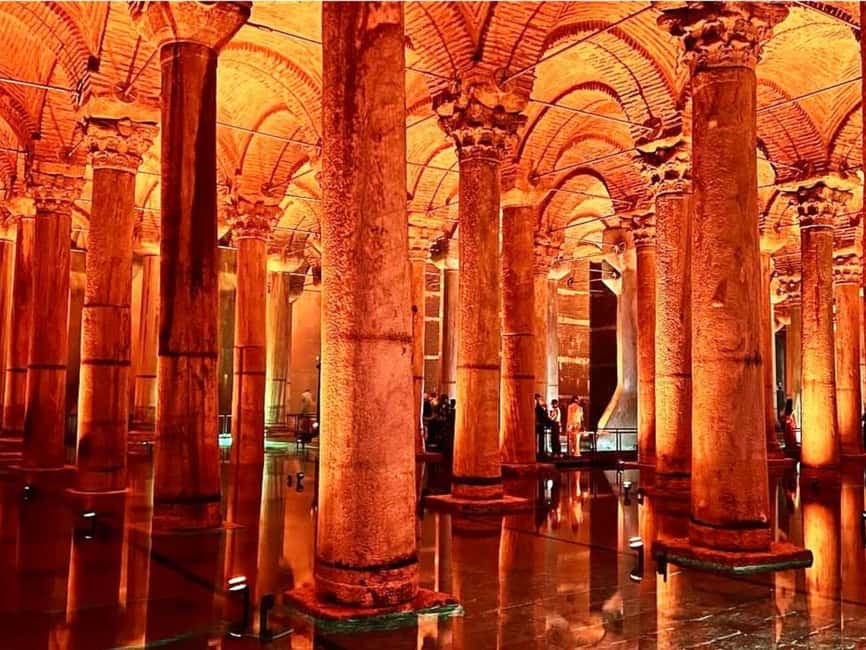
The Basilica Cistern was built in the 4th century and then enlarged in 532 AD under Emperor Justinian I. It wasn’t built for tourists. It was built to solve a real problem: storing massive amounts of water for the Great Palace era.
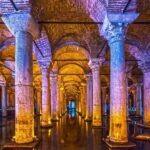
What makes it memorable is the scale you only understand after you step down. You descend 52 stone steps, then you’re in a cathedral-size chamber designed to hold up to 80,000 cubic meters of water. Even if you know the history, the feeling is still physical—cool air, echo, and walls built for pressure, not aesthetics.
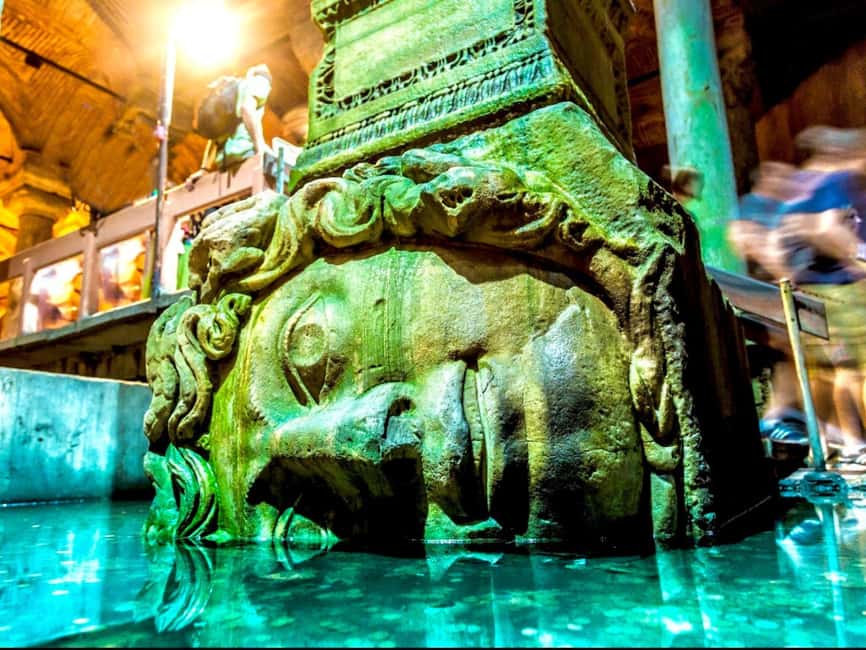
And yes, you’ll also learn the myth layer. The visit focuses on the mystery around the Medusa heads—not just that they’re there, but why they became a story people keep repeating.
You can also read our reviews of more tours and experiences in Istanbul.



Skip-the-Line entry: what it gets you (and what it doesn’t)
The big promise here is skip-the-line entry. In practice, this means you’re using a prearranged ticket path so you don’t spend your precious time stuck at the normal ticket queues.
That said, the important reality is spelled out clearly: you cannot skip security lines. There might still be a line at the entrance, and it’s mandatory for everyone. Think of it as faster than the ticket line, but not instant.
If you can, aim for an earlier start time. Some guided groups reported being among the first in, which translates into a calmer entry and easier photos. The tour can be short and efficient, so arriving when the cistern is less crowded makes a noticeable difference.
From aqueducts to the Great Palace: the water system story you’ll actually remember
This is the part that makes the Basilica Cistern more than a pretty underground hall. Your guide walks you through how water moved through the system and where it came from.
You’ll hear that the cistern was supplied via a network stretching toward the Black Sea area, delivered through 20 kilometers of aqueducts. The tour includes specifics like:
- Eğrikapı Water Distribution Center in the Belgrade Forest
- Valens Aqueduct (about 971 meters)
- Mağlova Aqueduct (about 115 meters)
On top of that, the cistern itself isn’t casual construction. The chamber is surrounded by a firebrick wall about 4 meters thick, with waterproofing mortar. When you connect those details to what you’re standing inside, the whole space makes sense as infrastructure.
This is also where I’d tell you to pay attention, because it’s easy to miss the engineering while you’re busy taking photos. Keep your eyes up and around the stonework as the story unfolds—you’ll start seeing how it was built to function, not just to impress.
Entering the cistern: sights, lighting, and what to expect underground
Once you’re inside, the cistern works on two levels. First, there’s the geometry—long rows of columns and the suggestion of endless water space. Second, there’s the atmosphere: the cooler temperature and low-ceiling echo that turns your voice into a soundtrack.
A few practical notes shaped by what you’ll likely experience:
- The space can feel refreshingly cool compared with Istanbul’s warmer humidity.
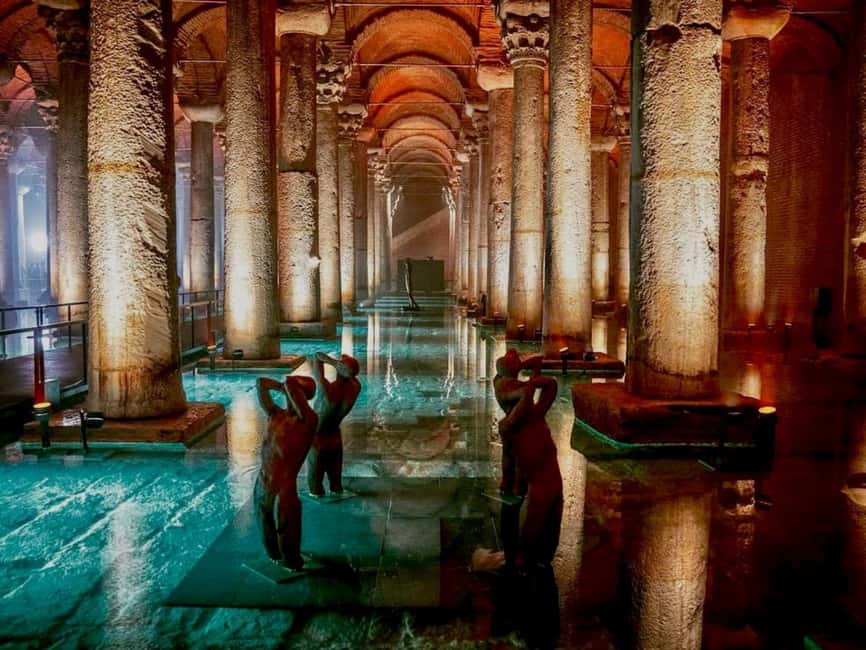
- The cistern has colorful lights, and those lights do a lot for atmosphere and photos.
- Renovations and changes to the entrance can affect how you route through the space, so you may notice the layout is slightly different than older photos you’ve seen online.
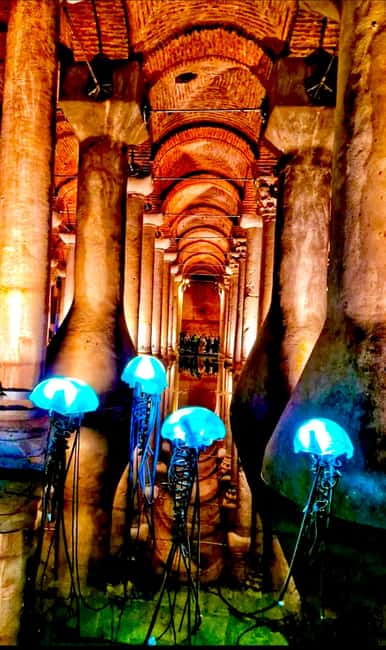
There’s also a modern layer. Some people described modern sculptures or installations that felt out of place to them, while others simply enjoyed the look and lighting. Add this to your expectations: the cistern is historic, but it’s also being managed as a contemporary attraction, so you may see contemporary art mixed in.
And yes, a small portion can be under repair at times. One review mentioned that part of the sight was being worked on. That doesn’t ruin the visit, but it can slightly change what’s accessible in certain sections.
Medusa heads: myth, symbolism, and the reason guides matter
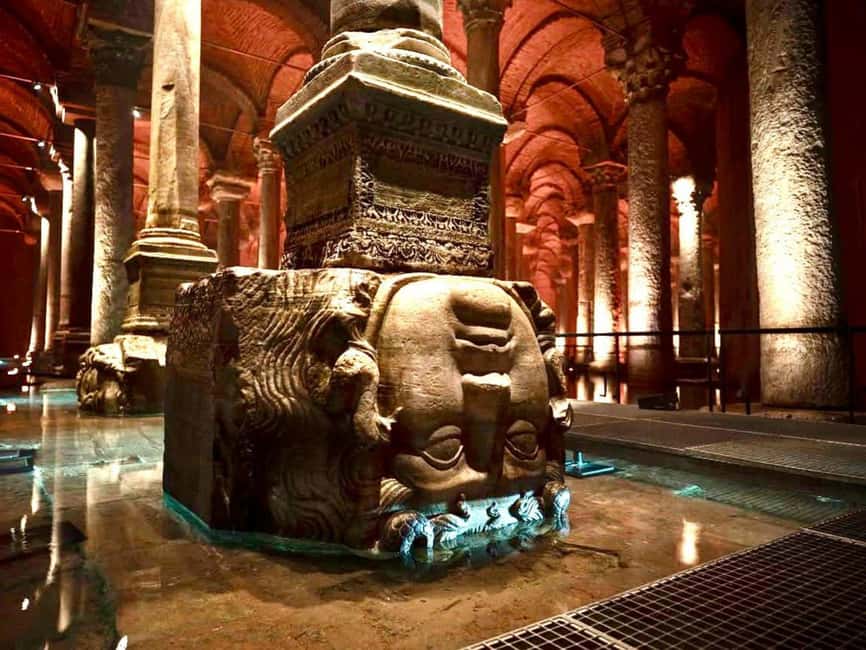
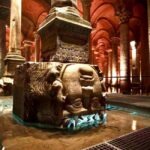
The Medusa heads are the headline, but the magic is what your guide does with them. You’re not just pointed at two carvings. You’ll hear the story behind the references to Greek mythology and the way the heads became a mystery people associate with the cistern.
This is also where tour leadership can make or break the experience. Several guides were praised for turning the Medusa story into something clear and entertaining, not random trivia. When guides like Oguzhan (Augustus) or Adam (Edem) explain the significance, you’re more likely to notice details you’d otherwise walk past.
If you’re into myths, movies, or anything symbolic, this part will feel satisfying because it connects three things at once: what you see, the cultural story layer, and the practical setting of the cistern.



The James Bond From Russia with Love moment
One of the fun highlights is the chance to recognize a scene from James Bond From Russia with Love. You’re not required to be a Bond fan, but if you know the film, this reference can add a pop of playful recognition.
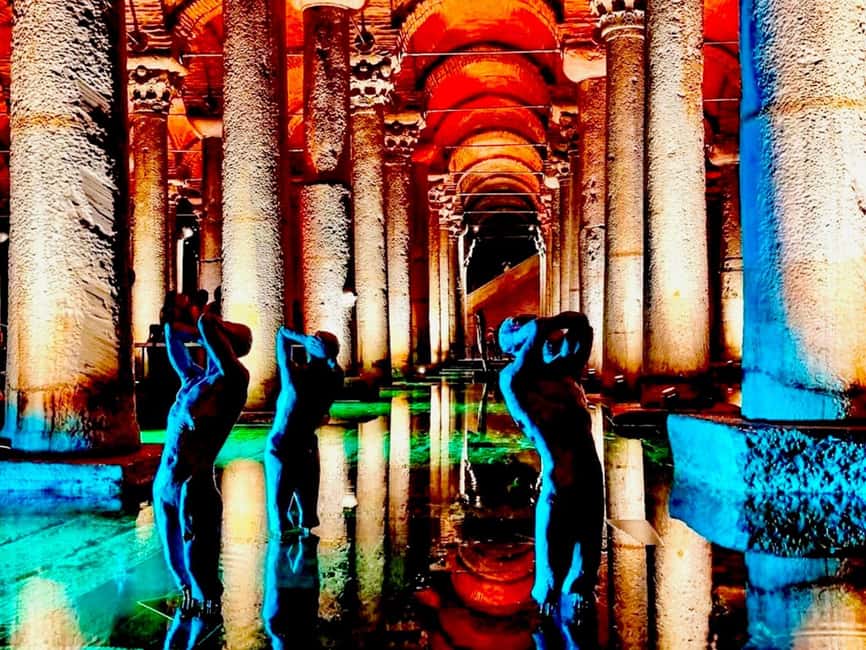
The reason it works is simple: the cistern already has a cinematic feel—columns, shadow, reflective water surfaces, and dim lighting. When your guide points out the movie reference, you’ll start seeing the cistern the way film viewers did.
It’s a small feature, but it can make the visit feel lighter and more memorable, especially if you’ve already seen a lot of mosques, palaces, and churches that day.
Hagia Irene and Bosphorus/Golden Horn views: why the tour frames the cistern
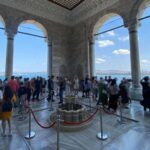
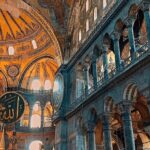
This experience doesn’t treat the cistern as a floating island. The highlights mention viewing over the Golden Horn and Bosphorus, and learning about Hagia Irene, described as the second biggest church in Istanbul.
Even if your time in the cistern is the main event, this kind of framing helps you understand where the cistern fits in Istanbul’s larger story. Hagia Irene ties you to the city’s religious and Byzantine layers, while those water views remind you that Istanbul’s identity is tied to waterways.
You should expect some form of connection to the surrounding area—whether it’s a look from a viewpoint, a short contextual walk, or your guide pointing out what you’re seeing. The goal is that when you leave the cistern, you don’t feel like you traveled only to underground columns. You feel like you traveled through the city’s layers.
Colorful lights, odd installations, and renovation reality checks
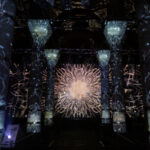
One of the most repeated impressions was how striking the cistern looks with colored lighting. In plain terms: the lights help you see depth. They make the columns look less flat and more dimensional, which is why people keep returning to photograph the same corners.
At the same time, you may notice modern additions. Some visitors felt certain modern sculptures or installations were slightly out of place, and others just accepted it as part of the current presentation. Either way, it won’t take away from the core experience: the cistern’s scale and engineering are the real star.
Renovation can also be visible. A comment noted that part of the site was under repair and that the entrance changed after restoration with smaller passageways. So if you arrive expecting a single fixed layout, you’ll be happier if you treat it as a living site that keeps getting improved.
Guides make the difference: Oguzhan, Emre, and others you might meet
This experience lives or dies on how the story is told. The good news: the guide lineup here appears strong, with multiple names and consistent praise for clarity.
You may meet guides such as:
- Oguzhan (Augustus), repeatedly described as outstanding and wealth of knowledge
- Emre Eriskon, praised for passion, storytelling, and even dry humor
- Oguz and Ozy, noted for enthusiasm and keeping groups informed
- Adam (Edem), mentioned for taking guests to key underground parts, including the Medusa heads area
One detail I like is how adaptable some guides were in less-than-perfect situations. One review noted noise from a school trip and that the guide adjusted. That matters because if you’re visiting in peak times, it’s not always quiet. A good guide helps you keep pace.
If you care about getting more out of the visit than what a sign can tell you, pick a time slot that gives you full access to the guided portion, not the shortest possible schedule.
Audio guide + eSIM: small extras that help on a travel day
This ticket bundle includes an audio guide (optional, English). Even if your main experience is guided, the audio can be useful for moments when you want to linger on your own terms. It’s also a nice backup if you want to re-check a detail you missed during the guided story.
You also get internet with an eSIM, listed as limited time. This is practical if you want navigation, messaging, or quick photo uploads during and after your visit. It’s one of those quiet conveniences that can reduce stress on a tight Istanbul day.
Timing and pace: how long you’ll spend and how to use it
Duration is listed as 1 hour to 75 minutes, depending on available starting times. In real terms, the experience can feel “short-and-sweet,” with structured guidance followed by time to wander and photograph.
Several reviews mention around 30 minutes of guidance, then free time to explore inside the cistern and take pictures. That’s a great format because it respects two kinds of tourists:
- the ones who want the story with minimal wandering
- the ones who want to stop and stare at column angles and water reflections
Plan for the fact that you’ll be underground for most of the visit, so it’s a good option for hot weather. One review specifically described it as surprisingly cooling and a nice break from humidity.
Who this is best for (and who might skip)
You’ll likely enjoy this most if you want:
- a quick highlight that doesn’t eat half your day
- guided explanations of the Medusa heads and the water-engineering details
- a “bonus fun” moment like the Bond movie reference
- a comfortable outing during warmer hours, since it’s naturally cooler underground
If you’re the type who prefers reading every plaque yourself, you might be tempted to skip the guide. But even then, the guide-led myth and engineering connections are what turn it from scenery into understanding.
If you’re very sensitive to crowds or noise, choose a less busy start time. A school group behind you is still a possibility at any popular attraction, and some guidance teams handle that better than others.
Price and value: is $54 worth it?
At $54 per person, you’re paying for three things that matter in Istanbul: time saved, guided context, and extras.
Here’s the value math that usually works:
- Skip-the-line entry reduces the biggest friction point: waiting. Some comments described long queues without the skip option, including waits approaching 1.5 hours.
- The guide adds meaning. You’re getting more than visuals—you’re getting story around the Medusa heads and how Justinian’s water network functioned. That’s hard to replicate with generic signage.
- The audio guide and limited-time eSIM internet are useful add-ons for a travel day, especially if your phone connection is inconsistent.
So is it cheap? No. But for many people, it’s priced like a “buy back your time” option plus a guided explanation in a place that’s visually strong but easy to misunderstand without context.
Should you book the Basilica Cistern skip-the-line tour?
Book it if you want a strong, efficient visit and you care about the story behind the visuals. This is the kind of attraction where the guide’s structure helps you notice the Medusa heads, understand why the cistern was built, and appreciate the engineering details tied to Justinian-era water supply.
Skip or reconsider if you hate any chance of crowd noise and you’re aiming for total silence, or if you’re only interested in taking photos with no interest in myth and water-system explanations. Also, keep your expectations realistic on entry: security lines still happen, even with the skip-the-line ticket.
FAQ
FAQ
What is the duration of the Basilica Cistern tour?
The experience lasts about 1 hour to 75 minutes, depending on the starting time available.
Is this ticket truly skip-the-line?
It includes skip-the-line entry for the Basilica Cistern, but you still must go through mandatory security lines.
What is included with the ticket?
Included items are an audio guide, internet with an eSIM (limited time), and skip-the-line entry ticket for the Basilica Cistern if that option is selected.
Do I need to bring an ID?
Yes. You should bring a passport or ID card.
Where do I meet the guide?
The meeting point may vary depending on the option booked, and the tour ends back at the meeting point.
Is hotel pickup included?
No. Hotel pickup is not included.
Do I need to download tickets in advance?
You’ll receive Entry Ticket QR Codes via a separate email from the supplier Istanbul Tourist Pass.
What language is the audio guide in?
The audio guide is listed as optional English.
Can I cancel if my plans change?
Yes, free cancellation is offered up to 24 hours in advance for a full refund.
How much does it cost?
The price is listed as $54 per person.