REVIEW · CARCASSONNE
Carcassonne ‘s Medieval Walls: A Self-Guided Tour
Book on Viator →Operated by VoiceMap Audio Tours · Bookable on Viator
Walls with a soundtrack feel alive. This self-guided route turns Carcassonne’s ramparts into a chapter-by-chapter story, starting at the Buste de Dame Carcas and ending at Porte Narbonnaise; I especially like the offline access (audio and maps) and the way the narration guides your walk at your own pace. One thing to consider: you’ll need your smartphone plus headphones, and if a short section is closed for restoration you may need to keep moving and let the app guide you to the next part.
For $24.99 per person, you get a 2 to 3 hour, English-language walk that’s designed for navigation around the Cite de Carcassonne—no museum detours, no ticket headaches, just you and the stonework. It’s also set up for a private group feel, since only your party joins the experience.
In This Review
- Key things that make this wall walk work
- Why Carcassonne’s walls feel different with a self-guided audio walk
- Starting at Buste de Dame Carcas: the legend before the stone
- Through Porte Narbonnaise: the wall-walk starts where the city breathes
- Along the ramparts: siege logic and the meaning of gate lines
- The Château Comtal (Château et Remparts): where castle and wall become one defense
- The Monument to Jean Pierre Cros Mayrevieille: saving the city in modern times
- Gates and saints in the center: Aude, Nazaire, and Toulouse gates
- Timing and pace: how to plan a 2 to 3 hour loop without getting annoyed
- Price and value: what $24.99 buys you (and what it doesn’t)
- What you need to bring: phone, headphones, and an offline-ready setup
- Practical logistics: where it starts and ends
- Who this self-guided wall tour suits best
- Should you book this Carcassonne wall audio tour?
- FAQ
- FAQ
- How long is the self-guided Carcassonne walls tour?
- Is the tour offered in English?
- Where does the tour start and end?
- Do I need to buy tickets for museums or attractions?
- What do I need to bring with me?
- Does the tour work offline?
- When can I do the tour?
- Is this a guided group tour with other people?
- What parts of Carcassonne will the audio cover?
Key things that make this wall walk work
- Offline audio, maps, and geodata so you’re not stuck hunting signal on old stone
- A clear starting point at Buste de Dame Carcas and a finish at Porte Narbonnaise
- Siege storytelling that points out how medieval defense actually worked
- Big defensive landmarks in sequence, from Lady Carcas to Château Comtal
- City-center access by gates, so you see more than just ramparts
- Restoration-friendly pacing, with an easy way to move to the next chapter if something’s blocked
Why Carcassonne’s walls feel different with a self-guided audio walk
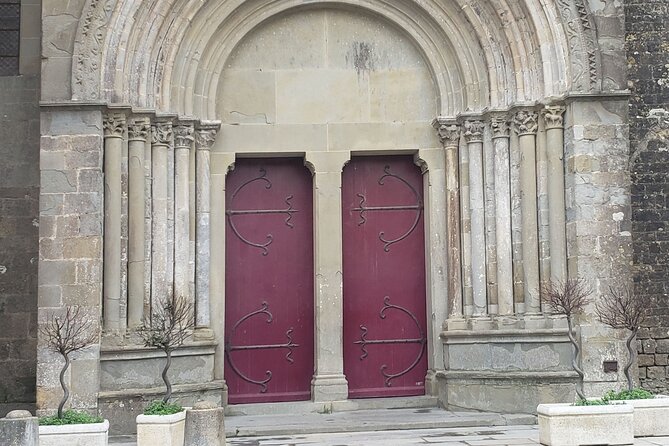
Carcassonne can be a lot when you’re surrounded by crowds, signs, and tour groups moving in herds. This format gives you control. You pause when you want to, keep walking when you don’t, and you still get the story threads that connect the statues, gates, and battlements.
The narration is built around the walls themselves, not around a museum schedule. That means you’re learning while you’re outside, looking at real defensive angles and gate structures you’d otherwise skim past. And because it’s designed for your timing, you’re less likely to feel rushed at the best views.
You can also read our reviews of more tours and experiences in Carcassonne.


Starting at Buste de Dame Carcas: the legend before the stone
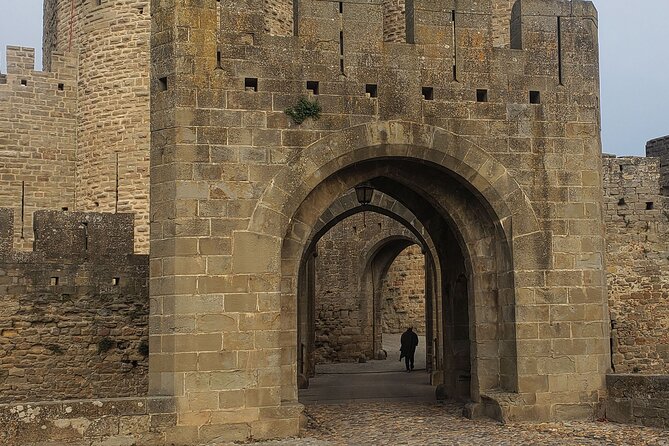
You begin at the Buste de Dame Carcas, in Carcassonne (11000). This is a smart warm-up because it sets the local legend before you start analyzing architecture like a tiny medieval detective.
Lady Carcas is tied to a story about saving the city from Charlemagne. Even if you already know Carcassonne as a medieval-walls place, starting here helps you read the walls as something people fought over, protected, and used for power. It also gives you a character to hold onto as the route shifts into more technical history.
I like how the tour sets expectations early: you’re not just strolling. You’re learning why the walls matter, and that makes later stops click faster.
Through Porte Narbonnaise: the wall-walk starts where the city breathes
Once you enter through Porte Narbonnaise (Narbonne Gate), you begin following the wall around the old city. This is where the walk becomes practical: you’re on a defined circuit, and the narration keeps you oriented as the defenses curve and change.
This segment also brings in the Cathars and the crusade launched against them, plus siege episodes connected to the city. The key value here is context. You’re seeing the physical systems of defense while you’re hearing why the region was a target in the 12th century—so the story has weight, not just dates.
If you’re the type who likes “why this place is famous,” this is your first payoff: the walls stop being a pretty backdrop and start acting like evidence.
Along the ramparts: siege logic and the meaning of gate lines
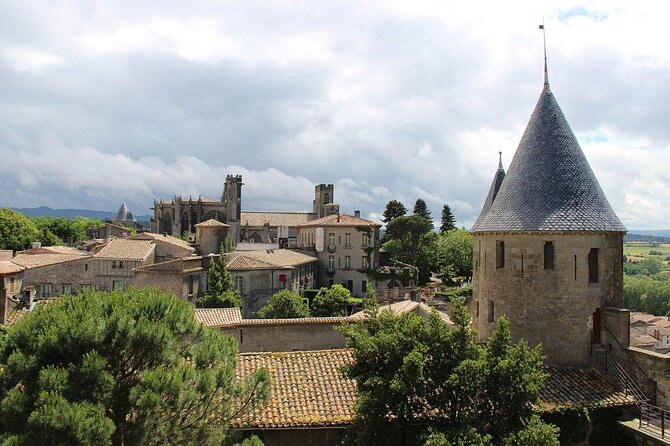
As you continue around the Cite, you’ll hit the meat-and-potatoes of medieval warfare: how defenders thought, where attackers got stressed, and why certain wall lines were chosen.
A big theme in this tour is locating “kill zones”—areas where attackers risked being trapped or overwhelmed. This is one of those details that’s easy to miss when you just follow a route map. When the narration points to the likely chokepoints and defensive advantages, you start noticing small architectural cues: angles, vertical drops, and how defenders could respond quickly.
I find that this kind of explanation makes the stone easier to “read.” You’re no longer just looking at walls. You’re matching the wall design to the tactics it was built to resist.
The Château Comtal (Château et Remparts): where castle and wall become one defense
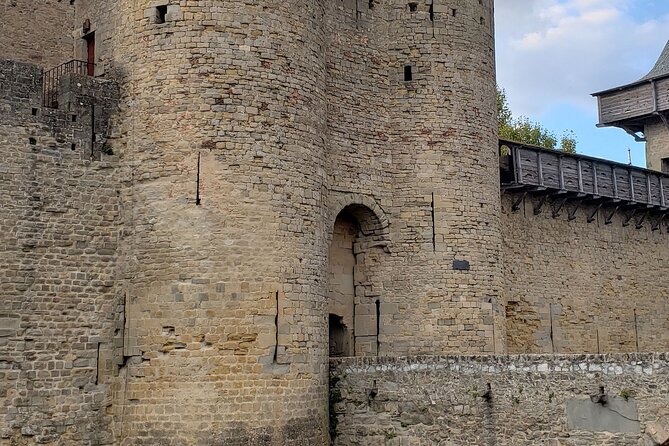
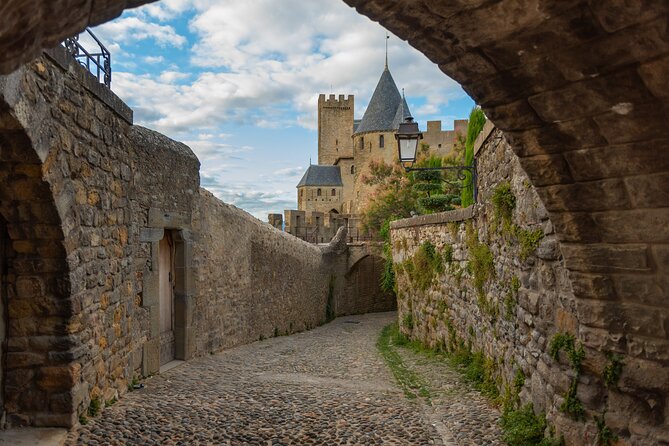
At some point, the route takes you to Château et Remparts de la Cité de Carcassonne—also known as the Château Comtal. This area is the kind of stop where your brain switches modes from story to structure.
Here you’ll see the castle meeting the wall and its surrounding defenses. That matters because it shows how Carcassonne didn’t rely on one line of defense. It layered strength: wall plus stronghold plus controlled access points.
If you’re curious about why medieval cities could hold out, this is one of the best parts of the walk. You can visually connect the idea of refuge and command from the castle with the perimeter defense around it.
Also, if you’ve got plans to visit the castle later or pair this walk with another site visit, doing this wall-focused audio first can make your later viewing more meaningful. You’ll be carrying the “defense map” in your head.
The Monument to Jean Pierre Cros Mayrevieille: saving the city in modern times
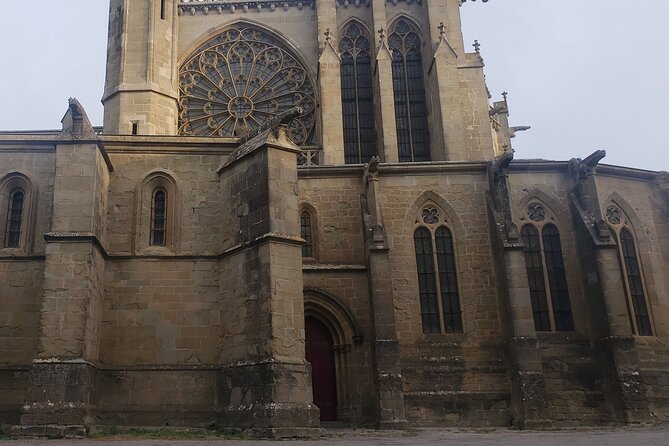
Next, you’ll reach the monument de la Jean Pierre Cros Mayrevieille, a doctor of law, historian, and an Inspector of Historic Monuments who helped save the city from ruin. This stop is brief but important, because it shifts the frame from medieval warfare to preservation.
It’s a good reminder that Carcassonne’s walls weren’t only made for sieges. They were also made to survive into the modern world, and that took its own kind of battle.
If your travel style includes “how we got to today,” don’t skip this part. It gives you a line from medieval ambition to modern conservation—and it makes your last views feel a little more personal.
Gates and saints in the center: Aude, Nazaire, and Toulouse gates
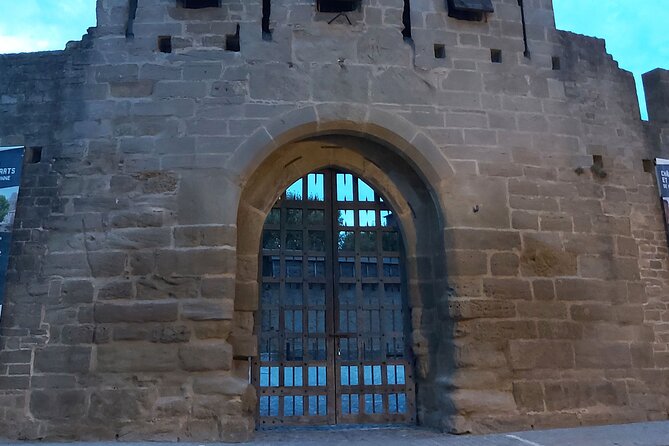
This two-hour walk doesn’t only circle the walls. You’ll also venture into the city’s center through gates including the Aude, Nazaire, and Toulouse Gates.
That’s a practical benefit if you’re using this as a standalone activity. You’ll get both the exterior defensive circuit and a glimpse of how the town’s religious life connects to its geography. You’ll also see the Church of Saints Nazaire and Celse, the city’s two patron saints.
I like this mix because it keeps the experience from becoming one long “wall, wall, wall.” The gates break the rhythm. They also help you understand that the walls shaped everyday movement—entry points, approach roads, and what mattered enough to be controlled.
Timing and pace: how to plan a 2 to 3 hour loop without getting annoyed
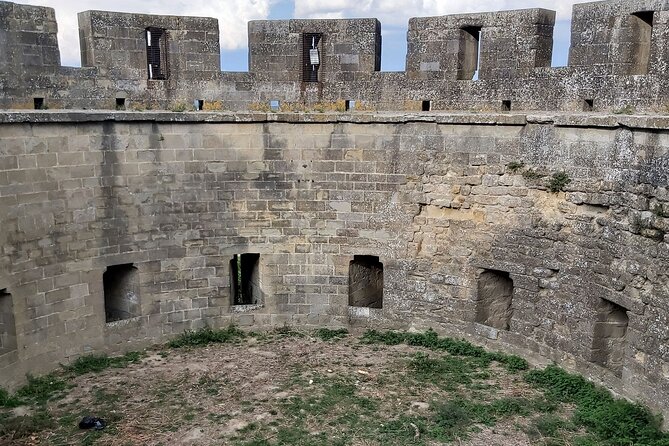
The tour is meant to take about 2 to 3 hours, and the big advantage is control over pacing. Start, pause, and resume without worrying about a group schedule.
Carcassonne can be extremely busy in the streets and on the ramparts, so I’d aim for a time when you can still enjoy pauses at viewpoints. Even a slightly off-peak hour can make the difference between hearing the story and feeling like you’re performing a musical chair routine with other visitors.
One more smart trick: if you run into a barrier or a section closed for restoration, don’t stress. The experience is set up so you can skip to the next chapter and keep going rather than losing your whole flow.
Price and value: what $24.99 buys you (and what it doesn’t)
At $24.99 per person, this is a strong value for a wall-centered experience because you’re buying guided interpretation without paying for a live escort. When you compare it to high-priced guided tours that can run well above $100, the economics are clear: this gives you a lot of instruction for a lot less money.
What you are not buying is entry to museums or paid attractions along the way. Tickets aren’t included, and the tour doesn’t drag you into indoor stops. That’s actually a good thing if you’d rather spend your time looking at walls and gates instead of searching for lines and opening hours.
If you’re traveling with one person who loves history and another who just wants great views, this format can work well. The narration gives the history, and your walking route still delivers the scenery even if you tune in and out.
What you need to bring: phone, headphones, and an offline-ready setup
You’ll use the VoiceMap app on Android or iOS. Offline access includes audio, maps, and geodata, which is exactly what you want in an old, stone-heavy place.
But you should plan the basics:
- Bring your smartphone with enough battery.
- Pack headphones, since they aren’t included.
- Before you start, make sure you can access the offline materials through the app, especially if your signal is spotty.
If the app doesn’t play smoothly on your phone, you’ll still want a backup mindset. This is a walking route around the walls, so you can keep moving even if you have a tech hiccup—but you’ll lose some of the guidance if audio isn’t running.
Practical logistics: where it starts and ends
The tour starts at the Buste de Dame Carcas (11000 Carcassonne) and ends at Porte Narbonnaise. The ending point is after you’ve walked around the Cite de Carcassonne and followed the medieval walls.
That start/end setup is great for planning. You’re not stuck crisscrossing the city to meet someone, and you’re not guessing which direction the main circuit runs. It’s a loop designed around the old city’s defensive ring.
You’ll also get a private experience setup, meaning it’s only your group. That can help if you don’t enjoy being jostled or rushed by strangers.
Who this self-guided wall tour suits best
This is ideal if you want:
- A serious medieval defense story without paying for a live guide
- A route that you control, so you can stop for photos or viewpoints
- A way to understand gates, walls, and the idea of siege without needing a textbook
It’s less ideal if you strongly prefer a human guide explaining details in real time, or if you dislike using apps during sightseeing. Also, if you’re expecting museum-style interior visits, you’ll need to plan those separately since ticketed entries aren’t included.
Should you book this Carcassonne wall audio tour?
Book it if you want to walk the walls in a smart order and actually understand what you’re seeing—especially if you care about medieval warfare, siege strategy, and why specific defense zones mattered. For the price, it’s one of the easiest ways to get a lot of interpretation without getting trapped in group pacing.
Skip it if you’d rather have guided museum stops, or if you know you don’t tolerate audio-on-phone sightseeing. In that case, a live guide might feel more aligned with your style.
FAQ
FAQ
How long is the self-guided Carcassonne walls tour?
The tour takes about 2 to 3 hours.
Is the tour offered in English?
Yes, it’s offered in English.
Where does the tour start and end?
It starts at the Buste de Dame Carcas and ends at Porte Narbonnaise after walking around the Cite de Carcassonne and following its medieval walls.
Do I need to buy tickets for museums or attractions?
No. Tickets or entrance fees to museums or other attractions en route are not included.
What do I need to bring with me?
You’ll need your smartphone and headphones. Transportation and food and drink are also not included.
Does the tour work offline?
Yes. You get offline access to audio, maps, and geodata, and the tour has lifetime access.
When can I do the tour?
The experience is listed as available daily, with opening hours shown as 12:00 AM to 11:59 PM during the listed date range.
Is this a guided group tour with other people?
It’s private, so only your group participates.
What parts of Carcassonne will the audio cover?
You’ll pass through the medieval walls, see the Buste de Dame Carcas, begin via Porte Narbonnaise, learn about the Cathars and crusade, locate medieval warfare kill zones, visit the Château Comtal area, and see gates in the city center including the Aude, Nazaire, and Toulouse Gates plus the Church of Saints Nazaire and Celse.