REVIEW · HERAKLION
Heraklion: Mobile Self-Guided Audio Sightseeing Tour
Book on GetYourGuide →Operated by Clio Muse Tours · Bookable on GetYourGuide
Heraklion’s waterfront is a quick-start storybook. This mobile self-guided audio tour turns the city into a paced walk, beginning at Koules Fortress and guiding you through major landmarks like the Morosini fountain (the Lions) and the Loggia, plus the long siege and Ottoman takeover that shaped what you see. I like this format because it lets you set your own speed, pause when something catches your eye, and keep moving without waiting for a group.
Two things I especially like: first, the offline content (audio, text, and maps) so you’re not stuck hunting for signal, and second, the straightforward setup—download before you go, then follow the tour on your phone as you walk. One drawback to plan for: it’s not an interactive, GPS-style map experience by itself, so if you want heavy “tap-to-navigate” support, you may end up leaning on your regular maps app more than you expect.
Why this works in Heraklion (key points)
- Start at Koules: easy anchor point at the old harbor, right where the city feels most alive.
- Offline maps and narration: audio, text, and maps stored on your phone to reduce roaming stress.
- Landmarks with context: you’re not just seeing sights; you get the siege-era story thread that connects them.
- Multiple language options: English, German, French, Spanish, and Italian.
- Low price for a self-paced walk: $11 is a small cost if you’ll actually use your time wisely on foot.
- Accessible in concept: wheelchair access is supported, though some individual stops may be harder.
In This Review
- Koules Fortress is the smart place to begin
- Offline audio and maps: the value you actually pay for
- Where the story line takes you: Ottomans, siege, and civic landmarks
- Stop-by-stop: what to watch for as you walk the route
- 1) Koules Fortress and the old harbor edge
- 2) Arsenals: the city’s working power
- 3) Kazantzakis tomb: how the modern layer fits
- 4) Morosini fountain (the Lions): stop for photos, stay for meaning
- 5) Loggia: Renaissance building, civic purpose
- App reality check: what you’ll want to prepare
- When self-guided works best (and when it can frustrate you)
- Practical logistics: how to fit it into your Heraklion day
- Accessibility notes you should take seriously
- Quick value verdict for $11
- Should you book this Heraklion audio tour?
- FAQ
- Where does the tour start?
- Are museum or church entrance tickets included?
- Does the audio tour work offline?
- Which languages are available?
- How long is the tour valid?
- Is there a live guide?
- What phones are compatible?
- How much storage do I need on my phone?
- What should I bring to enjoy it comfortably?
- Is the tour wheelchair accessible?
Koules Fortress is the smart place to begin
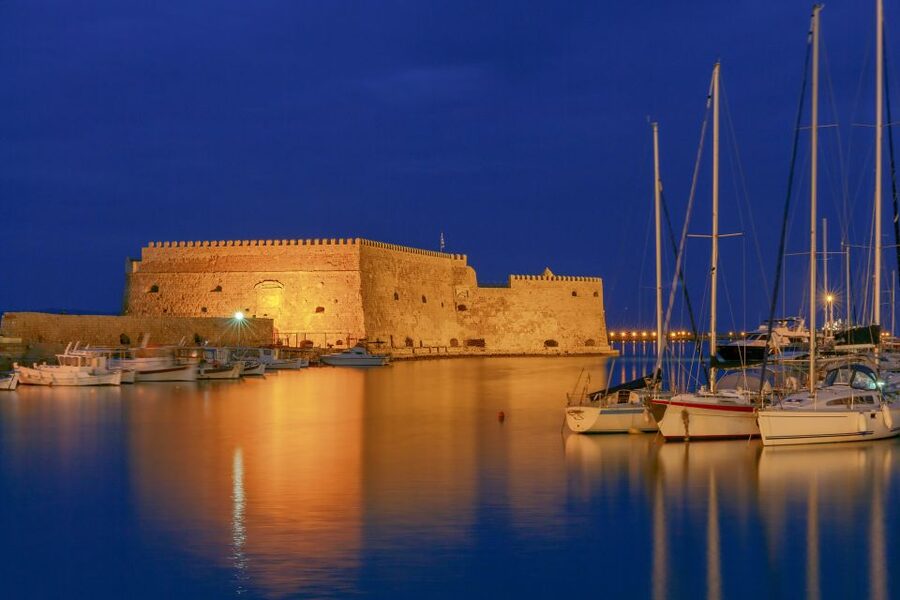
Starting at the entrance of Koules Fortress in Heraklion’s old harbor is a practical choice. It’s a clear landmark, and it’s also a part of the city where you can orient yourself fast—boats, sea air, and that “this is where the action was” feeling that makes the walking tour click.
Here’s what I think you’ll enjoy: the tour doesn’t treat Heraklion like a museum checklist. It uses the harbor-to-old-city flow so you naturally transition from water views to central streets where fountains and civic buildings sit.
And because you’re doing it on your own schedule, you can match the tour to your energy. If it’s hot (it often is in Crete), you can shorten the listening and keep the walking lighter. If you’re a history-focused visitor, you can linger on the story segments and replay key moments when you’re standing right in front of the landmark.
Offline audio and maps: the value you actually pay for

At $11 per person, the price makes sense only if you’ll use the main perk: a phone-based audio guide with offline support. The tour includes offline text, narration, and maps, plus an activation link to access the content. You also get the audio in several languages, which matters if you’re traveling with people who don’t want to compromise.
This is where the tour can feel like good value. Being offline means you can avoid the two classic travel problems: wandering because you lost the signal, and paying extra because roaming got expensive. The audio is also designed to keep you moving—so you’re not stuck trying to read everything off plaques while everyone else marches ahead.
That said, you do need to do your part:
- Download the audio tour before you arrive.
- Make sure your phone has enough storage (the download needs about 100–150 MB).
- Bring a charged phone and headphones (headphones are not included).
One more consideration: the audio experience works through your phone, so if you’re not comfortable consulting your screen while you walk, you’ll want to build in moments where you stop walking, listen, then continue. The narration is the product here.
You can also read our reviews of more tours and experiences in Heraklion.

Where the story line takes you: Ottomans, siege, and civic landmarks

The strongest “thread” running through the tour is historical context—especially the long conflict that ends with the Ottomans conquering Heraklion after 25 years of siege. That kind of timeline detail is more than trivia. It changes how you read the city: you start noticing which buildings look like defensive or civic power, and you understand why certain spaces mattered.
The tour also connects multiple named sights into one story. You’re guided past:
- Koules Fortress
- the arsenals area
- Kazantzakis tomb
- Morosini fountain, known as the Lions
- the Loggia, a Renaissance-era building
Even if you’ve seen photos of these places, the payoff of an audio tour like this is that it gives you a reason to look twice. A fountain becomes more than a photo spot when you know who commissioned it or what civic idea it represented. A civic building becomes easier to interpret when you know the competing powers that fought over the city and its economy.
Stop-by-stop: what to watch for as you walk the route

Below is the tour flow in plain language: where you’ll end up and what you should focus on at each named stop, so you’re not just walking from one icon to the next.
1) Koules Fortress and the old harbor edge
You start at Koules, which anchors the whole walk. Don’t treat it like a quick photo and go. Take a moment to look outward toward the harbor first, then turn back and scan the fortress structure. Even without technical knowledge, you can tell this was about control of access and movement.
When the audio speaks at this point, it works best if you listen while standing near the right orientation—toward the harbor side. That’s when the stories about the city’s defensive importance tend to make the most sense.
Practical tip: bring sun protection. A hat and sunscreen are on the recommended list for a reason, and the harbor area can be exposed.
2) Arsenals: the city’s working power
The tour includes the arsenals, the idea of industry and war combined. This is where you can either breeze through or get something surprisingly satisfying: listening for the way the audio frames the city’s role—ships, supply, military logistics, and the constant pressure that comes from being a target.
If you’re hoping for highly detailed architecture lessons here, keep expectations realistic. The tour is designed as city storytelling, not a professional architecture lecture. Some people may find the pace quick or the focus more general than they want, so if architecture is your main interest, plan to skim and return to the parts that catch your attention.

3) Kazantzakis tomb: how the modern layer fits
Next is the Kazantzakis tomb. What makes this stop interesting in the context of the tour is that it shifts from siege-era power to a modern memory of Cretan identity. Even if you’re not deeply familiar with the author, you’ll probably appreciate the way the audio helps you connect cultural legacy to the same cityscape.
A tip for getting more out of it: pause your walking right at the listening cue, then look slowly around. Tomb settings often reward a calmer pace, and this tour format lets you do that without feeling guilty that the “group” will move on.
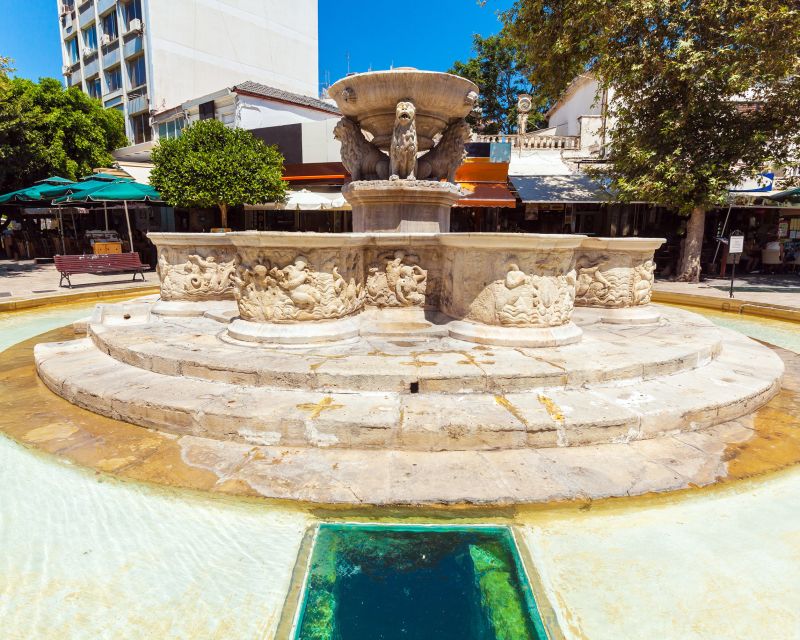
4) Morosini fountain (the Lions): stop for photos, stay for meaning
The Morosini fountain, nicknamed the Lions, is an ideal place to slow down. It’s a famous landmark, so you’ll see why it’s used as a waypoint. But don’t just take the picture; stand close enough to register details.
For the audio tour, this is one of those stops where the narration can help you understand why it’s tied to civic life and city pride. When fountains are discussed with historical context, you notice how they sit within street life—less like a random attraction, more like a center-of-gravity element.
If you’re sensitive to phone time while walking, this is where headphones really pay off. You’ll get the most value if you listen while you’re right there, then step back for your photo.
5) Loggia: Renaissance building, civic purpose
Finally, the tour highlights the Loggia, a Renaissance building. This kind of structure tends to work best when you focus on proportions and setting: the way it frames public space and the way it signals “civic order” after long periods of conflict.
The audio format helps here because it doesn’t expect you to know the architectural vocabulary. It guides your attention so you can follow the story even without being an architecture student.
App reality check: what you’ll want to prepare
This is a downloadable self-guided audio tour on your phone, through the provider’s app. It’s not Windows compatible, and it’s also not compatible with older Apple devices (for example, older iPhone/iPod/iPad models listed in the requirements).
So before you go, I’d do a simple checklist:
- Install the app and download the tour before you reach Heraklion.
- Confirm your phone storage (100–150 MB).
- Bring charged battery power and a way to stay comfortable in the sun.
- Use headphones if you can.
Also note the tour validity: you get access for 365 days from the first activation. That means you’re not just buying one day’s worth—you’re buying a flexible window, which can be useful if your plans shift.
When self-guided works best (and when it can frustrate you)
This tour style is great if you:
- like walking at your own pace,
- want history without paying for a live guide,
- prefer offline materials,
- enjoy landmark-to-landmark storytelling.
But it may frustrate you if you:
- expect a super interactive map experience that handles navigation without effort,
- dislike spending time checking your phone while moving,
- want very detailed architecture deep dives.
The mixed rating makes sense in this context. An audio tour lives or dies by how well it matches your expectations. If you want constant, turn-by-turn navigation and a polished, tightly sequenced listening experience, you might feel let down. If you’re happy to use your own maps app and treat the audio as a guide to what to look at next, you’ll probably get solid value.
Practical logistics: how to fit it into your Heraklion day
Your meeting point is straightforward: go to the entrance of Koules at the old harbor. The easiest approach is on foot. That matters because the tour is a city walk, not a “bus between stops” plan.
It’s also important to understand what isn’t included:
- Entrance tickets to museums, archaeological sites, or churches are not included.
- There’s no live guide.
- Smartphone and headphones are not included.
So if your day includes ticketed stops, budget those separately. The audio tour can help you choose what’s worth paying for, but it won’t cover admissions.
Time wise, you control it. Some people will listen lightly and move fast; others will stop often. That’s the point. If you’re planning to pair this with other activities (like a longer museum visit), start early enough that you’re not rushing your last segments.
Accessibility notes you should take seriously
This tour is listed as wheelchair accessible as a city route, but it also warns that some points of interest might not be fully wheelchair accessible. So if you’re using a wheelchair, you should plan for that reality: expect uneven surfaces, steps, or limited access at certain landmarks.
The good news is the tour is structured around walking and listening, so you’re not dependent on staff assistance. If you’re traveling with someone who can help, it can be smoother; if you’re traveling solo with mobility constraints, you’ll want to check the conditions around each stop before committing to long stretches.
Quick value verdict for $11
For $11, this is a cost-effective way to get guided narration across a concentrated area. The price works especially well because:
- offline maps reduce the hidden cost of connectivity,
- multiple languages let groups stay together,
- you don’t pay for a live guide.
But I wouldn’t treat it as a replacement for ticketed sightseeing. It’s an add-on that helps you enjoy what you see, not a pass into paid attractions.
If you’re the type of traveler who likes to understand why a city looks the way it does—even when you’re not stopping for museums—this can be a satisfying use of your time.
Should you book this Heraklion audio tour?
Book it if you want a self-paced walk from the old harbor area, you’ll actually listen to the narration, and you’re comfortable using your phone for navigation when needed. The combination of offline content, well-known landmarks like the Lions fountain and the Loggia, and the Ottoman siege storyline gives you a strong sense of place for a small price.
Skip it (or at least reconsider) if you’re expecting a highly interactive route map experience that replaces your own navigation tools, or if you need slow, ultra-detailed explanations about architecture. In that case, you may feel like the phone becomes the main event rather than the city.
If you do book, prepare properly: download ahead, bring headphones, start at Koules, and treat the listening segments like mini stops you choose—not like background chatter you tolerate.
FAQ
Where does the tour start?
It starts at the entrance of Koules Fortress in Heraklion’s old harbor.
Are museum or church entrance tickets included?
No. Entrance fees for museums, archaeological sites, or churches are not included.
Does the audio tour work offline?
Yes. The tour includes offline content (text, audio narration, and maps) to help you avoid roaming charges.
Which languages are available?
The audio tour is available in English, German, French, Spanish, and Italian.
How long is the tour valid?
It’s valid for 365 days from the first activation.
Is there a live guide?
No live guide is included.
What phones are compatible?
It works on Android (version 5.0 and later) and iOS, but it is not compatible with Windows phones and it also lists restrictions for older iPhone/iPod/iPad models.
How much storage do I need on my phone?
You’ll need storage space of about 100–150 MB for the download.
What should I bring to enjoy it comfortably?
Bring comfortable shoes, a hat, sunscreen, comfortable clothes, headphones, and a charged smartphone.
Is the tour wheelchair accessible?
Yes, it’s listed as wheelchair accessible as a city tour, but some points of interest might not be wheelchair accessible.