REVIEW · TEMPLE OF OLYMPIAN ZEUS ATHENS
Athens: Temple of Olympian Zeus Ticket and Audio Tour
Book on GetYourGuide →Operated by Clio Muse Tours · Bookable on GetYourGuide
Big ruins, simple phone audio, and an ending in the baths.
I really like the pre-booked e-ticket setup, so you’re not stuck hunting for tickets in the sun. My other favorite part is the offline audio tour on your smartphone, which turns scattered stone into a clear story with myths, politics, and disasters. The main consideration: this is self-guided, and the temple is mostly ruins—plus there can be construction around the exit on some dates.
In This Review
- Key takeaways
- Temple of Olympian Zeus, minus the guesswork
- Getting in fast: the e-ticket + app combo that actually works
- From the Great Propylon to the Great Deluge myth
- Seventeen-meter pillars and a 700-year build story
- Theseus to tyrants to Rome: power always needs a story
- When storms hit: damage, warnings, and broken plans
- Ending at the Balaneion: public baths and everyday life
- What the audio guide experience feels like in practice
- Comfort and phone setup: small stuff that prevents big headaches
- Price and value: is $30 fair for a self-guided audio visit?
- Site changes: construction near the exit on certain dates
- Who should book this, and who should skip it
- Should you book the Temple of Olympian Zeus e-ticket and audio?
- FAQ
- How long does the audio tour take?
- Is there a live guide on-site?
- What’s included in the price?
- Do I need to bring headphones and a phone?
- Will I have internet access while using the tour?
- What languages are available for the audio guide?
- Is this activity refundable?
- Is it wheelchair friendly?
Key takeaways

- Skip the ticket line with a pre-booked e-ticket for entry to the Olympieion
- Offline audio + offline map means you can wander without worrying about roaming
- Myth and history in one walk: Zeus myths, Theseus, tyrants, Romans, storms, and 700 years of building
- You end at the Balaneion bath area, where public baths bring everyday life into focus
- All about your phone setup: Android or iOS required, and Windows phones won’t work
Temple of Olympian Zeus, minus the guesswork

The Temple of Olympian Zeus is one of those Athens stops that can feel a bit lonely if you show up cold. Big pieces of the story are there, but the meaning can be hard to assemble when you’re staring at tall fragments and empty air.
That’s why I like pairing the site entry with an audio tour you control. You don’t have to wait for a guide to catch up, and you don’t need perfect timing. You can walk at your pace, stop where you want, and replay sections when something clicks—especially if you love myths or you’re the kind of person who likes to understand why rulers brag about gods.
Just set your expectations. The temple is magnificent in concept and impressive in scale, but much of what you see today is partial. Add site works in front of the exit on certain dates, and you’ll want flexibility.
Getting in fast: the e-ticket + app combo that actually works
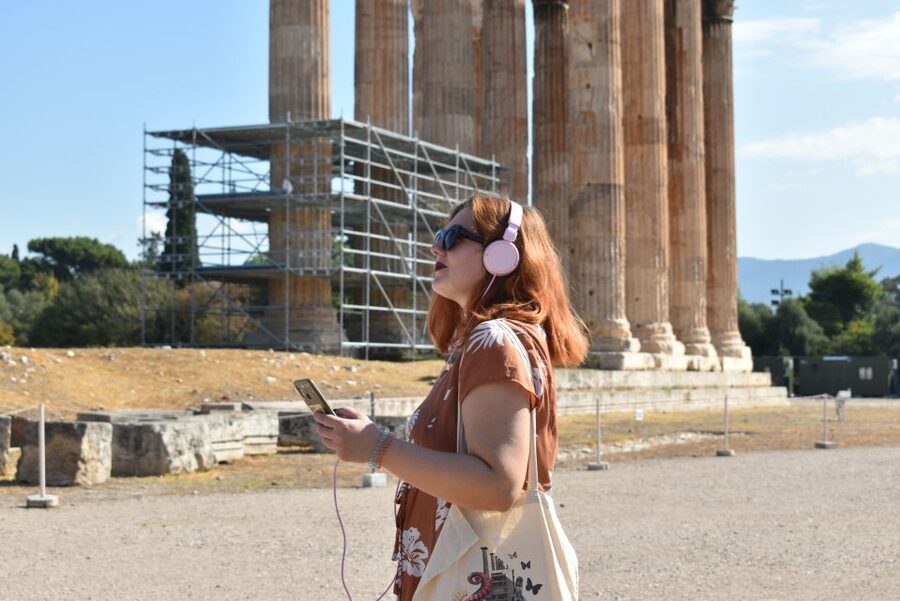
This visit is built for an easy, independent start: you get an adult e-ticket for the Temple of Olympian Zeus, then you use a self-guided audio experience on your phone.
A few practical things matter here:
- You’ll download the app and then access the tour content with a secure promo code after downloading.
- The audio includes an offline interactive map, so you can follow along without draining your data plan.
- It’s designed around Android and iOS smartphones only. Windows phones won’t work, and certain older iPhone/iPad models aren’t supported.
There’s no live guide walking alongside you. That’s a plus if you want autonomy, but it also means if you’re hoping for extra explanations on the spot, you won’t get that here.
From the Great Propylon to the Great Deluge myth
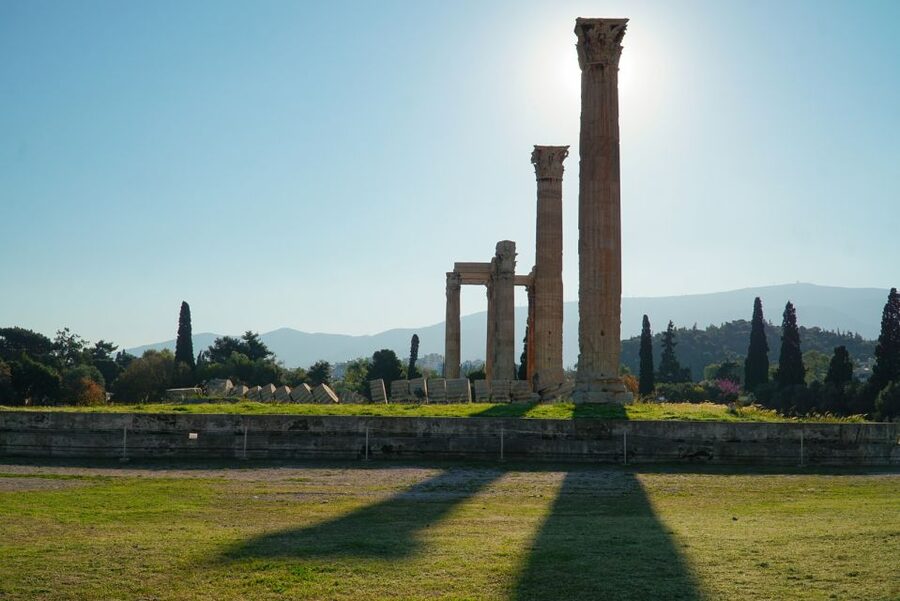
Your walk starts at the main monumental area near the Great Propylon. This is a smart opening. It gives the site a narrative hook before you move into the big architectural spaces.
The audio guide points you toward Greek mythology and one of Zeus’s mood swings: the Great Deluge. The story centers on divine wrath and a stormy day when Zeus decides humanity has had enough.
Then the tour starts connecting myth to place. You’re not just hearing a legend. You’re walking through a landscape that ancient Athenians used to explain the world—weather, power, punishment, and survival.
If you’re an audio-person, this part is where the experience starts to feel purposeful. If you prefer silent ruins, you might find the first stretch a little story-heavy—but you can always move at your own speed.
Seventeen-meter pillars and a 700-year build story
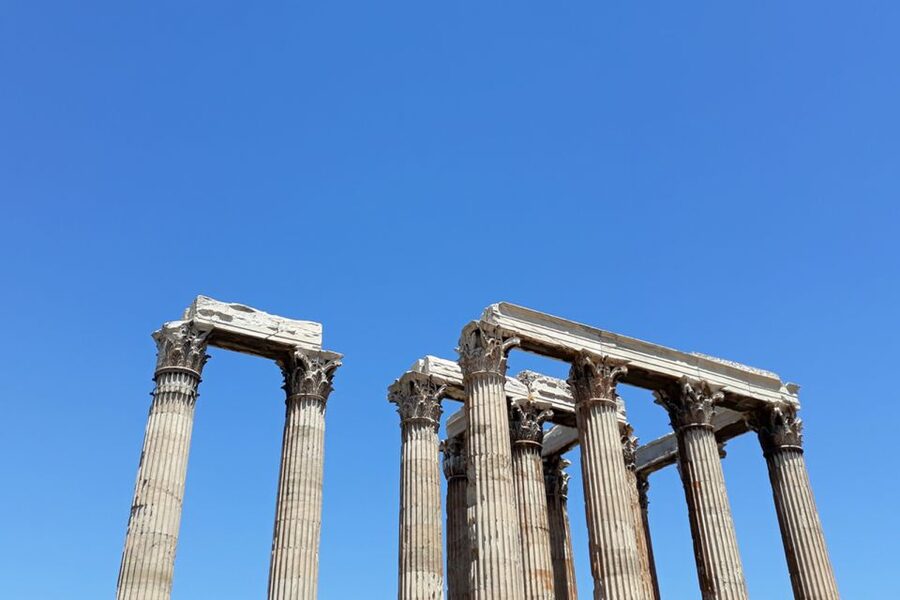
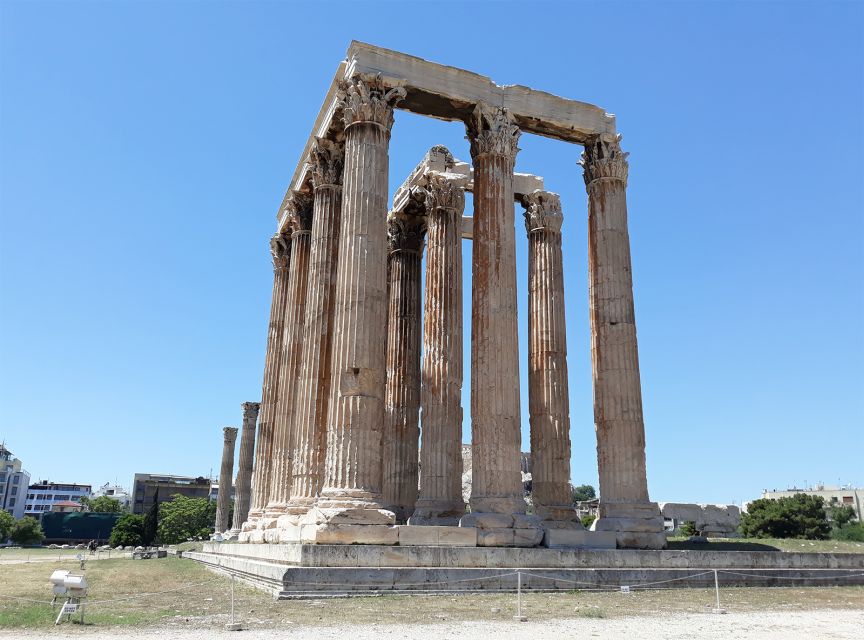
Next comes the core wow-factor: the remains of the enormous temple. The audio tour guides you through the towering 17-meter pillars, which are a reminder of what the structure was meant to be.
What’s especially useful is how the story doesn’t treat the temple as a quick project. It frames it as a turbulent 700-year construction history, including changes across centuries and how the temple’s fate shifted over time. That matters because if you only hear one “big timeline,” you can miss why a Roman-era legend or a later catastrophe still matters in modern Athens.
In other words: the pillars aren’t just pretty stone. They’re proof of time, politics, and shifting ambition.
Theseus to tyrants to Rome: power always needs a story
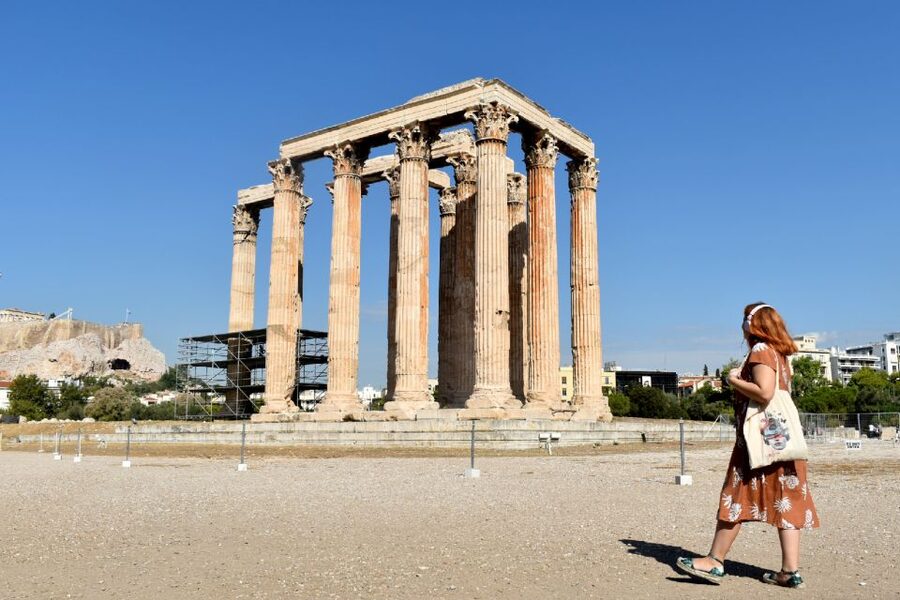
Ancient Athens didn’t just build temples for religious reasons. It built them to make statements about authority. The audio tour leans into that.
You’ll hear about a dark chapter tied to the city’s founding legend—the bloodbath connected to Theseus. The story is blunt, and that’s the point. These myths weren’t bedtime stories; they were explanations for how a city becomes itself.
Then the tour moves into how rulers tried to place themselves beside Zeus’s celestial power. You’ll get audio context on attempts by an Athenian tyrant and later a Roman emperor to link human rule with divine authority.
This is the part I’d recommend listening closely if you like understanding “why” behind stone. The architecture may be ancient, but the strategy—use a god to legitimize your leadership—is painfully human.
When storms hit: damage, warnings, and broken plans
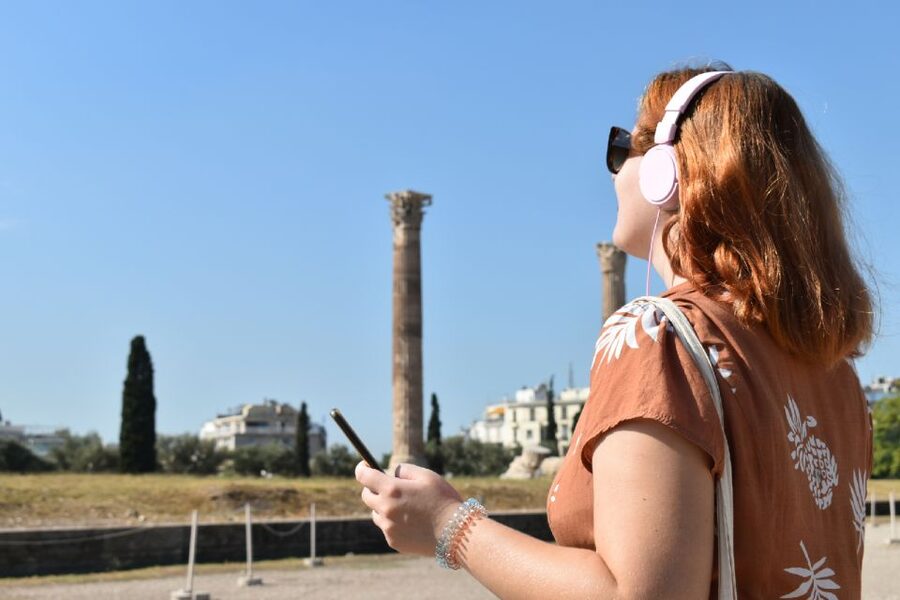
No grand plan lasts forever. The audio tour addresses that through disaster.
You’ll hear about a ferocious thunderstorm that caused serious damage to the temple. There’s also a later thread about how locals perceived danger—premonitions of imminent disaster in 19th-century Athens.
That pairing is effective because it shows two kinds of time:
- the ancient cause-and-effect of weather and building failure
- the modern human sense that something bad might be coming, even when the past already has receipts
If you like narrative history, this section gives you more than “facts.” It gives you momentum.
Ending at the Balaneion: public baths and everyday life
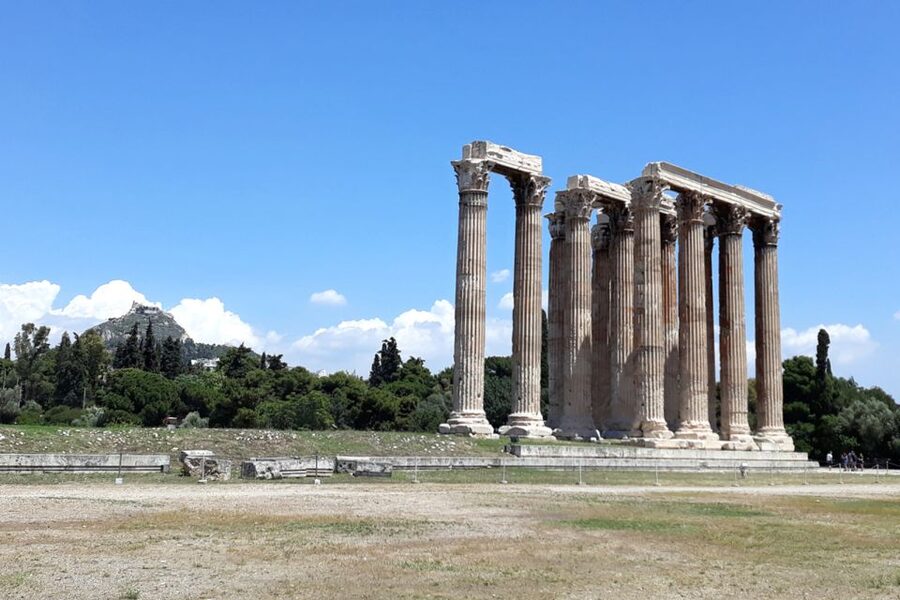
Here’s the best reason to do the audio fully instead of only skimming the main ruins. The route ends near the Balaneion, an ancient Greek public bath area.
You discover relics tied to everyday life, not only elite ceremonies. The audio explains the supposed rejuvenating benefits of public baths, giving you a sense of how Romans and Greeks treated bathing as part of social and civic life.
It’s a strong closing move because it changes your brain from “big myth + big empire” to “people like us, thousands of years ago.” Sitting down after walking big stone doesn’t hurt either; one tip from experience with this site is that there are benches in the shade where you can pause and picture what the finished temple might have looked like.
Also, there’s an extra little charm factor: this site has a tortoise you might notice when you stop to rest.
What the audio guide experience feels like in practice
The audio guide is the heart of the value here. In plain terms, it works best if you:
- wear headphones (you provide them)
- listen while you walk, not after
- pause when the story tells you to look at a specific feature
You get multiple languages, including English, French, German, Italian, Spanish, Greek. So if you’re traveling with someone who doesn’t want English, you have options.
One thing to be aware of: the audio is informative, but it’s not described as a dramatic, sound-effect-heavy production. If you want theatrical thunder and full cinematic sound design, your expectations may need a small tune-up.
Still, the ability to replay parts at the site is genuinely useful. History becomes clearer when you hear it again while the stones are right in front of you.
Comfort and phone setup: small stuff that prevents big headaches
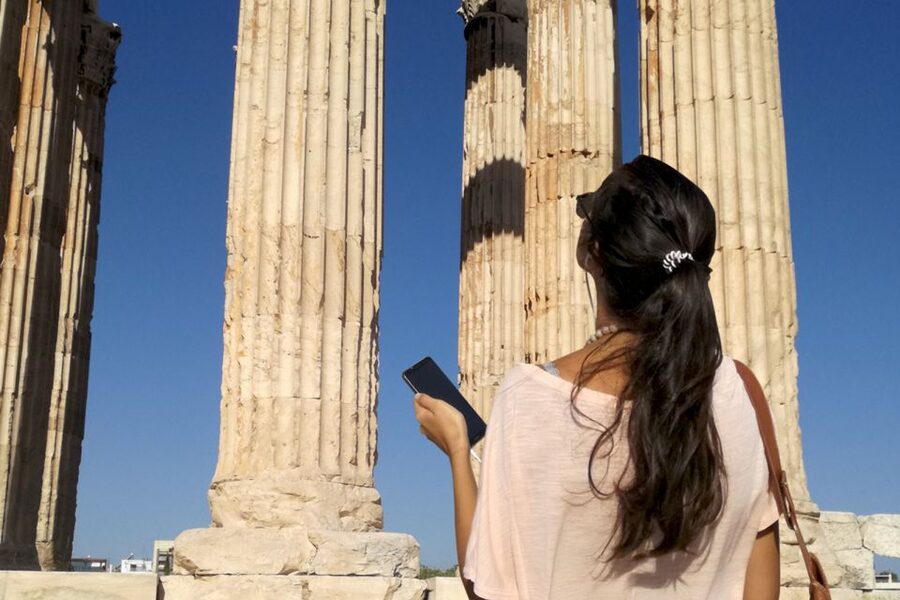
This visit is easy only if you do a few basics right:
- Comfortable shoes matter. The area is a walking experience, and you’ll want stable footing.
- Sunglasses and a sun hat are smart. Athens can be intense, even when you’re just between ruins.
- Bring headphones. The audio is included, but headphones aren’t.
- Keep your smartphone charged. You need the phone for the e-ticket and the audio tour.
- Don’t forget that the app is not compatible with Windows phones, and not with certain older Apple devices (the cutoff list is specific to older iPhone/iPad models).
One more tip: start with your phone ready before you enter the main area. Once you’re in, you want your audio to start cleanly and your map to load without stress.
Price and value: is $30 fair for a self-guided audio visit?
At about $30 per person, you’re paying for a bundle:
- the entrance fee via the e-ticket
- the self-guided audio tour
- offline content and an offline interactive map
- and access to the audio tour through the app with a promo code
So the value depends on how you like to travel.
If you’re happy to wander independently and you like learning through your own rhythm, it’s good value. You get the site entry and a guided narrative without paying for a live guide.
If you strongly prefer a person explaining everything, you may feel underwhelmed because this is not live-led. And because the temple is mostly remnants, you’ll want to lean on the audio to make the scale and history make sense.
Also, check admissions rules before you assume you’ll pay full price. EU citizens aged 0–25 are entitled to free admission, but they still need to wait in line to show their ID or passport. Kids under 5 from non-EU countries also may qualify for free entry with passport verification.
Site changes: construction near the exit on certain dates
Starting October 7, 2025, construction work is set to begin in front of the Olympieion archaeological site exit. That means the exit will be closed, and an accessible entrance will temporarily serve as both entrance and exit.
That matters even if you’re doing a self-guided walk. It can change where you end up at the final moment, and it can affect flow if you planned to circle back through a specific route.
If your trip is near that date range, plan for extra walking time at the end.
Who should book this, and who should skip it
This experience fits best if you:
- want a self-guided walk with narrative structure
- enjoy myths and want them explained in a way that matches the architecture
- like having an offline map and audio you can replay
- are okay with ruins and want help visualizing what came before
I’d consider skipping or pairing with something else if you:
- want a live guide to answer questions on the spot
- expect the temple to look complete (it won’t)
- need wheelchair access (this option is not suitable for wheelchair users, based on the tour details)
Should you book the Temple of Olympian Zeus e-ticket and audio?
I’d book it if you want a smooth, low-stress visit with learning built in. The strongest reason to choose it is that the audio tour doesn’t just give dates—it gives context while you’re standing in front of the 17-meter pillars and working through the site in the right order.
If you hate phone-based tours, or you don’t like wearing headphones in public, you might not get your money’s worth. In that case, you could consider another approach—maybe a guide-led option elsewhere in Athens—so you still get interpretation.
But if you’re flexible, comfortable with ruins, and you like turning a walk into a story, this is a solid match for Athens.
FAQ
How long does the audio tour take?
Plan for about 1 to 2 hours. Starting times depend on availability.
Is there a live guide on-site?
No. It’s an e-ticket and a self-guided audio tour on your smartphone, with no live guide accompanying you.
What’s included in the price?
You get the adult e-ticket entrance fee for the Temple of Olympian Zeus and a self-guided smartphone audio tour, including offline content with an offline interactive map.
Do I need to bring headphones and a phone?
Yes. A smartphone is required, and headphones are not included. Bring a charged smartphone so you can access the audio and materials you need.
Will I have internet access while using the tour?
You get offline content with an offline interactive map to help you avoid roaming charges. The tour is designed to work without constant connectivity.
What languages are available for the audio guide?
The audio guide is available in English, French, German, Italian, Spanish, and Greek.
Is this activity refundable?
No. The activity is non-refundable.
Is it wheelchair friendly?
No. This activity is not suitable for wheelchair users.
If you tell me your travel dates and whether you’re visiting in the morning or afternoon, I can help you plan around heat and the likely construction impact near the exit.