REVIEW · HERAKLION
Crete: Palace of Knossos E-Ticket and Audio Guide
Book on GetYourGuide →Operated by Clio Muse Tours · Bookable on GetYourGuide
Knossos doesn’t need a tour guide. This e-ticket plus phone audio helps you walk the palace like you have a story map in your pocket.
I especially liked having a pre-booked ticket that cuts the stress of ticket lines, and the audio guide that turns the ruins into a sequence you can follow. One thing to plan for: the narration and on-site directions don’t always match perfectly, especially when parts of Knossos are closed for maintenance.
In This Review
- Key points before you go
- Knossos Palace: why this ruins complex matters (even without a live guide)
- Entering with an e-ticket: where the real value shows up
- Using the phone audio guide: setup, compatibility, and how to stay synced
- The core Knossos route: what you’ll see and why each area clicks
- South Propylaeum frescoes: processions and everyday rituals
- West Magazines: bureaucracy, writing, and how the palace ran
- South Entrance Corridor: the Prince of the Lilies and the framed view of Mount Juktas
- Queen’s Megaron: blue dolphins, and the surprising reality of bathrooms
- Optional add-ons: when Heraklion and Phaistos audio can be worth it
- How long should you plan: using the 1–5 hour window wisely
- Who this experience suits best (and who may want something else)
- Price and value: is $34 a good deal?
- Should you book the Knossos Knossos e-ticket with audio guide?
- FAQ
- How long does the Knossos Palace visit take?
- What’s included in the ticket?
- Do I need headphones?
- Which phones work with the audio guide?
- How much phone storage do I need?
- What languages are available for the audio guide?
- Are tickets refundable?
Key points before you go
- Skip-the-line style entry with a pre-booked e-ticket (timed to your visit window)
- Phone-based audio guide you download in advance; works only on compatible Android/iOS
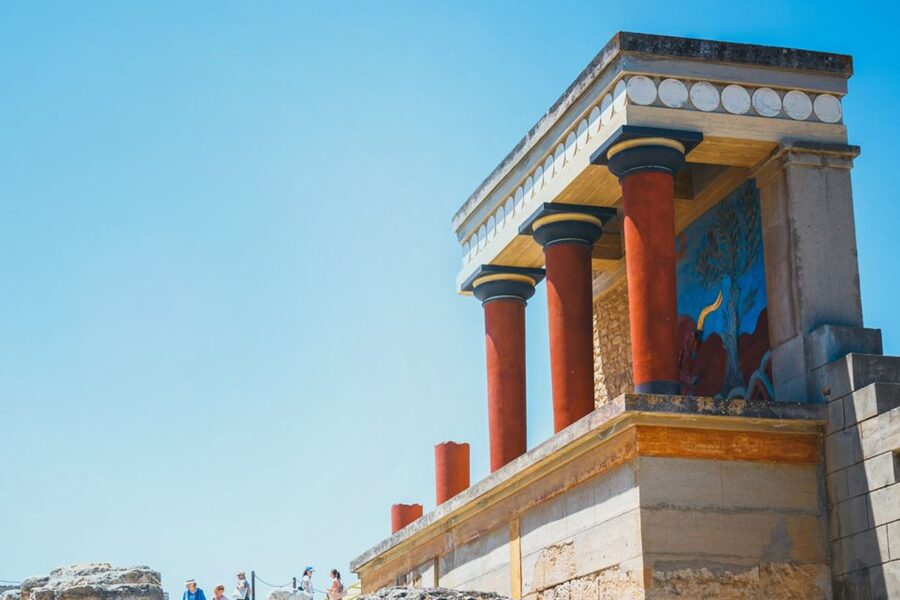
- A clear walk through major spots like the South Propylaeum, West Magazines, and Queen’s Megaron
- Minoan daily life details alongside the big myths and frescoes
- Strong visual payoff including a framed view of Mount Juktas from inside the palace complex
- Bring headphones because the headset isn’t included, and storage is required on your phone
Knossos Palace: why this ruins complex matters (even without a live guide)
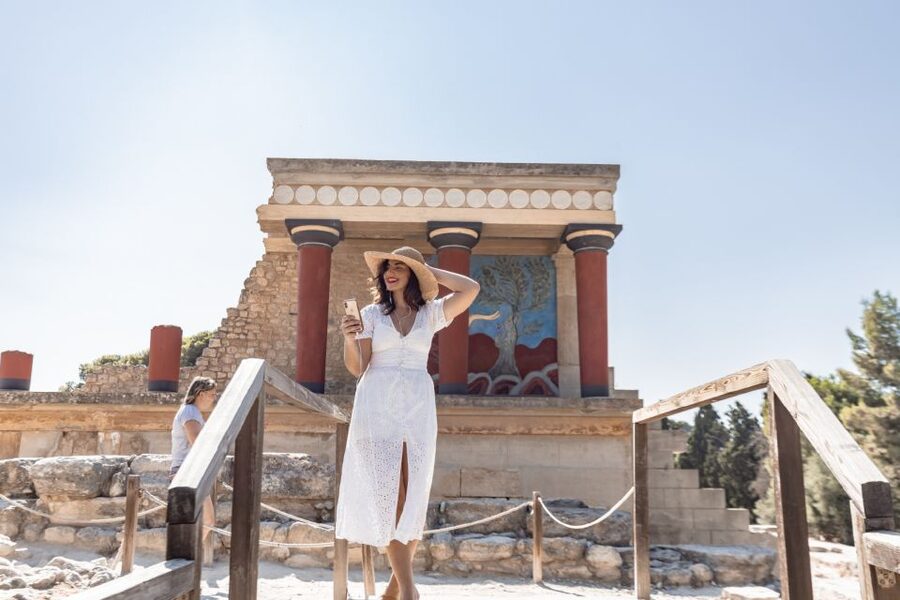
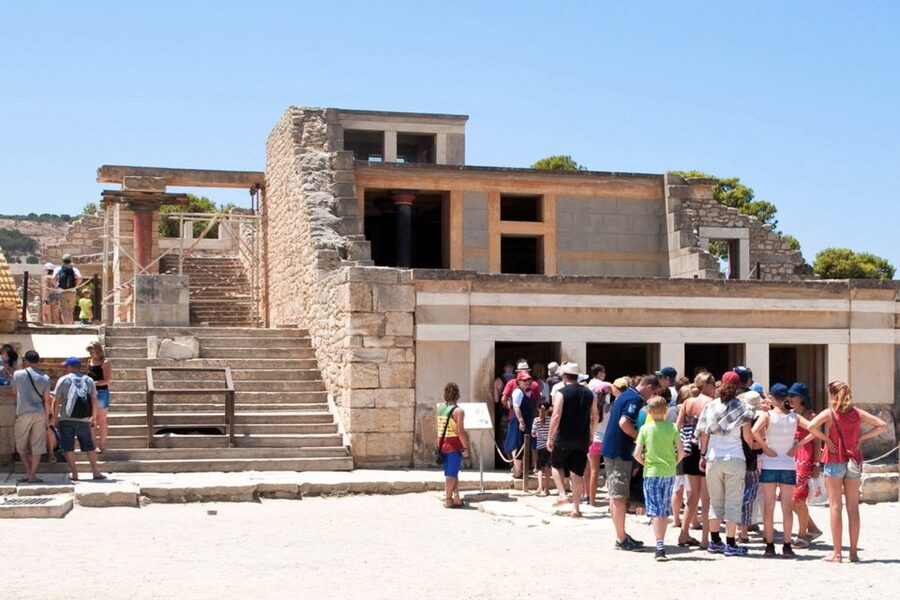
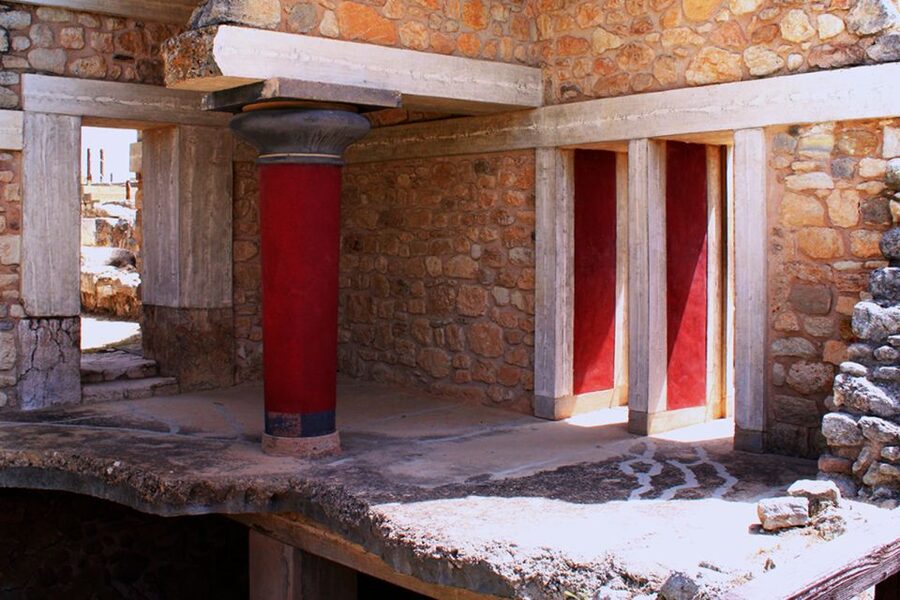
Knossos is Crete’s best-known Minoan palace, and that reputation isn’t just marketing. It’s one of the oldest palatial sites on the island, and when you’re inside, you can feel why people built such a big administrative center in this spot just south of Heraklion. The layout may be a mix of original remains and later reconstructions, but the overall “palace city” idea still comes through fast.
What makes Knossos work well with an audio guide is how many different themes you can pull from the same stones:
- politics and administration (not just art)
- daily life (rituals, grooming, workshops)
- art and symbolism (frescoes, processions, myth-adjacent stories)
If you want one place in Crete that gives you the broad Minoan picture, Knossos is it. The ruins are large enough that you’ll enjoy having a structured route instead of wandering randomly.
You can also read our reviews of more tours and experiences in Heraklion.

Entering with an e-ticket: where the real value shows up

This experience centers on your pre-booked e-ticket for Knossos Palace. That matters because Knossos can get very crowded, and ticket lines can be long during peak times. Even with self-guided entry, having your admission arranged in advance typically reduces time spent waiting and lets you get walking sooner.
A couple practical notes I’d anchor on:
- The meeting point may vary depending on the option you book, so check the email instructions you receive.
- Your visit duration is flexible, listed as 1–5 hours, so you can slow down for photos and stops—or keep moving if you’re working with a tighter schedule.
Also, keep expectations realistic. This product does not include a live guide. The value is in ticketing plus audio, not in someone accompanying you through every room.
Using the phone audio guide: setup, compatibility, and how to stay synced
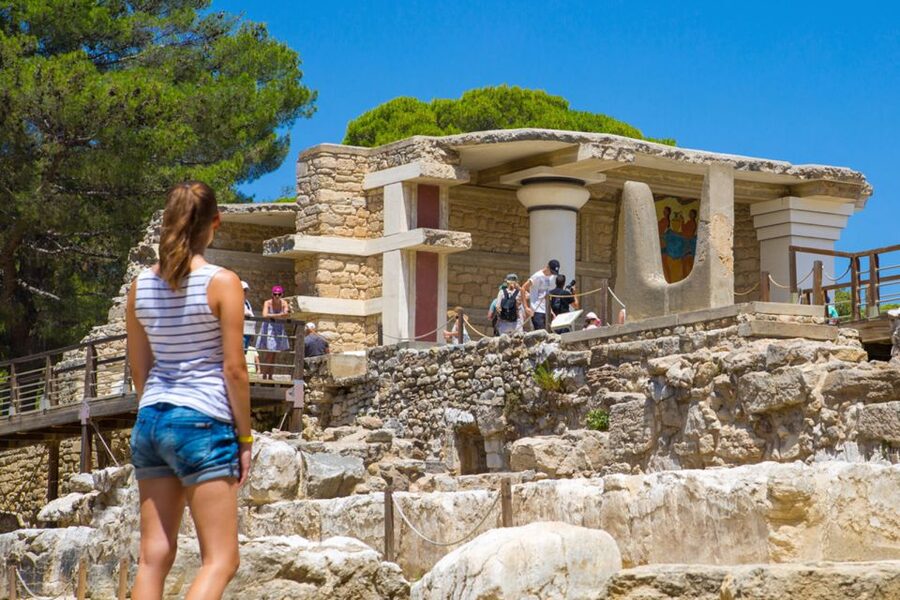
The audio guide is the heart of the experience. You download it based on the instructions emailed by the provider, and then you use it on your smartphone while you walk.
Here’s what you should know before you arrive:
- Audio is available in English, German, French, Spanish, and Italian.
- You’ll need a compatible device: Android (version 5.0+) or iOS, with enough storage (listed as about 100–150 MB).
- It’s not compatible with Windows phones, and older Apple devices are excluded (like iPhone 5/5C and older, iPod Touch 5th gen and older, iPad 4 and older, and iPad Mini 1st gen).
- Headphones are required for the audio experience, and they’re not included.
- The phone has to be charged, and you’ll want to confirm you have the audio ready before you step onto the site.
The most honest caution: several people found the narration and wayfinding tricky to coordinate. Sometimes the audio tells you to look for something slightly different than what you see next, especially if you move faster or slower than the track expects. If you’re prone to getting turned around, I recommend this approach:
1) follow the audio for a bit
2) if directions feel off, pause, use the site map/signage, then restart the audio at the next logical section.
That flexibility is usually the difference between a smooth visit and one where you spend too much time troubleshooting your route.
The core Knossos route: what you’ll see and why each area clicks
Knossos is big. The good news is that the audio route is designed to hit the palace’s major zones, so you can understand what you’re looking at without needing a lecturer.
South Propylaeum frescoes: processions and everyday rituals
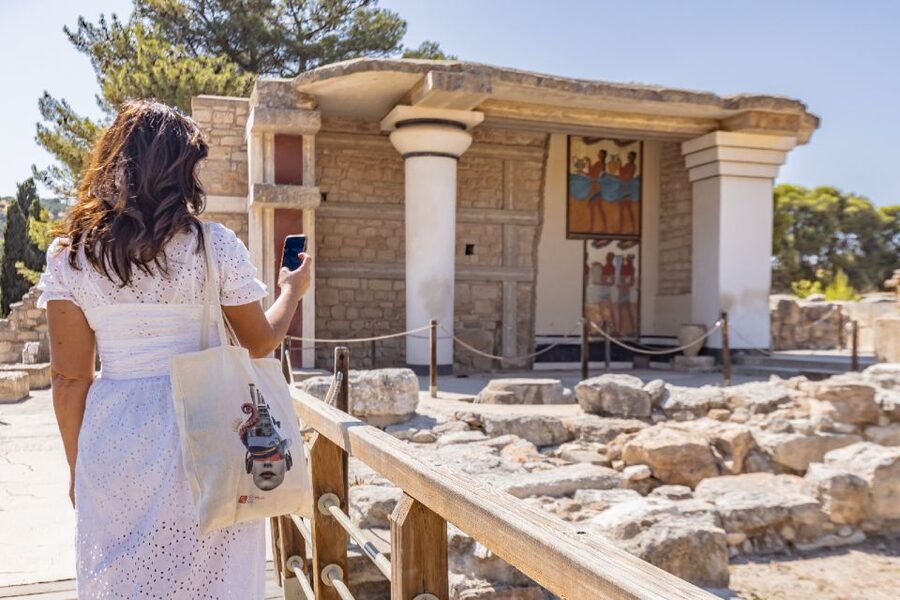
One of the first emotionally satisfying areas is the South Propylaeum, where the cupbearers and procession frescoes set the tone. This isn’t only about kings and ceremonies; the audio focuses on how these scenes connect to daily life and shared cultural ideals.
What I like about this stop in an audio format is that it gives you a lens. Even when frescoes are fragmentary, you can still read them better when you know what the figures are doing and why people would care about the imagery.
Where you might notice friction: this palace area can feel like a maze if you’re moving quickly, so don’t be surprised if you occasionally need to match the story to your exact position on the ground.
West Magazines: bureaucracy, writing, and how the palace ran
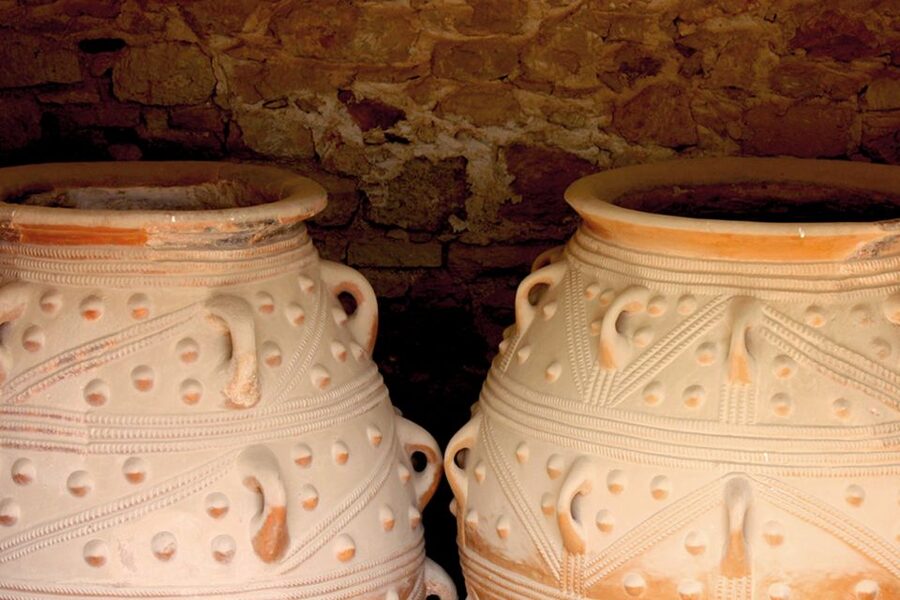
Next up is the West Magazines, the storage area that helps explain how the palace functioned day-to-day. This is where the audio shifts from “wow, frescoes” to “how did they manage everything?”
You’ll learn about:
- administration and organization (the earliest forms of linear writing are referenced)
- Minoan economy and trade networks
For me, this is the section that turns Knossos from a myth stop into a real historical machine. When you understand storage and paperwork, the palace stops being only a stage for art and becomes a system for people, goods, and power.
South Entrance Corridor: the Prince of the Lilies and the framed view of Mount Juktas
The South Entrance Corridor features the “Prince of the Lilies” (the audio points you to a copy), and then you get one of the most photogenic moments of the palace: the view of Mount Juktas framed by the palace’s eroded walls.
This is the sort of payoff that works even if you’re not a hardcore history person. You’re standing in a place where geography and architecture feel linked, and the audio helps you notice that connection instead of just taking pictures blindly.
If your timing is off (or you hit a closure), this is one of the areas where it can be worth checking what’s accessible on the day. Maintenance work may affect the flow, and closed sections can mean parts of the audio won’t line up cleanly.
Queen’s Megaron: blue dolphins, and the surprising reality of bathrooms
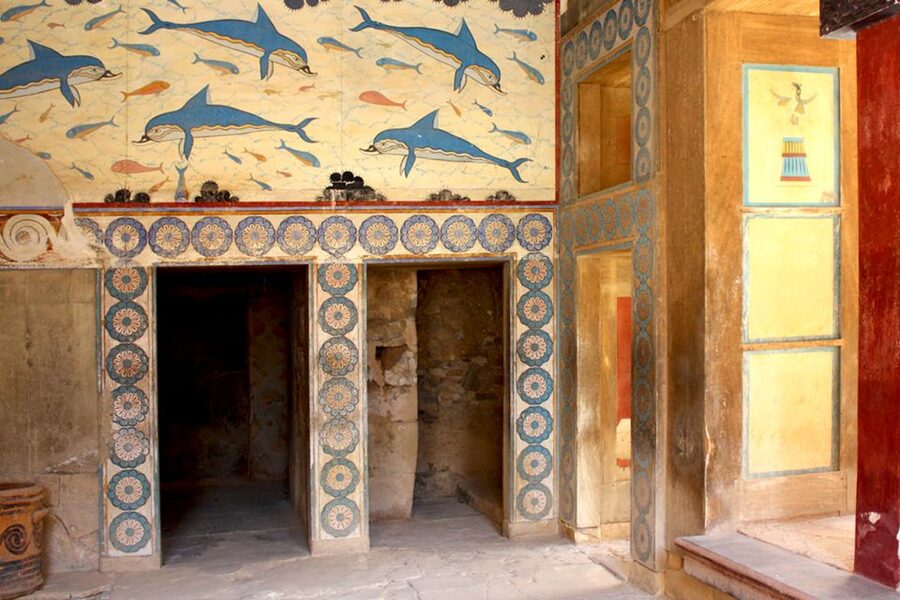
The Queen’s Megaron is where the palace gets personal. The area is associated with famous blue dolphins frescoes, and the audio guide also talks about the presence of a bathroom and a toilet room—details that push beyond the “big palace rooms” view.
I like this stop because it undercuts the idea that ancient life was only about ceremonies and status. Little practical details like sanitation and bathing habits make the whole place feel more human.
Again, expect some “route reality.” If you’re trying to follow audio prompts precisely, closures can interrupt the loop.
Optional add-ons: when Heraklion and Phaistos audio can be worth it
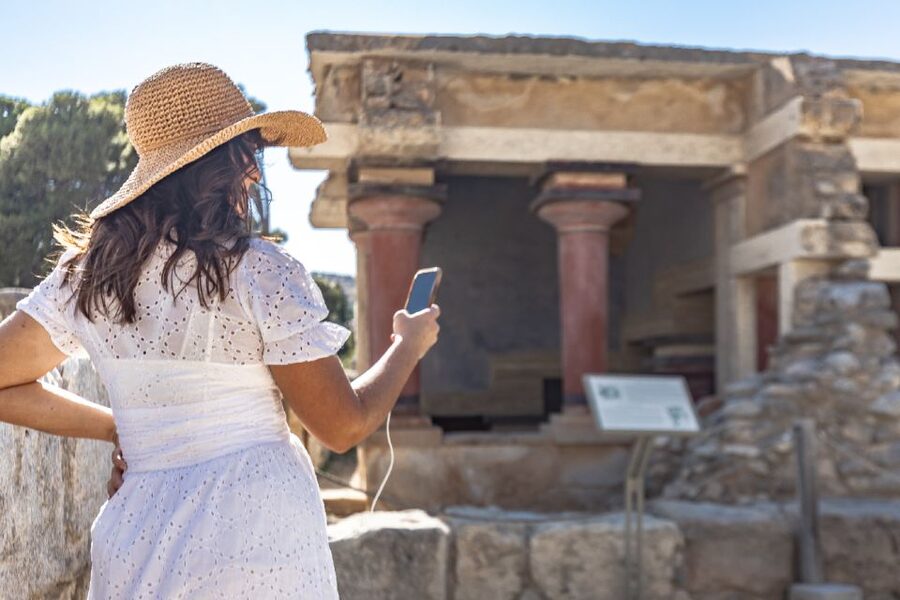
The basic package focuses on Knossos. But the overall offer also includes options that can extend your learning:
- optional entry to the Heraklion Arch Museum
- optional audio for Heraklion City
- optional audio for Phaistos Palace
If you’re the type who likes to connect the dots, this is the smarter move than piling on another museum later with no context. Heraklion and Phaistos relate to Minoan culture and the broader archaeological story, so extra audio can help you connect what you just saw at Knossos to what you’ll see next.
On the flip side, if you’re short on time, skip the add-ons and use the phone audio fully on-site. The palace itself is the main event.
How long should you plan: using the 1–5 hour window wisely
Your booking lists a wide 1–5 hour range. That flexibility is a gift, but it also means you should decide your pace before you arrive.
If you want a smoother visit:
- Give yourself enough time to stop for photos and to reset when audio instructions feel slightly mismatched.
- Assume the site can be warm and crowded. One visitor noted it was very hot with not much shade, so your hat and sunglasses aren’t optional extras.
A simple rule I use: if you start getting restless or your legs start aching, don’t force a “perfect route.” Turn the audio off if you need to, then keep exploring just by what you can see. The audio is meant to guide your understanding, not to become homework.
Who this experience suits best (and who may want something else)
This is ideal if you want:
- self-paced exploration with a downloadable narrative
- a structured walk focused on major palace zones
- phone audio in multiple languages
- lower friction than booking a full-day guided tour
It’s also a solid value for the price because you get admission plus the audio content, rather than paying separately for a guide.
You may want to choose a different format if:
- you can’t use the required smartphone compatibility (Windows phones don’t work, and some older iOS/Android models aren’t supported)
- you don’t want to rely on aligning audio with a complex site layout
- you need wheelchair access (this is listed as not suitable for wheelchair users)
- you’re expecting a live guide to handle questions instantly
Price and value: is $34 a good deal?
At $34 per person, the value comes from combining three things:
- your admission to Knossos
- a phone audio guide that you can replay and control
- optional add-on audio/museum entry (depending on the option you select)
This isn’t a low-cost “just tickets” deal. But it also isn’t a high-priced guided tour. For a palace this famous, the sweet spot is avoiding both extremes: don’t pay for a live guide you might rush through, and don’t show up without context.
The main thing that can affect value is your comfort with audio-as-direction. If you like wandering with a story, it’s worth it. If you hate syncing narration to physical locations, you might feel the cost more than the benefit.
Should you book the Knossos Knossos e-ticket with audio guide?
I’d book it if you want an efficient, flexible way to see Knossos with context, without waiting in a long ticket line. The pre-booked entry plus the ability to listen on your own pace is a practical match for most visit styles.
I’d think twice if:
- your phone isn’t compatible or you can’t download the audio ahead of time
- you’re relying on audio for step-by-step navigation and get frustrated when directions don’t match
- you’re visiting when parts of Knossos are closed for maintenance, which can reduce how well the audio follows the walk
If you’re prepared—charged phone, headphones, and comfortable shoes—this is a solid way to turn Knossos from “big ruins” into a readable palace story.
FAQ
How long does the Knossos Palace visit take?
The listed duration is 1–5 hours. You can choose a visit length based on starting times and how much of the audio you want to cover.
What’s included in the ticket?
It includes an adult entry ticket. The Knossos Palace audio guide is included if that option is selected, and a Heraklion City audio guide is included if that option is selected.
Do I need headphones?
Yes. Headphones and a smartphone are not included, so you’ll need your own.
Which phones work with the audio guide?
The audio guide requires an Android phone (version 5.0 and later) or an iOS smartphone. It is not compatible with Windows phones and older iPhone/iPad models listed in the requirements.
How much phone storage do I need?
You’ll need about 100–150 MB of storage space on your phone for the audio.
What languages are available for the audio guide?
The audio guide is available in English, German, French, Spanish, and Italian.
Are tickets refundable?
No. This activity is listed as non-refundable.