REVIEW · FLORENCE
Florence: Accademia Gallery Entry Ticket with Audio Guide
Book on GetYourGuide →Operated by italypasstours srl · Bookable on GetYourGuide
Few sights hit like Michelangelo’s David.
This entry ticket gets you into Florence’s Accademia Gallery with fast-track access and the chance to focus on the works that matter most: the David and Michelangelo’s unfinished Slaves (also called Prisoners). One thing to keep in mind: the experience hinges on an in-app audio guide, so come prepared with working earbuds and don’t assume the device will cooperate with yours.
I especially like that you’re not stuck waiting for a group tour rhythm. You can take your time in the long halls, pause for details, and still keep the visit moving with a prebooked setup and a greeter to help you through. The possible drawback is that check-in can take effort—especially if you arrive and end up juggling app codes and finding the next point inside the area.
Bottom line: if you’re a self-guided type who wants context without a live guide, this works well. If you hate app-based audio or you’re planning to arrive late, you may feel the friction.
In This Review
- Key highlights to look for
- Why the Accademia Gallery ticket is worth planning
- Fast-track entry and the Italy Pass meeting point
- How the optional audio guide really works (and how to make it work)
- The Hall of Prisoners: seeing non-finito in real life
- David under the skylight: what to look for when you get there
- Beyond David: models, instruments, and religious paintings
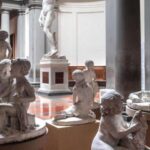
- Gipsoteca Bartolini models
- Museum of Musical Instruments
- Gold-ground religious art
- That Middle Ages vibe: church atmosphere and hand-made glass
- A realistic 4-hour plan that doesn’t feel rushed
- Price and value: is this ticket a good deal at $42?
- Who this experience suits best
- Should you book this Accademia Gallery entry ticket with audio guide?
- FAQ
- FAQ
- Where is the meeting point?
- What’s included with the ticket?
- Is a tour guide included?
- Do I need earbuds for the audio guide?
- What languages are available?
- Is the attraction wheelchair accessible?
- What should I bring?
- Can I cancel and get a refund?
Key highlights to look for
- Fast-track entry so your time goes to the art, not the queue
- David in the skylight setting, where the scale and detail feel real
- The Prisoners (non-finito marble) that show Michelangelo’s process up close
- Gipsoteca Bartolini models that help you understand how sculptors planned forms
- Musical Instrument Museum including a Stradivarius violin
- Gold-ground religious paintings from Florentine masters, 13th to 16th centuries
Why the Accademia Gallery ticket is worth planning
The Accademia in Florence is famous for one statue. But if you go only for David, you’ll miss the point of the building: it’s a lesson in how Renaissance artists worked, studied, and refined ideas.
What makes this ticket special is how it lets you hit the big names without turning your day into a waiting game. Fast-track access helps you get inside quickly, and the visit format makes it easy to spend longer with the sculptures and paintings that catch your eye. David is the headline, yes—but the real payoff comes from seeing Michelangelo’s process in the same visit.
You’ll also get a chance to slow down for the atmosphere. The highlights mention a church-like setting that feels tied to the Middle Ages, plus old hand-made glass windows. Even if you’re mainly there for marble and Renaissance art, those quieter visual details can change how the museum feels—less like a showroom, more like a time machine.
You can also read our reviews of more tours and experiences in Florence.
Fast-track entry and the Italy Pass meeting point
Your day starts at the Italy Pass store in Via dei Pucci 37/39 (the sign is red). A host or greeter is there to help you enter, and the greeter languages include English, French, Italian, and Spanish.
Here’s the practical advice: treat check-in like a small mission. Have your booking details ready, and plan to be a little early. Some visitors can end up doing a bit of running around—first to confirm at the office, then to find their way to the gallery entry point once inside the broader area. If you’re the kind of person who likes everything smooth and predictable, arrive with buffer time.
Once you’re in, the flow is straightforward: you move through the museum at your pace. That matters because the Accademia’s most impressive moments aren’t quick photo stops. They reward standing still, looking up, and letting the scale land.
How the optional audio guide really works (and how to make it work)
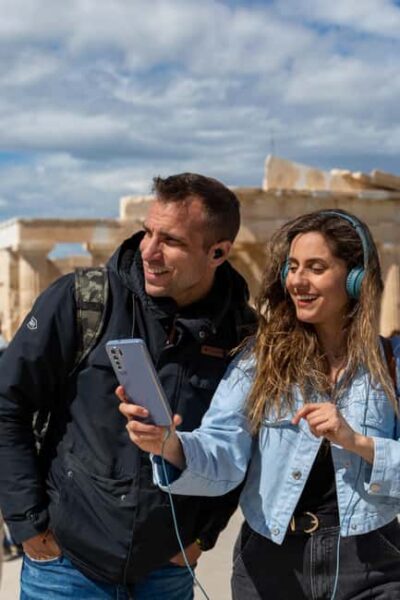
If you choose the audio guide option, you get a multilingual in-app guide in English, Spanish, French, German, and Italian. You’ll use an app with a code, and the main instruction is simple: bring your own earbuds for best audio quality and compatibility.
That’s not just fine print. Audio quality is the difference between enjoying the art and feeling annoyed by static or missing sound. Since audio is delivered through your device, you should test your setup before you step into the museum—volume up, earbuds plugged in properly, and the app loaded. If your phone battery runs low, bring a small charger if you have one.
Also note what’s not included: this is not a ticket that comes with a live tour guide. The experience is built around your self-paced movement plus the audio commentary. If you want back-and-forth questions, you’ll probably prefer a guided tour format instead.
The Hall of Prisoners: seeing non-finito in real life
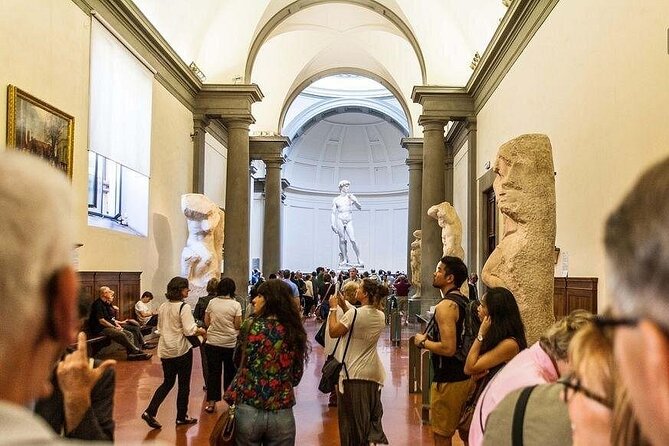
The first major wow-factor area is the hall with Michelangelo’s unfinished works—Slaves, also called Prisoners. These marble figures look like they’re straining against their stone blocks, as if the sculpture is mid-rebellion.
What I like about encountering non-finito here is how human it feels. The forms aren’t polished into final perfection, so you notice Michelangelo’s thinking: where the energy is concentrated, where the struggle is suggested, and how the body’s motion is designed. Even if you don’t know Renaissance technique, your eyes still understand the tension.
This is also a smart place to start listening to the audio guide. The commentary can help you read what you’re seeing, instead of staring at a sculpture and wondering why parts look incomplete. Once you get the idea, the hallway changes from “unfinished statues” into a workshop view—Michelangelo’s sculpting language, captured before the final chisel strokes.
David under the skylight: what to look for when you get there
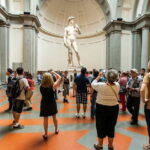
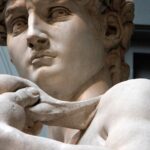
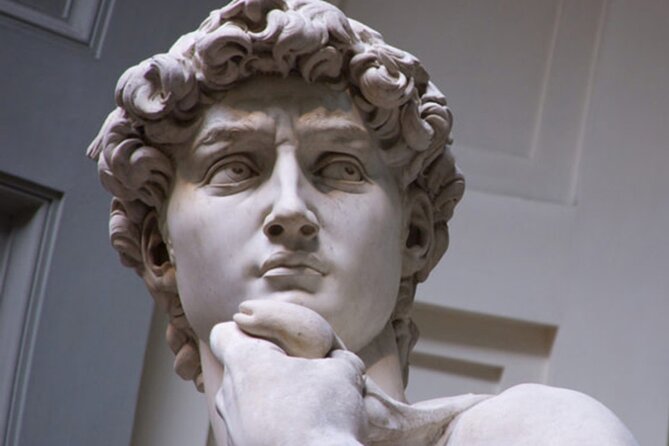
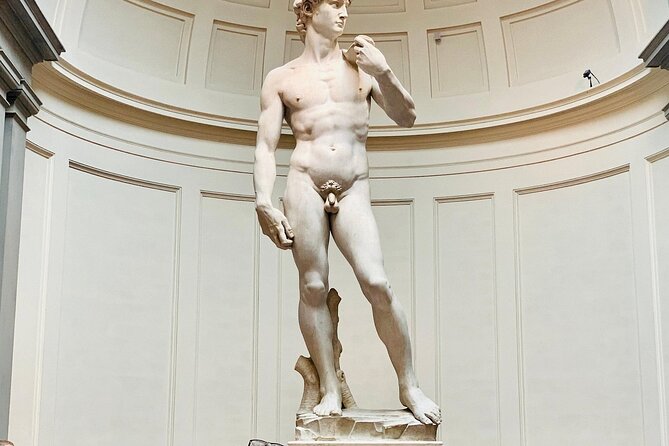
At the end of the long hall, you reach Michelangelo’s David. The statue is over 17 feet tall, and the effect is instant. Photos can show the face, but they struggle to show the presence—how tall the figure is, and how the details feel made for the real eye, not a screen.
One of the reasons David hits so hard is the setting: it sits beneath a magnificent natural skylight. Light matters here. It changes how the marble reads—especially around the face, hands, and the sharp edges that define his stance.
When you’re up close, slow down for the parts people usually rush past:
- The watchful gaze and how it pulls your attention forward
- The hands, where the anatomy feels studied rather than just symbolic
- The stance and balance, which feels poised, not posed
If you’re using the audio guide, time the listening so it supports what you’re noticing. If you play commentary nonstop, you’ll miss the moment where David becomes more than an icon. Let your eyes lead, then let the audio give you the context afterward.


Beyond David: models, instruments, and religious paintings
David gets the crowd. The Accademia’s quieter rooms are where you get smarter about how Renaissance art was built and used.
Gipsoteca Bartolini models
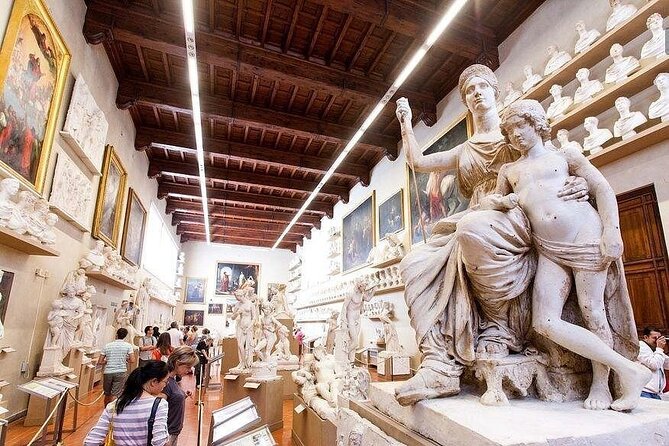
The Hall of Models is home to the Gipsoteca Bartolini, a collection of 19th-century plaster casts. Even though it’s later than Michelangelo, it’s still valuable because plaster casts show how sculptors learned by measuring and studying forms. Think of it like seeing the learning tools that connect eras.
If you’re the type who wants to understand process—not just results—this stop is worth your time. The audio guide can help you connect what you saw in marble to how artists practiced with models.
Museum of Musical Instruments
Another standout is the Museum of Musical Instruments, including rare treasures associated with the Medici and Lorraine families. One highlight is a Stradivarius violin. Even if you don’t play, you’ll notice the care in craftsmanship and the sense that music belonged to courtly life and elite collections.
This section also breaks the museum’s rhythm. After wrestling with marble drama, it’s refreshing to shift to objects made for sound and ceremony.
Gold-ground religious art
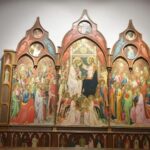
The gallery also includes gold-ground paintings by Florentine masters from the 13th to 16th centuries. These works can feel visually intense because the gold background isn’t subtle—it’s meant to catch light and symbolize sacred space.
If your visit is heavy on Michelangelo, these paintings add contrast. You see a wider range of Florentine creativity than sculpture alone. The audio guide can help you spot why the style mattered to the period, and why gold backgrounds weren’t just decoration.
That Middle Ages vibe: church atmosphere and hand-made glass
The highlights mention a unique church-like experience that takes you back to the Middle Ages, plus old glass windows made by hand centuries ago.
You don’t need to be a specialist to enjoy this part. The best way to treat it is like a pause button. Step out of fast-looking mode and let the space slow you down. Glass, stone, and religious settings change how your eyes handle color and light, especially after the bright, high-impact sculpture rooms.
If you’re using the audio guide, don’t feel forced to keep it running at max volume everywhere. Sometimes it’s better to hear the room and watch the light on surfaces. Even with no soundtrack, the building’s atmosphere does some of the explaining for you.
A realistic 4-hour plan that doesn’t feel rushed
Even with fast entry, the Accademia is one of those museums where rushing makes you miss the good part. I’d plan for about 4 hours as a comfortable target, letting you linger where you want.
A simple rhythm that tends to work:
- Start with the hall of the Prisoners (marble unfinished power)
- Move toward David and take your time under the skylight
- Use the Hall of Models as a learning stop, not a quick glance
- Fit in the instruments and religious paintings before you’re museum-tired
Wear comfortable shoes. Museum floors are not the place to test new footwear. And give yourself permission to stop. David is the kind of work that improves the more time you spend, because your eye finds details the longer you stay.
If your audio guide is on, keep checking that it’s synced and playing at the right volume. Nothing ruins a museum moment like realizing your sound is gone in the middle of a key explanation.
Price and value: is this ticket a good deal at $42?
At $42 per person, this is positioned as a practical way to get in with fast-track benefits plus optional audio support. The value is strongest when you want to:
- see David without waiting in the ticket line
- get helpful commentary in multiple languages
- move at your own pace rather than follow a live guide
It’s also a fair choice if you like structure but not hand-holding. You’ll have a host to assist with entry, but there’s no included live tour guide. If you don’t need a person talking face-to-face, you’re not paying for something you won’t use.
Where the price can feel less satisfying is if the audio option becomes unreliable for your device or earbuds setup. Since the audio is app-based and earbud quality affects the result, you’ll get more value if you prepare your tech.
Not included items matter too. There’s no transportation or hotel pickup, so you’re responsible for getting to the meeting point on your own. For many visitors in Florence, that’s normal—but it does affect your planning.
Who this experience suits best
This ticket works best for:
- independent visitors who enjoy self-paced museums
- people who mainly want Michelangelo and are willing to spend time with him in more than one room
- anyone who likes art context delivered through audio in your preferred language
- families traveling with children who have an ID (passport or ID card for children is required)
It may be less ideal if:
- you strongly prefer live guidance and Q&A
- you know your phone and earbuds setup often fails
- you need everything to be perfectly friction-free from the first minute
A small note on rules: oversize luggage isn’t allowed, and selfie sticks and flash photography aren’t allowed. Smoking is prohibited, and pets aren’t allowed (assistance dogs are allowed). If you like traveling light, this kind of museum day becomes easier.
Should you book this Accademia Gallery entry ticket with audio guide?
If your goal is to see David and still learn more than the basic facts, I think you’ll like this ticket. Fast-track entry helps you protect your time, and the audio guide format is a good match for a museum where pacing matters.
Book it if:
- you’re comfortable navigating museums on your own
- you’ll actually use the audio guide (and you’ll bring earbuds)
- you want to spend time with Michelangelo’s unfinished Slaves and then come back with a better understanding
Skip it or consider another format if:
- you rely on live guides to feel oriented
- your audio setup often struggles
- you’re arriving late and hate check-in complexity
If you get there prepared and you’re ready to linger, the Accademia becomes more than a famous stop. It turns into a focused art education day, with Michelangelo front and center and plenty of rewarding extras once David steals the show.
FAQ
FAQ
Where is the meeting point?
The meeting point is at the Italy Pass store in Via dei Pucci 37/39 (red).
What’s included with the ticket?
You get prebooked tickets, a host to assist you to enter, and an optional audio guide depending on the option you choose.
Is a tour guide included?
No. A tour guide is not included. The audio guide is in-app if you select that option.
Do I need earbuds for the audio guide?
Yes, you should bring your own earbuds for the best audio quality and compatibility. Disposable earphones may be available, but they may not fit all devices.
What languages are available?
The host/greeter is available in English, French, Italian, and Spanish. The audio guide is available in English, Spanish, French, German, and Italian.
Is the attraction wheelchair accessible?
Yes, it is wheelchair accessible.
What should I bring?
For children, bring a passport or ID card.
Can I cancel and get a refund?
Yes. You can cancel up to 24 hours in advance for a full refund.