REVIEW · FLORENCE
Florence: Uffizi Skip-the-Line Ticket & Digital Audio Guide
Book on GetYourGuide →Operated by Tours About · Bookable on GetYourGuide
Skip the line, see the masterpieces.
This Uffizi ticket is a smart way to get timed entry into one of Florence’s biggest art machines, and I love that you get a Pop Guide audio plan so you can move at your own pace. The main catch is the tech: you’ll want headphones and working mobile access, because some people run into audio or loading issues inside the museum.
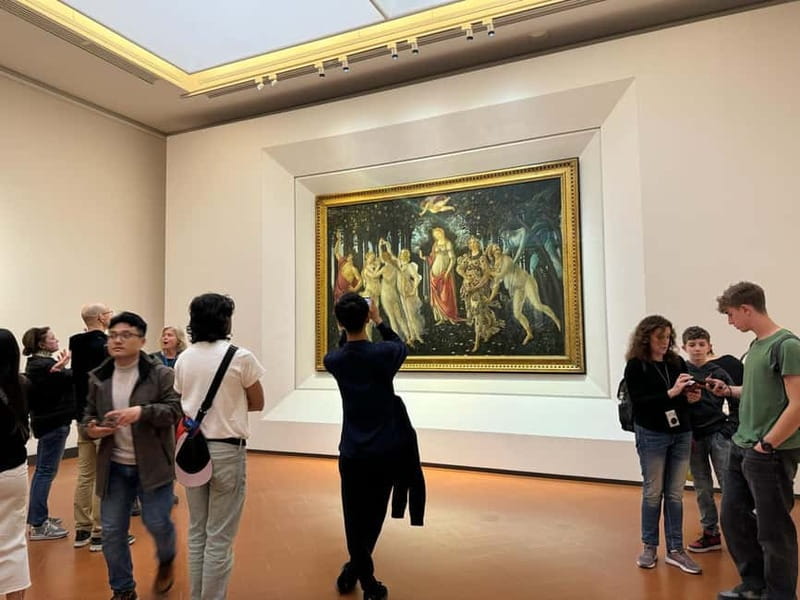
Uffizi is also the kind of place where time management matters. With a separate entrance and pre-booked entry, you trade waiting for looking—then you can spend your energy on the art, from Botticelli’s Primavera to the Birth of Venus. One thing to consider: security checks still happen once you’re there, so even with skip-the-line, plan for a small delay at peak hours.
In This Review
- Key highlights at a glance
- Meet at Leonardo’s Statue and Get Your Pop Guide Ready
- Skip-the-Line Entry: What It Actually Saves
- Vasari’s Building and the First Rooms: Getting Oriented Fast
- Botticelli’s Two Icons: Primavera and Birth of Venus
- The Renaissance Heavy Hitters: Michelangelo, Leonardo, Raphael
- Caravaggio and Rembrandt: Two Different Kinds of Power
- How the App Experience Shapes Your Time in the Gallery
- Practical Timing: Plan for Crowds and Use Your Timed Slot Wisely
- Price and Value: Is $47.71 Worth It?
- Who This Uffizi Experience Fits Best
- Should You Book This Uffizi Skip-the-Line Ticket?
- FAQ
- What’s included in this experience?
- Is a tour guide included?
- Where do I meet the host?
- Do I need to exchange my voucher?
- How does the digital audio guide work?
- Do I need headphones?
- Will I still do a security check after skipping the line?
- Is it wheelchair accessible?
- What’s a good amount of time to plan?
Key highlights at a glance

- Timed-entry skip-the-line access through a separate entrance to cut the worst of the queues
- Pop Guide digital audio with login details provided at the meeting point
- Botticelli’s Primavera and Birth of Venus plus Michelangelo, Leonardo da Vinci, and Raphael
- Rembrandt self-portraits (Dutch Golden Age) that add a different kind of intensity
- Standout works like Caravaggio’s Medusa and Raphael’s Madonna del Cardellino
- A self-guided format, meaning you’ll control pace—but you need to manage the app
Meet at Leonardo’s Statue and Get Your Pop Guide Ready
The day starts outside, at the meeting point in front of Leonardo da Vinci’s statue. A staff member holds a white flag that says ENJOY ROME, and your job is simple: exchange your GetYourGuide voucher for a physical ticket so you can use the timed entry.
You’ll also get what makes this tour feel complete: access for the Pop Guide audio app. The catch is that the experience depends on your phone being able to handle the app. The tour data specifically calls out that you should bring headphones and have internet access, which matters because you download the Pop Guide app and then use credentials you’ll receive at the meeting point.
Here’s the practical move I recommend: try to have your headphones and Pop Guide downloaded before you head in, not while you’re standing in line. People reported that initial setup can be awkward and that the museum may not offer Wi‑Fi, so waiting for a connection can turn your first gallery minutes into troubleshooting minutes.
You can also read our reviews of more tours and experiences in Florence.


Skip-the-Line Entry: What It Actually Saves
This is not a private escort or a narrated tour. The value here is the access: a pre-reserved timed-entry ticket plus skip-the-line through a separate entrance.
In real life, that matters because the Uffizi can be crowded, and the timed window is what helps you bypass the worst waiting. Even with that advantage, the museum requires a security check, and during peak hours the wait for security can be around 15 to 20 minutes. So the line you’re skipping is the entry queue; you’re still doing the normal Uffizi inspection once inside.
Think of it like this: you’re paying to protect your day. Instead of spending the most precious part of your visit stuck in a slow-moving bottleneck, you get earlier art time, and you can spend your energy deciding what to linger on.
Vasari’s Building and the First Rooms: Getting Oriented Fast
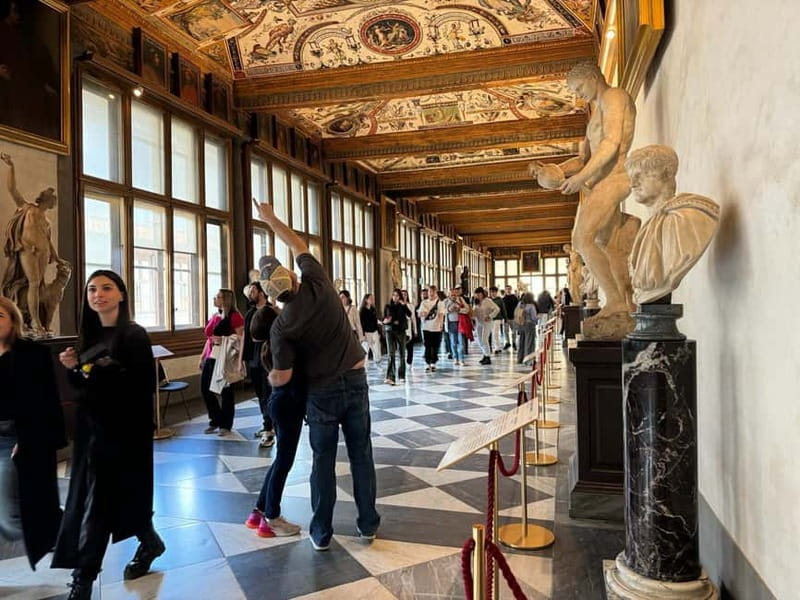
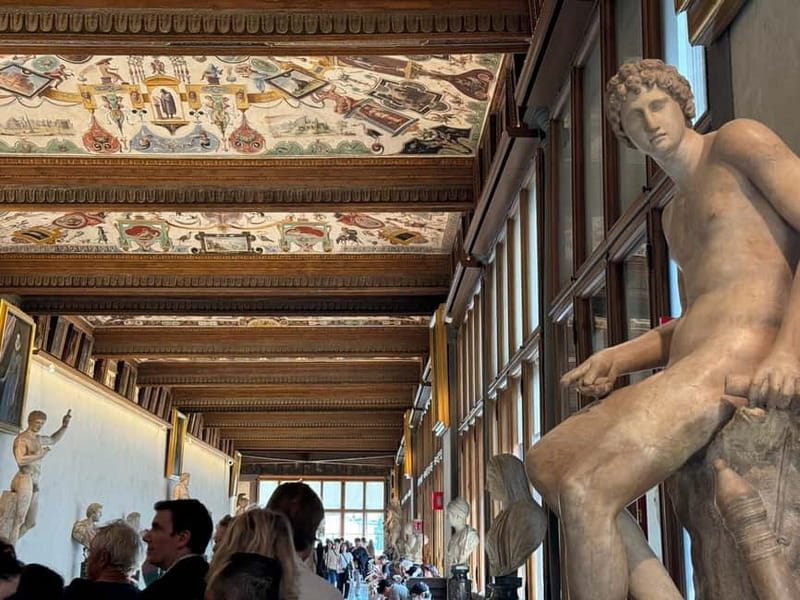
Once you enter, you’re in a building with a real job history. The Uffizi is a 16th-century structure designed by Giorgio Vasari, originally built as offices for magistrates and later transformed into a gallery.
That building layout is part of why the Uffizi feels huge. Even with a timed ticket, you’ll want to start smart. The audio guide is designed to help you move through highlights without needing a live guide, and the self-paced format is ideal if you hate being rushed.
You also need to expect Uffizi reality: people flow in waves, rooms can get packed, and you’ll constantly be negotiating between seeing the work clearly and sharing space with others. The museum is so dense with masterpieces that the best strategy is not to “see everything.” It’s to build a shortlist of what you came for, then let the rest be bonus discoveries.
Botticelli’s Two Icons: Primavera and Birth of Venus
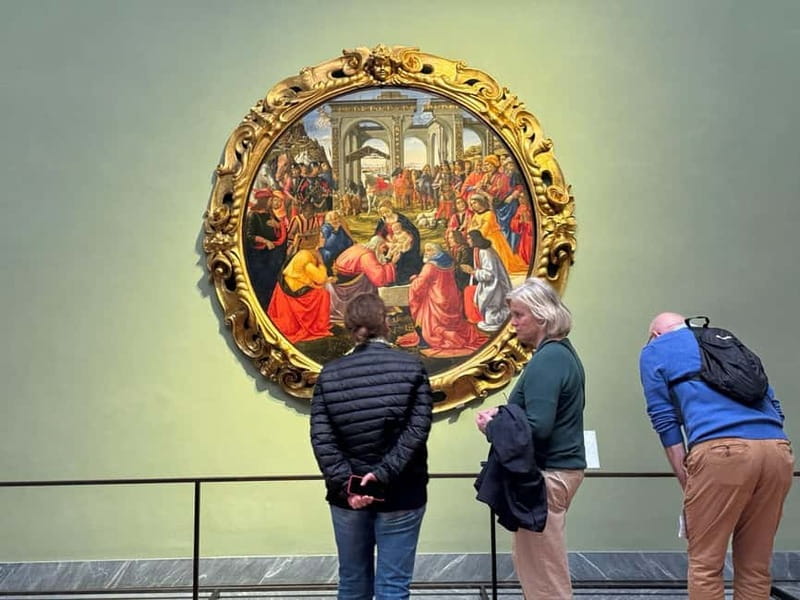
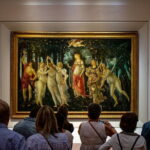
If you like Renaissance art, Botticelli is the emotional center of the Uffizi experience. With this ticket, you can target the two big-ticket paintings named in the tour highlights: Primavera and the Birth of Venus.
Primavera works because it invites you to look longer than you think you need. It’s not just a single moment; it’s layers of figures and symbolism that reward slow viewing. The self-guided format is a plus here. You can pause when the composition clicks, rather than forcing it into someone else’s pace.
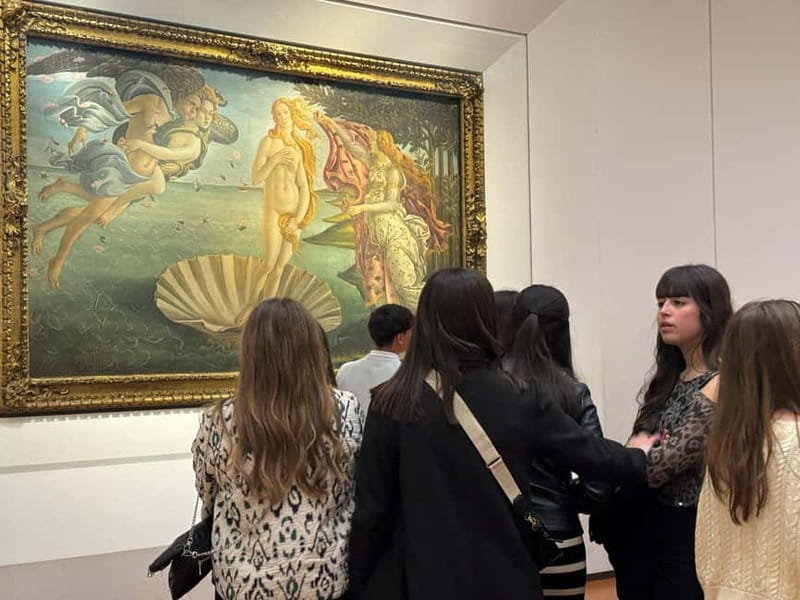
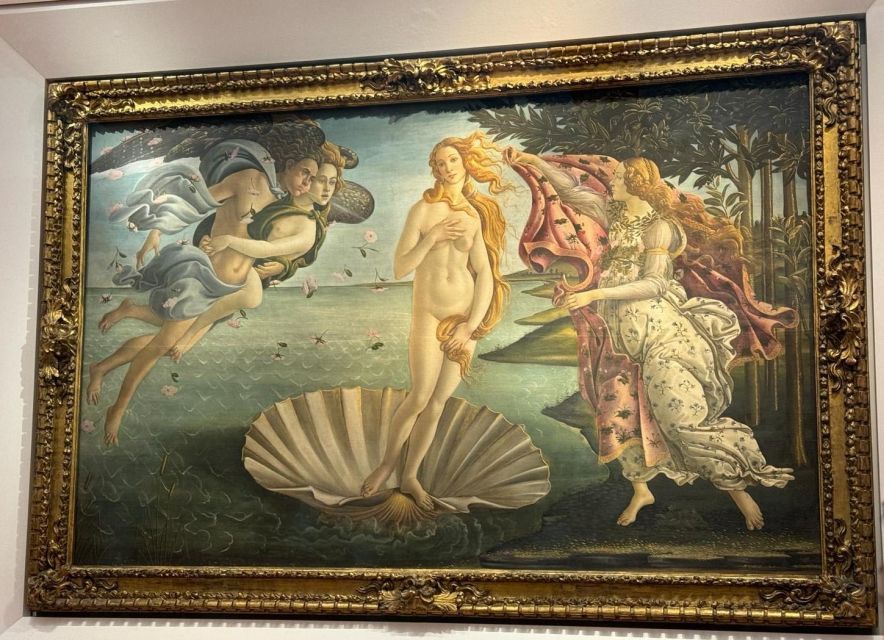
Birth of Venus is the museum’s emblem and a true “why everyone talks about this” work. The tour info points out that it’s a national treasure and the gallery’s signature image, and once you’re in front of it, you’ll understand why. Even when crowds are thick, this painting tends to create a little pocket of attention—people stop, look up, and reset their brain.
One practical note: this is where having your headphones ready helps. You’ll get the most from Pop Guide if you can listen while you’re standing there, not after you’ve already moved on to the next room.
The Renaissance Heavy Hitters: Michelangelo, Leonardo, Raphael
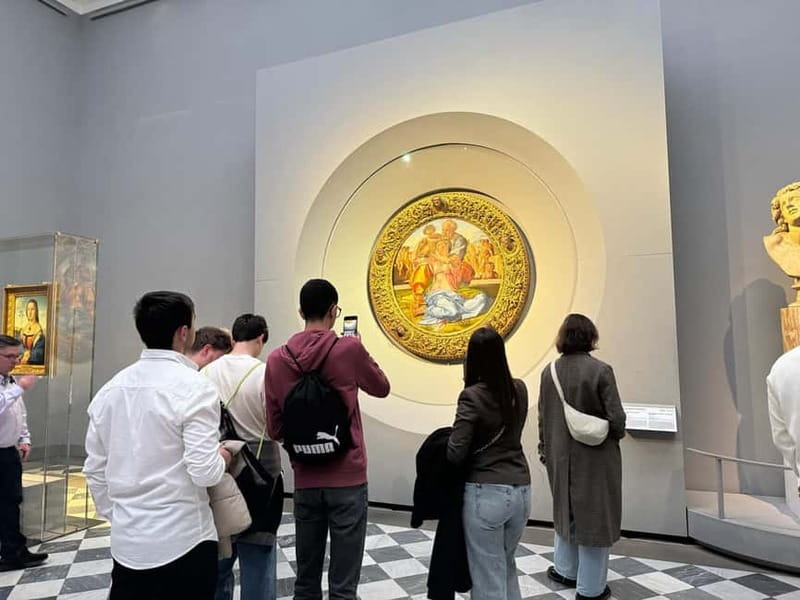
After Botticelli, the Uffizi leans hard into Renaissance greatness. This ticket’s highlight list includes major names: Michelangelo, Leonardo da Vinci, and Raphael.
This matters because those artists push different ideas of beauty. Michelangelo often brings strength and drama; Leonardo leans toward observation and subtle atmosphere; Raphael is admired for balance and clarity. In a guided tour, those contrasts can blur when you’re trying to keep up. In a self-guided visit, you get a chance to feel each style at your own speed.
The tour info also calls out Raphael’s Madonna del Cardellino and emphasizes that the gallery includes works by these Renaissance stars in its main suites. You can plan your route so you hit the big names first, then circle back if something catches your eye.
A good approach is to give yourself permission to move on quickly from works that don’t grab you. Uffizi is massive, and if you force yourself to “power through,” the experience can turn into visual noise.



Caravaggio and Rembrandt: Two Different Kinds of Power
One reason this tour feels more than just a Renaissance museum visit is the range. The highlight list includes Caravaggio’s Medusa, plus selection of Rembrandt self-portraits from the Dutch Golden Age.
Caravaggio’s Medusa is dramatic in theme and in how it pulls your attention. It’s the kind of painting that doesn’t sit quietly in the corner of your mind. Even in a crowded room, it tends to feel like a spotlight moment because of the subject and the intensity of the presentation.
Then you get Rembrandt. Self-portraits change the tone of the gallery. Instead of myth and allegory, you’re looking at a person thinking, studying, and presenting themselves through paint. The tour notes that you’ll see a selection of Rembrandt self-portraits, which gives you a thread to follow even as the museum shifts periods and styles.
This is a major value point for you: Pop Guide helps you connect works into a loose narrative, and those Rembrandt moments give your visit variety so you don’t feel trapped in one era.
How the App Experience Shapes Your Time in the Gallery
Here’s where you should pay attention, because this is the main variable in the experience.
Pop Guide is used as the digital audio system. You’re told to download the app, and at the meeting point you receive login credentials. The tour info also stresses bringing headphones, because audio is only useful if you can actually listen.
The reviews included in the data give you a heads-up about common friction points:
- The app can be awkward to switch between the audio and the museum map.
- Some people struggled with the initial download or updates like map updates, especially if Wi‑Fi wasn’t available.
- A few reported playback problems where recordings wouldn’t run or the app froze.
So my practical recommendation is not to treat the app as the whole plan. Treat it as a helpful guide. Have a paper backup in your brain: decide your must-sees (Primavera, Birth of Venus, Medusa, plus your Rembrandt interest), then use Pop Guide to add context as you go.
Also, Uffizi is big enough that you should assume you’ll take more time than you think. One practical tip from the same information set: if you’re trying to finish fast, people manage it in about three hours, but if you want a relaxed visit, plan closer to six hours.
Practical Timing: Plan for Crowds and Use Your Timed Slot Wisely
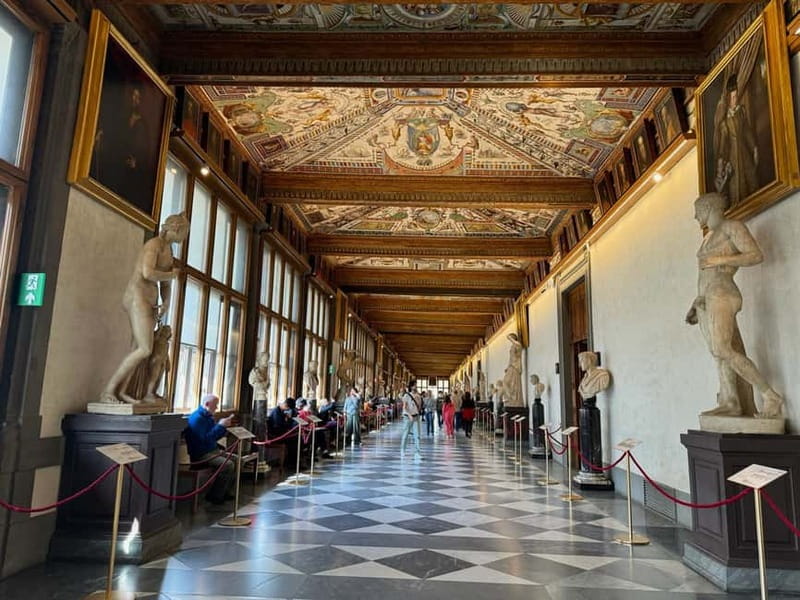
Even with timed entry, Uffizi can feel busy once you’re inside. That’s not the fault of your ticket; it’s just the reality of a superstar museum in a small city center.
The timed entry helps you in the first phase: getting inside faster. After that, your job is to manage your pace and avoid getting stuck waiting for a good view. The self-guided format is actually good for this because you’re not locked into a group schedule.
For your day, I’d suggest:
- Start with the works you care about most while your eyes are fresh.
- Use the audio for context, not for every single step. If you find yourself moving too slowly, you’ll get frustrated.
- Let the museum guide you—then stop when you’re happy, not when you’re exhausted.
And yes, keep an eye on your phone battery. Between downloading an app, running audio, and using a map interface, it can drain faster than you expect.
Price and Value: Is $47.71 Worth It?
At $47.71 per person, you’re paying for two things: a timed entry ticket and skip-the-line access. The price also reflects the convenience of having the audio guide setup tied to your experience, even though it’s digital and not a live guide.
Is it worth it? For many people, yes—because the Uffizi is one of those places where the difference between arriving at your slot and arriving in the wrong window is massive. Waiting in line is time you can’t get back, and the museum is large enough that extra hours inside actually change how satisfying the visit feels.
There’s also a tradeoff: because a tour guide is not included, you’re responsible for your own pace and your own interpretation. If you love a structured explanation and don’t want to deal with apps, you might prefer a guided option. But if you’re happy to explore, and you’re the type who enjoys stopping in front of a painting until it makes sense, the self-paced format can be a win.
One more value reality: the museum itself is where you do the heavy lifting. The building is stunning, but the payoff is the art, and this ticket helps you reach it sooner.
Who This Uffizi Experience Fits Best
This experience fits you if:
- You want skip-the-line timed entry more than you want a live guide.
- You like self-paced museum time, with audio context on your own terms.
- You’re excited about the named highlights: Botticelli, Michelangelo, Leonardo da Vinci, Raphael, plus Caravaggio’s Medusa and Rembrandt self-portraits.
It may not be the best fit if:
- You dislike mobile apps in museums or you know your phone connectivity is unreliable.
- You prefer someone to manage pacing and explain works without any tech setup.
- You hate the idea of troubleshooting audio while standing in a crowded room.
That said, even if you run into app hiccups, the ticket still gives you access to the Uffizi’s core treasures. The audio is support; the building and the paintings are the main event.
Should You Book This Uffizi Skip-the-Line Ticket?
I’d book it if your priority is straightforward: get into the Uffizi efficiently, spend real time with the art, and use an audio guide to guide your choices without a rigid schedule.
Skip booking if you want a full guided narrative from start to finish, or if you’re likely to show up with no headphones or a phone that struggles with app downloads. In that case, a different format might suit you better.
If you do book, prep like it’s a mini project: headphones in your pocket, Pop Guide downloaded ahead of time if possible, and a simple list of must-sees in your notes. Do that, and this becomes one of the more practical ways to experience the Uffizi without losing half your day to lines.
FAQ
What’s included in this experience?
It includes a skip-the-line entry ticket to the Uffizi Gallery.
Is a tour guide included?
No. The experience includes a host or greeter for assistance, but a tour guide is not included.
Where do I meet the host?
Meet your host in front of Leonardo Da Vinci’s statue. A staff member will be there holding a white flag with ENJOY ROME written on it.
Do I need to exchange my voucher?
Yes. You’ll exchange your GetYourGuide voucher for a physical ticket at the meeting point.
How does the digital audio guide work?
You’ll use the Pop Guide Audio Guide application. The app requires download on your mobile, and you’ll receive login credentials at the meeting point.
Do I need headphones?
Yes. The tour data lists headphones as something to bring.
Will I still do a security check after skipping the line?
Yes. All visitors must undergo a security check, and during peak hours the wait is around 15 to 20 minutes.
Is it wheelchair accessible?
Yes, the experience is wheelchair accessible.
What’s a good amount of time to plan?
The visit is timed-entry and self-paced, and a practical tip included with the information set is to allow up to 6 hours for a more relaxed experience.