REVIEW · FLORENCE
Accademia & Uffizi: timed-entry tickets with Audio Guide
Book on Viator →Operated by CAF Tour and Travel · Bookable on Viator
Art in Florence, without the headache of lines. This timed-entry Accademia + Uffizi experience lets you roam independently with an audio guide, so you can pause, backtrack, and really look. I like that it covers both the Michelangelo highlights and the Uffizi’s crowd-pleasers in one smooth morning, plus you get your museum time locked in.
My two favorite parts are the chance to see Michelangelo’s David in its original home at the Accademia, and the audio guide that gives you context in your language while you move at your own speed. One thing to watch: you must arrive on time at the meeting point, because being late can mean losing your time-entry access with no refund or reschedule.
In This Review
- Key things to know
- Morning logistics: meeting at Via Ricasoli and keeping your entry time
- Galleria dell’Accademia: Michelangelo’s David and why this stop feels different
- Uffizi Gallery at your pace: Botticelli, Venus, and the big-name rooms
- How to use the audio guide so it actually helps
- Lunch option: when the Tuscan 3-course upgrade makes sense
- Price and value: what you’re paying for and when it’s worth it
- Who this tour fits best (and who should reconsider)
- Should you book: Accademia & Uffizi with audio at timed entry?
- FAQ
- What’s included in the Accademia & Uffizi timed-entry experience?
- Is lunch included?
- How long is the tour?
- Where do I meet, and when does it start?
- Can I visit the museums at my own pace?
- Are children allowed, and can kids use the audio guide?
- What happens if I’m late to the meeting point?
- Does the Uffizi ticket include other sites?
- What’s the group size?
Key things to know
- Timed-entry tickets help you avoid the long ticket-office slog for two top museums
- Audio guide in your own language keeps you moving while still learning something real
- David at the Accademia is a must if Michelangelo is even a little on your radar
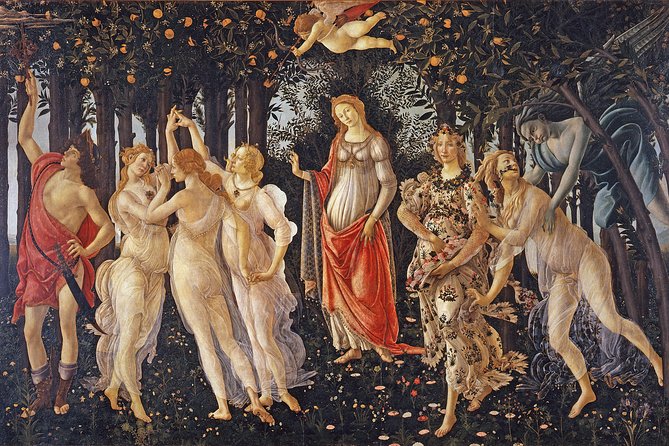
- Uffizi highlights on Botticelli and more (including Spring and Venus) are built into the experience
- Lunch upgrade is optional and is a set 3-course Tuscan meal at a historic restaurant
Morning logistics: meeting at Via Ricasoli and keeping your entry time
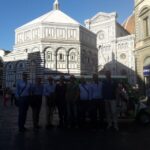
This starts at Via Ricasoli, 68 near central Florence, with a start time of 8:30am and the tour ending at the Uffizi. Expect the full experience to run about 3 hours, split roughly between the two galleries.
The big practical win here is guaranteed entry time plus tickets handled for you at the meeting point. That means you’re not hunting for tickets or wasting time in the general admission queue. Still, you’re not immune to delays entirely, because security checks (metal detector) and museum crowd limits can slow entry.
You’ll want to show up early enough to stay calm. It’s mandatory to arrive at the meeting point at the check-in time, and if you miss it, you may not be able to get the time-entry ticket or museum access, and there won’t be a refund or reschedule.
The group size is capped at 25 travelers, which usually helps the start feel organized without turning it into a cattle-herd tour. Also, you get multilingual help at the meeting point, and the museum tickets are delivered directly there—handy when your phone battery is low or you just want to get moving.
You can also read our reviews of more tours and experiences in Florence.
Galleria dell’Accademia: Michelangelo’s David and why this stop feels different
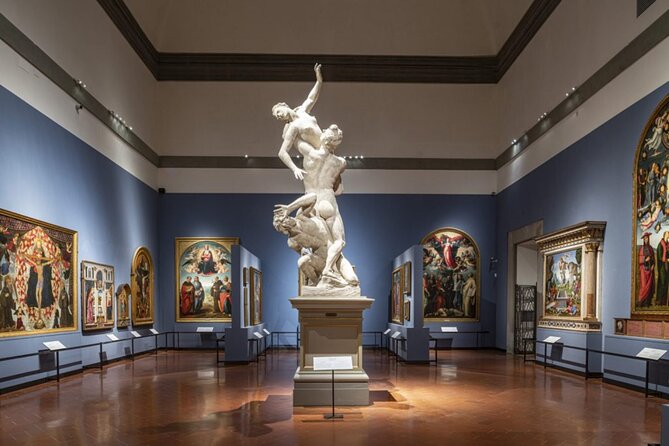
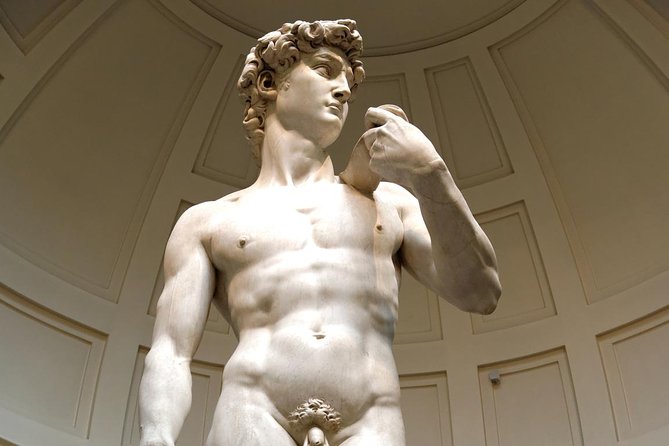
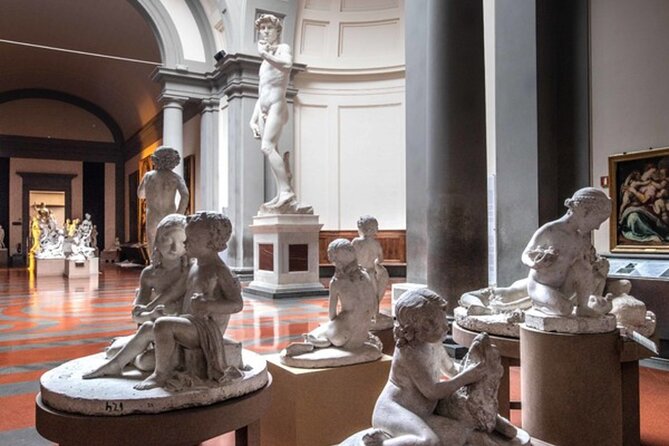
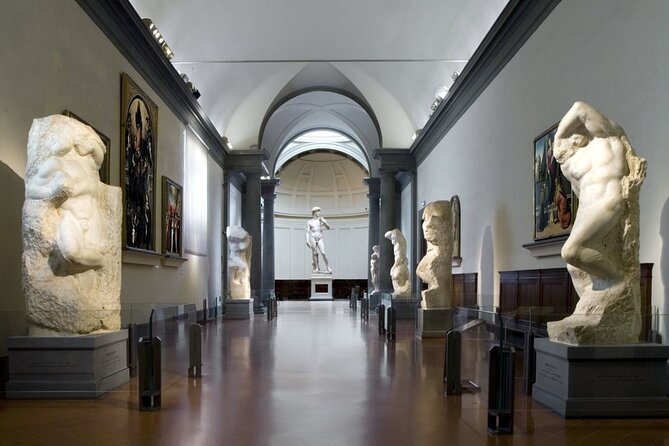
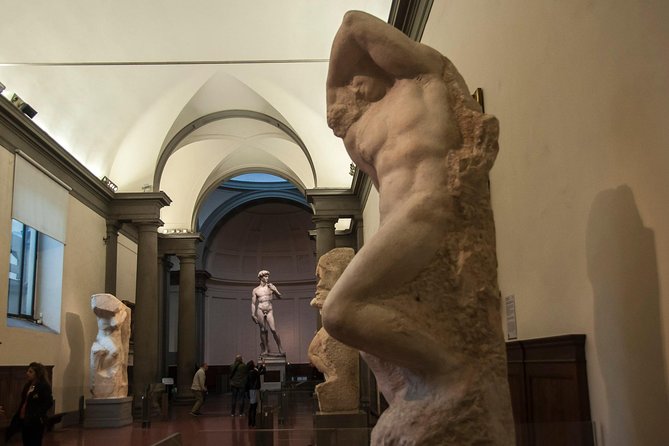
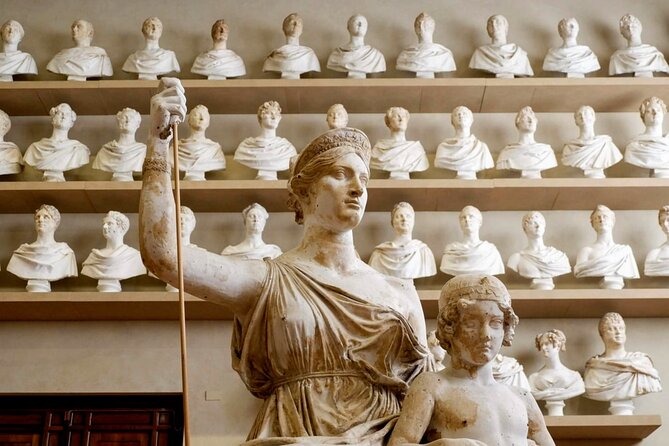
Your first stop is the Galleria dell’Accademia, and you’ll have about 1 hour 30 minutes there. This is the museum built around Michelangelo’s most famous sculpture, and it gives you the context you need to understand why people make a special trip for this one work.
Yes, you’ve probably seen images of David a thousand times. But standing in front of the original is a different experience than scrolling a photo. Scale matters, details matter, and the posture hits harder when you’re physically there. If you want a strong “anchor” moment for the day, this is it.
The Accademia visit also includes other works you’d otherwise miss when you rush through. You’ll be directed toward pieces such as I Prigioni (the Prisoners), San Matteo, and the Palestrina Pietà. These are not just filler; they help connect Michelangelo’s world—movement, emotion, and carving choices that look almost impossible up close.
Because this is independent with an audio guide, you can pace yourself instead of watching a guide herd you from room to room. I like this style for art museums because it lets you linger when something clicks. If David is your focus, you can head straight there first, then work your way through the rest with the audio guide keeping you oriented.
A smart caution: since the visit is self-paced, it’s easy to overspend time on one room and run out of steam later. So decide early what you want most. For many people, it’s David first, then a quick scan of the related works before you move on.
Uffizi Gallery at your pace: Botticelli, Venus, and the big-name rooms
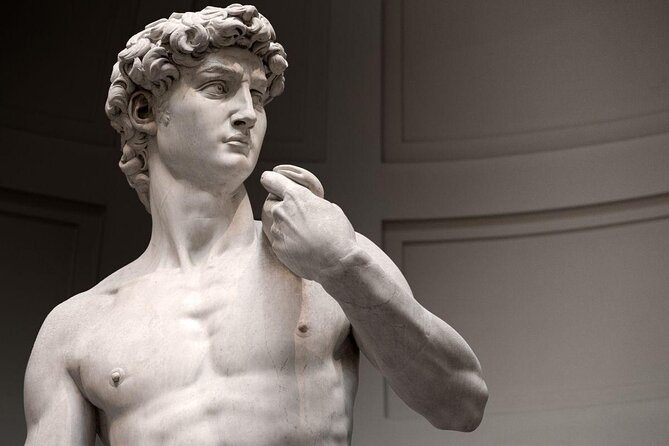
After the Accademia, you head to the Uffizi Gallery for another 1 hour 30 minutes. This is one of the world’s best-known art collections, and it can be overwhelming if you don’t have any structure.
That’s where the audio guide earns its keep. You get expert commentary recorded in your language, so you can learn what you’re seeing without relying on your own knowledge or joining a fast-paced group tour.
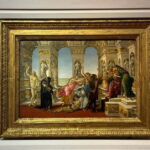
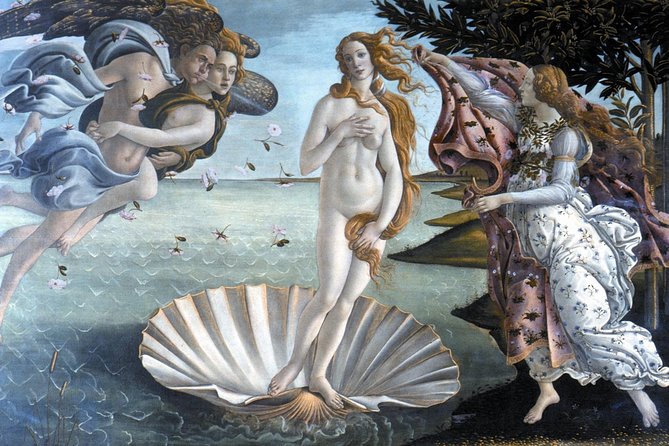
The Uffizi is especially strong for Botticelli, with major crowd magnets like Spring and Venus. If Venus is on your list, plan to slow down. The painting(s) are famous, but the real payoff is noticing how the mood and composition work when you’re not competing with a line of strangers.
You’ll also run into works tied to Michelangelo, Leonardo da Vinci, Raffaello, and artists like Giotto, Cimabue, and Masaccio. Caravaggio is part of what you may encounter too. The point isn’t to “see everything.” It’s to pick a route through the highlights and let the audio guide fill in the gaps.
One reason timed entry matters at the Uffizi is that crowd pressure can flatten your experience. When you get inside efficiently, you’re more likely to actually look instead of merely passing through. And because you’re visiting at your own pace, you can spend time where your attention goes—whether that’s a Renaissance face study, a dramatic scene, or a mythological theme.
Tip that saves time: don’t try to take in the whole museum in 90 minutes. I’d rather you choose your must-sees and use the audio guide like a guided walk, not like a school lecture. If you finish early, you’ll still feel like you got something real.
How to use the audio guide so it actually helps
An audio guide can be either helpful or annoying. Here, it’s built for the first option, because it’s designed to give you context while you roam.
Start simple. Before you enter each gallery’s main rooms, pick one question you want answered. Examples: Why is this figure posed this way? What’s the story behind the painting? Why does this artwork matter historically? Then listen for that type of explanation as you move.
I also like that the audio guide is not tied to a live group schedule. If you pause to zoom in with your eyes (and your brain), the guide doesn’t punish you by moving on. You can go back a step when something catches your eye—especially on details you’d otherwise miss.
Two practical notes from the rules:
- The audio guide is not available for children under 6.
- Children must be accompanied by an adult.
So if you’re traveling with kids, you may want to pre-plan what you’ll do while your child can’t use the audio. This isn’t a dealbreaker, but it changes how you’ll experience the museums.
Finally, use the audio guide to shape your route. You’ll get the most value if you let it point you toward the works you care about, rather than trying to listen to everything from beginning to end like it’s a podcast marathon.
Lunch option: when the Tuscan 3-course upgrade makes sense
There’s an optional lunch add-on at a Tuscan restaurant: a 3-course set menu in a historic setting. If you’re the type who hates planning lunch mid-walk, this can be a big relief.
Drinks are not included, so you’ll pay for those on the spot. Also, if you select lunch, note that infants age 0–5 have lunch that’s paid on the spot (not included in the package).
Should you upgrade? Here’s how I’d think about it:
- If you want an easy, low-stress break with a meal that’s already timed for your day, it’s a good convenience.
- If you like flexibility and prefer finding a casual spot right after the galleries, you might skip the upgrade and do lunch on your own.
Because the tour ends at the Uffizi, an organized lunch option can help you avoid that end-of-museum scramble: hungry, warm from walking, and trying to choose a place quickly. If you do upgrade, keep expectations realistic: it’s a set menu, so it won’t be a personalized tasting experience—but it can still be a pleasant, properly Tuscan reset.

Price and value: what you’re paying for and when it’s worth it
This costs $126.29 per person, and it’s typically booked about 39 days in advance. That price may feel high if you’re thinking, I can just buy tickets at the door. But the whole structure here is about value through saved time and reduced friction.
You’re paying for:
- Timed-entry (so you’re not relying on luck)
- A reservation fee and guaranteed entry time
- Admission tickets delivered at the meeting point
- An audio-guided visit with commentary in your language
- Help at the meeting point to get started smoothly
For big-name museums like these, time has real value. The difference between standing in a long line and walking right in can turn a day of art into a day of waiting. Even if security and crowd limits still exist, timed entry generally gives you a calmer experience.
Also, the museum reservation and ticket handling matters. When you’re in Florence with limited museum hours and a packed travel schedule, it’s not just about skipping one line—it’s about protecting your plan.
If you only want one museum, focus is key. The experience is designed for doing both, so it’s best when you genuinely care about Michelangelo and the Uffizi’s masterpieces. If Michelangelo is your top priority, Accademia’s David moment will anchor your day. If you’re more drawn to Botticelli and the Uffizi classics, you’ll get major payoff there.
And one more practical value note: the Uffizi ticket is also valid to access the National Archaeological Museum, and the Opificio delle Pietre Dure is listed as part of that ticket validity but is currently closed for renewal. So in theory, you might squeeze in another visit later if your schedule allows.
Who this tour fits best (and who should reconsider)
This tour works well for most travelers who want art-heavy mornings without turning the day into a logistics problem. It’s especially strong for people who:
- Want two top Florence museums in one session
- Prefer self-paced exploration over a group schedule
- Like learning but don’t want to rely only on your own museum reading
It’s also a great fit if you’re the kind of traveler who can’t stand uncertainty. Arriving on time for the entry time is crucial, and the timed tickets are designed to remove that “will we get in quickly” stress.
Consider another approach if you’re traveling with very young kids who can’t use the audio guide (under 6), because the pacing and learning format changes. You can still do the museums, but you may need a different plan for how your child will experience the day.
Also, if you hate the idea of any rule-based timing at all, this might feel strict. The requirement to arrive at the meeting point at check-in time is not flexible, and being late can mean lost access and no refund.
Should you book: Accademia & Uffizi with audio at timed entry?
I’d book this if you want the best shot at a smooth morning and you care about seeing both Michelangelo and the Uffizi’s signature masterpieces. The biggest reason is practical: timed entry plus audio guide in your language turns “I hope the lines aren’t awful” into a plan you can trust.
I’d skip it if you’re happy with buying tickets on your own and you’re okay with unpredictable waiting, or if your must-sees are only in one museum. In that case, you might get better value by focusing your time and energy rather than trying to split attention between two heavy hitters.
If you do book, do yourself a favor: plan to arrive early at Via Ricasoli. Then treat the audio guide like a tool to guide your eyes, not a task list. You’ll enjoy the day more, and you’ll actually remember what you saw.
FAQ
What’s included in the Accademia & Uffizi timed-entry experience?
It includes entrance tickets (with the reservation fee and guaranteed entry time), multilingual assistance at the meeting point, tickets delivered at the meeting point, and an audio-guided visit with commentary in your own language.
Is lunch included?
Lunch is only included if you select the lunch option. It’s a 3-course set Tuscan menu at a historic restaurant, and drinks are paid on the spot.
How long is the tour?
The duration is about 3 hours, with roughly 1 hour 30 minutes at each museum.
Where do I meet, and when does it start?
You meet at Via Ricasoli, 68, 50122 Firenze FI and the start time is 8:30am.
Can I visit the museums at my own pace?
Yes. The experience is described as independent visits to both galleries at your own pace, supported by the audio guide.
Are children allowed, and can kids use the audio guide?
Children must be accompanied by an adult. The audio guide is not available for children under age 6.
What happens if I’m late to the meeting point?
It’s mandatory to arrive at the meeting time. If you arrive late, you may not be able to get the time-entry ticket and museum access, and there’s no refund or rescheduling.
Does the Uffizi ticket include other sites?
Yes. The Uffizi ticket is also valid to access the National Archaeological Museum and the Opificio delle Pietre Dure, though the Opificio is currently closed for renewal.
What’s the group size?
The experience has a maximum of 25 travelers.